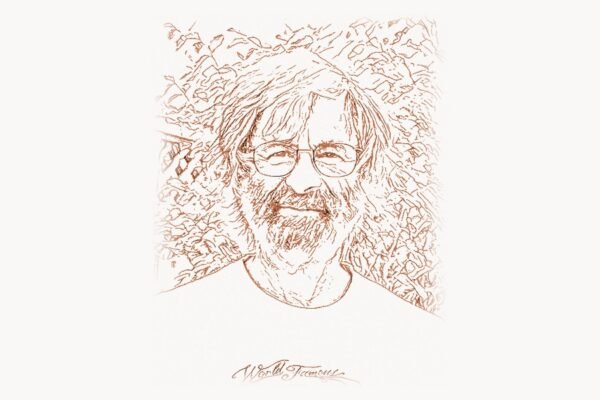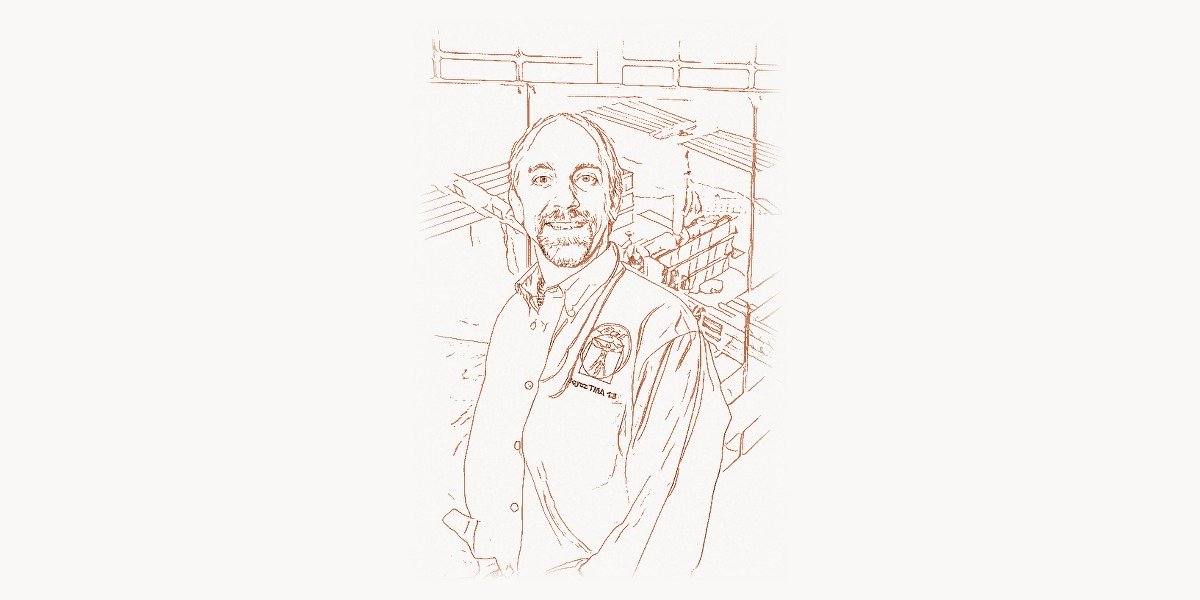
Before millions of players roamed persistent virtual worlds together, before guilds and raids and player economies became gaming staples, one man sat in a cramped Austin apartment writing code that would give birth to an entirely new genre. Richard Garriott — known to legions of fans as Lord British — did not merely create video games. He built living, breathing digital universes governed by ethical systems, physical simulations, and emergent social dynamics that no one had attempted before. From the 1981 release of Ultima I on the Apple II to the groundbreaking launch of Ultima Online in 1997, Garriott’s career traces the entire arc of role-playing games from single-player curiosities to the massively multiplayer phenomena that now generate billions in annual revenue. And somewhere along the way, he became only the sixth private citizen to visit the International Space Station — because when you have already conquered a virtual world, the real one becomes the next frontier.
Early Life & Education
Richard Allen Garriott was born on July 4, 1961, in Cambridge, England, while his father Owen Garriott — a NASA scientist-astronaut — was studying at Stanford University. The family eventually settled in Houston, Texas, close to NASA’s Johnson Space Center. Growing up in a household where space exploration was dinner-table conversation shaped Richard’s imagination profoundly. His father flew aboard Skylab 3 in 1973 and later on Space Shuttle Columbia in 1983, giving the young Garriott a front-row seat to humanity’s reach beyond Earth.
Richard discovered computing in high school when he gained access to a teletype terminal connected to a PDP-11 mainframe. He began writing simple text-based dungeon crawlers in BASIC, drawing on his passion for Dungeons & Dragons and Tolkien’s fantasy worlds. By the time he was 18, he had already programmed 28 different role-playing games on whatever hardware he could access. His 28th creation, originally called Akalabeth: World of Doom, was sold in ziplock bags at a local ComputerLand store in 1979. When California Pacific Computer Company picked it up for national distribution, it sold roughly 30,000 copies — a remarkable number for the era. Garriott enrolled at the University of Texas at Austin to study electrical engineering but dropped out after his sophomore year when the commercial success of Ultima made continuing his education impractical.
Career & Technical Contributions
Garriott’s career can be divided into distinct epochs, each of which pushed interactive entertainment forward in ways the industry had never seen. In 1983, he co-founded Origin Systems with his brother Robert, establishing a studio whose motto — “We create worlds” — became one of the most famous taglines in gaming history. Over the next decade and a half, Origin produced the entire mainline Ultima series, the Wing Commander franchise, and numerous other titles that collectively redefined what PC games could be.
Technical Innovation
The Ultima series was a relentless laboratory for technical experimentation. Ultima III: Exodus (1983) was one of the first RPGs to feature a party-based combat system rendered on a tile-based graphical map, a design pattern that influenced Sid Meier’s later strategy work and countless Japanese RPGs. Ultima IV: Quest of the Avatar (1985) did something no game had done before: it made morality the central game mechanic. Rather than simply defeating a villain, players had to embody eight virtues — Honesty, Compassion, Valor, Justice, Sacrifice, Honor, Spirituality, and Humility — to complete the game. This was a philosophical leap that predated modern moral-choice systems by two decades.
Ultima VI (1990) and Ultima VII (1992) introduced sophisticated world simulation engines. In Ultima VII, virtually every object in the game world could be picked up, moved, combined, or used. Players could bake bread by gathering wheat, milling it into flour, adding water, and placing the dough in an oven. Non-player characters followed daily schedules, sleeping at night and going about their routines during the day. The engine that powered this, sometimes informally referred to as the Ultima VII engine, was a technical marvel that pushed the limits of DOS-era hardware.
Consider the complexity of the world simulation loop that made Ultima VII’s living world possible. A simplified representation of the NPC scheduling system looked conceptually like this:
/* Simplified NPC schedule system - Ultima VII style world simulation */
typedef struct {
    int npc_id;
    int hour_start;
    int hour_end;
    int target_x, target_y;
    Activity activity;  /* SLEEP, WORK, EAT, WANDER, PATROL */
} ScheduleEntry;

void update_npc_behavior(NPC *npc, int game_hour) {
    ScheduleEntry *entry = find_schedule(npc->id, game_hour);
    if (entry == NULL) {
        npc->state = WANDER;
        return;
    }
    if (npc->x != entry->target_x || npc->y != entry->target_y) {
        pathfind_to(npc, entry->target_x, entry->target_y);
    } else {
        execute_activity(npc, entry->activity);
    }
    /* Check NPC-to-NPC interactions */
    for (int i = 0; i < nearby_npc_count; i++) {
        if (can_interact(npc, nearby_npcs[i])) {
            trigger_social_event(npc, nearby_npcs[i]);
        }
    }
}
This kind of systemic thinking — where hundreds of NPCs operated on independent schedules, interacted with each other, and responded to the player’s actions within a physically simulated world — was unprecedented in 1992. It laid the groundwork for the “immersive sim” philosophy that would later be championed by developers like John Carmack and the teams behind Deus Ex and System Shock.
But Garriott’s most significant technical achievement came in 1997 with the launch of Ultima Online (UO). While text-based MUDs had existed since the late 1970s, and graphical MUDs like Meridian 59 preceded it by a year, UO was the first game to prove that a persistent graphical world with thousands of simultaneous players could be commercially viable at scale. The server architecture had to solve problems that had no precedent in the gaming industry — how to synchronize state across thousands of clients, how to handle player economies, how to design systems that remained fun when human unpredictability replaced carefully scripted AI behavior.
The networking model used a client-server architecture where the server was authoritative over all game state. A simplified view of how UO handled player action validation demonstrates the foundational server-authoritative design that became standard for all future MMOs:
# Server-authoritative action validation model (UO-style)
# All client actions must be validated server-side to prevent cheating

class GameServer:
    def __init__(self):
        self.world_state = WorldState()
        self.player_sessions = {}
        self.tick_rate = 10  # updates per second

    def handle_player_action(self, player_id, action):
        player = self.player_sessions.get(player_id)
        if not player:
            return ActionResult(success=False, reason="Invalid session")

        # Server validates EVERYTHING — never trust the client
        if action.type == "MOVE":
            if self.world_state.is_valid_move(player, action.target):
                self.world_state.move_entity(player, action.target)
                self.broadcast_to_nearby(player, MovementUpdate(player))
            else:
                self.force_sync_position(player)  # correct client

        elif action.type == "TRADE":
            if self.validate_trade(player, action.target_player, action.items):
                self.execute_trade(action)
                self.log_transaction(action)  # economic tracking

    def broadcast_to_nearby(self, origin, update):
        """Only send updates to players within visual range"""
        for pid, p in self.player_sessions.items():
            if self.world_state.distance(origin, p) < VISUAL_RANGE:
                p.send(update)
The server-authoritative model was essential because Ultima Online had a real economy where items had genuine value to players. Gabe Newell would later face similar challenges when building Steam’s marketplace, but Garriott’s team confronted these issues first, in an era when best practices simply did not exist.
Why It Mattered
Ultima Online attracted over 100,000 subscribers within six months of launch — an unheard-of number in 1997. It proved that the MMO business model could work, paving the way for EverQuest (1999), World of Warcraft (2004), and the entire MMO industry that followed. Many of the design problems UO encountered and solved — griefing, player-killing, economic inflation, server sharding — became the foundational curriculum of online game design. Garriott’s concept of a virtual ecology, where players hunting too many deer would cause wolves to migrate into towns, was an early experiment in emergent gameplay systems that modern titles like Dwarf Fortress and RimWorld continue to explore.
The influence extends well beyond gaming. The social dynamics observed in Ultima Online attracted academic researchers studying economics, sociology, and human behavior in virtual spaces. Edward Castronova’s landmark 2001 paper on the economics of EverQuest built directly on patterns first observed in UO. The concept of virtual goods having real-world economic value — now a multi-billion-dollar industry — was first demonstrated at scale in Garriott’s creation. Modern platforms for project management and team collaboration owe an intellectual debt to the coordination tools and guild management systems that MMO developers had to invent.
Other Notable Contributions
Garriott’s influence extends into areas few game developers have ever reached. In October 2008, he traveled to the International Space Station aboard Soyuz TMA-13, becoming the first second-generation American in space (his father Owen having preceded him aboard Skylab and the Space Shuttle). He reportedly paid approximately $30 million for the trip through Space Adventures. During his 12-day stay, he conducted scientific experiments in protein crystal growth and participated in educational outreach to schools worldwide. The mission was not a vanity project — Garriott had wanted to be an astronaut since childhood but was disqualified from NASA’s program due to imperfect eyesight.
His commitment to exploration extends to Earth as well. Garriott has visited all seven continents, descended to the Titanic wreck site in a submersible, explored the Amazon rainforest, and collected an extensive cabinet of natural curiosities in his Austin home — a genuine Wunderkammer featuring fossils, automata, and historical artifacts. This adventurer’s spirit is directly reflected in his game design philosophy: the Ultima games rewarded curiosity and exploration more than combat prowess.
In 2000, after Electronic Arts shut down Origin Systems, Garriott co-founded Destination Games, which eventually became NCsoft Austin, producing Tabula Rasa — an ambitious sci-fi MMO that launched in 2007 but was shuttered in 2009. The closure led to a protracted legal battle with NCsoft over Garriott’s departure, which he ultimately won, receiving a $28 million settlement. He later founded Portalarium (now Catnip Games) and launched Shroud of the Avatar: Forsaken Virtues through one of Kickstarter’s early crowdfunding successes, raising over $2 million. The game continued the Ultima tradition of player-driven narratives and ethical gameplay systems.
Garriott has also been a vocal advocate for the commercial space industry and serves on the board of the Explorers Club, one of the world’s oldest exploration societies. His interdisciplinary approach — spanning software engineering, game design, space science, and natural history — mirrors the polymathic ideals of pioneers like Alan Turing and John von Neumann, who saw computing as a means to explore all domains of human knowledge.
Philosophy & Key Principles
Garriott’s design philosophy can be distilled into several core tenets that have remained consistent across four decades of work.
Virtue as gameplay. Beginning with Ultima IV, Garriott insisted that games should challenge players morally, not just mechanically. He drew directly from Hindu, Buddhist, and Western ethical traditions to construct the Virtue System — a framework in which Compassion, Honesty, Valor, and other qualities were not abstract lore but measurable in-game attributes that determined a player’s progression. This was radical in 1985 and remains influential today.
World-first design. Rather than building levels for players to traverse, Garriott built worlds for players to inhabit. Every Ultima title expanded the simulation depth of its world — more interactive objects, more complex NPC behaviors, more systemic interactions. As Will Wright approached simulation from a city-planning perspective and Shigeru Miyamoto approached it through level design, Garriott approached it as a world-builder constructing a coherent, self-consistent reality.
Player agency above authorial control. Garriott recognized earlier than most designers that the most compelling stories in multiplayer games are those created by players, not developers. In Ultima Online, the most memorable events — the assassination of Lord British during a beta test, the rise and fall of player-run towns, the economic chaos caused by duplication exploits — were all emergent. This philosophy anticipated the user-generated content revolution that Markus Persson would later catalyze with Minecraft.
Technology serves imagination. Garriott was never a technology-for-technology’s-sake developer. Each technical advancement in his games — tile engines, world simulation, networked multiplayer — existed to serve a creative vision. He once noted that the goal was always to create a world so rich that the computer would disappear, leaving only the experience. This human-centered approach to technology resonates with modern principles in digital product development and web design, where user experience remains the ultimate measure of success.
Legacy & Impact
Richard Garriott’s legacy operates on multiple levels. At the most immediate, he created one of gaming’s longest-running and most beloved franchises. The nine mainline Ultima games, plus Ultima Online and its expansions, collectively sold millions of copies and defined the RPG genre on personal computers for nearly two decades. Origin Systems, under his creative leadership, also produced the Wing Commander series, which pushed the boundaries of cinematic storytelling in games years before the term “cinematic game” became commonplace.
At a deeper level, Garriott’s insistence on ethical systems in games opened a design space that the industry is still exploring. Titles like Mass Effect, The Witcher, Undertale, and Disco Elysium all owe a philosophical debt to Ultima IV’s demonstration that morality could be a core mechanic rather than a cosmetic veneer. The concept that player choices should have meaningful, lasting consequences — now a standard expectation in RPGs — was arguably first proven viable in Garriott’s work.
His impact on the MMO genre is incalculable. Ultima Online was the proof of concept that convinced publishers to invest in persistent online worlds. Without UO’s commercial success, the business case for EverQuest and World of Warcraft would have been far harder to make. The design problems UO solved — and the new problems it created — became the foundational knowledge base for every online game that followed. Concepts now taken for granted, such as server sharding, client-server authority models, anti-griefing mechanics, and virtual economies, were all pioneered or significantly advanced by Garriott’s teams.
Beyond the gaming industry, Garriott represents something increasingly rare: a technologist whose curiosity is genuinely unbounded. He has explored the deepest oceans and orbited the Earth. He collects Renaissance automata and funds space research. His career suggests that the best technology is built by people who see no boundary between science, art, and adventure — a lesson that applies equally to game development, the pioneering spirit that built the early games industry, and the broader technology landscape of the 21st century.
Key Facts
| Category | Details |
|---|---|
| Full Name | Richard Allen Garriott de Cayeux |
| Born | July 4, 1961, Cambridge, England |
| Known As | Lord British |
| Education | University of Texas at Austin (attended, did not complete degree) |
| Founded | Origin Systems (1983), Destination Games (2000), Portalarium (2009) |
| Key Creations | Ultima series (I–IX), Ultima Online, Tabula Rasa, Shroud of the Avatar |
| Space Mission | Soyuz TMA-13 to ISS (October 12–24, 2008) |
| Notable Awards | BAFTA Fellowship (2006), First Playable Award, Game Developers Choice Lifetime Achievement (planned) |
| Key Innovation | Morality-as-gameplay (Ultima IV), Massively multiplayer online gaming (Ultima Online) |
| Industry Impact | Established the commercial viability of MMORPGs; defined RPG conventions for two decades |
FAQ
Why is Richard Garriott called Lord British?
The nickname originated from Garriott’s birth in Cambridge, England. When his family moved to Texas, his schoolmates called him “British” because of his birthplace. When he began creating games, he adopted the persona “Lord British” as his in-game alter ego — a benevolent monarch who ruled the fictional land of Britannia across the entire Ultima series. The character became inseparable from Garriott’s public identity, and players have interacted with Lord British in every Ultima title since the original 1981 release. In one of gaming’s most famous incidents, a player named Rainz managed to kill the supposedly invincible Lord British during the Ultima Online beta test in 1997, demonstrating the unscripted chaos that would come to define the MMO genre.
What made Ultima Online different from earlier online games?
While text-based MUDs and earlier graphical online games like Meridian 59 and Neverwinter Nights (on AOL) preceded it, Ultima Online was the first to combine a persistent graphical world, thousands of simultaneous players on a single server shard, a full player-driven economy, and rich world simulation at commercial scale. It launched in September 1997 and quickly surpassed 100,000 subscribers, proving to the industry that the MMO business model was viable. Its server-authoritative architecture, economic simulation, and approaches to managing player behavior became the template that all subsequent MMOs — from EverQuest to World of Warcraft — built upon.
Did Richard Garriott actually go to space?
Yes. On October 12, 2008, Garriott launched aboard Soyuz TMA-13 from the Baikonur Cosmodrome in Kazakhstan and spent approximately 12 days aboard the International Space Station. He was the sixth private citizen to visit the ISS through the Space Adventures program. The trip made him and his father Owen Garriott (who flew on Skylab 3 and STS-9) the first American father-and-son pair to both travel to space. During his stay, Richard conducted protein crystal growth experiments, took thousands of photographs of Earth, and participated in educational programs connecting with students worldwide.
How did the Ultima series influence modern RPG design?
The Ultima series introduced or popularized numerous concepts that are now standard in role-playing games. Ultima III established party-based combat in a graphical overworld. Ultima IV pioneered morality as a core gameplay mechanic, directly inspiring the moral choice systems in games like Mass Effect, Fable, and The Witcher. Ultima VII created one of the first truly interactive simulated worlds, where NPCs followed daily routines and nearly every object could be manipulated — a design philosophy later expanded by immersive sims like Deus Ex and open-world games like The Elder Scrolls. Ultima Online then extended these principles into the multiplayer realm, establishing the template for all massively multiplayer RPGs that followed.