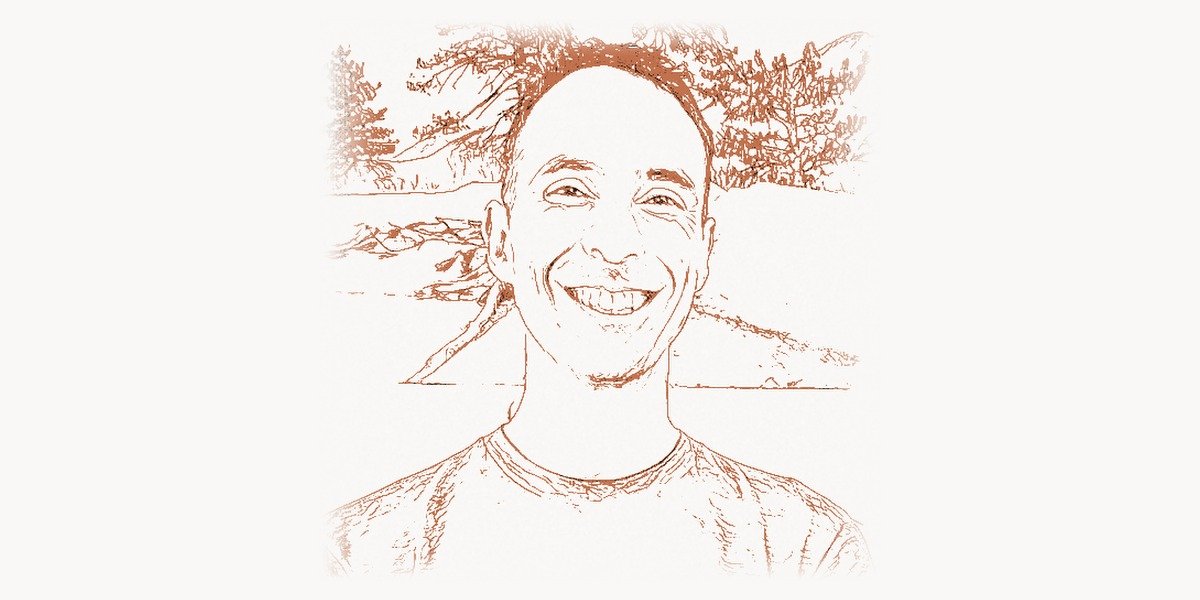
In 2014, a single research paper shattered the performance ceiling of object detection benchmarks and redefined how machines perceive visual scenes. Ross Girshick, then a postdoctoral researcher at UC Berkeley, introduced R-CNN — Regions with Convolutional Neural Networks — and in doing so launched a lineage of algorithms that would become the backbone of modern computer vision. Before R-CNN, object detection systems relied on hand-engineered features that plateaued in accuracy. After it, deep learning dominated the field entirely. Girshick did not merely improve a metric; he rewrote the playbook for how researchers approach visual recognition problems.
Early Life and Education
Ross Girshick grew up with a fascination for both mathematics and the natural sciences. He pursued his undergraduate studies at the University of Chicago, where he built a strong foundation in mathematical reasoning and analytical problem-solving. The rigorous academic environment shaped his approach to research — always grounded in principled formulation before experimentation.
For his doctoral work, Girshick joined the University of Chicago, earning his PhD under the mentorship of Pedro Felzenszwalb, a leading figure in object recognition. His dissertation focused on deformable parts models (DPM), which at the time represented the state of the art in object detection. DPM used handcrafted features — specifically histograms of oriented gradients (HOG) — combined with discriminatively trained latent variable models. Working on DPM gave Girshick deep insight into the limitations of traditional feature engineering and planted the seeds for his later pivot to deep learning approaches.
During his PhD years, Girshick became intimately familiar with the evaluation protocols and datasets that drove the field, particularly the PASCAL VOC benchmark. This hands-on experience with the entire detection pipeline — from feature extraction to bounding box regression — proved invaluable when he later reimagined the architecture from the ground up using convolutional neural networks.
The R-CNN Breakthrough
Technical Innovation
R-CNN, introduced in the 2014 paper “Rich feature hierarchies for accurate object detection and semantic segmentation,” proposed a deceptively simple pipeline. First, generate roughly 2,000 region proposals using selective search. Then, warp each region to a fixed size and pass it through a convolutional neural network (specifically AlexNet, the architecture created by Alex Krizhevsky) to extract a feature vector. Finally, classify each region using a set of class-specific linear SVMs and refine the bounding box coordinates with a regression model.
The core conceptual leap was recognizing that CNN features, pre-trained on ImageNet classification, could be fine-tuned and repurposed for detection — a form of transfer learning that was not yet standard practice. On the PASCAL VOC 2012 dataset, R-CNN achieved a mean average precision (mAP) of 53.3%, a dramatic jump from the 33.4% achieved by the previous best DPM-based system. This was not an incremental improvement; it was a paradigm shift.
Below is a simplified representation of the R-CNN pipeline concept in pseudocode:
import torch
import torchvision
from torchvision.models import alexnet

# Step 1: Generate region proposals via selective search
def generate_proposals(image, max_proposals=2000):
    """Use selective search to extract candidate regions."""
    selective_search = cv2.ximgproc.segmentation.createSelectiveSearchSegmentation()
    selective_search.setBaseImage(image)
    selective_search.switchToSelectiveSearchFast()
    rects = selective_search.process()
    return rects[:max_proposals]

# Step 2: Extract CNN features for each warped region
class RCNNFeatureExtractor:
    def __init__(self, num_classes=20):
        self.backbone = alexnet(pretrained=True)
        # Remove classification head, keep feature layers
        self.backbone.classifier = torch.nn.Sequential(
            *list(self.backbone.classifier.children())[:-1]
        )
        self.svm_classifiers = [
            train_svm(cls) for cls in range(num_classes)
        ]

    def extract_features(self, warped_region):
        """Forward pass through CNN to get 4096-d feature vector."""
        with torch.no_grad():
            features = self.backbone(warped_region)
        return features

    def classify_region(self, features):
        """Score region with per-class SVMs."""
        scores = [svm.predict(features) for svm in self.svm_classifiers]
        return scores

# Step 3: Apply bounding box regression for refinement
def refine_bbox(proposal_bbox, regression_model, features):
    """Adjust proposal coordinates using learned offsets."""
    offsets = regression_model.predict(features)
    refined = apply_offsets(proposal_bbox, offsets)
    return refined
Why It Mattered
R-CNN mattered for reasons far beyond its benchmark numbers. It established a template — propose, extract, classify — that every major detection system would follow for years. It validated the hypothesis that features learned by deep networks on one task (ImageNet classification, as pioneered by Fei-Fei Li) could transfer effectively to another task (detection). And it signaled to the broader computer vision community, influenced by the deep learning revolution led by Geoffrey Hinton, that hand-engineered features were no longer competitive.
The practical implications rippled through industry immediately. Autonomous vehicles, surveillance systems, medical imaging tools, and robotics platforms all began adopting CNN-based detection. The R-CNN paper became one of the most cited works in all of computer science, accumulating tens of thousands of citations and inspiring an entire generation of researchers to focus on deep detection architectures.
Other Major Contributions
Girshick did not stop at R-CNN. He systematically addressed its limitations in a series of follow-up works that each represented a significant architectural advance.
SPPNet collaboration and Fast R-CNN (2015): The original R-CNN was painfully slow — processing each of 2,000 proposals independently through the CNN. Fast R-CNN eliminated this redundancy by computing a single convolutional feature map for the entire image and then pooling features for each region of interest (RoI pooling). It also replaced the separate SVM classifiers and bounding box regressors with a single multi-task loss, enabling end-to-end training. Fast R-CNN was roughly 9 times faster at training and 213 times faster at inference than R-CNN.
Faster R-CNN (2015): Co-authored with Shaoqing Ren, Kaiming He, and Jian Sun at Microsoft Research, Faster R-CNN replaced the external selective search with a Region Proposal Network (RPN) — a small neural network that shares convolutional features with the detection network and proposes regions in near real-time. This made the entire pipeline end-to-end trainable and brought detection speed close to real-time (5 fps on a GPU). Faster R-CNN became the de facto standard for object detection for several years and is still widely used as a baseline.
Mask R-CNN (2017): Extending Faster R-CNN by adding a parallel branch for predicting segmentation masks, Mask R-CNN unified object detection and instance segmentation in a single framework. It introduced RoIAlign, which replaced the coarse quantization of RoI pooling with bilinear interpolation, significantly improving mask accuracy. Mask R-CNN won the Best Paper Award at ICCV 2017 and became the standard approach for instance segmentation.
Feature Pyramid Networks (FPN): Girshick co-authored FPN with Tsung-Yi Lin and others, creating a multi-scale feature extraction architecture that builds a top-down pathway with lateral connections, allowing the network to detect objects at multiple scales efficiently. FPN became a standard component in virtually all modern detection architectures.
Detectron and Detectron2: At Facebook AI Research (FAIR, now Meta AI), Girshick led the development of Detectron, an open-source object detection platform built on Caffe2, followed by Detectron2 built on PyTorch. These platforms democratized access to state-of-the-art detection models and became the standard research toolkit for the community.
Here is an example showing how straightforward it is to use Detectron2 for inference:
from detectron2.engine import DefaultPredictor
from detectron2.config import get_cfg
from detectron2 import model_zoo
import cv2

# Load configuration for Mask R-CNN with ResNet-50 + FPN backbone
cfg = get_cfg()
cfg.merge_from_file(
    model_zoo.get_config_file(
        "COCO-InstanceSegmentation/mask_rcnn_R_50_FPN_3x.yaml"
    )
)
cfg.MODEL.WEIGHTS = model_zoo.get_checkpoint_url(
    "COCO-InstanceSegmentation/mask_rcnn_R_50_FPN_3x.yaml"
)
cfg.MODEL.ROI_HEADS.SCORE_THRESH_TEST = 0.5

# Create predictor and run inference
predictor = DefaultPredictor(cfg)
image = cv2.imread("input.jpg")
outputs = predictor(image)

# Access detection results
instances = outputs["instances"]
print(f"Detected {len(instances)} objects")
print(f"Classes: {instances.pred_classes}")
print(f"Confidence scores: {instances.scores}")
print(f"Bounding boxes: {instances.pred_boxes}")
# Mask R-CNN also provides per-instance segmentation masks
print(f"Masks shape: {instances.pred_masks.shape}")
Philosophy and Approach
Girshick represents a particular archetype in machine learning research — the principled engineer who values clean abstractions, reproducible results, and practical impact over theoretical novelty alone. His work has consistently aimed to simplify complex pipelines rather than add complexity, a philosophy visible in the progression from R-CNN through Faster R-CNN.
His approach reflects a broader tradition in systems-oriented AI research. Much like Jeff Dean at Google, who prioritized engineering elegance and scalability, Girshick has always emphasized making research results accessible through clean implementations and open-source code.
Key Principles
- Simplify the pipeline: Each iteration of R-CNN removed complexity. R-CNN had three separate stages; Fast R-CNN unified them; Faster R-CNN eliminated external proposals entirely. The best architecture is the one with fewer moving parts.
- End-to-end learning over hand-engineering: Girshick consistently pushed to replace manually designed components with learned ones. Selective search gave way to RPNs. SVM classifiers gave way to softmax layers. Manual feature design gave way to transfer learning from deep networks.
- Benchmark rigorously, release openly: Every major paper from Girshick included comprehensive ablation studies and was accompanied by public code releases. This commitment to reproducibility, similar to the ethos championed by the Andrew Ng school of open education in AI, accelerated the entire field.
- Transfer learning as a first principle: Before it was fashionable, Girshick demonstrated that features trained on ImageNet could transfer to detection. This insight — that deep networks learn generalizable representations — became a foundational idea in modern AI.
- Build infrastructure, not just papers: Detectron and Detectron2 were not afterthoughts. Girshick invested significant effort in building production-quality research platforms that other scientists could build upon, recognizing that infrastructure compounds in value over time.
Legacy and Impact
Ross Girshick’s contributions have reshaped computer vision in ways that extend far beyond academic citations. The R-CNN family of algorithms — R-CNN, Fast R-CNN, Faster R-CNN, and Mask R-CNN — collectively form one of the most influential lineages in deep learning history. They transformed object detection from a niche subfield into a core capability deployed in billions of devices worldwide.
The practical applications are vast. Tesla and Waymo use detection architectures descended from R-CNN principles to navigate autonomous vehicles. Medical imaging systems at hospitals use instance segmentation derived from Mask R-CNN to identify tumors and anomalies. Retail platforms use detection models for visual search and inventory management. Social media platforms, including Meta where Girshick now works, use these systems for content understanding, accessibility features, and augmented reality. If you manage AI-powered web development projects, understanding the detection pipeline Girshick created is essential context.
His impact on the research community is equally profound. The propose-and-classify paradigm he established influenced virtually every detection paper published between 2014 and 2020. Even modern anchor-free and transformer-based detectors like DETR define themselves in relation to the Faster R-CNN baseline. His work on Mask R-CNN bridged detection and segmentation, enabling new research directions in panoptic segmentation, video instance segmentation, and 3D scene understanding.
At Meta AI, Girshick has continued pushing boundaries, contributing to research on self-supervised visual learning, vision transformers, and large-scale visual foundation models. His role as a senior research scientist positions him at the intersection of fundamental research and platform-scale deployment — a rare combination that amplifies his impact on both theory and practice. Teams using modern project management tools to coordinate AI research pipelines often rely on the open-source frameworks he helped create.
Girshick’s influence extends through mentorship as well. Many researchers who collaborated with him at Berkeley, Microsoft Research, and FAIR have gone on to lead their own labs and companies, propagating his engineering-first approach to deep learning research. The lineage of talent that traces back to the R-CNN project constitutes a significant fraction of today’s computer vision leadership.
Key Facts
- Full name: Ross Girshick
- PhD from the University of Chicago under Pedro Felzenszwalb
- Introduced R-CNN in 2014, achieving a 53.3% mAP on PASCAL VOC (vs. 33.4% prior best)
- Created Fast R-CNN (2015) — 213x faster inference than R-CNN
- Co-authored Faster R-CNN (2015) with the Region Proposal Network
- Co-authored Mask R-CNN (2017) — ICCV 2017 Best Paper Award
- Led development of Detectron and Detectron2 at FAIR
- Co-authored Feature Pyramid Networks (FPN), a standard in multi-scale detection
- Current position: Research Scientist at Meta AI (formerly Facebook AI Research)
- His papers have collectively accumulated over 100,000 citations
- R-CNN family influenced autonomous driving, medical imaging, robotics, and AR/VR
- Previously held positions at UC Berkeley and Microsoft Research
FAQ
What is the difference between R-CNN, Fast R-CNN, and Faster R-CNN?
R-CNN (2014) processes each region proposal independently through a CNN, making it slow. Fast R-CNN (2015) computes a single feature map for the whole image and uses RoI pooling to extract features per region, dramatically improving speed. Faster R-CNN (2015) replaces the external selective search with a learned Region Proposal Network (RPN), making the entire pipeline end-to-end trainable and near real-time. Each version simplified and accelerated the previous one while maintaining or improving accuracy. Mask R-CNN (2017) further extended the architecture by adding instance segmentation capabilities, building on the pioneering work in deep residual learning by Kaiming He and others.
Why was R-CNN so influential compared to earlier object detection methods?
Before R-CNN, the dominant approach used handcrafted features like HOG descriptors combined with deformable parts models. These methods had plateaued in accuracy. R-CNN demonstrated that CNN features — originally trained for image classification on ImageNet by researchers like Alex Krizhevsky — could transfer to detection, improving mAP by nearly 20 absolute percentage points. This validated transfer learning for detection and established the propose-then-classify paradigm that dominated the field for years. It was a proof point that deep learning could surpass decades of hand-engineering in visual recognition.
What is Detectron2 and why does it matter for the AI research community?
Detectron2 is an open-source object detection and segmentation platform developed by Meta AI, led by Girshick. Built on PyTorch, it provides modular, high-performance implementations of Faster R-CNN, Mask R-CNN, FPN, and numerous other architectures. It matters because it democratized access to state-of-the-art detection models — researchers anywhere in the world can reproduce top results, run ablation studies, and build new architectures on a well-tested codebase. Detectron2 has become the standard research toolkit in the detection and segmentation community, much like how TensorFlow and PyTorch standardized deep learning frameworks more broadly.
How does Ross Girshick’s work connect to modern vision transformers and foundation models?
While the R-CNN family used convolutional architectures, the principles Girshick established — transfer learning, end-to-end training, multi-scale features, and open-source infrastructure — directly inform modern vision transformer systems. Architectures like DETR (Detection Transformer) explicitly build on the Faster R-CNN evaluation framework and benchmarks. At Meta AI, Girshick has contributed to research bridging CNNs and transformers, including work on self-supervised learning methods and visual foundation models that scale the transfer learning paradigm he championed to even larger datasets and architectures. The progression from the attention mechanisms described by Ashish Vaswani in NLP to visual transformers owes much to the detection infrastructure Girshick built.