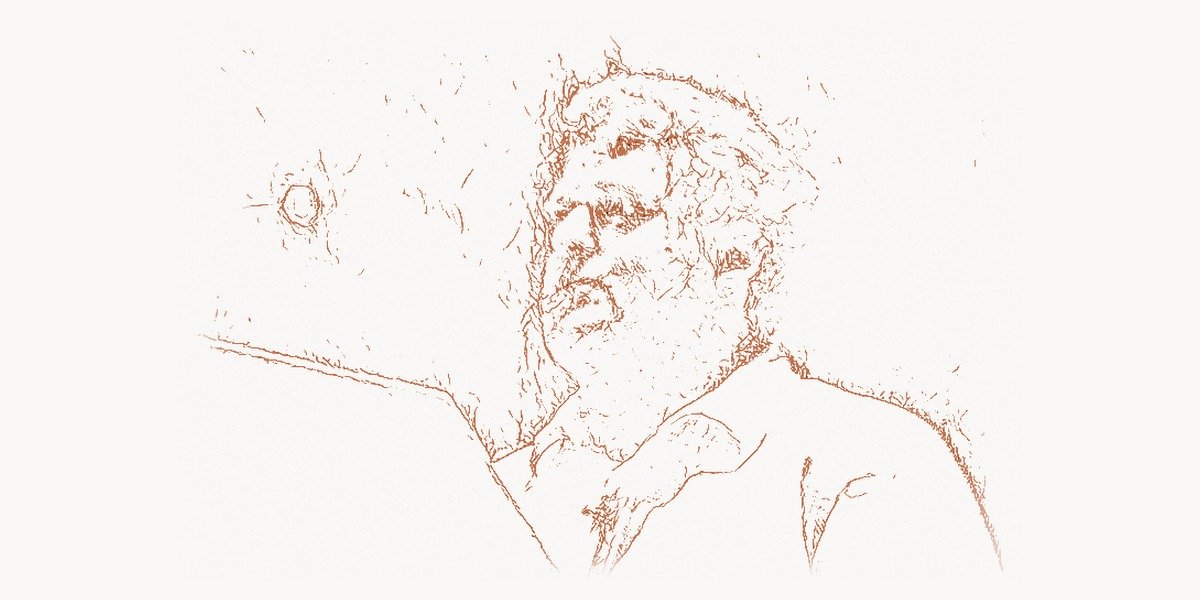
In the year 2000, a doctoral dissertation from the University of California, Irvine, introduced six architectural constraints for building networked applications. The dissertation was titled “Architectural Styles and the Design of Network-Based Software Architectures,” and its author was Roy Thomas Fielding — a man who had already spent seven years shaping the protocols of the World Wide Web. Chapter 5 of that dissertation described an architectural style Fielding called REST: Representational State Transfer. Within a decade, REST would become the dominant paradigm for building web APIs, fundamentally changing how software systems communicate. Today, virtually every major web service — from Google Maps to Twitter, from Stripe to GitHub — exposes a REST API. Mobile applications, single-page applications, microservices architectures, and IoT platforms all rely on RESTful communication. But REST was not Fielding’s only contribution: he co-authored the HTTP/1.0 and HTTP/1.1 specifications that govern how browsers talk to servers, and he co-founded the Apache HTTP Server project, which at its peak served over 70% of all websites on the internet. Roy Fielding did not just describe how the web should work — he built the infrastructure that made it work.
Early Life and Education
Roy Thomas Fielding was born on September 1, 1965, in Laguna Beach, California. Growing up in the southern California coastal community, Fielding developed an early interest in technology and computing during an era when personal computers were just beginning to enter households. He attended the University of California, Irvine (UCI), where he earned his Bachelor of Science degree in Information and Computer Science in 1988.
After completing his undergraduate studies, Fielding continued at UCI for graduate work. During the early 1990s, while the World Wide Web was still in its infancy — Tim Berners-Lee had only just proposed the web in 1989 — Fielding became deeply involved in the emerging web standards community. He joined the Internet Engineering Task Force (IETF) working groups that were developing the foundational protocols of the web. This was a pivotal moment: the web was growing explosively, but its core protocols were still being defined and refined. Fielding found himself at the center of this effort.
Fielding earned his Master of Science in Information and Computer Science from UCI in 1993. He then continued toward his doctorate, which he would complete in 2000 under the supervision of Professor Richard N. Taylor. His doctoral dissertation would become one of the most influential documents in the history of web architecture — but by the time he finished it, Fielding had already spent nearly a decade building the web’s technical foundations in practice.
The REST Breakthrough
Technical Innovation
REST — Representational State Transfer — is an architectural style for designing networked applications. Fielding formalized it in Chapter 5 of his 2000 doctoral dissertation, but the ideas behind REST were not invented in a vacuum. They were distilled from Fielding’s years of hands-on work designing the HTTP protocol and analyzing why the web’s architecture worked so well while other distributed systems struggled.
At its core, REST defines six architectural constraints that, when followed, produce systems with desirable properties like scalability, simplicity, modifiability, and reliability. These constraints are:
- Client-Server: Separation of concerns between the user interface (client) and data storage (server), allowing each to evolve independently.
- Stateless: Each request from client to server must contain all the information needed to understand the request. The server does not store session state between requests.
- Cacheable: Responses must define themselves as cacheable or non-cacheable, allowing clients and intermediaries to reuse responses and reduce load.
- Uniform Interface: A standardized way of communicating between components, using resource identification (URIs), resource manipulation through representations (JSON, XML, HTML), self-descriptive messages, and hypermedia as the engine of application state (HATEOAS).
- Layered System: The architecture can be composed of hierarchical layers, with each component unable to see beyond the immediate layer it interacts with. This enables load balancers, proxies, and security layers.
- Code on Demand (optional): Servers can temporarily extend client functionality by transferring executable code, such as JavaScript applets.
What made REST revolutionary was not any single constraint, but the combination. Fielding demonstrated that the web itself — with its URLs, HTTP verbs, HTML pages, and hyperlinks — was already a RESTful system. The web’s success was not accidental; it was the result of an architecture that naturally scaled, that allowed independent evolution of clients and servers, and that supported intermediaries like caches and proxies without breaking the system. Fielding’s genius was in identifying and formalizing these properties so they could be deliberately applied to new systems.
A RESTful API treats everything as a resource, identified by a URI, and manipulated through a small, uniform set of HTTP methods:
# REST API principles demonstrated with curl
# Resources are identified by URIs, manipulated via HTTP methods

# GET — Retrieve a resource (safe, idempotent, cacheable)
curl -X GET https://api.example.com/users/42 \
  -H "Accept: application/json"
# Returns: {"id": 42, "name": "Roy Fielding", "role": "architect"}

# POST — Create a new resource (not idempotent)
curl -X POST https://api.example.com/users \
  -H "Content-Type: application/json" \
  -d '{"name": "New User", "role": "developer"}'
# Returns: 201 Created with Location: /users/43

# PUT — Replace a resource entirely (idempotent)
curl -X PUT https://api.example.com/users/42 \
  -H "Content-Type: application/json" \
  -d '{"name": "Roy T. Fielding", "role": "chief architect"}'
# Returns: 200 OK

# DELETE — Remove a resource (idempotent)
curl -X DELETE https://api.example.com/users/42
# Returns: 204 No Content

# HATEOAS — Hypermedia as the Engine of Application State
# A truly RESTful response includes links to related resources:
# GET /users/42 returns:
# {
#   "id": 42,
#   "name": "Roy Fielding",
#   "_links": {
#     "self": {"href": "/users/42"},
#     "projects": {"href": "/users/42/projects"},
#     "company": {"href": "/companies/7"}
#   }
# }
Why It Mattered
Before REST became the standard, web services were dominated by complex protocols like SOAP (Simple Object Access Protocol), which relied on heavyweight XML envelopes, WSDL service descriptions, and rigid contract-first design. SOAP services required specialized tooling, thick client libraries, and intricate configuration. Building integrations between systems was an expensive, time-consuming process that typically required dedicated middleware teams.
REST changed the equation dramatically. Because RESTful APIs use standard HTTP — the same protocol that browsers use to fetch web pages — developers could test and debug APIs using nothing more than a browser or a command-line tool like curl. The barrier to entry dropped from weeks of middleware configuration to minutes of reading API documentation. This simplicity catalyzed the API economy: companies like Amazon, Google, Twitter, and Stripe built their platforms around REST APIs, enabling third-party developers to build on top of their services. The modern web ecosystem — where a single page application might call a dozen different APIs from different providers — is a direct consequence of REST’s simplicity and ubiquity.
The rise of modern JavaScript frameworks like React, Vue, and Svelte is deeply intertwined with REST. Single-page applications fetch data from RESTful backends, render it on the client, and update resources through the same API. The entire paradigm of frontend-backend separation that dominates modern web development exists because REST provided a clean, standardized interface between the two. Mobile applications follow the same pattern: native iOS and Android apps consume the same REST APIs that power their web counterparts.
Fielding’s work also influenced the evolution of API design beyond REST itself. GraphQL, created at Facebook in 2012, was explicitly designed to address limitations of REST for complex mobile interfaces — but it still operates over HTTP, still uses URIs, and still follows many RESTful principles. gRPC, Google’s high-performance RPC framework, similarly builds on HTTP/2. Even the systems that claim to go “beyond REST” are built on the foundations Fielding helped establish. For teams looking to streamline their API development workflows, modern project management and task tracking tools have become essential for coordinating complex backend and frontend efforts.
Other Major Contributions
REST was the crowning theoretical achievement of Fielding’s career, but his practical contributions were equally transformative. In 1995, Fielding co-founded the Apache HTTP Server project, which grew out of the NCSA HTTPd web server — one of the earliest web servers. The name “Apache” is commonly said to derive from “a patchy server,” referring to the collection of patches applied to the NCSA codebase, though the Apache Foundation notes the name also honors the Apache Nation of Native Americans.
The Apache HTTP Server (commonly called Apache or httpd) quickly became the most popular web server in the world. By 1996, it had overtaken NCSA HTTPd, and by the early 2000s, Apache served more than 60% of all websites globally. It was the “A” in the LAMP stack (Linux, Apache, MySQL, PHP/Perl/Python) that powered the first generation of dynamic web applications. WordPress, Wikipedia, and countless other sites ran on Apache. Even today, despite competition from Nginx and cloud-native solutions, Apache remains one of the most widely deployed web servers, powering approximately 30% of active websites as of 2024.
The Apache project’s significance extended beyond the software itself. It pioneered the open-source development model that would become standard in the software industry. The Apache Software Foundation (ASF), established in 1999, created a governance framework for collaborative open-source development that influenced hundreds of subsequent projects. The Apache License became one of the most widely used permissive open-source licenses, adopted by projects ranging from Android to Kubernetes. Linus Torvalds’ work on Linux and Git followed a similar philosophy of community-driven open-source development that Apache helped popularize.
Fielding’s other monumental contribution was his work on the HTTP specification itself. He was a principal author of RFC 1945 (HTTP/1.0, published in 1996) and RFC 2616 (HTTP/1.1, published in 1999). HTTP/1.1 introduced critical features including persistent connections (which eliminated the overhead of establishing a new TCP connection for every request), chunked transfer encoding (which allowed servers to begin sending responses before knowing the total content length), and the Host header (which enabled virtual hosting — multiple websites sharing a single IP address). These features were essential for the web’s scalability. Without persistent connections, every image, CSS file, and JavaScript file on a page would require a separate TCP handshake. Without the Host header, every website would need its own dedicated IP address — a resource that was already scarce.
Later, Fielding contributed to the revision of HTTP/1.1 that resulted in RFCs 7230-7235 (published in 2014), which clarified and corrected the original specification. His deep understanding of how HTTP worked in practice — gained from building Apache and designing REST — made him uniquely qualified to refine the protocol. The web that Vint Cerf’s TCP/IP carried across networks spoke the language that Fielding helped define.
Philosophy and Approach
Key Principles
Fielding’s approach to software architecture is characterized by a deep commitment to principled design over ad hoc solutions. Where many engineers build systems by accretion — adding features until the system does what they need — Fielding works from architectural constraints. His methodology in the REST dissertation was to start with a “null style” (no constraints) and then add constraints one by one, analyzing the properties each constraint induced. This analytical rigor produced an architecture that was not just functional but provably scalable, evolvable, and resilient.
A central tenet of Fielding’s philosophy is that the architecture of the web is its most important feature, not any specific technology built on top of it. Individual websites, applications, and services come and go, but the architectural properties — statelessness, cacheability, uniform interfaces, layered systems — are what allow the web to continue growing and evolving after more than three decades. This is why Fielding has been vocal in criticizing APIs that call themselves “RESTful” while violating REST’s core constraints. In a 2008 blog post, he wrote that most so-called REST APIs are not actually RESTful because they ignore HATEOAS — the principle that API responses should contain hyperlinks guiding the client to available actions, just as web pages contain links guiding human users.
Fielding also embodies the principle of practical standardization. Rather than designing protocols in isolation and then imposing them on the community, he participated in the IETF process where standards emerge from running code and rough consensus. His work on HTTP was informed by years of experience building and maintaining Apache, and his REST dissertation was a formalization of principles he had observed working in the real web. This feedback loop between theory and practice — building systems, observing their properties, formalizing those properties into architectural constraints, and then using those constraints to guide future systems — is a hallmark of Fielding’s engineering approach.
Collaboration and open standards are fundamental to how Fielding works. The HTTP specifications he co-authored were the product of extensive working group discussions within the IETF. The Apache project was a collaborative effort from its inception. Fielding has consistently advocated for open, interoperable standards over proprietary protocols — a stance that has shaped the web’s character as an open platform. Modern developers building applications with tools like VS Code or other modern editors benefit daily from the open standards ecosystem that Fielding helped create.
For development teams working on complex web applications, Toimi offers strategic digital solutions that leverage the RESTful principles Fielding established — helping businesses build scalable, well-architected web platforms. Similarly, engineering teams coordinating API development and deployment across distributed teams find that Taskee streamlines project workflows with its intuitive task management approach.
Legacy and Impact
Roy Fielding’s impact on the technology industry is difficult to overstate. REST has become the lingua franca of web services. A 2023 survey by Postman found that 86% of developers use REST APIs, making it the most widely adopted API architecture by a wide margin. The API economy — estimated at over $5 trillion in market value — runs primarily on RESTful interfaces. Every time a mobile app loads your social media feed, a payment processor handles a transaction, or a cloud service provisions a virtual machine, REST is almost certainly involved.
The Apache HTTP Server that Fielding co-founded served as the backbone of the early web and remains a critical piece of internet infrastructure. The Apache Software Foundation has grown into one of the most important organizations in open-source software, overseeing projects like Hadoop, Kafka, Spark, and Cassandra that power modern data infrastructure. The collaborative development model Apache pioneered is now the norm, not the exception.
HTTP — the protocol Fielding co-authored — is the most widely used application protocol in the world. It carries the vast majority of internet traffic. Its evolution from HTTP/1.0 through HTTP/1.1 to HTTP/2 and HTTP/3 has been guided by the architectural principles Fielding established. The semantic foundation he helped define — methods, status codes, headers, content negotiation — remains unchanged even as the transport mechanisms evolve.
Fielding’s influence extends to how we think about software architecture itself. The concept of architectural styles — defined sets of constraints that produce predictable system properties — has become a standard tool in software engineering education and practice. Brendan Eich’s JavaScript and the browser APIs built around it communicate with servers through the HTTP protocol and REST conventions that Fielding defined. The entire modern web development stack, from the Unix foundations built by Ritchie and Thompson through TCP/IP networking to HTTP and REST at the application layer, includes Fielding’s work as a critical component.
Fielding has received numerous honors for his contributions. He received the ACM Software System Award in 1999 for his work on Apache. He was named one of the top 100 people on the internet by several publications. He served on the board of the Apache Software Foundation and has been a frequent speaker at technology conferences worldwide. He has worked at several companies including Adobe Systems, where he served as a Senior Principal Scientist, contributing to the architecture of cloud-based creative tools.
A REST API in Practice
To understand how deeply REST has permeated modern development, consider this JavaScript example of a typical frontend application communicating with a RESTful backend — a pattern used by millions of applications worldwide:
// Modern REST API consumption — the pattern Roy Fielding made possible
// This is how virtually every web and mobile application works today

// Fetching a resource — GET request
async function getUser(userId) {
  const response = await fetch(`https://api.example.com/users/${userId}`, {
    method: 'GET',
    headers: {
      'Accept': 'application/json',
      'Authorization': 'Bearer eyJhbGciOi...'
    }
  });

  if (!response.ok) {
    throw new Error(`HTTP ${response.status}: ${response.statusText}`);
  }

  const user = await response.json();

  // HATEOAS: The response includes links to related resources
  // The client discovers available actions from the response itself
  // {
  //   "id": 42,
  //   "name": "Roy Fielding",
  //   "email": "fielding@example.com",
  //   "_links": {
  //     "self": { "href": "/users/42" },
  //     "edit": { "href": "/users/42", "method": "PUT" },
  //     "projects": { "href": "/users/42/projects" },
  //     "avatar": { "href": "/users/42/avatar" }
  //   }
  // }
  return user;
}

// Creating a resource — POST request
async function createProject(projectData) {
  const response = await fetch('https://api.example.com/projects', {
    method: 'POST',
    headers: {
      'Content-Type': 'application/json',
      'Authorization': 'Bearer eyJhbGciOi...'
    },
    body: JSON.stringify({
      name: projectData.name,
      description: projectData.description,
      teamId: projectData.teamId
    })
  });

  // REST convention: 201 Created with Location header
  // pointing to the newly created resource
  if (response.status === 201) {
    const location = response.headers.get('Location');
    console.log(`New resource created at: ${location}`);
  }

  return response.json();
}

// REST's uniform interface means any developer who knows HTTP
// can immediately understand and use any REST API.
// This universality is Fielding's greatest practical legacy.
Key Facts
- Born: September 1, 1965, Laguna Beach, California, USA
- Known for: Creating REST architectural style, co-authoring HTTP/1.0 and HTTP/1.1, co-founding Apache HTTP Server
- Education: B.S. in Information and Computer Science (1988), M.S. (1993), and Ph.D. (2000) from UC Irvine
- Key works: REST dissertation (2000), RFC 1945 (HTTP/1.0), RFC 2616 (HTTP/1.1), RFCs 7230-7235 (HTTP/1.1 revision), Apache httpd
- Awards: ACM Software System Award (1999) for Apache, named among top internet influencers
- Career: UC Irvine, Apache Software Foundation (co-founder), Day Software, Adobe Systems (Senior Principal Scientist)
- Impact: REST is used by 86% of developers; Apache served 70%+ of websites at peak; HTTP carries the majority of internet traffic
- PhD advisor: Richard N. Taylor, UC Irvine
Frequently Asked Questions
What is REST and why did Roy Fielding create it?
REST (Representational State Transfer) is an architectural style for designing networked applications, defined by Roy Fielding in his 2000 doctoral dissertation at UC Irvine. Fielding created REST by formalizing the architectural principles that made the World Wide Web successful. Rather than inventing something new, he identified why the web worked — its statelessness, cacheability, uniform interface (URLs and HTTP methods), and layered architecture — and codified these properties into a set of constraints that could be deliberately applied to any distributed system. REST became the dominant paradigm for building web APIs because it leverages existing HTTP infrastructure, is simple to understand and implement, and produces systems that naturally scale. Today, the vast majority of web services, mobile app backends, and microservices architectures follow REST principles.
How did Roy Fielding contribute to HTTP and the Apache web server?
Fielding was a principal author of both the HTTP/1.0 specification (RFC 1945, 1996) and the HTTP/1.1 specification (RFC 2616, 1999), making him one of the key architects of the protocol that powers the entire World Wide Web. HTTP/1.1 introduced persistent connections, chunked transfer encoding, and virtual hosting — features critical to the web’s scalability. Separately, Fielding co-founded the Apache HTTP Server project in 1995, which grew from patches to the NCSA HTTPd server into the world’s most popular web server. Apache served over 70% of all websites at its peak and was the “A” in the LAMP stack that powered the first generation of dynamic web applications. The Apache Software Foundation, which grew out of this project, now oversees hundreds of open-source projects and set the standard for collaborative open-source governance.
Why is Roy Fielding considered one of the most important figures in web development history?
Fielding occupies a unique position in web history because he contributed at multiple critical layers of the stack. At the protocol level, he co-authored HTTP — the language every browser speaks to every server. At the infrastructure level, he co-founded Apache — the server that hosted the majority of websites for over a decade. At the architectural level, he defined REST — the style that governs how modern applications communicate. Few individuals have shaped the web so broadly. Every developer who writes a fetch request, designs an API endpoint, or deploys a web server is working with systems Fielding helped create. His insistence on principled architectural design — rather than ad hoc problem-solving — gave the web a foundation robust enough to grow from a few thousand academic pages in the early 1990s to billions of interconnected applications serving half the world’s population today.