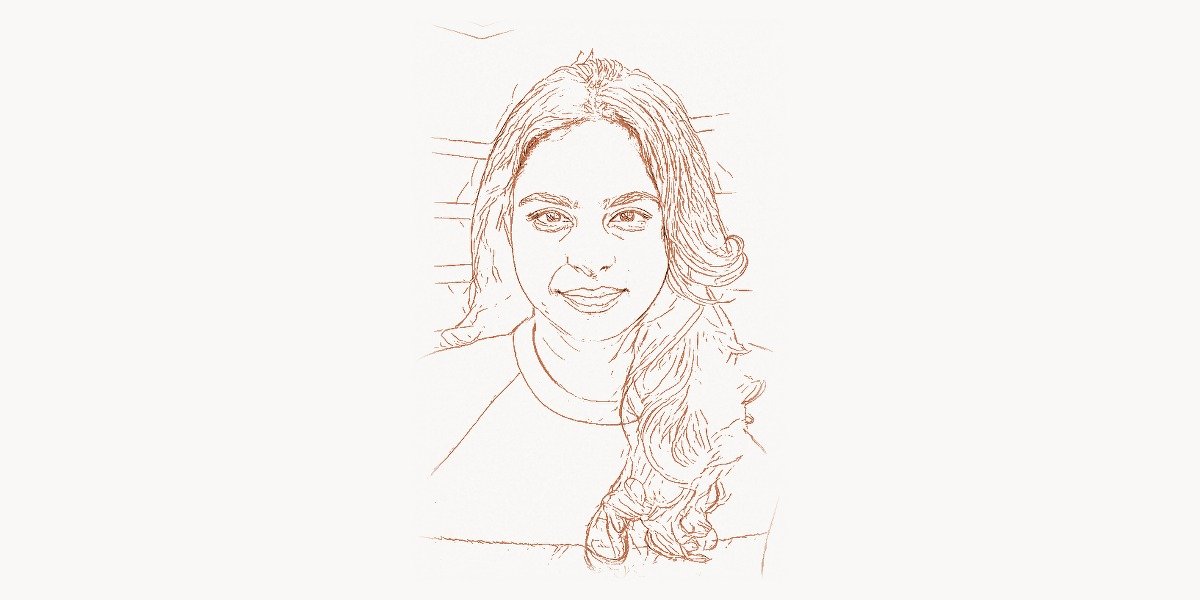
In September 2006, millions of Facebook users woke up to find something radically different about the platform they had come to know. Instead of manually navigating to individual profiles to check what friends were up to, a continuous stream of updates now greeted them on their homepage. The outrage was immediate and deafening — a petition to remove the feature gathered over 700,000 signatures within days. Protest groups formed on the very platform being protested. And yet, the person who built this feature, a 24-year-old engineer named Ruchi Sanghvi, stood firm alongside her team. Within weeks, engagement metrics told a story that contradicted the vocal backlash: people were spending more time on Facebook than ever before. That feature was the News Feed, and it fundamentally rewrote the rules of how information flows on the internet. Today, every major social platform — from Twitter to TikTok to LinkedIn — operates on a feed-based model that traces its conceptual lineage directly to what Sanghvi and her team shipped that September morning.
Early Life and the Road to Silicon Valley
Ruchi Sanghvi was born in 1982 in Pune, India, a city with deep roots in education and technology. Growing up in an entrepreneurial family — her father ran a manufacturing business — she developed an early appreciation for both engineering discipline and business thinking. She attended Pune’s Bishop Cotton Girls’ School before making the bold decision to pursue her education in the United States, enrolling at Carnegie Mellon University in Pittsburgh.
At Carnegie Mellon, Sanghvi studied electrical and computer engineering, immersing herself in the rigorous curriculum that the university is renowned for. The program blended hardware fundamentals with software design, giving her a systems-level understanding of computing that would prove invaluable in her later work on large-scale distributed platforms. She graduated in 2004 and, unlike many of her peers who headed to established tech giants, she chose a different path entirely.
In early 2005, Facebook was still a scrappy startup operating out of a house in Palo Alto. The platform had roughly one million users, most of them college students. Mark Zuckerberg was actively recruiting engineers who could help scale the platform beyond its university roots. Sanghvi joined as the company’s first female engineer — employee number one in a technical role that would become the backbone of the world’s largest social network. She was 23 years old.
The Genesis of the News Feed
When Sanghvi joined Facebook, the platform operated on a profile-centric model. Users had to visit each friend’s profile individually to see updates, photos, or status changes. It was essentially a digital yearbook — static, manual, and increasingly impractical as users accumulated hundreds of connections. The core engagement problem was clear: as your friend list grew, the likelihood that you would visit any single friend’s profile decreased. Valuable social signals were being lost in the noise of an expanding network.
Sanghvi was assigned to lead the development of a feature internally codenamed “feed.” The concept was deceptively simple: aggregate activity from a user’s social graph into a single, continuously updating stream. But the technical and design challenges were enormous. How do you decide which updates appear first? How do you handle the computational load of generating personalized feeds for millions of users in real time? And how do you present this information without overwhelming users or violating their sense of privacy?
The engineering team, which Sanghvi led alongside Chris Cox and Andrew Bosworth, spent months building the infrastructure. The original News Feed was powered by a relatively straightforward ranking system that considered recency, the type of content (photos ranked higher than simple profile changes), and the strength of the relationship between the viewer and the content creator. This was the seed of what would eventually evolve into one of the most sophisticated recommendation algorithms in the world.
The Ranking Algorithm: From Simple Heuristics to EdgeRank
The earliest version of the News Feed ranking used a weighted scoring system. Each piece of content — called a “story” internally — received a score based on several factors. The initial implementation was elegant in its simplicity, relying on a small set of signals to produce surprisingly effective personalization. Here is a simplified representation of how the early feed ranking logic conceptually worked:
class FeedStoryRanker:
    """
    Simplified model of Facebook's early News Feed ranking system.
    Each story is scored based on affinity, content weight, and time decay.
    This evolved into what was publicly known as EdgeRank (circa 2010).
    """

    # Content type weights — photos and life events ranked highest
    CONTENT_WEIGHTS = {
        'photo_upload': 1.0,
        'relationship_change': 0.95,
        'life_event': 0.90,
        'status_update': 0.65,
        'wall_post': 0.60,
        'group_join': 0.30,
        'profile_update': 0.20,
        'app_activity': 0.10,
    }

    # Time decay constant — stories lose relevance over time
    HALF_LIFE_HOURS = 6.0

    def calculate_affinity(self, viewer_id, creator_id, interaction_log):
        """
        Compute relationship strength between viewer and content creator.
        Based on frequency and recency of interactions: messages, profile
        views, photo tags, wall posts, mutual friends.
        """
        score = 0.0
        weights = {
            'message_sent': 1.0,
            'photo_tagged_together': 0.8,
            'wall_post': 0.6,
            'profile_view': 0.3,
            'mutual_friend_interaction': 0.15,
        }

        for interaction in interaction_log:
            if interaction['type'] in weights:
                recency_factor = self._time_decay(interaction['timestamp'])
                score += weights[interaction['type']] * recency_factor

        return min(score, 1.0)  # Normalize to [0, 1]

    def score_story(self, story, viewer_id, interaction_log):
        """
        Final score = affinity * content_weight * time_decay
        This three-factor model was the foundation of feed ranking.
        """
        affinity = self.calculate_affinity(
            viewer_id, story['creator_id'], interaction_log
        )
        content_weight = self.CONTENT_WEIGHTS.get(story['type'], 0.1)
        time_decay = self._time_decay(story['created_at'])

        return affinity * content_weight * time_decay

    def _time_decay(self, timestamp):
        """Exponential decay: score halves every HALF_LIFE_HOURS."""
        import time
        age_hours = (time.time() - timestamp) / 3600.0
        return 0.5 ** (age_hours / self.HALF_LIFE_HOURS)
This three-factor model — affinity, content weight, and time decay — became the conceptual framework that Facebook later formalized as EdgeRank. Each interaction between users was treated as an “edge” in the social graph, and the rank of any story in your feed was a function of how strong that edge was, what kind of content was being shared, and how fresh it was. The mathematical elegance of this approach allowed the system to scale efficiently while still producing feeds that felt personally relevant.
September 5, 2006: The Day the Feed Went Live
The News Feed launched on September 5, 2006, to Facebook’s then nine million users. There was no opt-in, no gradual rollout, no A/B test with a small percentage of users. Every single Facebook user saw the new feed simultaneously. Sanghvi herself authored the blog post announcing the feature, opening with the now-famous line that described the feed as “a personalized newspaper” for each user.
The backlash was unlike anything the young company had experienced. Within 24 hours, protest groups on Facebook had amassed hundreds of thousands of members. Users felt that the News Feed was a violation of their privacy — not because it showed information that wasn’t already public, but because it aggregated and surfaced that information in ways that made it impossible to ignore. A breakup that previously would have been noticed only by someone who happened to visit your profile was now broadcast to your entire friend network.
Sanghvi and the team faced enormous pressure. There were internal debates about whether to pull the feature entirely. But the data told a compelling story: despite the vocal backlash, overall engagement was increasing significantly. Users who complained about the feed were also spending more time on the platform. Zuckerberg and Sanghvi decided to address the privacy concerns by adding granular controls — letting users choose what types of activities would appear in their feed — while keeping the core feature intact.
Within two weeks, the protests subsided. Within a month, users had largely forgotten what Facebook was like without the feed. The News Feed became the defining interface pattern of social media, and its success validated a principle that would guide Facebook for years: users don’t always know what they want, and behavioral data can be a more reliable signal than stated preferences.
Technical Architecture and the Social Graph
Building the News Feed required solving several fundamental engineering challenges that pushed the boundaries of web application architecture in 2006. The system needed to query a user’s social graph, identify all recent activity from their connections, score and rank those activities, and render a personalized page — all within a few hundred milliseconds. At a time when Facebook was growing by millions of users per month, this was a non-trivial distributed systems problem.
The social graph — the network of connections between users — was stored in a MySQL-based architecture that the engineering team continuously optimized. Generating a feed required traversing this graph efficiently, pulling activity from potentially thousands of connected users, and applying the ranking algorithm in near-real-time. The team implemented aggressive caching strategies and precomputation pipelines to ensure that feed generation didn’t become a bottleneck as the user base scaled.
One of the critical innovations was the concept of a “feed cache” — a precomputed, personalized list of ranked stories for each user that was updated asynchronously as new activity occurred. Rather than computing the feed from scratch on every page load, the system maintained a rolling cache that was incrementally updated. This approach dramatically reduced the computational cost per request and allowed the feed to scale to tens of millions of users. The following pseudocode illustrates how the feed aggregation pipeline handled incoming social graph events:
-- Feed aggregation pipeline: processing new social graph events
-- When a user performs an action, fan out to all connected feeds

-- Step 1: New activity arrives (e.g., user uploads a photo)
-- Insert into the activity log
INSERT INTO activity_stream (user_id, action_type, object_id, created_at)
VALUES (:actor_id, 'photo_upload', :photo_id, NOW());

-- Step 2: Fan-out query — find all users who should see this story
-- Retrieve the actor's friend list from the social graph
SELECT friend_id
FROM friendships
WHERE user_id = :actor_id
  AND status = 'confirmed';

-- Step 3: For each friend, compute story score and insert into feed cache
-- The feed cache is a priority queue per user, sorted by score
-- This runs asynchronously via a background job queue

-- Scoring query: compute affinity between viewer and actor
SELECT
    SUM(
        CASE interaction_type
            WHEN 'message'    THEN 1.0
            WHEN 'photo_tag'  THEN 0.8
            WHEN 'wall_post'  THEN 0.6
            WHEN 'profile_view' THEN 0.3
            ELSE 0.1
        END
        * EXP(-0.1155 * TIMESTAMPDIFF(HOUR, created_at, NOW()))
    ) AS affinity_score
FROM user_interactions
WHERE viewer_id = :friend_id
  AND target_id = :actor_id
  AND created_at > DATE_SUB(NOW(), INTERVAL 30 DAY);

-- Step 4: Insert scored story into the friend's feed cache
-- The cache maintains only the top N stories per user
INSERT INTO feed_cache (user_id, story_id, score, cached_at)
VALUES (:friend_id, :story_id, :computed_score, NOW())
ON DUPLICATE KEY UPDATE
    score = GREATEST(score, :computed_score),
    cached_at = NOW();

-- Step 5: Trim the cache to keep only top-ranked stories
DELETE FROM feed_cache
WHERE user_id = :friend_id
  AND story_id NOT IN (
      SELECT story_id FROM (
          SELECT story_id FROM feed_cache
          WHERE user_id = :friend_id
          ORDER BY score DESC
          LIMIT 500
      ) AS top_stories
  );
This fan-out-on-write architecture — where a single user action triggers updates to the feed caches of all their friends — became a foundational pattern in social media infrastructure. It traded storage and write amplification for read performance, ensuring that when a user opened Facebook, their personalized feed was already waiting. Variations of this pattern are still used by platforms like Twitter (now X), Instagram, and LinkedIn. The work that Sanghvi and her team did on this pipeline directly influenced how Jack Dorsey and the Twitter engineering team later approached their own timeline ranking challenges.
Beyond the Feed: Sanghvi’s Broader Contributions at Facebook
While the News Feed remains Sanghvi’s most visible contribution, her work at Facebook extended well beyond that single feature. She was instrumental in developing Facebook Platform, launched in May 2007, which opened the social graph to third-party developers. This was a transformative moment — it allowed external applications to integrate with Facebook’s user data (with permission), creating an ecosystem that eventually included games like FarmVille, business tools, and social plugins that spread across the web.
The Platform launch was technically ambitious. It required building a robust API layer that could handle millions of requests from third-party applications while maintaining data integrity and user privacy controls. Sanghvi’s work on this system helped establish the patterns for social APIs that would be adopted across the industry. The concept of a platform-as-ecosystem — where a company opens its core data and functionality to external developers — became a dominant strategy in Silicon Valley, influencing how companies from Jeff Bezos’s Amazon to Marc Benioff’s Salesforce thought about developer ecosystems.
Sanghvi spent three and a half years at Facebook before departing in late 2008. During her tenure, she had witnessed the platform grow from roughly one million users to over 100 million — a hundredfold increase in scale that required constant engineering innovation. Her experience navigating the intersection of product design, distributed systems, and user psychology at this breakneck pace of growth would define her approach to technology for the rest of her career.
Founding Cove and the Dropbox Acquisition
After leaving Facebook, Sanghvi co-founded a startup called Cove in 2011 with Aditya Agarwal, a fellow former Facebook engineer who was also her husband. Cove focused on collaborative communication tools — an area that Sanghvi had become passionate about through her experience building social features at scale. The startup explored new paradigms for how teams could share information and coordinate work, drawing on the feed-based information architecture that she had pioneered.
In 2012, Cove was acquired by Dropbox, and Sanghvi joined the cloud storage company as Vice President of Operations. At Dropbox, she oversaw critical functions including engineering, product, and business operations during a period of rapid growth. Her experience scaling Facebook’s engineering organization proved directly applicable as Dropbox expanded from a consumer file-syncing tool into a platform for team collaboration. The operational frameworks she implemented helped Dropbox navigate the complex transition from startup to enterprise-grade service provider. Project management methodologies she championed — the kind of structured sprint-based workflows that platforms like Taskee now make accessible to development teams of all sizes — became central to how Dropbox coordinated across its growing engineering organization.
South Park Commons: Building a Community for Builders
In 2015, Sanghvi co-founded South Park Commons (SPC), a community and fund for technologists exploring what to build next. Named after the San Francisco neighborhood where it was originally based, SPC was designed to address a gap that Sanghvi had observed in the startup ecosystem: talented engineers and product thinkers often needed time and community support to explore ideas before committing to a specific venture.
SPC operates on a fellowship model, providing its members with a stipend, community, and resources while they explore new directions. The community has become one of the most respected incubators of technical talent in Silicon Valley, with alumni going on to found companies in areas ranging from AI infrastructure to developer tools. Sanghvi’s vision for SPC reflected her belief that the best technology companies emerge from periods of genuine exploration and intellectual curiosity, not from the pressure-cooker environment of traditional accelerators.
What distinguished SPC from other programs was its emphasis on the exploration phase. Where accelerators like Paul Graham’s Y Combinator focus on rapidly building and launching products, SPC gave its members permission to spend months reading papers, building prototypes, and having conversations before deciding on a direction. This patient approach to company building has produced notable results, with SPC alumni collectively raising over a billion dollars in venture funding.
The News Feed’s Lasting Impact on Technology
The algorithmic feed that Sanghvi built in 2006 did more than change Facebook — it fundamentally altered how humans consume information. Before the News Feed, the internet was primarily a pull medium: you visited websites, checked bookmarks, and actively sought out content. The feed transformed the internet into a push medium, where content found you based on algorithmic predictions of what you would find engaging.
This shift had profound consequences. On the positive side, the feed model made social platforms dramatically more engaging and useful. It solved the information overload problem by acting as a personalized filter, surfacing the most relevant content from an ever-growing pool of connections and sources. It enabled new forms of content distribution that democratized publishing — anyone could create content and have it reach an audience, without needing to build their own website or email list.
The feed also enabled the modern creator economy. By providing an algorithmic distribution layer, platforms built on feed architecture allowed individual creators to build audiences at scales previously reserved for media companies. The recommendation algorithms that evolved from Sanghvi’s original ranking system now power platforms where individual creators generate millions of dollars in revenue — a direct downstream effect of the decision to move from profile-centric to feed-centric social networking.
However, the feed model also introduced challenges that continue to shape public discourse. The optimization for engagement — a direct descendant of the original ranking algorithm’s focus on affinity and content weight — has been criticized for creating filter bubbles, amplifying sensational content, and contributing to information polarization. These are challenges that engineers at every major social platform, from the team Kevin Systrom built at Instagram to TikTok’s recommendation engineers, continue to grapple with today.
Sanghvi as a Pioneer for Diversity in Tech
As Facebook’s first female engineer, Sanghvi occupied a symbolic role whether she sought it or not. She joined a technical organization that was, like most of Silicon Valley in 2005, overwhelmingly male. Her success in that environment — leading one of the most consequential product launches in social media history — demonstrated that the talent pipeline problem in tech was not about capability but about access and opportunity.
Sanghvi has spoken openly about the challenges she faced as the only woman in Facebook’s engineering team. She has described moments of being talked over in meetings, having her technical contributions attributed to male colleagues, and navigating the subtle social dynamics of a workplace where she was the obvious outlier. Rather than being deterred, she channeled these experiences into advocacy for greater inclusion in the technology industry.
Through South Park Commons, Sanghvi has actively worked to create more inclusive pathways into tech entrepreneurship. The fellowship program has maintained a diverse cohort, and Sanghvi has been vocal about the importance of building communities where underrepresented founders can find the support structures they need. Her trajectory — from an immigrant engineer joining a tiny startup to a respected founder and investor — has served as a powerful example for women in technology globally, much like Sheryl Sandberg’s later work at Facebook brought visibility to women in tech leadership roles.
Investment and Advisory Work
Beyond South Park Commons, Sanghvi has been active as an angel investor and advisor to technology companies. Her investment focus has centered on enterprise software, developer tools, and AI — areas where her technical background gives her a differentiated perspective compared to purely financial investors. She has been particularly drawn to companies that are building foundational infrastructure, reflecting her own experience building the systems that powered Facebook’s growth.
Her advisory work often focuses on the intersection of product and engineering — helping early-stage companies make the architectural decisions that will determine whether their systems can scale. Having lived through Facebook’s growth from one million to 100 million users, she brings hard-won operational knowledge about what breaks at scale and how to build systems that can handle exponential growth. For teams working with modern project coordination tools like Toimi, Sanghvi’s emphasis on clear engineering roadmaps and cross-functional alignment reflects the same principles of structured team collaboration that help agencies and development teams deliver complex projects at scale.
Technical Legacy and Influence
Sanghvi’s technical contributions can be measured not just by their direct impact but by the patterns they established. The News Feed introduced several concepts that are now standard in software engineering. The concept of a personalized, algorithmically ranked content stream has become the dominant interface paradigm for information consumption. The fan-out-on-write architecture used in feed generation has become a foundational pattern taught in distributed systems courses. The approach of using behavioral data to override stated user preferences — shipping the feature despite protests because engagement data supported it — has become a standard practice in product development.
The feed also pioneered the concept of implicit social signals as ranking inputs. Before the News Feed, most recommendation systems relied on explicit signals: ratings, likes, bookmarks. Sanghvi’s team recognized that implicit signals — who you message, whose profile you view, whose photos you comment on — were far more predictive of genuine interest. This insight anticipated the implicit-signal-driven recommendation systems that now power everything from Netflix to Spotify to Amazon, and connects to the broader tradition of using data to understand user behavior that Larry Page pioneered with PageRank at Google.
The architectural decisions made during the News Feed development also set precedents for how Facebook thought about infrastructure investment. The willingness to build aggressive precomputation and caching layers — trading storage and write complexity for read performance — became a defining characteristic of Facebook’s engineering culture. This philosophy eventually led to the development of tools like Memcached (which Facebook significantly extended), Cassandra, and TAO (The Associations and Objects distributed data store), all of which grew from the engineering challenges first encountered during feed development.
FAQ
Why was Ruchi Sanghvi’s News Feed so controversial when it launched?
The News Feed was controversial because it aggregated and surfaced user activity that was previously only visible to people who actively visited individual profiles. While the information was technically already public within Facebook, the feed made it impossible to ignore — relationship changes, photo uploads, and status updates were now broadcast to everyone in a user’s network. Over 700,000 users signed a petition to remove it within days of launch. The backlash reflected a fundamental tension between convenience and privacy that continues to shape social platform design today. However, engagement data showed that users were spending more time on the platform despite the complaints, and the protests subsided within weeks as users adapted to the new paradigm.
What was Ruchi Sanghvi’s role as Facebook’s first female engineer?
Sanghvi joined Facebook in early 2005 as the company’s first female engineer when the platform had roughly one million users. She was 23 years old and had just graduated from Carnegie Mellon University. Her role was not ceremonial — she led the development of the News Feed, one of the most consequential features in social media history, and later contributed to Facebook Platform. Her presence in an overwhelmingly male engineering organization and her subsequent success demonstrated that the underrepresentation of women in tech was a pipeline and access issue, not a capability issue. She has since become a prominent advocate for diversity in the technology industry through her work at South Park Commons.
How does the News Feed ranking algorithm work?
The original News Feed ranking used a three-factor model that later became formalized as EdgeRank: affinity (the strength of the relationship between the viewer and the content creator, based on interaction history), content weight (certain types of content like photos ranked higher than profile updates), and time decay (newer content scored higher than older content). Each story received a composite score from these three factors, and the feed displayed stories in ranked order. Over the years, this simple model evolved into a machine-learning-based system using thousands of signals, but the core principles Sanghvi’s team established — relationship strength, content relevance, and timeliness — remain foundational to how feeds work across all social platforms.
What is South Park Commons and what does it do?
South Park Commons (SPC) is a community and fund co-founded by Sanghvi in 2015 that supports technologists during the exploration phase before they commit to building a specific company. Unlike traditional accelerators that focus on rapid product development, SPC provides fellowships with stipends and community resources, allowing members to spend months researching, prototyping, and exploring ideas. The community has produced alumni who have collectively raised over a billion dollars in venture funding. SPC reflects Sanghvi’s philosophy that the best technology companies emerge from genuine intellectual exploration rather than from the pressure of artificial timelines.
What happened to Ruchi Sanghvi after she left Facebook?
After leaving Facebook in late 2008, Sanghvi co-founded Cove, a collaborative communication startup, with her husband Aditya Agarwal in 2011. Cove was acquired by Dropbox in 2012, where Sanghvi served as Vice President of Operations, overseeing engineering, product, and business operations during a period of significant growth. In 2015, she co-founded South Park Commons, a community and fund for technologists exploring new ventures. She has also been active as an angel investor and advisor, focusing on enterprise software, developer tools, and AI startups. Her career trajectory spans engineering, operations leadership, entrepreneurship, and investing — making her one of the most versatile figures in modern Silicon Valley.