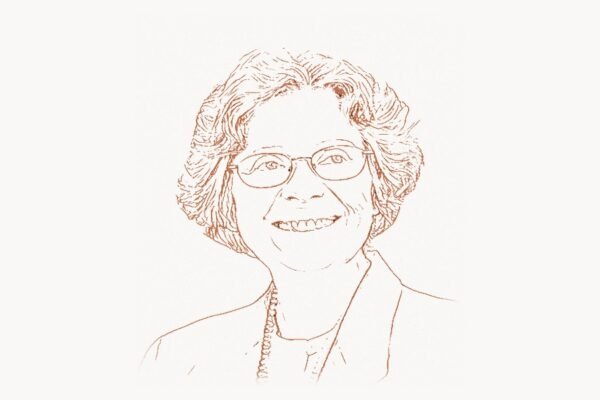
In the early 2000s, Oracle Corporation was a database company with ambitions to be something much larger. The tech landscape was shifting: enterprise software was fragmenting into hundreds of specialized products, cloud computing was a distant rumor, and Oracle’s core relational database business, while dominant, was not enough to sustain long-term growth. The company needed someone who could see the entire chessboard — someone who understood not just technology, but the financial architecture of how technology companies acquire, integrate, and extract value from other technology companies. That someone was Safra Ada Catz. Between 2005 and 2016, Catz orchestrated over $80 billion in acquisitions — PeopleSoft, Siebel Systems, BEA Systems, Sun Microsystems, NetSuite — each one a precisely calculated move that transformed Oracle from a database vendor into the most comprehensive enterprise software and cloud infrastructure company on the planet. When she became sole CEO in 2019, Oracle’s annual revenue exceeded $39 billion. By 2024, it had crossed $53 billion, driven by a cloud infrastructure business that was growing faster than any analyst had predicted. Larry Ellison built Oracle’s technology. Safra Catz built Oracle’s empire.
Early Life and Path to Technology
Safra Ada Catz was born on December 1, 1961, in Holon, Israel, a city just south of Tel Aviv. Her family emigrated to the United States when she was six years old, settling in Brookline, Massachusetts. Her father had been an engineer in Israel, and the family carried with them the pragmatic, results-oriented mindset common to Israeli immigrants of that generation — a mentality that would later define Catz’s approach to business and corporate strategy.
Catz attended the Wharton School at the University of Pennsylvania, earning a Bachelor of Science in Economics in 1983. She then went to the University of Pennsylvania Law School, earning her Juris Doctor degree in 1986. This dual background in finance and law would prove decisive: the combination gave her an unusually deep understanding of corporate structure, securities regulation, mergers and acquisitions law, and the financial mechanics of large-scale deals. Most technology executives come from engineering. Catz came from the world of capital, contracts, and corporate governance — and that perspective is exactly what Oracle needed.
After law school, Catz joined Donaldson, Lufkin & Jenrette (DLJ), a prominent investment bank on Wall Street. She spent over a decade there, rising to managing director in the technology group, developing deep expertise in technology company valuations and M&A transactions. It was during this period that she first worked with Oracle as a client — a relationship that would change both her career and the company.
In 1999, Larry Ellison recruited Catz to join Oracle as a senior vice president. Her impact was immediate: within two years, she was promoted to Executive Vice President and board member. By 2004, she was named President, gaining operational control over finances, manufacturing, and legal affairs. Ellison recognized in Catz something rare in the technology industry: a mind that could evaluate a $10 billion acquisition and a cloud infrastructure pricing model with equal precision.
Building Oracle Through Strategic Acquisitions
The PeopleSoft Campaign
Catz’s first major test — and the deal that established her reputation as one of the most formidable corporate strategists in technology — was Oracle’s hostile takeover of PeopleSoft. In June 2003, Oracle launched an unsolicited bid to acquire PeopleSoft, a leading enterprise resource planning (ERP) and human capital management (HCM) software company, for $16 per share (approximately $5.1 billion). PeopleSoft’s board rejected the offer. Its CEO, Craig Conway, publicly compared Oracle to a hostile invader. The U.S. Department of Justice filed an antitrust lawsuit to block the deal.
What followed was an 18-month campaign that tested every dimension of Catz’s skill set. Oracle raised its bid multiple times, ultimately paying $26.50 per share ($10.3 billion) in January 2005. Catz managed the financial structure, negotiated with regulators, coordinated the legal defense against the DOJ’s antitrust challenge (which Oracle won in September 2004), and planned the integration of PeopleSoft’s 8,000+ employees into Oracle’s operations.
The PeopleSoft acquisition was a turning point for enterprise software. It demonstrated that consolidation was inevitable, established Oracle as an acquirer willing to pursue hostile deals, and validated Catz’s strategic thesis: that customers would benefit from integrated suites rather than fragmented point solutions, and that Oracle could extract massive value by combining complementary product lines under a single operational umbrella.
The Sun Microsystems Gambit
If the PeopleSoft deal established Catz’s reputation, the Sun Microsystems acquisition defined her strategic vision. In April 2009, Oracle announced the acquisition of Sun Microsystems for $7.4 billion. Sun was the creator of Java — arguably the most important programming language in enterprise computing — as well as the Solaris operating system, the SPARC processor architecture, the MySQL database, and a vast portfolio of hardware and software products.
The deal was controversial — critics argued Oracle had no business acquiring a hardware maker. But Catz and Ellison saw what others missed: Sun’s value was not in its hardware — it was in Java, MySQL, and the intellectual property portfolio. Java alone, running on billions of devices as the foundation of Android, was worth the acquisition price. The hardware could be restructured; the software assets were irreplaceable.
The Sun acquisition gave Oracle something no other enterprise software company possessed: vertical integration from silicon to application. Oracle could now offer the entire stack — hardware, operating system, database, middleware, and application software — optimized and tested as a single system. This capability would later become the foundation of Oracle’s Engineered Systems (Exadata, Exalogic, Exalytics) and a key differentiator in Oracle’s cloud infrastructure strategy.
The Cloud Transformation
Oracle Cloud Infrastructure
The most consequential chapter of Catz’s leadership has been Oracle’s transformation from an on-premises software company to a cloud computing powerhouse. When Catz became co-CEO in 2014 (alongside Mark Hurd, who passed away in 2019), the dominant narrative in technology was that Oracle had missed the cloud. Amazon Web Services, launched in 2006, had a decade head start. Andy Jassy had built AWS into a $40+ billion business. Microsoft Azure was growing rapidly. Google Cloud was investing billions. Oracle, the narrative went, was a legacy company clinging to on-premises licenses.
Catz rejected this narrative — not with rhetoric, but with financial engineering and strategic execution. She recognized that Oracle’s path to cloud dominance would be different from AWS or Azure. Oracle would not try to compete on general-purpose commodity cloud services. Instead, Oracle Cloud Infrastructure (OCI) would be purpose-built for the workloads that Oracle already dominated: enterprise databases, ERP systems, supply chain management, and financial applications. The strategy was to make Oracle Cloud the best place to run Oracle workloads — and then expand from that beachhead into broader infrastructure and platform services.
This approach required massive capital investment. Under Catz’s financial leadership, Oracle invested over $10 billion in cloud infrastructure between 2020 and 2024, building data centers on six continents and developing a “Generation 2” cloud architecture that was designed from scratch rather than retrofitted from existing infrastructure. The technical architecture reflected lessons learned from competitors’ mistakes — OCI separated the network virtualization layer from the compute layer, providing more consistent performance and stronger security isolation than first-generation cloud architectures.
# Oracle Cloud Infrastructure (OCI) — Generation 2 Architecture
# Key design principle: separate network virtualization from compute

# OCI Region Layout:
#   Region → Availability Domains (3) → Fault Domains (3 per AD)
#
#   ┌─── Region (e.g. us-ashburn-1) ──────────────────────┐
#   │  AD-1           AD-2           AD-3                  │
#   │  ┌─FD1─┐       ┌─FD1─┐       ┌─FD1─┐               │
#   │  │BM/VM│       │BM/VM│       │BM/VM│               │
#   │  └─────┘       └─────┘       └─────┘               │
#   │                                                      │
#   │  ┌── Off-Box Network Virtualization ───────────────┐ │
#   │  │  SmartNIC offload (no hypervisor in data path)  │ │
#   │  │  Microsecond-level latency consistency          │ │
#   │  └─────────────────────────────────────────────────┘ │
#   └──────────────────────────────────────────────────────┘

# Core OCI services driving Catz's cloud strategy:
oci_services = {
    "Autonomous Database": "Self-tuning, self-patching — no DBA needed",
    "OCI Compute":         "Bare metal + VMs, off-box networking",
    "Fusion Cloud Apps":   "ERP, HCM, SCM — 42K+ customers by 2024",
    "OCI AI":              "Up to 32K NVIDIA GPUs in supercluster",
    "Database@Multicloud": "Oracle DB running inside AWS/Azure/GCP"
}
The results vindicated Catz’s strategy. Oracle’s cloud revenue grew from $6.9 billion in fiscal year 2020 to over $19 billion in fiscal year 2024. OCI revenue specifically grew at rates exceeding 50% year-over-year through 2023 and 2024. In fiscal Q1 2025, Oracle reported remaining performance obligations (contractual backlog) of $99 billion — a staggering figure that indicated massive future cloud revenue already under contract. Major enterprises including Uber, TikTok’s parent ByteDance, and numerous financial institutions chose OCI for mission-critical workloads, validating the thesis that a purpose-built cloud optimized for enterprise workloads could compete with — and in some cases outperform — the hyperscalers.
The Autonomous Database
One of Catz’s most significant strategic bets was Oracle’s Autonomous Database, launched in 2018. The concept was audacious: a relational database that could tune itself, patch itself, back itself up, and recover from failures — all without human intervention. Traditional database administration required armies of highly skilled (and expensive) DBAs to manage performance tuning, security patches, backup schedules, and failure recovery. Oracle’s Autonomous Database used machine learning to automate these tasks entirely.
For Catz, the Autonomous Database was not just a product — it was the embodiment of Oracle’s cloud strategy. By eliminating the operational burden of database management, Oracle could offer a cloud database service that was simultaneously more reliable, more secure, and less expensive than manually managed alternatives. The service guaranteed 99.995% availability (less than 2.5 minutes of downtime per month, including planned maintenance), automated security patching within hours of vulnerability disclosure, and performance optimization that adapted to workload patterns in real time.
-- Oracle Autonomous Database: Self-Tuning Concepts
-- Traditional vs. Autonomous approach to database management

-- TRADITIONAL: DBA manually creates indexes after analyzing slow queries
CREATE INDEX idx_orders_customer ON orders(customer_id);
CREATE INDEX idx_orders_date ON orders(order_date);

-- AUTONOMOUS: Database auto-indexes based on actual workload patterns
-- Continuously evaluates: which indexes help, which are unused,
-- whether maintenance cost exceeds query benefit
SELECT * FROM DBA_AUTO_INDEX_CONFIG;
-- AUTO_INDEX_MODE = IMPLEMENT (fully automatic)

-- TRADITIONAL: DBA manually pins SQL execution plans
-- AUTONOMOUS: ML-based plan stability management
--   Captures all execution plans → evaluates against baselines
--   → adopts only if demonstrably better → auto-rollback on regression

-- Auto-scaling: CPU adjusts to actual demand
-- Weekday peak:   16 OCPUs   |  Weeknight batch: 4 OCPUs
-- Month-end:      48 OCPUs   |  Weekend idle:    2 OCPUs
-- Billing based on actual usage, not peak provisioning
Financial Architecture and Operational Discipline
What distinguishes Catz from most technology CEOs is her approach to financial management. While Silicon Valley culture often celebrates growth at any cost — burning cash to acquire market share, tolerating years of losses in pursuit of future dominance — Catz has run Oracle with the financial discipline of a Wall Street investment bank. Under her leadership, Oracle has maintained operating margins consistently above 40% — among the highest in the enterprise software industry. She has managed a share buyback program that repurchased over $100 billion in Oracle stock between 2011 and 2024, reducing the share count and driving per-share earnings growth even in periods of modest top-line revenue growth.
Catz’s approach to cost management extends to Oracle’s cloud investments: while Oracle has spent billions building OCI, the spending has been targeted and efficient. Oracle has not tried to match AWS’s breadth of services (AWS offers over 200 services; OCI offers around 100). Instead, Oracle has invested deeply in the services that matter most to its customer base — database, compute, networking, and security — achieving price-performance leadership in those categories. Her compensation structure reflects this financial alignment: Catz has frequently taken a base salary of $1 and received the bulk of her compensation in stock options and performance-based equity, ensuring her financial interests are directly aligned with Oracle’s long-term stock performance.
Leadership Philosophy and Management Approach
Key Principles
Catz’s leadership style is characterized by several distinctive principles. First, she is deeply data-driven — decisions are grounded in financial modeling and competitive analysis, not intuition. When Oracle invested in AI-optimized GPU clusters for OCI, the decision was backed by detailed demand analysis, not by a desire to be seen as an “AI company.” Second, Catz prizes execution speed. Oracle’s acquisition integration process begins on day one — finance, HR, IT systems, and reporting are consolidated immediately, with product integration roadmaps established before deals close.
Third, she maintains an unusual level of operational involvement for a CEO of a $300+ billion company, participating directly in major sales calls and reviewing quarterly financials at a granular level. Her relationship with Larry Ellison is one of the most effective founder-CEO partnerships in technology history: Ellison focuses on product vision and technology strategy; Catz focuses on operations, finance, and execution. This kind of complementary partnership mirrors what many successful technology strategy organizations strive to achieve: visionary product thinking paired with disciplined operational execution.
Landmark Deals and Their Impact
Beyond PeopleSoft and Sun Microsystems, Catz has overseen dozens of acquisitions that have shaped Oracle’s product portfolio. The 2016 acquisition of NetSuite for $9.3 billion gave Oracle the leading cloud ERP solution for mid-market companies, complementing the Fusion ERP suite that served large enterprises. The 2022 acquisition of Cerner for $28.3 billion — Oracle’s largest ever — moved Oracle into the healthcare IT market, giving it access to electronic health records (EHR) systems used by hospitals, clinics, and health systems worldwide.
Each acquisition followed a pattern Catz refined over two decades: identify a company with a strong product but operational inefficiencies; acquire it at a price justified by current cash flows and future synergies; integrate it rapidly; invest in the product while eliminating redundant costs; and cross-sell Oracle’s broader portfolio to the acquired customer base.
The Cerner acquisition is particularly significant because it represents Oracle’s expansion into healthcare — a vertical market where the combination of database technology, cloud infrastructure, and application software can deliver transformative value. Catz’s vision is to modernize healthcare IT, moving hospitals from legacy on-premises systems to Oracle Cloud for integrated data, improved clinical outcomes, and AI-powered research. Managing complex integrations like these often requires the kind of structured project management that breaks massive initiatives into trackable, executable components.
Breaking Barriers in Technology Leadership
Safra Catz is one of the highest-ranked and highest-paid women in the global technology industry. As CEO of Oracle — consistently one of the ten largest technology companies by revenue — she leads an organization with over 160,000 employees operating in more than 175 countries. Her trajectory from Israeli immigrant to Wall Street banker to Fortune 500 CEO carries significance beyond Oracle itself. In an industry where women remain underrepresented in C-suite roles, Catz has demonstrated that operational excellence, financial acumen, and strategic vision are the qualities that matter, regardless of background.
Her influence extends beyond Oracle through board memberships (HSBC Holdings, 2008-2015; The Walt Disney Company) and advisory roles including service on President Trump’s transition team in 2016, advising on technology policy and government IT modernization. Oracle is one of the largest IT vendors to the U.S. federal government, and Catz ensures that Oracle’s interests are represented in policy discussions that affect the technology industry.
Oracle’s AI and Future Strategy
Under Catz’s leadership, Oracle has positioned itself as a critical infrastructure provider for the AI era. Rather than trying to build its own large language models — a strategy pursued by Google, Microsoft, and Meta — Oracle has focused on providing the cloud infrastructure that AI companies need to train and deploy their models. OCI’s GPU supercluster capability, which can connect up to 32,000 NVIDIA GPUs in a single cluster, has attracted AI companies including Cohere, Adept, and numerous enterprise customers building proprietary AI systems.
The strategic logic is characteristically Catz: rather than compete in the crowded and capital-intensive AI model market, provide the picks and shovels to everyone who is mining for AI gold. This approach mirrors Oracle’s historical strategy of building infrastructure that other companies build applications on — whether that infrastructure is a relational database, a cloud platform, or a GPU supercluster.
Oracle’s AI strategy also includes embedding AI capabilities directly into its application suite. Oracle Fusion applications now include AI-powered features for financial forecasting, supply chain optimization, and human capital analytics — leveraging Oracle’s unique advantage of access to decades of enterprise transaction data. Catz has also expanded Oracle’s partnership strategy to include major cloud competitors. Oracle Database@AWS and Oracle Database@Azure allow customers to run Oracle databases within competitor data centers, reflecting a pragmatic recognition that many enterprises operate in multi-cloud environments. Rather than insisting on OCI exclusivity, Catz has positioned Oracle’s database and applications to run wherever customers need them — while using OCI’s superior performance as an incentive to bring more workloads to Oracle’s own cloud over time.
Legacy and Modern Relevance
Safra Catz has demonstrated a model of technology leadership fundamentally different from the founder-visionary archetype. While founders like Ellison, Bezos, and Zuckerberg are celebrated for product vision, Catz has shown that operational excellence, financial discipline, and strategic acquisition can be equally transformative. Her acquisition playbook has been studied and imitated across the industry — Salesforce’s acquisition of Slack, Broadcom’s acquisition of VMware — all followed patterns Catz pioneered at Oracle.
Under her leadership, Oracle transitioned from a company many analysts wrote off as a legacy vendor to a cloud powerhouse with $99 billion in contractual backlog. The company’s market capitalization grew from approximately $180 billion when Catz became sole CEO in 2019 to over $350 billion by late 2024.
In an industry obsessed with disruption and reinvention, Catz has proven that discipline, persistence, and strategic clarity — the qualities of a great operator — can be every bit as powerful as the qualities of a great inventor. She has not invented a programming language or a new computing paradigm. She has done something arguably harder: she has taken a 47-year-old technology company and made it more relevant, more profitable, and more strategically positioned than at any point in its history.
Key Facts
- Born: December 1, 1961, Holon, Israel
- Role: Chief Executive Officer, Oracle Corporation (sole CEO since 2019; co-CEO 2014-2019)
- Education: B.S. in Economics, Wharton School, University of Pennsylvania (1983); J.D., University of Pennsylvania Law School (1986)
- Known for: Orchestrating $80+ billion in strategic acquisitions, transforming Oracle into a cloud infrastructure and enterprise applications powerhouse
- Key acquisitions: PeopleSoft ($10.3B, 2005), Sun Microsystems ($7.4B, 2010), NetSuite ($9.3B, 2016), Cerner ($28.3B, 2022)
- Oracle under her leadership: Revenue grew from ~$37B (FY2014) to $53B+ (FY2024); cloud revenue exceeded $19B; market cap surpassed $350B
- Board roles: HSBC Holdings (2008-2015), The Walt Disney Company
- Recognition: Consistently ranked among the most powerful women in business by Fortune and Forbes
Frequently Asked Questions
Who is Safra Catz?
Safra Catz is the Chief Executive Officer of Oracle Corporation, one of the world’s largest technology companies with over $53 billion in annual revenue. Born in Israel and educated at the Wharton School and Penn Law School, she joined Oracle in 1999 after a career in investment banking. She served as President, co-CEO alongside Mark Hurd (2014-2019), and became sole CEO after Hurd’s passing. She is recognized as one of the most influential women in global technology.
What did Safra Catz accomplish at Oracle?
Catz orchestrated over $80 billion in strategic acquisitions (PeopleSoft, Sun Microsystems, NetSuite, Cerner), led Oracle’s cloud transformation from near-zero cloud revenue to over $19 billion annually, maintained operating margins above 40%, and managed over $100 billion in share buybacks. Under her sole CEO tenure, Oracle’s market capitalization grew from approximately $180 billion to over $350 billion.
How did Safra Catz transform Oracle’s cloud business?
Catz invested over $10 billion in Oracle Cloud Infrastructure (OCI), building a “Generation 2” cloud architecture with off-box network virtualization. Rather than competing with AWS on breadth, she focused OCI on enterprise workloads where Oracle had domain expertise. She launched the Autonomous Database, forged multi-cloud partnerships with AWS, Azure, and Google Cloud, and invested in AI infrastructure (GPU superclusters). By 2024, Oracle reported $99 billion in remaining performance obligations.
Why is Safra Catz important in the technology industry?
Catz pioneered the acquisition-driven growth model now standard in enterprise technology. She demonstrated that operational and financial excellence can drive technology company success as effectively as product innovation. She led one of the most significant corporate transformations in tech history, and as one of the highest-ranking women in global technology, she expanded the definition of what technology leadership looks like.
What is Oracle’s strategy under Safra Catz’s leadership?
Oracle’s strategy focuses on four pillars: (1) cloud infrastructure growth through OCI, targeting enterprise and AI workloads; (2) cloud applications dominance through Fusion ERP, HCM, and NetSuite; (3) healthcare IT transformation through Cerner; and (4) AI infrastructure investment with GPU superclusters. The overarching approach leverages Oracle’s unique position as the only major tech company offering the complete stack — from infrastructure to applications.