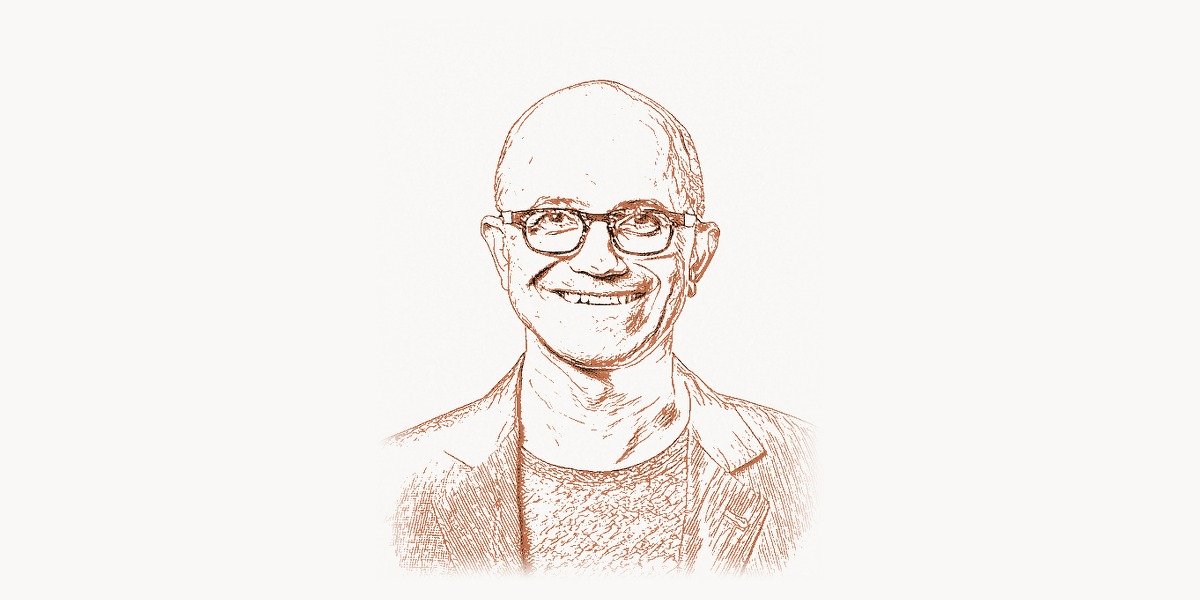
When Satya Nadella became the third CEO of Microsoft in February 2014, the company was widely viewed as a fading giant — a relic of the PC era that had missed mobile, stumbled in search, and was losing its best engineers to Google and Facebook. Windows Phone was failing, the Surface tablet was a billion-dollar write-down, and the stock had been essentially flat for over a decade. Wall Street analysts speculated openly about breaking up the company. Within ten years, Nadella would transform Microsoft into the most valuable company on the planet, with a market capitalization exceeding three trillion dollars. He did it not by inventing a new product or making a single brilliant acquisition, but by doing something far harder: changing the culture and strategic direction of a 150,000-person organization from the ground up. The instrument of that transformation was cloud computing — specifically, Azure — and the philosophy behind it was a radical shift from Microsoft’s historically proprietary, combative posture to one of openness, partnerships, and developer-first thinking. No CEO in modern technology history has executed a corporate transformation of this magnitude, and the story of how Nadella pulled it off contains lessons for every engineer, product manager, and technology leader alive today.
Early Life and Education
Satya Narayana Nadella was born on August 19, 1967, in Hyderabad, India. His father, Bukkapuram Nadella Yugandhar, was a senior Indian Administrative Service officer; his mother, Prabhavati, was a Sanskrit lecturer. Growing up in Hyderabad — then a quieter city than the tech hub it would become — Nadella developed two passions that would shape his career: cricket and technology. Cricket taught him about teamwork, adaptability, and the importance of learning from failure. Technology, which he encountered through the Hyderabad Public School’s early computing programs, gave him an outlet for systematic thinking.
Nadella earned a bachelor’s degree in electrical engineering from the Manipal Institute of Technology in 1988. He then moved to the United States to pursue a master’s degree in computer science at the University of Wisconsin-Milwaukee, completing it in 1990. While working at Sun Microsystems, he earned an MBA from the University of Chicago Booth School of Business — an unusual credential for a tech CEO, and one that gave him a fluency in business strategy that would prove invaluable. He joined Microsoft in 1992, beginning a career that would span the company’s entire modern history.
The Long Road Through Microsoft
From Engineer to Division Leader
Nadella spent twenty-two years at Microsoft before becoming CEO, and the breadth of his experience across the company’s divisions was unusual even by Microsoft standards. He worked on Windows NT, the server operating system that became the backbone of enterprise IT in the 1990s. He led the Online Services division, which included Bing — a product that taught him hard lessons about competing against entrenched market leaders (in this case, Google). He ran the Server and Tools business, where he oversaw the transition of products like SQL Server and System Center from on-premises licenses to cloud-based subscriptions. And he led the Cloud and Enterprise group, where he built the early Azure platform that would become Microsoft’s strategic center of gravity.
Each role taught Nadella something essential. Windows NT taught him the power of platforms. Bing taught him humility and the limits of throwing resources at a problem without a differentiated strategy. The Server and Tools business taught him how enterprise customers actually make purchasing decisions — driven by total cost of ownership and long-term vendor trust rather than feature comparisons. And Azure taught him that the future of computing was cloud services sold through subscriptions, where revenue was recurring and the relationship with the customer was continuous.
This trajectory through Microsoft’s divisions gave Nadella something that neither of his predecessors had: a visceral understanding of both the company’s technical architecture and its commercial relationships. Bill Gates was a visionary who saw the future of personal computing and built a company to capture it. Steve Ballmer was a sales executive who drove revenue growth through aggressive licensing and channel partnerships. Nadella was an engineer who understood the business, and a business leader who understood the engineering. This dual fluency would prove critical when the time came to make wrenching strategic decisions about the company’s future.
The Cloud Transformation
Strategic Pivot to Azure
When Nadella took over as CEO, Microsoft’s cloud platform Azure existed but was a secondary priority behind Windows and Office — the two cash cows that had defined the company for decades. Nadella’s first major strategic decision was to declare, in essence, that Windows was no longer the center of Microsoft’s universe. Instead, the company would reorganize around what he called “the intelligent cloud and intelligent edge.” This was not just a marketing slogan; it represented a fundamental reallocation of engineering talent, capital expenditure, and management attention from desktop software to cloud infrastructure.
The technical challenges of this pivot were enormous. Azure had to compete with Amazon Web Services, which had a seven-year head start and had already established itself as the default cloud platform for startups and many enterprises. Andy Jassy had built AWS into a juggernaut by relentlessly focusing on infrastructure primitives — compute, storage, networking — and letting customers build whatever they wanted on top. Azure needed a different strategy, and Nadella found one: enterprise hybrid cloud. Rather than asking large companies to migrate everything to the cloud overnight, Azure would meet them where they were — allowing hybrid architectures where some workloads ran on-premises and others in the cloud, with seamless integration between the two.
This hybrid approach resonated with Fortune 500 companies — Microsoft’s core customers — that had decades of investment in on-premises infrastructure and regulatory requirements preventing certain data from leaving their data centers. Nadella understood that telling them to abandon all of this was unrealistic. Instead, Azure offered a migration path — a way to move to the cloud incrementally, at a pace dictated by business needs rather than by a vendor’s timeline.
# Azure CLI: Deploying a cloud-native application with hybrid capabilities
# This demonstrates the kind of workflow Nadella's Azure transformation enabled

# 1. Create a resource group — the organizational container for cloud resources
az group create \
  --name myapp-production \
  --location eastus

# 2. Create an Azure Kubernetes Service cluster
# AKS became a strategic product under Nadella's leadership,
# integrating Kubernetes (originally created at Google by Brendan Burns,
# whom Microsoft later hired) into the Azure ecosystem
az aks create \
  --resource-group myapp-production \
  --name myapp-cluster \
  --node-count 3 \
  --node-vm-size Standard_D4s_v3 \
  --enable-managed-identity \
  --network-plugin azure \
  --generate-ssh-keys

# 3. Get credentials to interact with the cluster
az aks get-credentials \
  --resource-group myapp-production \
  --name myapp-cluster

# 4. Deploy an application using kubectl
# The fact that Microsoft — historically the most proprietary company
# in tech — now ships and supports Kubernetes is itself a testament
# to the cultural transformation Nadella drove
kubectl apply -f - <
The Hybrid Cloud Advantage
The hybrid cloud strategy became Azure's defining competitive advantage. Microsoft invested heavily in Azure Arc, a management layer that extends Azure services to any infrastructure — on-premises, at the edge, or in other clouds. This effectively turned Azure into a universal control plane for computing. Azure's integration with Microsoft's existing enterprise products created another moat: companies using Active Directory, SQL Server, and Office 365 found Azure offered the path of least resistance for cloud migration. For engineering teams managing complex agile and waterfall workflows, the Azure DevOps suite provided an end-to-end pipeline from code commit to production deployment.
By 2024, Azure had grown to roughly 25% of the global cloud infrastructure market — second only to AWS but growing faster, with Microsoft's Intelligent Cloud segment generating over $96 billion in annual revenue. The stock price had increased tenfold since Nadella became CEO. The hybrid model he championed — once dismissed by cloud purists as a half-measure — became the industry standard.
The Cultural Revolution
From "Know-It-All" to "Learn-It-All"
The technical transformation would not have been possible without a parallel cultural transformation. When Nadella took over, Microsoft's internal culture was notoriously toxic. A "stack ranking" performance review system forced managers to rate a fixed percentage of their team as underperformers, creating a culture where employees were incentivized to sabotage colleagues rather than collaborate.
Nadella dismantled stack ranking and replaced it with a system rewarding collaboration, learning, and customer impact. He described the shift as moving from a "know-it-all" culture to a "learn-it-all" culture — drawn from Carol Dweck's research on growth mindset. He required every executive to read Dweck's work, restructured incentives for cross-team collaboration, and personally modeled the behavior he wanted to see.
The cultural shift had immediate practical consequences. The Office team had refused to build apps for iOS and Android to protect Windows Phone. Nadella reversed this — Office for iPad was released within weeks of his becoming CEO and was an immediate hit, demonstrating that Microsoft's software could thrive on competitors' platforms. This was heresy under the old regime, but the logical consequence of Nadella's insight that Microsoft's value lay in its software and services, not its operating system's market share.
Open Source and the Developer Community
Embracing Linux and Open Source
Perhaps the most dramatic symbol of Microsoft's transformation was the company's embrace of open source. Under Ballmer, Linux was called a "cancer." Under Nadella, Microsoft became the largest corporate contributor to open-source projects on GitHub, and in 2018 acquired GitHub itself for $7.5 billion — a move inconceivable five years earlier.
Microsoft released Visual Studio Code as a free, open-source editor that rapidly became the most popular in the world. Azure added first-class Linux support, with over half of all Azure VMs eventually running Linux. Anders Hejlsberg developed TypeScript as an open-source project, and it became one of the most widely adopted languages in web development. The .NET framework was rewritten as cross-platform, open-source .NET Core.
Microsoft's embrace of Kubernetes was equally significant — Brendan Burns, one of Kubernetes' three co-creators at Google, was hired to build Azure Kubernetes Service (AKS). The company was now actively hiring open-source creators and building its cloud platform around their projects. For developers working with modern frameworks and CI/CD pipelines, the new Microsoft was an ally rather than an adversary.
The AI Bet: OpenAI and Beyond
The OpenAI Partnership
Nadella's most consequential strategic decision may be Microsoft's partnership with OpenAI. Beginning in 2019 with a $1 billion investment and escalating to over $13 billion by 2024, Microsoft secured exclusive cloud-provider status for OpenAI's models and the right to integrate GPT technology across its product suite — committing billions to a company pursuing artificial general intelligence when most of the industry considered it decades away.
The bet paid off spectacularly. When ChatGPT launched in November 2022, Microsoft was positioned as the primary commercial beneficiary. Microsoft integrated GPT-4 into Bing, into Office 365 as Copilot, and into GitHub as Copilot for code. Each integration created new revenue streams and deepened customer lock-in. The AI strategy demonstrated Nadella's characteristic approach: identify the most capable partner, structure a deal for commercial rights, then focus Microsoft's engineering resources on integration and distribution. For teams managing AI-enhanced development workflows, tools like Taskee help coordinate the complex task streams that emerge when AI capabilities are woven into existing products.
# Azure OpenAI Service: The integration layer Nadella's strategy created
# This demonstrates how Microsoft made GPT accessible to enterprise developers
# through familiar Azure patterns and security models

from openai import AzureOpenAI
import json

# Enterprise developers use Azure-managed endpoints rather than
# calling OpenAI directly — gaining Azure AD authentication,
# private networking, content filtering, and compliance guarantees
client = AzureOpenAI(
    azure_endpoint="https://mycompany.openai.azure.com/",
    api_version="2024-10-21",
    azure_deployment="gpt-4o"
    # Authentication via Azure Managed Identity — no API keys in code
    # This enterprise integration is what differentiates Azure OpenAI
    # from the raw OpenAI API
)

def analyze_cloud_architecture(description: str) -> dict:
    """
    Example: Using Azure OpenAI to analyze cloud architecture decisions.
    This kind of AI-augmented engineering workflow is what Nadella
    envisioned when he invested in the OpenAI partnership.
    """
    response = client.chat.completions.create(
        model="gpt-4o",
        messages=[
            {
                "role": "system",
                "content": (
                    "You are a senior cloud architect specializing in Azure. "
                    "Analyze the given architecture and provide recommendations "
                    "for cost optimization, security, and scalability."
                )
            },
            {
                "role": "user",
                "content": f"Analyze this architecture:\n{description}"
            }
        ],
        temperature=0.3,
        max_tokens=2000
    )
    return {
        "analysis": response.choices[0].message.content,
        "model": response.model,
        "tokens_used": response.usage.total_tokens
    }

# Azure AI Services ecosystem built under Nadella's leadership:
# - Azure OpenAI Service (GPT-4, DALL-E, Whisper)
# - Azure AI Search (vector + keyword hybrid search)
# - Azure Machine Learning (MLOps platform)
# - Copilot Studio (custom AI assistants for enterprises)
# - Responsible AI toolkit (fairness, transparency, safety)

services = {
    "Azure OpenAI": "Enterprise access to GPT-4, embeddings, DALL-E",
    "Azure AI Search": "RAG pipeline: vector + semantic + keyword search",
    "Azure ML": "End-to-end MLOps with managed compute and endpoints",
    "Copilot Studio": "No-code custom AI agents for business processes",
    "Content Safety": "Filters for harmful content in AI-generated output"
}

print("Microsoft AI services portfolio under Nadella's strategy:")
for service, description in services.items():
    print(f"  {service}: {description}")
print("\nTotal Azure AI revenue run rate: $13B+ annually (as of 2024)")
print("The integration of OpenAI into Azure exemplifies Nadella's")
print("approach: partner, integrate, distribute through enterprise trust.")
Leadership Philosophy
Key Principles
Nadella's leadership style is distinctive in the technology industry for its emphasis on empathy, humility, and long-term thinking. In his 2017 book "Hit Refresh," he described empathy as the most important quality a leader can possess — not as a soft skill but as a practical necessity for understanding customers, motivating employees, and anticipating market shifts. This emphasis on empathy has personal roots: Nadella's son Zain was born with severe cerebral palsy, an experience that Nadella credits with fundamentally changing how he sees the world and how he leads.
Nadella is also notable for his approach to competition. Under Ballmer, Microsoft viewed the world as a zero-sum game where every competitor's gain was Microsoft's loss. Nadella replaced this with a partnership-first mentality, partnering with Salesforce, Red Hat, SAP, and dozens of companies Microsoft had previously treated as adversaries. If Azure could run every workload — including competitors' workloads — then partnerships expanded the market rather than dividing it. This collaborative approach to complex technology projects mirrors the principles that platforms like Toimi bring to digital agency project management.
His management of the OpenAI relationship demonstrates strategic patience. The initial $1 billion investment in 2019 generated skepticism, and the subsequent investments — totaling over $13 billion — were even more controversial. But Nadella understood that the potential upside of being the commercial partner to the most advanced AI lab in the world was worth the risk. When ChatGPT exploded in late 2022, Microsoft was the only company positioned to capture the commercial value at scale.
Impact on the Industry
Nadella's impact extends far beyond Microsoft. His success demonstrated that a legacy technology company could reinvent itself — a lesson that influenced strategic thinking at IBM, Oracle, Adobe, and dozens of other companies. Larry Ellison's aggressive pivot of Oracle toward cloud infrastructure was influenced by Azure's success. The entire enterprise software industry's transition to cloud-based delivery models was accelerated by Microsoft's demonstration that it could be done at the largest scale.
His embrace of open source changed the relationship between commercial software companies and the developer community. Before Nadella, large commercial software companies were assumed hostile to open source. After Nadella, it became standard to contribute to open-source projects and build commercial products on open-source foundations. Visual Studio Code, TypeScript, and .NET's open-source transformation collectively changed how millions of developers work. For anyone using modern code editors or building applications with TypeScript, Nadella's strategic decisions directly shaped the tools in their hands.
Legacy and Continuing Influence
Satya Nadella's legacy is already secure as one of the most successful corporate turnarounds in technology history. He inherited a company that the market had given up on and transformed it into the most valuable corporation on Earth — not through a single breakthrough product but through strategic clarity, cultural transformation, and relentless execution across every dimension of a vast organization. For engineers working with Azure's technical infrastructure or building on the Kubernetes and cloud-native ecosystem that Microsoft has helped nurture, Nadella's strategic decisions form the backdrop of their daily work.
AI is now transforming every industry simultaneously, and Microsoft — through Azure, OpenAI, Copilot, and its enterprise relationships — is positioned to be the primary platform through which that transformation is delivered. Whether Nadella can navigate the regulatory, ethical, and competitive challenges of the AI era as deftly as he navigated the cloud transformation will determine not just Microsoft's future but a significant portion of the technology industry's trajectory.
Key Facts
- Born: August 19, 1967, Hyderabad, India
- Nationality: American (Indian-born)
- Known for: CEO of Microsoft (2014–present), leading Microsoft's cloud transformation, championing growth mindset culture, OpenAI strategic partnership
- Education: B.E. Electrical Engineering (Manipal Institute of Technology), M.S. Computer Science (University of Wisconsin-Milwaukee), MBA (University of Chicago Booth School of Business)
- Career: Sun Microsystems (1990–1992), Microsoft (1992–present): Server and Tools, Online Services, Cloud and Enterprise, CEO from 2014
- Key achievements: Grew Microsoft market cap from ~$300B to over $3T, transformed Azure into #2 global cloud platform, acquired GitHub ($7.5B) and LinkedIn ($26.2B), invested $13B+ in OpenAI partnership
- Publications: "Hit Refresh: The Quest to Rediscover Microsoft's Soul and Imagine a Better Future for Everyone" (2017)
- Awards: Financial Times Person of the Year (2019), CNN Business CEO of the Year (2019), Padma Bhushan (India, 2022)
Frequently Asked Questions
What was Microsoft like before Satya Nadella became CEO?
Before Nadella took over in February 2014, Microsoft was widely seen as a declining technology giant trapped in the PC era. The company's stock price had been flat for over a decade. Internally, a toxic "stack ranking" system forced managers to rate employees against each other, creating fierce internal competition rather than collaboration. The Windows team held outsized power, Microsoft had missed the mobile revolution with Windows Phone capturing less than 3% market share, and Steve Ballmer had called Linux a "cancer." The contrast with the collaborative, cloud-first, open-source-friendly company that Nadella built is stark.
How did Satya Nadella transform Microsoft's culture?
Nadella's cultural transformation centered on replacing a "know-it-all" mindset with a "learn-it-all" mindset, drawing on Carol Dweck's growth mindset research. He eliminated stack-ranking reviews, restructured incentives to reward cross-team collaboration, and broke the Windows team's veto power over strategy. One of his first acts was releasing Office for iPad — previously blocked to protect Windows Phone — signaling that customer value would drive decisions. The cultural shift enabled the technical transformation: engineers could collaborate across divisions, embrace open-source tools, and build for competitors' platforms without fear of internal retaliation.
Why is Azure important and how does it compare to AWS?
Azure is Microsoft's cloud computing platform and the second-largest cloud infrastructure provider globally, behind Amazon Web Services (AWS). Azure's strategic importance to Microsoft cannot be overstated: the Intelligent Cloud segment generates over $96 billion in annual revenue and is the primary driver of Microsoft's stock price growth. Azure differentiates from AWS primarily through its hybrid cloud capabilities (Azure Arc allows managing on-premises, edge, and multi-cloud resources from a single control plane), its deep integration with Microsoft's enterprise software ecosystem (Active Directory, Office 365, SQL Server, Dynamics), and its exclusive access to OpenAI's models through Azure OpenAI Service. While AWS has a larger overall market share, Azure has been growing faster in enterprise adoption, particularly among Fortune 500 companies that already use Microsoft's software stack.
What is Microsoft's relationship with OpenAI and why does it matter?
Microsoft has invested over $13 billion in OpenAI since 2019, making it the company's largest external investor and exclusive cloud infrastructure provider. In exchange, Microsoft received the rights to integrate OpenAI's models — including GPT-4 and DALL-E — into its commercial products. This partnership powers Microsoft Copilot (AI assistant in Office 365), GitHub Copilot (AI pair programming), Azure OpenAI Service (enterprise API access to GPT models), and Bing Chat (AI-powered search). The relationship matters because it positions Microsoft at the center of the generative AI revolution without requiring Microsoft to build frontier AI models itself. Nadella's strategy was to provide the compute infrastructure and enterprise distribution while OpenAI provided the research breakthroughs — a division of labor that has proven remarkably effective.
What is Satya Nadella's "growth mindset" philosophy?
Nadella's growth mindset philosophy, adapted from Stanford psychologist Carol Dweck's research, holds that abilities and intelligence can be developed through effort, learning, and persistence rather than being fixed traits. In practice at Microsoft, this meant shifting from a culture that rewarded having all the answers (know-it-all) to one that rewarded curiosity, experimentation, and learning from failure (learn-it-all). Nadella applied this principle at every level: individual performance reviews were restructured to measure learning and impact rather than internal rankings; teams were encouraged to run experiments and share results even when they failed; and the company's overall strategy embraced openness to new ideas — including open source, cloud computing, and AI partnerships — that the previous leadership had rejected. The growth mindset became the philosophical foundation for every major strategic shift Microsoft made under Nadella's leadership.