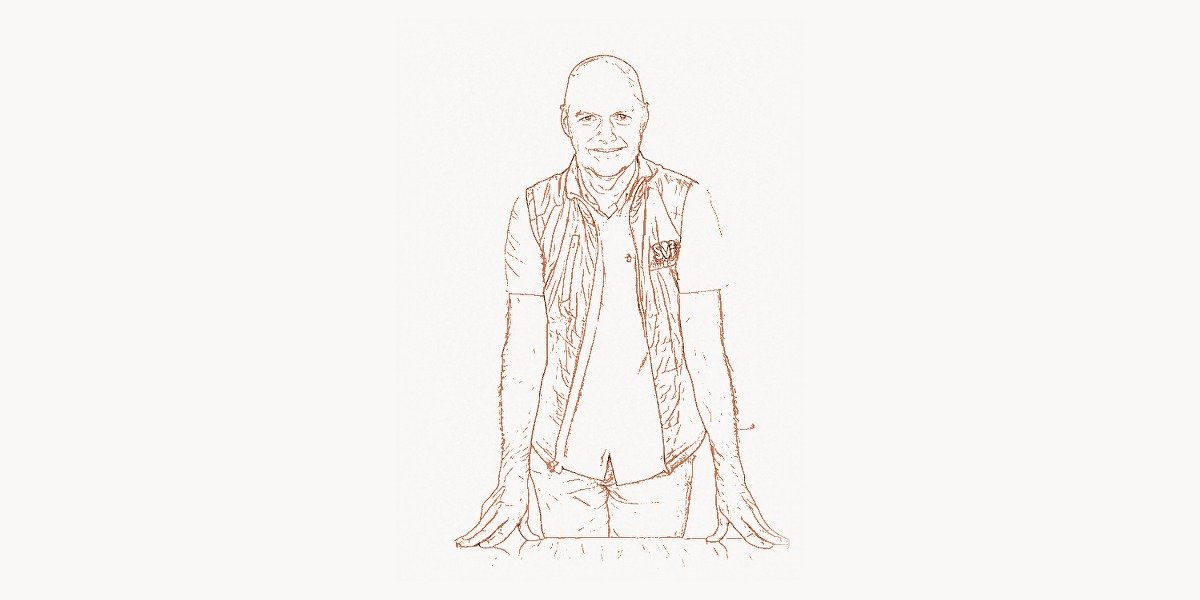
On October 9, 2005, in the Mojave Desert of Nevada, a modified Volkswagen Touareg named Stanley crossed the finish line of the DARPA Grand Challenge — a 132-mile autonomous course through rough desert terrain that no vehicle had been able to complete just eighteen months earlier. Stanley finished in 6 hours and 53 minutes, averaging over 19 miles per hour, navigating rocky paths, narrow passes, and open desert with no human intervention. The vehicle was built by a team from Stanford University’s Artificial Intelligence Laboratory, led by a German computer scientist named Sebastian Thrun. That day in the desert was a turning point — the moment when self-driving cars stopped being science fiction and became engineering. Within five years, Thrun would take the technology he had proved in the desert and scale it at Google, launching the self-driving car project that would eventually become Waymo. Along the way, he would also create Google X (the company’s secretive moonshot laboratory), help develop Google Glass, co-found Udacity (an online education platform that pioneered the concept of the nanodegree), and build Kitty Hawk (a flying car company backed by Larry Page). Thrun’s career is not defined by a single invention but by a pattern: he identifies problems that most engineers consider impossible or impractical, assembles teams capable of attacking those problems with both theoretical rigor and engineering urgency, and then ships results that redefine what the field considers achievable. From probabilistic robotics to autonomous vehicles to mass online education, Thrun has repeatedly transformed ideas that existed only in academic papers into systems that work in the real world.
Early Life and Education
Sebastian Thrun was born on May 14, 1967, in Solingen, Germany, a city in North Rhine-Westphalia known for its blade-making industry. Growing up in postwar West Germany, Thrun showed an early aptitude for mathematics and science, but his path to computer science was not straightforward. He was fascinated by how machines could be made to perceive and act in the physical world — a fascination that would eventually lead him to robotics and artificial intelligence, but that began with a broader curiosity about the relationship between computation and the physical environment.
Thrun studied computer science at the University of Hildesheim, where he completed his undergraduate degree, and then moved to the University of Bonn for his graduate work. At Bonn, he earned his Ph.D. in computer science and statistics in 1995, working under the supervision of Armin Cremers. His doctoral research focused on neural networks and learning algorithms applied to robotics — specifically, on how robots could learn from experience to navigate and interact with uncertain, changing environments. This was the early 1990s, a period when neural networks were in the trough of their second “AI winter,” and most mainstream AI researchers were skeptical of learning-based approaches. Thrun’s willingness to work on neural networks and probabilistic methods during this unfashionable period shaped his entire career. While others pursued symbolic AI and hand-coded rule systems, Thrun was building the mathematical foundations for machines that could learn from sensor data — exactly the capability that would later make self-driving cars possible.
After completing his doctorate, Thrun moved to the United States, joining Carnegie Mellon University’s School of Computer Science in 1995. Carnegie Mellon was, at the time, the premier robotics research institution in the world, home to pioneers like Hans Moravec, Red Whittaker, and Raj Reddy. It was at CMU that Thrun developed his expertise in probabilistic robotics — the application of Bayesian statistics and probabilistic reasoning to robot perception, mapping, and navigation. His work on simultaneous localization and mapping (SLAM) and on probabilistic approaches to robot learning established him as one of the leading figures in the field. In 2003, Stanford University recruited him to direct their Artificial Intelligence Laboratory, and it was from this position that he would launch the project that changed transportation forever.
The Self-Driving Car Breakthrough
Technical Innovation
The technical challenge of building an autonomous vehicle is fundamentally a problem of uncertainty. A car moving at highway speed must perceive its environment through imperfect sensors (cameras, lidar, radar), build a model of the world that is accurate enough to make safe decisions, plan a path through that world, and execute that plan through mechanical actuators — all in real time, with lives depending on every decision. The environment is not a controlled laboratory; it includes other vehicles driven by unpredictable humans, pedestrians, cyclists, animals, weather, road construction, faded lane markings, and situations that no engineer could anticipate in advance.
Thrun’s key insight — the one that separated Stanley from every previous autonomous vehicle attempt — was that this problem could not be solved by writing rules. Previous approaches to autonomous driving had relied on hand-coded rule systems: if the sensor sees an obstacle at distance X, turn by angle Y. These rule-based systems were brittle. They worked in controlled conditions and failed catastrophically in the real world, because the real world contains an infinite number of situations that no finite set of rules can cover. The 2004 DARPA Grand Challenge, which preceded the 2005 event, demonstrated this painfully: not a single vehicle finished the course, and most failed within a few miles.
Thrun’s approach was fundamentally different. Stanley used machine learning — specifically, probabilistic models trained on real-world driving data — to perceive and navigate. The vehicle’s perception system did not rely on hard-coded rules for identifying roads, obstacles, and terrain; instead, it used models trained on sensor data collected during extensive test drives. When Stanley’s laser rangefinders detected the terrain ahead, the data was processed by learned models that could classify terrain as drivable or not drivable, estimate road boundaries, and predict the vehicle’s interaction with different surface types.
"""
Probabilistic terrain classification — the core idea behind Stanley.

Thrun's breakthrough was treating autonomous navigation as a
probabilistic inference problem rather than a rule-based one.
Instead of hand-coding "if obstacle at distance X, turn Y degrees,"
Stanley learned to classify terrain from sensor data using
Bayesian methods trained on real-world driving experience.
"""

import numpy as np
from dataclasses import dataclass, field


@dataclass
class TerrainCell:
    """
    Each cell in Stanley's occupancy grid maintained a probability
    distribution over terrain types — not a binary occupied/free.
    This probabilistic representation allowed the vehicle to reason
    about uncertainty, which is critical at 20+ mph in the desert.
    """
    x: float
    y: float
    traversability: float = 0.5    # P(traversable), starts uncertain
    elevation_mean: float = 0.0
    elevation_var: float = 1.0     # High initial uncertainty
    observations: int = 0


class ProbabilisticTerrainMapper:
    """
    Simplified model of Stanley's terrain analysis pipeline.

    The key innovation: each laser return updates a Bayesian estimate
    of terrain traversability. Multiple observations reduce uncertainty.
    The vehicle plans paths through cells with high P(traversable)
    and avoids cells where uncertainty or obstacle probability is high.
    """

    def __init__(self, resolution: float = 0.5):
        self.resolution = resolution
        self.grid: dict[tuple[int, int], TerrainCell] = {}

    def _cell_key(self, x: float, y: float) -> tuple[int, int]:
        return (int(x / self.resolution), int(y / self.resolution))

    def update_from_lidar(
        self,
        points: np.ndarray,
        vehicle_pose: np.ndarray,
    ) -> None:
        """
        Update terrain model from a single lidar scan.

        Stanley processed ~100,000 laser points per second.
        Each point updates the Bayesian estimate for its grid cell.
        Over multiple scans, uncertain cells converge to confident
        traversability estimates — safe, dangerous, or unknown.
        """
        for point in points:
            key = self._cell_key(point[0], point[1])

            if key not in self.grid:
                self.grid[key] = TerrainCell(x=point[0], y=point[1])

            cell = self.grid[key]
            cell.observations += 1

            # Bayesian update of elevation estimate
            # (Kalman filter-style recursive update)
            alpha = 1.0 / cell.observations
            cell.elevation_mean += alpha * (point[2] - cell.elevation_mean)
            cell.elevation_var *= (1.0 - alpha)

            # Traversability update based on local geometry:
            # - Low elevation variance → flat → likely traversable
            # - High elevation variance → rough → possibly obstacle
            # - Extreme elevation relative to vehicle → definitely obstacle
            roughness = cell.elevation_var
            if roughness < 0.05:
                # Flat terrain — update toward traversable
                cell.traversability += 0.1 * (1.0 - cell.traversability)
            elif roughness > 0.5:
                # Very rough — update toward obstacle
                cell.traversability -= 0.1 * cell.traversability
            # Cells with moderate roughness barely change —
            # the system remains uncertain until more data arrives

    def get_traversability(self, x: float, y: float) -> float:
        """Return P(traversable) for a given world coordinate."""
        key = self._cell_key(x, y)
        if key in self.grid:
            return self.grid[key].traversability
        return 0.5  # Unknown terrain — maximum uncertainty


# Stanley's path planner would then optimize a trajectory through
# cells with high traversability, penalizing paths near uncertain
# or low-traversability regions. This probabilistic approach meant
# Stanley could handle novel terrain it had never seen before —
# not by having rules for every situation, but by reasoning about
# uncertainty from first principles.
The path planning system built on top of this probabilistic terrain model was equally innovative. Rather than following a fixed set of GPS waypoints (which would have been sufficient for a highway but not for rough desert terrain), Stanley continuously replanned its path based on the current terrain model, selecting trajectories that maximized traversability while staying close to the intended route. The system could adapt in real time — if a previously planned path turned out to lead through rough terrain, the vehicle would autonomously find an alternative route.
Thrun also pioneered the use of machine learning for sensor calibration. One of Stanley’s most novel features was its ability to use the camera to extend the range of the laser rangefinders. The laser gave precise but short-range terrain data (up to about 25 meters). The camera could see much farther but provided less precise depth information. Stanley used a learned model — trained in real time during driving — that correlated the camera’s color and texture patterns with the laser’s terrain classifications. When the laser identified a patch of terrain as drivable, the system learned what that terrain looked like in the camera image, and then used that learned association to classify terrain that was visible to the camera but beyond the laser’s range. This allowed Stanley to “see” drivable terrain at distances of 50 to 70 meters, giving it much more time to plan and react at high speeds.
Why It Mattered
Stanley’s victory in the 2005 DARPA Grand Challenge was not merely a robotics competition result. It was the proof of concept that made the entire autonomous vehicle industry possible. Before Stanley, self-driving cars were a research curiosity — an interesting academic problem with no clear path to practical deployment. After Stanley, they were an engineering challenge with a known approach. The probabilistic, learning-based methods that Thrun demonstrated in the desert became the foundation for virtually every subsequent autonomous driving system, including the one he would build at Google.
In 2009, Google co-founder Larry Page recruited Thrun to lead a secret autonomous vehicle project at Google, which would eventually be called the Google Self-Driving Car Project and later become Waymo. Thrun assembled a team that included many of his Stanford colleagues and DARPA Challenge veterans, and they began adapting the technology from the desert to urban streets. The challenge was orders of magnitude harder: city driving involves traffic lights, pedestrians, cyclists, unmarked intersections, construction zones, double-parked delivery trucks, and the constant need to predict and respond to the behavior of other human drivers. Thrun’s team accumulated over 140,000 miles of autonomous driving on public roads by 2010 — a number that seemed extraordinary at the time but that was a tiny fraction of what Waymo would eventually log. The Google project proved that autonomous vehicles could operate safely in complex urban environments, and it catalyzed an industry. Within a few years, virtually every major automaker and dozens of startups had launched autonomous driving programs, collectively investing tens of billions of dollars in a technology that Thrun had proved viable in a modified SUV in the desert. The path from Geoffrey Hinton’s deep learning breakthroughs to today’s autonomous vehicle systems runs directly through Thrun’s probabilistic robotics work.
Beyond Self-Driving Cars: Other Contributions
Thrun’s impact extends well beyond autonomous vehicles. His career is defined by a willingness to move between domains, applying the same combination of probabilistic thinking, machine learning, and engineering pragmatism to problems that range from education to aviation to wearable technology.
In 2011, Thrun and Peter Norvig (the author of the definitive AI textbook) taught an online version of Stanford’s “Introduction to Artificial Intelligence” course. They expected perhaps a few thousand students. More than 160,000 people from 190 countries enrolled. This was before Coursera, before edX, before the term “MOOC” had entered common usage — and the scale of the response stunned the academic world. It demonstrated that demand for high-quality technical education vastly exceeded the capacity of traditional universities to supply it. The course that Andrew Ng later built at Coursera ran in parallel, but Thrun’s experiment was one of the first to prove the model at massive scale.
The experience convinced Thrun that online education could be transformative, and in 2012 he co-founded Udacity with David Stavens and Mike Sokolsky (both former members of the Stanley team). Udacity’s initial approach — offering free university-style courses — evolved into the “nanodegree” model, which provided focused, industry-relevant training programs developed in partnership with companies like Google, Amazon, and NVIDIA. The nanodegree concept was significant because it offered an alternative credentialing pathway for people who needed specific technical skills but could not afford or did not need a full university degree. Udacity’s programs in deep learning, self-driving car engineering, and AI programming trained hundreds of thousands of students worldwide, many of whom used the credentials to enter or advance in the tech industry. For teams managing these complex educational platforms, tools like Taskee offer the kind of structured project management that keeps distributed teams aligned.
At Google, Thrun also founded and led Google X (now simply X), the company’s semi-secret “moonshot factory” dedicated to pursuing ambitious, seemingly impractical technologies. Under Thrun’s leadership, Google X incubated projects including Google Glass (the augmented reality headset), Project Wing (autonomous delivery drones), Project Loon (internet access via high-altitude balloons), and the self-driving car project itself. The organizational model Thrun established for Google X — small, nimble teams working on high-risk, high-reward projects with significant autonomy from the parent company — influenced how Google and other tech companies structured their R&D efforts. Companies building similarly ambitious products often rely on digital agencies like Toimi to translate moonshot ideas into shipped products with disciplined execution.
Google Glass, while commercially unsuccessful in its consumer version, was technically pioneering. The device demonstrated that wearable augmented reality was physically possible in a lightweight, glasses-like form factor — a proof of concept that informed the entire wearable AR industry, from Microsoft HoloLens to Apple Vision Pro. The consumer backlash against Glass (driven by privacy concerns about always-on cameras) was itself instructive: it taught the industry that wearable technology raises social and ethical questions that pure engineering cannot solve.
In 2016, Thrun co-founded Kitty Hawk Corporation, backed by Google co-founder Larry Page, to develop electric vertical takeoff and landing (eVTOL) aircraft — essentially, flying cars. The company built and tested several prototype aircraft, including the Flyer (a single-seat personal aircraft) and the Heaviside (a more capable autonomous aircraft). Though Kitty Hawk wound down operations in 2022, the work contributed to the broader eVTOL industry that continues to attract significant investment and regulatory attention.
Philosophy and Engineering Approach
Key Principles
Thrun’s work is animated by several principles that recur across his projects. The first and most fundamental is the primacy of data over rules. Throughout his career — from his doctoral work on neural networks, through Stanley’s probabilistic terrain classification, to the Google self-driving car project — Thrun has consistently argued that systems which learn from data outperform systems built on hand-coded rules, particularly in complex, uncertain environments. This is not a theoretical preference but a conviction born from engineering experience: the rule-based autonomous vehicles at the 2004 DARPA Grand Challenge all failed, while Stanley’s learning-based system succeeded. The same principle guided his work at Google, where the self-driving car accumulated millions of miles of real-world driving data to train and refine its models.
The second principle is that uncertainty must be embraced, not eliminated. Traditional engineering tends to seek certainty: precise measurements, deterministic algorithms, guaranteed outcomes. Thrun’s probabilistic robotics framework starts from the opposite premise — that all sensor data is noisy, all models are approximate, and all predictions are uncertain. The goal is not to eliminate uncertainty but to quantify it and reason about it rigorously. This Bayesian worldview, deeply influenced by his statistical training, allows his systems to make good decisions even when the data is incomplete or ambiguous. It is the same intellectual framework that powers modern AI systems built by researchers like Jeff Dean at Google and accelerated by the hardware innovations of Jensen Huang at NVIDIA.
The third principle is speed of iteration. Thrun is famous for moving fast — launching projects, testing them in the real world, and iterating rapidly based on results. His Udacity nanodegrees were developed in months, not years. The Google self-driving car went from concept to public road testing in roughly two years. Google X projects were structured around “rapid evaluation” — the idea that you should try to kill a project early by identifying its hardest technical risk and attacking it first. If the hardest problem is solvable, proceed. If not, move on. This approach is the engineering analogue of the scientific method: form a hypothesis, test it as quickly and cheaply as possible, and let the results determine the next step.
The fourth principle is democratization. Thrun repeatedly expresses the belief that transformative technology should be accessible to as many people as possible. His Stanford AI course was offered for free. Udacity was founded on the premise that education should not be limited by geography or economic status. His autonomous vehicle work aimed to make transportation safer and more accessible for everyone, including people who cannot drive due to age, disability, or economic constraints. This democratizing impulse connects his seemingly disparate projects: self-driving cars, online education, and even Google Glass were all, in Thrun’s framing, attempts to make powerful capabilities available to people who previously lacked access to them.
"""
Bayesian sensor fusion — a core principle from Thrun's
'Probabilistic Robotics' textbook.

This demonstrates how Thrun thinks about combining uncertain
information from multiple sources — the mathematical framework
that underlies everything from Stanley to Waymo.
"""

import numpy as np


class BayesianSensorFusion:
    """
    Thrun's probabilistic approach: instead of trusting any single
    sensor, combine all available information using Bayes' theorem.

    Each sensor provides a noisy estimate. The fused result is
    more accurate than any individual sensor — and critically,
    the system knows HOW uncertain it is about the result.
    """

    def __init__(self):
        # Prior belief: uniform uncertainty
        self.mean = 0.0
        self.variance = 1e6  # Very uncertain initially

    def update(self, measurement: float, sensor_variance: float) -> None:
        """
        Bayesian update with a new sensor measurement.

        This is the Kalman filter update step — the mathematical
        heart of probabilistic robotics. Each new measurement
        pulls the estimate toward the measured value, weighted
        by how much we trust the sensor (low variance = high trust)
        relative to how uncertain we currently are.
        """
        # Kalman gain: how much to trust the new measurement
        # vs. our current estimate
        kalman_gain = self.variance / (self.variance + sensor_variance)

        # Update estimate: blend current belief with new data
        self.mean = self.mean + kalman_gain * (measurement - self.mean)

        # Update uncertainty: always decreases (we learn something)
        self.variance = (1 - kalman_gain) * self.variance

    def fuse_sensors(
        self,
        lidar_range: float,
        camera_depth: float,
        radar_range: float,
    ) -> tuple[float, float]:
        """
        Combine lidar, camera, and radar estimates of obstacle distance.

        Stanley used lidar + camera fusion. Google/Waymo vehicles
        added radar. Each sensor has different strengths:
        - Lidar: precise range, poor in dust/fog
        - Camera: rich visual info, imprecise depth
        - Radar: works in all weather, coarse resolution

        Bayesian fusion extracts the best from each.
        """
        self.mean = 0.0
        self.variance = 1e6

        # Lidar: high precision (low variance)
        self.update(lidar_range, sensor_variance=0.01)

        # Camera: lower precision depth estimation
        self.update(camera_depth, sensor_variance=0.25)

        # Radar: moderate precision, but works in all conditions
        self.update(radar_range, sensor_variance=0.05)

        return self.mean, self.variance


# Example: three sensors observe an obstacle
fusion = BayesianSensorFusion()
distance, uncertainty = fusion.fuse_sensors(
    lidar_range=15.2,
    camera_depth=15.8,
    radar_range=15.1,
)
# Result: distance ≈ 15.18, uncertainty ≈ 0.008
# More accurate than any single sensor, and the system
# quantifies exactly how confident it is — which determines
# whether the vehicle brakes, swerves, or continues.
Legacy and Modern Relevance
Sebastian Thrun’s legacy is measured not in papers or patents — though he has hundreds of both — but in industries created and transformed. The autonomous vehicle industry, now valued in the hundreds of billions of dollars globally, traces its origin to the moment Stanley crossed the finish line in the Mojave Desert. Waymo, which grew directly from the Google project Thrun founded, operates commercial autonomous taxi services in multiple U.S. cities as of 2025. Competitors including Cruise (General Motors), Aurora, Motional, and dozens of others are pursuing the same vision, using approaches that descend directly from the probabilistic, learning-based framework Thrun pioneered. The language of autonomous driving — occupancy grids, sensor fusion, probabilistic path planning, learned perception models — is the language Thrun codified in his textbook Probabilistic Robotics (co-authored with Wolfram Burgard and Dieter Fox), which remains the standard reference in the field.
Udacity, while it has gone through significant business model changes since its founding, established the template for industry-aligned online technical education. The nanodegree concept — short, focused, employer-recognized programs developed in partnership with tech companies — has been adopted and adapted by virtually every major online education platform. The broader insight that drove Udacity — that the traditional university model cannot scale to meet global demand for technical skills — has only become more relevant as AI transforms every industry and creates demand for skills that most universities are not yet equipped to teach.
Google X, the organizational innovation Thrun created, continues to operate as X (under Alphabet) and has launched multiple companies from its pipeline, including Waymo, Wing (autonomous delivery drones), and Verily (life sciences). The moonshot factory model — small teams, high autonomy, rapid prototyping, willingness to fail — has influenced R&D strategy across the tech industry and beyond. Thrun demonstrated that large companies could pursue genuinely ambitious, long-term research without the bureaucratic overhead that typically stifles innovation at scale.
Thrun’s influence on the field of AI education extends beyond Udacity. His Stanford AI course, co-taught with Peter Norvig, was one of the catalysts for the MOOC revolution that reshaped higher education globally. The course demonstrated that world-class AI education could be delivered at scale, and it directly inspired the founding of Coursera (by Andrew Ng and Daphne Koller) and edX (by MIT and Harvard). The ripple effects of that single course — taught in the fall of 2011 — are still expanding. Today, anyone with an internet connection can learn the same AI concepts that were once available only to students at a handful of elite universities, a reality that connects directly to the foundations laid by computing pioneers like Alan Turing and implemented in languages like Python, which remains the lingua franca of AI development and is the language taught in most of the courses Thrun helped create.
At 58, Thrun remains active in the fields he helped create. He continues to advise and invest in AI and robotics startups, teaches periodically, and advocates publicly for the responsible development and deployment of autonomous systems. His career offers a model for a particular kind of technologist: one who is equally comfortable proving a theorem, building a prototype, leading a company, and teaching a classroom — and who sees these activities not as distinct roles but as facets of a single mission to make powerful technology work for everyone. For developers looking to build the tools and applications powered by these AI advances, a solid development environment matters — and resources like our guide to the best code editors in 2026 can help set up the right foundation.
Key Facts
- Born: May 14, 1967, Solingen, Germany
- Education: Ph.D. in Computer Science and Statistics, University of Bonn (1995); undergraduate degree from University of Hildesheim
- Known for: Self-driving cars (Stanley, Google Self-Driving Car Project/Waymo), founding Udacity, creating Google X, probabilistic robotics
- Key projects: Stanley (DARPA Grand Challenge winner, 2005), Google Self-Driving Car Project (2009), Google X (2010), Udacity (2012), Google Glass, Kitty Hawk
- Awards: DARPA Grand Challenge winner (2005), elected to National Academy of Engineering, Max Planck Research Award, Smithsonian American Ingenuity Award
- Publications: Probabilistic Robotics (2005, with Burgard and Fox) — the definitive textbook on probabilistic approaches to robotics; over 300 peer-reviewed papers
- Academic positions: Professor at Stanford University, formerly at Carnegie Mellon University; research professor at Georgia Tech
- Industry roles: VP and Fellow at Google, CEO of Udacity, co-founder of Kitty Hawk Corporation
Frequently Asked Questions
Who is Sebastian Thrun and what is he known for?
Sebastian Thrun is a German-American computer scientist, roboticist, and entrepreneur who is widely recognized as a pioneer of self-driving car technology. He led the Stanford team that won the 2005 DARPA Grand Challenge with the autonomous vehicle Stanley, then founded and led the Google Self-Driving Car Project (which became Waymo). He also created Google X (Google’s moonshot laboratory), co-founded Udacity (an online education platform), helped develop Google Glass, and co-founded Kitty Hawk (an electric flying car company). His textbook Probabilistic Robotics is the standard reference for applying probabilistic methods to robot perception and navigation.
How did Sebastian Thrun contribute to self-driving car technology?
Thrun made self-driving cars practical by introducing probabilistic, machine-learning-based approaches to autonomous navigation. His Stanford vehicle Stanley, which won the 2005 DARPA Grand Challenge, used Bayesian terrain classification and learned sensor models instead of hand-coded driving rules — a fundamental shift in approach. He then scaled this technology at Google starting in 2009, leading the project that accumulated hundreds of thousands of autonomous miles on public roads and demonstrated that self-driving cars could operate safely in complex urban environments. The probabilistic framework Thrun pioneered — sensor fusion, occupancy grids, learned perception models — became the foundation for the entire autonomous vehicle industry. Waymo, the company that grew from his Google project, now operates commercial autonomous taxi services.
What is Udacity and why did Sebastian Thrun create it?
Udacity is an online education platform that Thrun co-founded in 2012 after his Stanford AI course attracted 160,000 students from 190 countries. The experience convinced him that demand for technical education vastly exceeded what traditional universities could supply. Udacity pioneered the “nanodegree” — a short, focused training program developed in partnership with industry leaders like Google, Amazon, and NVIDIA, designed to teach specific technical skills (such as deep learning, self-driving car engineering, or cloud computing) in months rather than years. The platform trained hundreds of thousands of students worldwide and established a model for industry-aligned online technical education that has been widely adopted across the education technology sector.