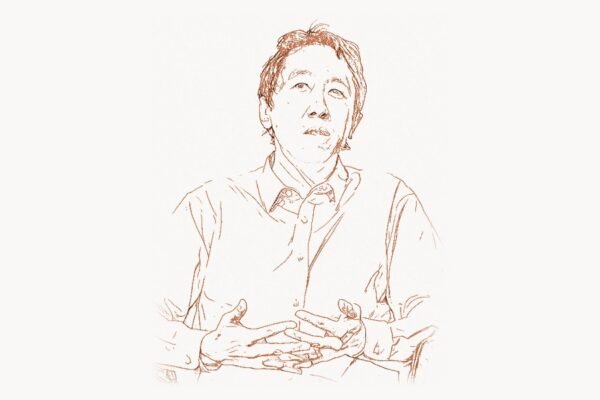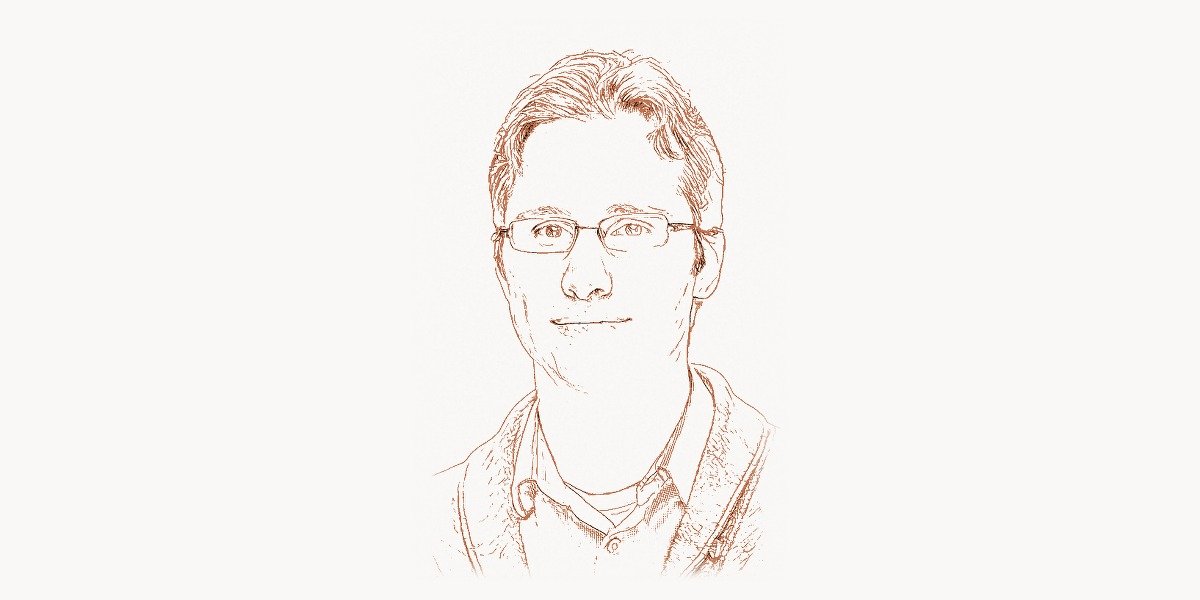
In a world where artificial intelligence has learned to write poetry, compose music, and beat human champions at complex games, one fundamental question remains stubbornly unsolved: how do you teach a machine to pick up a cup of coffee? While language models process billions of tokens and image generators conjure photorealistic scenes, the physical world — with its messy, unpredictable physics — remains AI’s greatest frontier. At the center of this frontier stands Sergey Levine, a UC Berkeley professor whose research has redefined how robots learn from experience. His work on deep reinforcement learning for robotics has bridged the gap between the dazzling theoretical achievements of modern AI and the gritty, real-world challenge of making machines move, grasp, and adapt in physical space.
Early Life and Education
Sergey Levine grew up with a deep curiosity about how intelligent behavior emerges from computation. His academic journey began at Stanford University, where he earned his Bachelor of Science in Computer Science. The Stanford environment, with its proximity to Silicon Valley’s innovation culture and its strong tradition in AI research, provided fertile ground for his developing interests.
Levine continued at Stanford for his doctoral studies, completing his Ph.D. in Computer Science under the supervision of Vladlen Koltun. His dissertation work focused on the intersection of machine learning and robotics — a combination that, at the time, was far from mainstream. While most machine learning researchers were focused on classification tasks, image recognition, and natural language processing, Levine was drawn to the harder problem of continuous control: teaching algorithms to produce the smooth, adaptive movements that physical systems require.
During his Ph.D., Levine developed methods for learning motor skills through guided policy search, an approach that combined trajectory optimization with neural network policy learning. This early work laid the conceptual foundations for everything that followed. He demonstrated that neural networks could learn complex motor behaviors — not by being explicitly programmed with physics equations, but by interacting with environments and learning from the outcomes. This was a radical departure from traditional robotics, which relied heavily on hand-crafted models and meticulously engineered control systems.
After completing his doctorate, Levine joined Google Brain as a research scientist, where he gained access to computational resources and robotic hardware at a scale few academic labs could match. This period proved transformative, allowing him to scale up his ideas and test them on real robotic systems in ways that produced landmark results.
Career and Robotic Deep Reinforcement Learning
Technical Innovation
Sergey Levine’s central contribution to the field is the development and refinement of deep reinforcement learning methods for robotic control. While David Silver and colleagues at DeepMind demonstrated that deep reinforcement learning could master Atari games and the ancient board game Go, Levine tackled the far more challenging domain of physical manipulation — where actions have real consequences and there is no reset button.
His most celebrated early project at Google Brain involved building a farm of robotic arms that learned to grasp objects through trial and error. The system used convolutional neural networks to process raw camera images and predict which grasping motions would succeed. Over the course of approximately 800,000 grasp attempts spread across multiple robots operating in parallel, the system learned a robust grasping policy from scratch — no human demonstrations, no hand-coded rules. The results, published in 2018, showed that large-scale self-supervised robotic learning was not just theoretically possible but practically viable.
The technical architecture underlying this work combined several key ideas. First, off-policy learning allowed the robots to learn from all past experience rather than only from the most recent attempts. Second, visual servoing through learned models enabled the system to continuously adjust its actions based on what it saw through cameras. Third, the use of large-scale data collection across multiple physical robots demonstrated that the data hunger of deep learning could be satisfied even in robotics, where each data point requires real-world physical interaction.
Levine also pioneered model-based reinforcement learning approaches that learn a predictive model of the environment’s dynamics and use that model to plan actions. This is significant because model-free reinforcement learning — while powerful — requires enormous amounts of interaction data, which is expensive and slow to collect with physical robots. By learning a model of how the world works, robots can simulate potential actions mentally before committing to them physically, dramatically improving sample efficiency.
A simplified illustration of how a deep reinforcement learning loop works in robotic grasping:
# Simplified deep RL loop for robotic grasping
import numpy as np

class RoboticGraspAgent:
    def __init__(self, policy_network, replay_buffer):
        self.policy = policy_network      # CNN: image -> grasp parameters
        self.buffer = replay_buffer        # stores (state, action, reward) tuples
        self.epsilon = 0.3                 # exploration rate

    def select_action(self, camera_image):
        """Choose grasp based on visual observation."""
        if np.random.random() < self.epsilon:
            # Explore: random grasp position and angle
            return self.random_grasp()
        # Exploit: use learned policy
        grasp_params = self.policy.predict(camera_image)
        return grasp_params  # (x, y, z, theta)

    def learn_from_experience(self, batch_size=64):
        """Sample past experiences and update policy."""
        batch = self.buffer.sample(batch_size)
        states, actions, rewards = zip(*batch)
        # Rewards: +1 if grasp succeeded, 0 otherwise
        loss = self.policy.train_on_batch(states, actions, rewards)
        return loss

    def run_episode(self, environment):
        """One complete grasp attempt."""
        image = environment.get_camera_image()
        action = self.select_action(image)
        environment.execute_grasp(action)
        success = environment.check_grasp_success()
        self.buffer.store(image, action, float(success))
        self.learn_from_experience()
Another key contribution was Levine's work on soft actor-critic (SAC), developed with his student Tuomas Haarnoja. SAC introduced maximum entropy reinforcement learning, where the agent is trained not only to maximize reward but also to act as randomly as possible while still achieving the task. This might sound counterintuitive, but the entropy bonus encourages exploration and produces policies that are more robust to perturbations — exactly the properties needed for real-world robotic systems that must cope with uncertainty and variation.
# Soft Actor-Critic (SAC) objective — maximum entropy RL
# J(pi) = sum_t E[ r(s_t, a_t) + alpha * H(pi(.|s_t)) ]
#
# Where:
#   r(s_t, a_t) = environment reward
#   H(pi)       = entropy of the policy (encourages exploration)
#   alpha        = temperature parameter balancing reward vs entropy

def sac_policy_loss(policy, q_network, states, alpha=0.2):
    """Compute SAC policy loss with entropy regularization."""
    actions, log_probs = policy.sample(states)
    q_values = q_network(states, actions)

    # Maximize Q-value WHILE maximizing entropy (minimizing log_prob)
    # This produces robust, exploratory policies
    loss = (alpha * log_probs - q_values).mean()
    return loss

# Key insight: the entropy term (alpha * log_probs) prevents
# the policy from collapsing to a single deterministic action,
# making the robot more adaptive to real-world variation.
Why It Mattered
Before Levine's work, robotics and deep learning existed largely in separate worlds. Traditional robotics relied on precise mathematical models of kinematics and dynamics, hand-engineered controllers, and carefully structured environments. Deep learning, meanwhile, was achieving remarkable results in perception tasks but was rarely applied to physical control problems. The gap between these fields was not merely technical — it was cultural. Roboticists were skeptical of data-hungry neural networks that offered little interpretability, while machine learning researchers saw robotics as too slow and too expensive for the rapid experimentation their methods required.
Levine's research demonstrated that this separation was not inevitable. By showing that deep neural networks could learn manipulation skills from raw sensory input through large-scale trial and error, he established a new paradigm for robot learning. This paradigm shift had several important consequences.
First, it democratized robotic capability. Instead of requiring years of engineering expertise to program a robot for each new task, Levine's approach suggested that robots could learn new skills simply by being given the opportunity to practice — much as humans and animals do. Second, it showed that the representations learned by deep networks for perception could be seamlessly integrated with control, creating end-to-end systems where a robot goes directly from pixels to actions. Third, it provided a scalable path forward: more robots, more data, more computation could yield better and more general robotic capabilities, following the same scaling laws that had proven so powerful in language and vision.
The implications extended well beyond academic research. Industries from manufacturing and logistics to healthcare and agriculture recognized that truly adaptive robots — ones that could handle the variability and unpredictability of real-world environments — would be transformative. Levine's methods provided a credible scientific foundation for that transformation, much as John Schulman's PPO algorithm provided a practical foundation for training RL agents in complex virtual environments.
Other Major Contributions
Beyond robotic grasping and manipulation, Levine has made significant contributions across multiple areas of machine learning and AI.
Offline Reinforcement Learning. One of the most practically important challenges in applying RL to real-world problems is that online data collection — where the agent must interact with the environment to learn — is often too dangerous, too expensive, or too slow. Levine and his group have been at the forefront of offline (or batch) RL, developing methods that learn effective policies from previously collected datasets without any additional interaction. This is analogous to how a medical student might learn from case studies before ever treating a patient. His Conservative Q-Learning (CQL) algorithm became a foundational method in this space.
Goal-Conditioned RL and Planning. Levine has explored methods where robots can be given high-level goals and autonomously figure out the sequences of actions needed to achieve them. This work on visual foresight allows robots to imagine the consequences of their actions before executing them, using learned video prediction models to plan manipulation sequences.
Imitation Learning and Learning from Demonstrations. While much of Levine's work focuses on autonomous learning through trial and error, he has also advanced methods for learning from human demonstrations. His work on DAGGER-style algorithms and more recent research on learning from play data — unstructured human interactions with objects — has shown that combining human guidance with autonomous exploration produces the most capable robotic systems.
Foundation Models for Robotics. In recent years, Levine has been a leading voice in exploring how large pretrained models — the kind that power systems like those developed at toimi.pro for project management and team coordination — can be adapted for robotic control. His work on RT-2 and related projects at Google DeepMind demonstrated that vision-language models pretrained on internet-scale data can be fine-tuned to control robots, effectively transferring knowledge from the vast corpus of human text and images into physical action.
Multi-Task and Transfer Learning. A persistent challenge in robotics is that skills learned for one task rarely transfer to another. Levine has worked extensively on multi-task learning frameworks where a single policy can perform many different manipulation tasks, and on transfer learning methods that allow knowledge gained in simulation to be applied to real robots — the so-called sim-to-real transfer problem.
His publication record is remarkably prolific, with papers regularly appearing at top venues such as NeurIPS, ICML, ICLR, CoRL, and RSS. He has co-authored work with researchers from institutions including Google DeepMind, Meta AI, Stanford, CMU, and MIT, reflecting the broad collaborative network his research has fostered.
Philosophy and Approach
Sergey Levine's research philosophy reflects a distinctive set of principles that set him apart from many contemporaries in both the robotics and machine learning communities.
Key Principles
- Learning over engineering. Rather than meticulously designing solutions for specific tasks, Levine consistently advocates for creating general learning algorithms that can discover solutions autonomously. He believes that hand-engineering introduces brittleness and limits generalization, while learning from data produces systems that can adapt to the unexpected.
- Scale as a strategy. Influenced by the success of scaling in language models and computer vision, Levine has pushed for scaling up robotic data collection — using multiple robots working simultaneously, leveraging simulation, and collecting diverse real-world datasets. His bet is that the same scaling laws that transformed NLP will eventually transform robotics.
- End-to-end integration. Levine favors systems that learn directly from raw sensory input (cameras, force sensors) to raw motor output (joint torques, gripper commands), rather than systems that decompose the problem into separately engineered perception and control modules. This end-to-end philosophy, influenced by the deep learning tradition of Sepp Hochreiter and other neural network pioneers, eliminates information bottlenecks and allows the system to discover representations that are optimally suited to the task.
- Real-world validation. While simulation is a valuable tool, Levine insists on testing methods on real physical robots. He has been vocal about the dangers of the sim-to-real gap — the phenomenon where algorithms that perform perfectly in simulation fail in the real world due to unmodeled physics, sensor noise, and other discrepancies.
- Principled theoretical foundations. Despite his emphasis on practical results, Levine's methods are grounded in rigorous mathematical frameworks. His work on maximum entropy RL, for example, is derived from principled information-theoretic arguments, not ad hoc engineering choices.
- Open science and mentorship. Levine's group at UC Berkeley — the Robotic AI & Learning (RAIL) lab — has produced a generation of researchers who now lead their own labs and teams. He is known for making code and datasets publicly available, contributing to the broader community's progress.
This combination of ambitious vision, theoretical rigor, and practical persistence has made Levine one of the most influential figures in the field. His approach resonates with the broader trend in AI research of replacing hand-crafted components with learned ones — a trend that has reshaped fields from natural language processing, as explored in the work of Christopher Manning, to computer vision, as advanced by Karen Simonyan.
Legacy and Impact
Sergey Levine's impact on the field of robotics and machine learning can be measured along several dimensions.
Scientific influence. His papers are among the most cited in robotic learning. The grasping farm work, soft actor-critic, and his offline RL contributions have each become foundational references that subsequent researchers build upon. According to Google Scholar, his work has accumulated tens of thousands of citations, placing him among the most impactful researchers of his generation.
Paradigm shift in robotics. Before Levine, the dominant approach to robotics was model-based control with carefully calibrated perception pipelines. His demonstration that deep learning could handle both perception and control in an integrated fashion has shifted the field's center of gravity. Today, nearly every major robotics lab incorporates deep learning methods, and much of this shift can be traced to the techniques and results his group pioneered.
Industry impact. Levine's time at Google Brain and ongoing collaborations with Google DeepMind have directly influenced the development of industrial robotic systems. The principles he established are being applied in warehouse automation, autonomous vehicle manipulation, and surgical robotics. Companies developing intelligent agents and project coordination tools — such as those at taskee.pro — share the same underlying philosophy of building systems that learn and adapt rather than follow rigid scripts.
Training the next generation. The RAIL lab at Berkeley has produced an extraordinary cohort of researchers. Levine's former students and postdocs hold positions at leading universities and companies worldwide, extending his influence far beyond his own direct publications. His mentorship style emphasizes intellectual independence and bold problem selection, encouraging students to tackle problems that the field considers too hard or too risky.
Bridging communities. One of Levine's most underappreciated contributions is his role in bridging the machine learning and robotics communities. By publishing in both ML conferences (NeurIPS, ICML) and robotics conferences (RSS, CoRL, ICRA), and by speaking to audiences in both fields, he has helped create a shared language and shared set of benchmarks that facilitate collaboration across traditionally siloed disciplines.
His work exists at a pivotal moment in the history of AI. As large language models and generative AI capture public attention, Levine's research reminds us that intelligence is not just about processing text and images — it is fundamentally about acting in the physical world. The quest to build machines that can manipulate, navigate, and interact with physical environments remains one of the great unsolved challenges of our time, and Levine's contributions have brought us closer to meeting that challenge than ever before, much as Alec Radford's work on GPT and CLIP redefined what was possible in language and vision.
Key Facts
- Full name: Sergey Levine
- Education: B.S. and Ph.D. in Computer Science, Stanford University
- Current position: Associate Professor, Department of Electrical Engineering and Computer Sciences, UC Berkeley
- Lab: Robotic AI & Learning (RAIL) Lab at UC Berkeley
- Previous role: Research Scientist at Google Brain
- Known for: Deep reinforcement learning for robotics, soft actor-critic (SAC), large-scale robotic grasping, offline RL, visual foresight
- Key publications: End-to-end training of deep visuomotor policies (2016), Soft Actor-Critic (2018), QT-Opt large-scale grasping (2018), Conservative Q-Learning (2020), RT-2 (2023)
- Awards: NIPS Best Paper Award, MIT Technology Review 35 Innovators Under 35, IEEE RAS Early Career Award, Sloan Research Fellowship
- Research themes: Robot learning, model-based RL, offline RL, imitation learning, foundation models for robotics
FAQ
What is deep reinforcement learning for robotics?
Deep reinforcement learning for robotics combines deep neural networks — which can process high-dimensional sensory data like camera images — with reinforcement learning algorithms that learn through trial and error. In Levine's framework, a robot receives visual observations from cameras, uses a neural network to decide on actions (such as how to move its gripper), executes those actions in the physical world, and then receives feedback on whether the action succeeded. Over thousands or millions of attempts, the neural network learns to map visual observations to effective actions without any explicit programming of the task. This approach contrasts with traditional robotics, where engineers must manually specify how a robot should perceive its environment and what control laws it should follow.
How did Sergey Levine's robotic grasping experiment work?
The landmark robotic grasping experiment involved a collection of robotic arms, each equipped with a camera and a parallel-jaw gripper, placed in front of bins containing assorted objects. The robots attempted grasps continuously, collecting data on which visual observations and motor commands led to successful grasps and which did not. This data was used to train a convolutional neural network that predicted grasp success from camera images and proposed grasp commands. Over approximately 800,000 grasp attempts collected across multiple robots, the system achieved a grasp success rate that significantly outperformed prior methods, demonstrating that large-scale self-supervised learning could work for physical manipulation tasks.
What is the soft actor-critic algorithm and why is it important?
The soft actor-critic (SAC) is a reinforcement learning algorithm developed by Levine and Tuomas Haarnoja that optimizes a modified objective: instead of simply maximizing the expected sum of rewards, SAC also maximizes the entropy (randomness) of the policy. This entropy bonus has several practical benefits. It encourages the agent to explore more broadly during training, which helps avoid getting stuck in poor local optima. It also produces policies that are robust to perturbations and variability — crucial for real robots that must operate in unpredictable environments. SAC has become one of the most widely used continuous-control RL algorithms due to its stability, sample efficiency, and strong performance across diverse tasks.
How is Levine's research influencing the future of autonomous robots?
Levine's research is shaping the future of autonomy by establishing that general-purpose learning algorithms, rather than task-specific engineering, are the most promising path to capable robots. His recent work on foundation models for robotics — where large pretrained vision-language models are adapted for robotic control — suggests a future where robots can understand natural language instructions, reason about their environment using common-sense knowledge absorbed from internet-scale training data, and execute complex multi-step tasks without task-specific programming. This vision, if realized, would make robots far more accessible and useful across industries, from manufacturing and healthcare to domestic assistance and exploration.