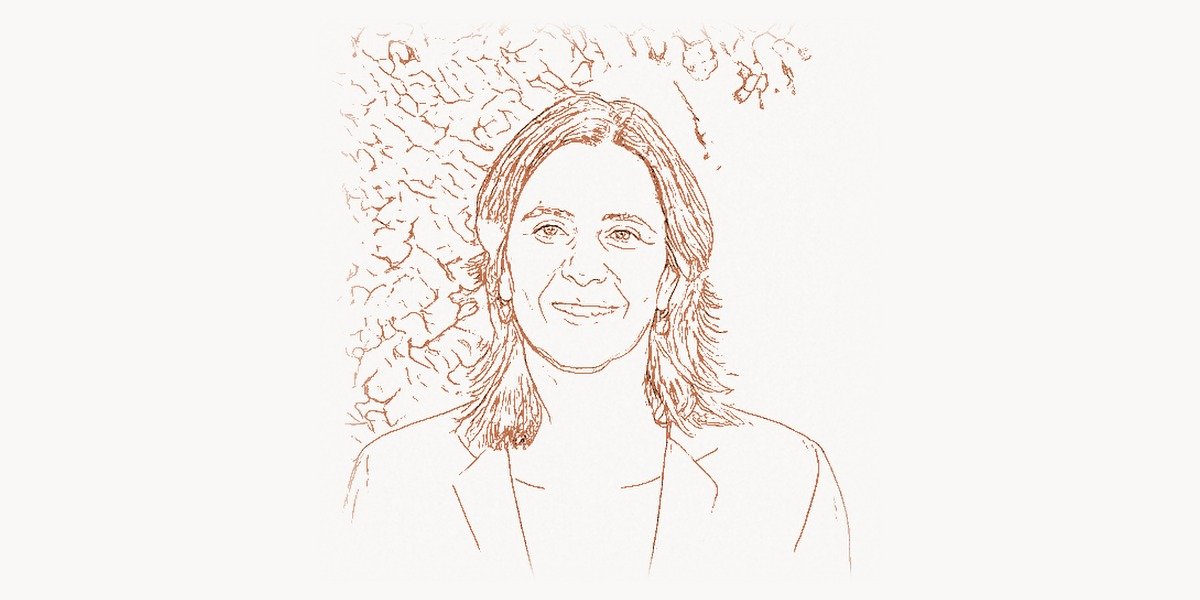
In the annals of computer science, few contributions have reshaped an entire field as profoundly as the work of Shafi Goldwasser. At a time when cryptography was still largely the province of government agencies and military intelligence, Goldwasser — alongside her long-time collaborator Silvio Micali — introduced mathematical rigor to the discipline and, in the process, invented concepts that would become foundational to every secure digital transaction on the planet. Her co-invention of zero-knowledge proofs, her pioneering work on probabilistic encryption, and her deep investigations into interactive proof systems earned her the 2012 Turing Award and two Gödel Prizes, placing her among the most decorated theoretical computer scientists in history. What makes Goldwasser’s story particularly compelling is how her restless curiosity about the mathematical underpinnings of secrecy led to tools now embedded in everything from blockchain protocols to electronic voting — tools whose full potential the world is only beginning to realize.
Early Life and Education
Shafi Goldwasser was born in New York City in 1958, though she spent much of her childhood in Tel Aviv, Israel. Growing up in a household that valued education and intellectual exploration, she developed an early affinity for mathematics — not the rote kind taught in classrooms, but the deeper, more puzzle-like reasoning that would later define her career. Her dual upbringing across American and Israeli cultures gave her an international perspective that would later prove invaluable in her academic career, which spanned both MIT and the Weizmann Institute of Science.
Goldwasser returned to the United States for her undergraduate studies, earning her bachelor’s degree in mathematics from Carnegie Mellon University in 1979. It was there that she first encountered the intersection of pure mathematics and computer science — a junction that was still relatively unexplored at the time. She then pursued graduate studies at the University of California, Berkeley, where she completed her PhD in computer science in 1984 under the supervision of Manuel Blum, himself a Turing Award laureate. Blum’s research group was a crucible for groundbreaking ideas in computational complexity and cryptography, and it was in this environment that Goldwasser began the work that would define the next four decades of her career.
Her doctoral thesis, completed with Silvio Micali, laid the groundwork for what would become one of the most important papers in the history of cryptography: the formalization of probabilistic encryption and the concept of semantic security. This was not merely an academic exercise — it was a fundamental rethinking of what it means for an encryption scheme to be secure. Where previous notions of security were often informal or insufficient, Goldwasser and Micali demanded mathematical proof, setting a standard that the entire field would eventually adopt.
Career and Technical Contributions
After completing her PhD, Goldwasser joined the faculty at MIT, where she would spend the bulk of her academic career as a professor of electrical engineering and computer science. She simultaneously maintained a position at the Weizmann Institute of Science in Rehovot, Israel, splitting her time between two of the world’s premier research institutions. This transatlantic arrangement allowed her to build and mentor research groups on both sides of the ocean, creating a network of collaborators and students who would go on to become leaders in theoretical computer science and cryptography.
Her work at MIT placed her at the heart of the Theory of Computation group, alongside luminaries like Ron Rivest and Michael Sipser. While Rivest and his collaborators had already revolutionized cryptography with the RSA algorithm, Goldwasser was asking a different — and in some ways deeper — question: how do we prove that a cryptographic system is secure? This question, deceptively simple in its formulation, required entirely new mathematical frameworks to answer.
Technical Innovation: Zero-Knowledge Proofs and Probabilistic Encryption
Goldwasser’s most celebrated technical contribution is the co-invention of zero-knowledge proofs (ZKPs), introduced in the 1985 paper “The Knowledge Complexity of Interactive Proof Systems,” co-authored with Silvio Micali and Charles Rackoff. The concept is both elegant and counterintuitive: a zero-knowledge proof allows one party (the prover) to convince another party (the verifier) that a statement is true, without revealing any information beyond the truth of the statement itself.
To illustrate with a classic analogy: imagine you are colorblind, and I want to prove to you that two balls are different colors without telling you which is which. I can design an interactive protocol where you repeatedly test me — hiding the balls, switching them, asking me to identify changes — until you are statistically convinced that I can indeed distinguish them, even though you never learn what the actual colors are. This is the essence of zero-knowledge.
The formal definition introduced by Goldwasser, Micali, and Rackoff required three properties: completeness (an honest prover can always convince an honest verifier), soundness (a dishonest prover cannot fool the verifier except with negligible probability), and zero-knowledge (the verifier learns nothing beyond the validity of the statement). The mathematical precision of these definitions was revolutionary. Here is a simplified representation of how a zero-knowledge proof protocol for graph isomorphism might be structured:
import random
import hashlib

class ZKProofGraphIsomorphism:
    """
    Simplified zero-knowledge proof protocol demonstrating
    the structure Goldwasser, Micali, and Rackoff formalized.
    Prover convinces Verifier that two graphs G0, G1 are isomorphic
    without revealing the isomorphism itself.
    """

    def __init__(self, graph_g0, graph_g1, isomorphism):
        self.G0 = graph_g0
        self.G1 = graph_g1
        self.iso = isomorphism  # secret mapping G0 -> G1

    def prover_commit(self):
        """Step 1: Prover creates random permutation of G0"""
        n = len(self.G0)
        self.perm = list(range(n))
        random.shuffle(self.perm)
        # H is a random isomorphic copy of G0 (and G1)
        self.H = self._apply_permutation(self.G0, self.perm)
        commitment = hashlib.sha256(str(self.H).encode()).hexdigest()
        return commitment, self.H

    def verifier_challenge(self):
        """Step 2: Verifier picks random bit b in {0, 1}"""
        return random.randint(0, 1)

    def prover_respond(self, challenge_bit):
        """Step 3: Prover reveals permutation from G_b to H"""
        if challenge_bit == 0:
            return self.perm  # mapping G0 -> H
        else:
            # Compose: G1 -> G0 -> H
            composed = self._compose(self._invert(self.iso), self.perm)
            return composed

    def verifier_check(self, graph_b, response_perm, H):
        """Step 4: Verifier checks that permutation maps G_b to H"""
        reconstructed = self._apply_permutation(graph_b, response_perm)
        return reconstructed == H

    def run_protocol(self, rounds=40):
        """
        Run multiple rounds. Soundness error = (1/2)^rounds.
        After 40 rounds, probability of cheating < 10^-12.
        """
        for i in range(rounds):
            commitment, H = self.prover_commit()
            b = self.verifier_challenge()
            response = self.prover_respond(b)
            graph_b = self.G0 if b == 0 else self.G1
            if not self.verifier_check(graph_b, response, H):
                return False  # Verifier rejects
        return True  # Verifier accepts with high confidence
The zero-knowledge property is subtle but profound: because the verifier's challenge is random, and the prover's response is determined entirely by that randomness, the entire transcript of the interaction could be simulated by the verifier alone without the prover's participation. This simulatability is the formal guarantee that no knowledge leaks. This concept, first rigorously defined by Goldwasser and her collaborators, has become the theoretical foundation for privacy-preserving protocols across the digital landscape.
Equally transformative was their earlier 1982 paper on probabilistic encryption, which introduced the notion of semantic security. Before Goldwasser and Micali, encryption schemes were evaluated informally — a system was considered "good" if no one could figure out an obvious way to break it. Goldwasser and Micali replaced this ad hoc reasoning with a rigorous definition: an encryption scheme is semantically secure if an adversary with the ciphertext cannot compute any function of the plaintext that they could not compute without the ciphertext. In other words, the ciphertext reveals absolutely nothing about the message. This definition, now standard across all of modern cryptography, was a paradigm shift comparable to what Alan Turing achieved by formalizing the notion of computation itself.
Why It Mattered
The practical implications of Goldwasser's theoretical work have proven immense. Zero-knowledge proofs, once considered a purely theoretical curiosity, have become a cornerstone of modern blockchain technology. ZK-rollups on Ethereum use zero-knowledge proofs to bundle hundreds of transactions into a single proof, dramatically improving scalability while maintaining privacy. Protocols like Zcash use a variant called zk-SNARKs (Zero-Knowledge Succinct Non-Interactive Arguments of Knowledge) to enable fully private cryptocurrency transactions. Digital identity systems in Estonia and elsewhere use zero-knowledge techniques so citizens can prove attributes (such as being over 18) without revealing their full identity.
Semantic security, meanwhile, became the gold standard for evaluating any encryption scheme. Every modern public-key cryptosystem — from the RSA variants used in TLS/SSL to the elliptic curve schemes protecting mobile communications — must satisfy Goldwasser and Micali's definition to be considered secure. Without this theoretical framework, the internet's security infrastructure would lack the mathematical foundations upon which billions of dollars in daily e-commerce depend. Teams working on modern web development and digital strategy at firms like Toimi rely on these foundational cryptographic guarantees every time they implement secure user authentication or payment processing.
Other Notable Contributions
While zero-knowledge proofs and probabilistic encryption are Goldwasser's most famous contributions, her research portfolio extends far beyond these landmark results. Her work on interactive proof systems, developed with Micali and Rackoff and later expanded with László Babai, fundamentally changed the landscape of computational complexity theory. The class IP (Interactive Polynomial time) and the celebrated result IP = PSPACE (proved by Adi Shamir, building directly on the framework Goldwasser helped create) demonstrated that interactive proofs are far more powerful than anyone had anticipated.
Goldwasser also made foundational contributions to the theory of program obfuscation and the study of pseudorandom number generators. Her work with Oded Goldreich and Avi Wigderson on multi-party computation showed that any function can be computed securely by a group of parties, even if some of them are malicious — a result with profound implications for distributed systems and collaborative project management platforms like Taskee, where data privacy across multiple stakeholders is paramount.
In the domain of computational number theory, Goldwasser contributed to primality testing algorithms that influenced how cryptographic key generation works in practice. Her work on lattice-based cryptography, conducted with colleagues at MIT and the Weizmann Institute, has become increasingly relevant as the field prepares for the post-quantum era — a domain where researchers like Tanja Lange continue pushing boundaries.
The following configuration demonstrates how zero-knowledge proof verification might be structured in a modern blockchain smart contract context — the kind of system that directly descends from Goldwasser's theoretical work:
// SPDX-License-Identifier: MIT
pragma solidity ^0.8.19;

/**
 * Simplified ZK proof verifier contract structure.
 * Illustrates how Goldwasser's zero-knowledge framework
 * is now embedded in blockchain infrastructure.
 *
 * In production, libraries like snarkjs generate proofs
 * that contracts like this verify on-chain.
 */
contract ZKVerifier {
    // Verification key components (from trusted setup)
    struct VerifyingKey {
        uint256[2] alpha;
        uint256[2][2] beta;
        uint256[2][2] gamma;
        uint256[2][2] delta;
        uint256[2][] ic; // input commitments
    }

    struct Proof {
        uint256[2] a;     // elliptic curve point A
        uint256[2][2] b;  // elliptic curve point B
        uint256[2] c;     // elliptic curve point C
    }

    VerifyingKey public vk;
    mapping(bytes32 => bool) public verifiedProofs;

    event ProofVerified(
        address indexed submitter,
        bytes32 indexed proofHash,
        bool valid
    );

    /**
     * Core verification: checks the pairing equation
     * e(A, B) = e(alpha, beta) * e(IC, gamma) * e(C, delta)
     *
     * This is the on-chain embodiment of Goldwasser's
     * zero-knowledge completeness and soundness properties.
     */
    function verifyProof(
        Proof memory proof,
        uint256[] memory publicInputs
    ) public returns (bool) {
        require(
            publicInputs.length + 1 == vk.ic.length,
            "Invalid public inputs length"
        );

        // Compute linear combination of public inputs
        uint256[2] memory vk_x = vk.ic[0];
        for (uint256 i = 0; i < publicInputs.length; i++) {
            vk_x = addition(
                vk_x,
                scalar_mul(vk.ic[i + 1], publicInputs[i])
            );
        }

        // Verify pairing (simplified — uses precompile)
        bool success = checkPairing(
            proof.a, proof.b,
            vk.alpha, vk.beta,
            vk_x, vk.gamma,
            proof.c, vk.delta
        );

        bytes32 proofHash = keccak256(abi.encode(proof));
        verifiedProofs[proofHash] = success;
        emit ProofVerified(msg.sender, proofHash, success);
        return success;
    }
}
Philosophy and Key Principles
Goldwasser's approach to research is defined by a conviction that theoretical rigor is not an obstacle to practical impact — it is a prerequisite for it. She has repeatedly argued that the most useful results in cryptography emerged from asking the right foundational questions, not from building systems first and trying to prove them secure afterward. This philosophy places her in the tradition of researchers like Edsger Dijkstra, who believed that mathematical elegance and practical utility are not in tension but are deeply intertwined.
A central tenet of her work is the idea that security must be defined before it can be achieved. This sounds obvious in retrospect, but before Goldwasser and Micali's semantic security definition, the cryptographic community operated largely on intuition and the absence of known attacks. Goldwasser's insistence on rigorous definitions — what does it mean for something to be secure? what does it mean for a proof to reveal no knowledge? — fundamentally changed how the field thinks about these questions.
She is also a passionate advocate for diversity in computer science and STEM fields more broadly. As one of the few women to reach the highest echelons of theoretical computer science — joining the ranks of pioneers like Ada Lovelace — Goldwasser has been vocal about the need to create inclusive environments where talent is not lost to structural barriers. Her mentoring record is exemplary: many of her former students and postdocs now hold faculty positions at leading universities worldwide.
Goldwasser has also expressed concerns about the dual-use nature of cryptographic research. While her work enables privacy and security, she is aware that the same tools can be used to shield illicit activity. She has advocated for thoughtful policy discussions that balance individual privacy with societal needs — a nuanced position in a field where absolutism is common.
Legacy and Impact
Shafi Goldwasser's legacy is measured not only in theorems but in the conceptual vocabulary she gave to an entire discipline. Terms like "zero-knowledge," "semantic security," "interactive proof," and "knowledge complexity" are now part of the standard lexicon of computer science, used daily by researchers, engineers, and developers worldwide. The frameworks she helped create are taught in every serious cryptography course and form the theoretical backbone of digital security infrastructure.
Her 2012 Turing Award, shared with Silvio Micali, recognized their "transformative work that laid the complexity-theoretic foundations for the science of cryptography." The award citation specifically highlighted zero-knowledge proofs and probabilistic encryption as contributions that changed the field permanently. But the Turing Award was just one milestone in a career studded with honors: two Gödel Prizes (in 1993 and 2001), the RSA Award for Excellence in Mathematics, election to the National Academy of Sciences, the National Academy of Engineering, and the American Academy of Arts and Sciences.
The practical reach of her work continues to expand. In the blockchain space, zero-knowledge proofs have moved from academic curiosity to production technology. Ethereum's roadmap explicitly relies on ZK-rollups for scalability. Privacy-focused cryptocurrencies like Zcash would be impossible without the theoretical framework Goldwasser helped establish. Beyond blockchain, zero-knowledge techniques are being explored for secure voting systems, private medical record sharing, and anonymous credential systems — applications that could reshape how societies handle sensitive information.
Her influence is also visible through her academic lineage. The researchers she trained at MIT and the Weizmann Institute have gone on to make their own groundbreaking contributions, extending the reach of her ideas into new domains. The public-key cryptography revolution started by Diffie and Hellman found its mathematical completion in the work of Goldwasser and her generation, who proved that these systems could be not just useful but provably secure.
In an era when cybersecurity threats grow more sophisticated daily, and when privacy is under pressure from both state surveillance and corporate data collection, Goldwasser's work provides the mathematical bedrock upon which defenses are built. Her contributions remind us that the most practical thing in the world can be a good theory — and that the quest to understand the fundamental nature of knowledge, secrecy, and proof is far from over.
Key Facts
| Detail | Information |
|---|---|
| Full Name | Shafrira Goldwasser |
| Born | 1958, New York City, USA |
| Education | BS Mathematics, Carnegie Mellon University (1979); PhD Computer Science, UC Berkeley (1984) |
| PhD Advisor | Manuel Blum |
| Positions | Professor, MIT EECS; Professor, Weizmann Institute of Science; Director, Simons Institute for the Theory of Computing, UC Berkeley |
| Key Contributions | Zero-knowledge proofs, probabilistic encryption, semantic security, interactive proof systems, multi-party computation |
| Turing Award | 2012 (shared with Silvio Micali) |
| Gödel Prizes | 1993 (interactive proofs), 2001 (probabilistic checking of proofs) |
| Primary Collaborator | Silvio Micali |
| Known For | Co-founding the complexity-theoretic foundations of modern cryptography |
Frequently Asked Questions
What are zero-knowledge proofs, and why did Goldwasser's formalization matter?
Zero-knowledge proofs are cryptographic protocols that allow one party to prove a statement is true without revealing any information beyond the truth of that statement. Before Goldwasser, Micali, and Rackoff's 1985 paper, the concept had no rigorous mathematical definition. Their formalization — specifying completeness, soundness, and the zero-knowledge property through the simulation paradigm — transformed an intuitive idea into a precise mathematical tool. This precision was essential because without formal definitions, it was impossible to prove that any system actually achieved zero-knowledge. Their work spawned an entire subfield and is now the basis for privacy-preserving technologies in blockchain, digital identity, and secure computation. The influence parallels how Whitfield Diffie's formalization of public-key concepts opened entirely new avenues for practical cryptography.
How does probabilistic encryption differ from earlier encryption methods?
Traditional (deterministic) encryption produces the same ciphertext for the same plaintext every time, which leaks information — an attacker can tell when the same message is sent twice. Goldwasser and Micali's probabilistic encryption introduces randomness into the encryption process, so encrypting the same message twice produces different ciphertexts. More importantly, they defined semantic security: the formal guarantee that a ciphertext reveals absolutely no computationally extractable information about the underlying plaintext. This definition became the benchmark against which all modern encryption schemes are measured, from RSA-OAEP to elliptic curve cryptography, ensuring that the systems protecting online banking, email, and messaging meet a provably rigorous standard of security.
What is the practical impact of zero-knowledge proofs in modern technology?
Zero-knowledge proofs have moved from pure theory to production technology across several domains. In blockchain, ZK-rollups (used by Ethereum layer-2 solutions like zkSync and StarkNet) batch hundreds of transactions into a single proof, improving throughput while maintaining security. Zcash uses zk-SNARKs for fully private cryptocurrency transactions. In identity management, zero-knowledge proofs enable selective disclosure — proving you are over 18 without revealing your birth date, or proving you hold a valid credential without exposing the credential itself. Governments and enterprises are exploring ZK-based voting systems, supply chain verification, and medical record sharing. These applications all trace their theoretical lineage back to the framework Goldwasser co-invented.
How has Goldwasser influenced the field beyond her own research?
Goldwasser's influence extends well beyond her published papers. As a professor at MIT and the Weizmann Institute, she trained generations of researchers who have gone on to shape cryptography, complexity theory, and computer science more broadly. Her insistence on formal definitions and rigorous proofs established a methodology that the entire cryptographic community adopted. She also served as the director of the Simons Institute for the Theory of Computing at UC Berkeley, fostering interdisciplinary collaboration. Her visibility as a woman in a male-dominated field has inspired countless students and researchers, and her advocacy for inclusive research environments has contributed to slow but meaningful cultural change in theoretical computer science. The security frameworks underpinning RSA cryptography and the broader field of computational security all bear the imprint of her foundational definitions.