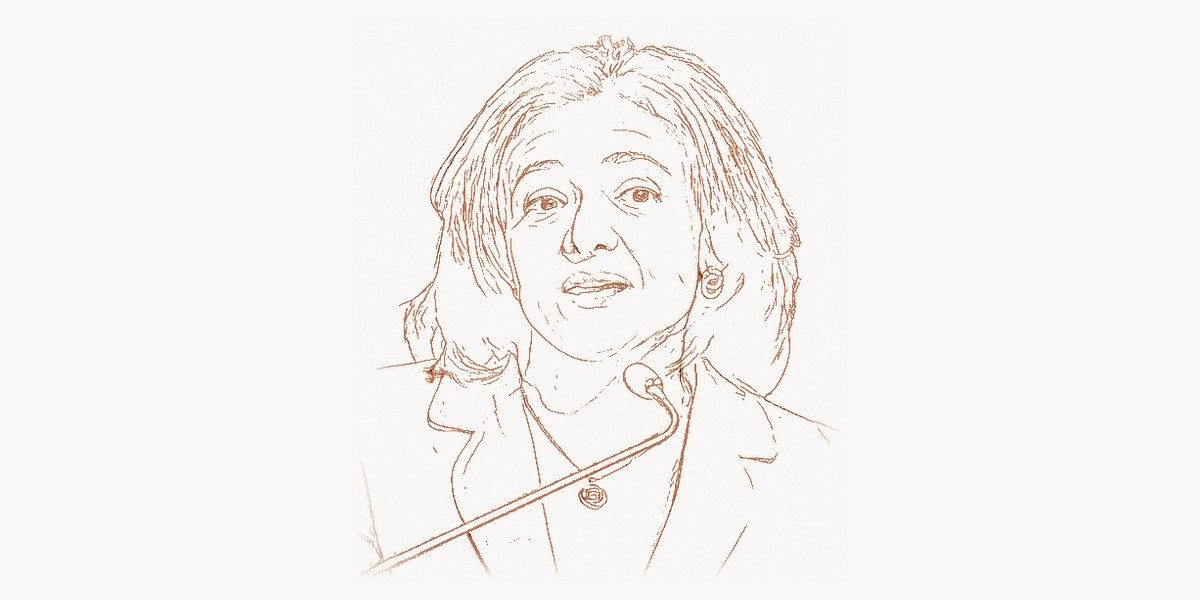
In March 2008, Sheryl Sandberg left her position as Vice President of Global Online Sales and Operations at Google to become the Chief Operating Officer of Facebook — a social network that had 100 million users but virtually no sustainable revenue model. The company was burning through venture capital, its advertising tools were primitive, and its infrastructure was straining under exponential growth. Mark Zuckerberg was 23 years old, brilliant at product and engineering, but openly acknowledged that he needed someone who could build the business machinery around his creation. Over the next fourteen years, Sandberg would transform Facebook from a college social network into one of the most profitable companies in the history of capitalism. She built an advertising platform that generated over $115 billion in annual revenue by 2021, scaled the company’s operations from 500 to over 77,000 employees, and navigated crises that ranged from congressional hearings on election interference to a global reckoning over data privacy. Along the way, she wrote Lean In, a book that ignited one of the most consequential debates about women in the workplace since Betty Friedan’s The Feminine Mystique. Whether one views Sandberg as the architect of the modern attention economy or as the executive who turned surveillance into a business model — or both — her impact on the technology industry, digital advertising, and workplace culture is immense and undeniable.
Early Life and Path to Technology
Sheryl Kara Sandberg was born on August 28, 1969, in Washington, D.C. Her father, Joel Sandberg, was an ophthalmologist, and her mother, Adele Sandberg, taught French at a local college before earning a PhD. The family moved to North Miami Beach, Florida, when Sheryl was two. She was the eldest of three children and, by all accounts, a driven student from an early age. She graduated first in her class at North Miami Beach High School in 1987.
Sandberg enrolled at Harvard University, where she studied economics and graduated summa cum laude in 1991. Her senior thesis, on the economics of spousal abuse — why women in abusive relationships face structural economic barriers to leaving — earned the John H. Williams Prize for the best senior thesis in economics. It was a topic that foreshadowed her later focus on systemic barriers facing women. At Harvard, she studied under Larry Summers, who would become her mentor and a pivotal figure in her career trajectory.
After Harvard, Sandberg spent a year at McKinsey & Company as a management consultant, then followed Summers to the World Bank in 1991, where she worked on health projects in India focused on leprosy, AIDS, and blindness. When Summers was appointed U.S. Secretary of the Treasury in 1999, Sandberg joined his staff as Chief of Staff — a role of extraordinary influence for someone in her early thirties. At Treasury, she worked on debt relief for developing nations and the U.S. response to the Asian financial crisis. These experiences gave Sandberg something rare among Silicon Valley executives: a deep understanding of government, policy, and the mechanics of institutional power at a global scale.
Google: Building the Ad Machine
Sandberg joined Google in 2001, when the company was still in its early growth phase with around 300 employees. She was hired to lead the company’s advertising and publishing business — the engine that would ultimately generate virtually all of Google’s revenue. Over six and a half years, she built and scaled Google’s ad sales team, oversaw the growth of AdWords and AdSense, and helped transform Google from a search engine with an uncertain business model into the most profitable advertising company in the world.
The work at Google taught Sandberg the fundamental lesson she would later apply at Facebook: in the attention economy, the product that users see — search results, social feeds, email — is not the product being sold. The product being sold is the user’s attention, and the customers are advertisers. The challenge is building systems that make advertising so precisely targeted, so measurably effective, and so easy to purchase that businesses of every size — from multinational corporations to local pizza shops — will shift their budgets from traditional media to digital platforms. This required not just sales talent but infrastructure: auction systems for pricing ads, analytics dashboards for measuring performance, self-serve tools that allowed small businesses to create campaigns without a sales representative, and data pipelines that processed billions of events per day to match ads to users.
The Technical Foundation
Under Sandberg’s operational leadership, Google refined the ad auction mechanism that would become the template for the entire digital advertising industry. The system combined advertiser bids with quality signals to determine which ads appeared and in what order. This approach — where the highest bidder does not automatically win, because ad relevance and user experience factor into the ranking — was a critical innovation that kept the user experience tolerable while maximizing revenue.
"""
Simplified Ad Auction Algorithm
Based on the Generalized Second-Price (GSP) auction model
that Sandberg's teams scaled at Google and later adapted at Facebook.

The key insight: ad placement is not a simple highest-bidder-wins auction.
Instead, it combines bid amount with predicted relevance (quality score)
to maximize both revenue AND user experience. This dual optimization
is what made digital advertising sustainable at scale.
"""
from dataclasses import dataclass
from typing import List, Tuple
import math


@dataclass
class AdCandidate:
    advertiser_id: str
    campaign_name: str
    bid_per_action: float       # Max willingness to pay (CPC/CPM/CPA)
    predicted_ctr: float        # ML model prediction: P(user clicks)
    predicted_cvr: float        # P(user converts | click)
    relevance_score: float      # 0-1, content match to user interest
    ad_quality_score: float     # Landing page quality, ad format, history
    budget_remaining: float     # Daily budget left


@dataclass
class AuctionResult:
    advertiser_id: str
    position: int
    expected_value: float       # eCPM used for ranking
    actual_price: float         # What they actually pay (2nd price)
    predicted_ctr: float


class AdAuctionEngine:
    """
    The ad auction engine ranks candidates by expected value
    to the platform, then charges based on second-price logic.

    This is the core economic engine that Sandberg built first
    at Google, then rebuilt and expanded at Facebook. At Facebook,
    the model shifted from search-intent signals to behavioral
    and demographic targeting — a fundamentally different (and
    more controversial) approach to predicting relevance.
    """

    def __init__(self, reserve_price: float = 0.01):
        self.reserve_price = reserve_price  # Minimum eCPM to show

    def compute_expected_value(self, ad: AdCandidate) -> float:
        """
        Calculate eCPM (effective cost per mille) for ranking.

        eCPM = bid * predicted_CTR * quality_score * 1000
        This formula ensures that highly relevant ads with
        lower bids can outrank irrelevant ads with higher bids.
        """
        ecpm = (
            ad.bid_per_action
            * ad.predicted_ctr
            * ad.ad_quality_score
            * (0.7 + 0.3 * ad.relevance_score)  # Relevance boost
            * 1000
        )
        return ecpm

    def run_auction(self, candidates: List[AdCandidate],
                    num_slots: int = 3) -> List[AuctionResult]:
        """
        Run a single ad auction for available impression slots.
        Returns ranked winners with second-price charges.
        """
        # Filter candidates with depleted budgets
        eligible = [ad for ad in candidates
                    if ad.budget_remaining > ad.bid_per_action]

        # Score and rank all eligible ads
        scored = []
        for ad in eligible:
            ev = self.compute_expected_value(ad)
            if ev >= self.reserve_price:
                scored.append((ad, ev))

        scored.sort(key=lambda x: x[1], reverse=True)

        # Assign slots with second-price pricing
        results = []
        for i in range(min(num_slots, len(scored))):
            ad, ev = scored[i]
            # Second-price: pay just enough to beat next bidder
            if i + 1 < len(scored):
                next_ev = scored[i + 1][1]
                price = (next_ev / (ad.predicted_ctr
                         * ad.ad_quality_score * 1000)) + 0.001
            else:
                price = self.reserve_price / 1000

            results.append(AuctionResult(
                advertiser_id=ad.advertiser_id,
                position=i + 1,
                expected_value=ev,
                actual_price=round(price, 4),
                predicted_ctr=ad.predicted_ctr,
            ))
        return results


# Example: Facebook News Feed ad auction for a single impression
engine = AdAuctionEngine(reserve_price=0.50)

candidates = [
    AdCandidate("nike_brand", "Summer Campaign", bid_per_action=2.50,
                predicted_ctr=0.032, predicted_cvr=0.08,
                relevance_score=0.85, ad_quality_score=0.92,
                budget_remaining=5000.0),
    AdCandidate("local_bakery", "Grand Opening", bid_per_action=0.80,
                predicted_ctr=0.051, predicted_cvr=0.12,
                relevance_score=0.94, ad_quality_score=0.78,
                budget_remaining=50.0),
    AdCandidate("fintech_app", "Install Campaign", bid_per_action=5.00,
                predicted_ctr=0.011, predicted_cvr=0.03,
                relevance_score=0.42, ad_quality_score=0.65,
                budget_remaining=2000.0),
]

results = engine.run_auction(candidates, num_slots=2)
for r in results:
    print(f"Slot {r.position}: {r.advertiser_id} "
          f"(eCPM=${r.expected_value:.2f}, pays ${r.actual_price:.4f}/click)")
Sandberg's time at Google was formative not just for the skills she developed but for the worldview she adopted. She saw firsthand that the ability to measure advertising effectiveness — to tell an advertiser exactly how many people saw their ad, clicked on it, and purchased the product — was the competitive advantage that would drain budgets from television, print, and radio. When she arrived at Facebook, she brought this conviction and the operational playbook to execute on it.
Facebook: From Social Network to Advertising Empire
The Revenue Challenge
When Sandberg joined Facebook in March 2008, the company had approximately 100 million monthly active users and was growing rapidly. But growth without revenue is just an expensive hobby. Facebook's advertising was rudimentary — basic display banners that performed poorly. The company had experimented with Beacon, a system that broadcast users' purchases to their friends, which provoked a privacy backlash and was quickly shut down. Mark Zuckerberg had built an extraordinary product, but the business side was underdeveloped.
Sandberg's mandate was clear: build a revenue engine that could sustain the company's growth and justify its mounting valuation. She approached this with the methodical intensity she had brought to every prior role. She restructured the sales organization, hired experienced advertising executives from traditional media, and — most critically — championed the development of a self-serve advertising platform that allowed any business, no matter how small, to create and run targeted ad campaigns on Facebook.
The self-serve model was transformative. Instead of relying on a sales force that could only serve large accounts, Facebook now had millions of small and medium businesses running their own campaigns. A restaurant owner in Omaha could target women aged 25-40 within ten miles who had expressed interest in Italian food — a level of targeting granularity that no traditional medium could match. This long tail of small advertisers would eventually constitute the majority of Facebook's revenue, and it fundamentally democratized access to sophisticated marketing tools that were previously available only to corporations with million-dollar budgets. The approach aligned with how modern project management was evolving — making enterprise-grade tools accessible to teams of every size.
The Data Advantage
What made Facebook's advertising platform uniquely powerful was the data. Unlike Google, which knew what users were searching for (a signal of intent), Facebook knew who users were — their age, location, education, employer, relationship status, interests, friend networks, and behavioral patterns. This identity-based targeting was a fundamentally different paradigm from keyword-based advertising, and Sandberg understood its commercial potential immediately.
Under her leadership, Facebook built increasingly sophisticated tools for advertisers: Custom Audiences (targeting existing customers by uploading email lists), Lookalike Audiences (finding new users who resembled existing customers), the Facebook Pixel (tracking conversions on advertisers' websites), and eventually the Conversions API for server-side event tracking. Each tool made the feedback loop between ad spend and business outcomes tighter, more measurable, and more automated. By the time of Facebook's IPO in May 2012, the advertising engine Sandberg had built was generating over $3.7 billion in annual revenue. By 2021, that figure had grown to over $115 billion.
"""
Social Media Advertising Metrics Pipeline
A simplified model of the data infrastructure Sandberg's teams
built at Facebook to track ad performance across billions of
daily events — from impression to conversion.

This pipeline architecture enabled the self-serve platform that
transformed Facebook from a social network into an ad tech giant.
Billions of events flow through systems like this every hour,
feeding both real-time dashboards for advertisers and ML models
for ad targeting optimization.
"""
from dataclasses import dataclass, field
from datetime import datetime, timedelta
from typing import Dict, List, Optional
from collections import defaultdict
import json


@dataclass
class AdEvent:
    """A single trackable event in the ad delivery pipeline."""
    event_id: str
    event_type: str          # impression, click, conversion, view
    timestamp: datetime
    user_id: str             # Anonymized user identifier
    ad_id: str
    campaign_id: str
    advertiser_id: str
    placement: str           # news_feed, stories, right_column, reels
    device_type: str         # mobile_ios, mobile_android, desktop
    cost: float              # Amount charged to advertiser
    metadata: Dict = field(default_factory=dict)


@dataclass
class CampaignMetrics:
    """Aggregated performance metrics for an ad campaign."""
    campaign_id: str
    impressions: int = 0
    clicks: int = 0
    conversions: int = 0
    spend: float = 0.0
    revenue_generated: float = 0.0  # Reported by advertiser pixel

    @property
    def ctr(self) -> float:
        """Click-through rate — primary engagement signal."""
        return (self.clicks / self.impressions * 100
                if self.impressions > 0 else 0.0)

    @property
    def conversion_rate(self) -> float:
        """Conversion rate — the metric advertisers care about most."""
        return (self.conversions / self.clicks * 100
                if self.clicks > 0 else 0.0)

    @property
    def cpa(self) -> float:
        """Cost per acquisition — efficiency metric."""
        return (self.spend / self.conversions
                if self.conversions > 0 else float('inf'))

    @property
    def roas(self) -> float:
        """Return on ad spend — the ultimate ROI measure."""
        return (self.revenue_generated / self.spend
                if self.spend > 0 else 0.0)


class MetricsPipeline:
    """
    Processes raw ad events into actionable campaign metrics.

    At Facebook scale, this pipeline handled billions of events
    per day across multiple data centers. Real-time aggregation
    powered the Ads Manager dashboard, while batch processing
    fed the ML models that predicted CTR and conversion rates
    for the auction system.

    The feedback loop was the key innovation:
    Event data -> ML training -> Better predictions ->
    Better ad matching -> Higher CTR -> More revenue ->
    More advertisers -> More data -> Better ML models
    """

    def __init__(self):
        self.campaigns: Dict[str, CampaignMetrics] = {}
        self.event_buffer: List[AdEvent] = []
        self.attribution_window = timedelta(days=7)

    def ingest_event(self, event: AdEvent) -> None:
        """Process a single ad event from the event stream."""
        if event.campaign_id not in self.campaigns:
            self.campaigns[event.campaign_id] = CampaignMetrics(
                campaign_id=event.campaign_id
            )

        metrics = self.campaigns[event.campaign_id]

        if event.event_type == "impression":
            metrics.impressions += 1
            metrics.spend += event.cost
        elif event.event_type == "click":
            metrics.clicks += 1
        elif event.event_type == "conversion":
            metrics.conversions += 1
            metrics.revenue_generated += event.metadata.get(
                "purchase_value", 0.0
            )

        self.event_buffer.append(event)

    def generate_report(self, campaign_id: str) -> Dict:
        """
        Generate advertiser-facing performance report.

        This is what appeared in Facebook Ads Manager — the
        dashboard Sandberg's team built so that any business
        owner could understand their ad performance without
        a media buyer or analytics degree.
        """
        m = self.campaigns.get(campaign_id)
        if not m:
            return {"error": "Campaign not found"}

        return {
            "campaign_id": m.campaign_id,
            "impressions": f"{m.impressions:,}",
            "clicks": f"{m.clicks:,}",
            "ctr": f"{m.ctr:.2f}%",
            "conversions": m.conversions,
            "cost_per_acquisition": f"${m.cpa:.2f}",
            "total_spend": f"${m.spend:,.2f}",
            "revenue_attributed": f"${m.revenue_generated:,.2f}",
            "roas": f"{m.roas:.1f}x",
        }


# Simulating a small business running Facebook ads
pipeline = MetricsPipeline()
now = datetime.now()

# A local fitness studio's Instagram campaign
sample_events = [
    AdEvent("e1", "impression", now, "u001", "ad_42", "camp_7",
            "fitness_studio", "news_feed", "mobile_ios", 0.008, {}),
    AdEvent("e2", "impression", now, "u002", "ad_42", "camp_7",
            "fitness_studio", "stories", "mobile_android", 0.006, {}),
    AdEvent("e3", "click", now, "u001", "ad_42", "camp_7",
            "fitness_studio", "news_feed", "mobile_ios", 0.0, {}),
    AdEvent("e4", "conversion", now, "u001", "ad_42", "camp_7",
            "fitness_studio", "news_feed", "mobile_ios", 0.0,
            {"purchase_value": 49.99, "event": "membership_signup"}),
]

for event in sample_events:
    pipeline.ingest_event(event)

report = pipeline.generate_report("camp_7")
print(json.dumps(report, indent=2))
The IPO and Scaling to Billions
Facebook's initial public offering on May 18, 2012, was the largest technology IPO in history at the time, valuing the company at $104 billion. The IPO was initially rocky — the stock dropped below its offering price amid concerns about Facebook's ability to monetize its mobile traffic. This was the critical challenge: in 2012, Facebook was generating almost all of its advertising revenue from desktop users, but its user base was rapidly migrating to mobile devices. Mobile screens were smaller, user sessions were shorter, and the right-column ads that worked on desktop were simply not viable on phones.
Sandberg and her team executed one of the most impressive platform transitions in tech history. They developed News Feed ads — sponsored content that appeared directly in users' main content stream, formatted identically to organic posts. These native ads performed dramatically better on mobile than traditional display formats. By the third quarter of 2013, mobile advertising accounted for 49% of Facebook's ad revenue, up from nearly zero eighteen months earlier. By 2016, mobile accounted for over 84%. The mobile ad transition, orchestrated under Sandberg's operational leadership, silenced skeptics who had predicted that Facebook could never monetize effectively on mobile devices.
The scaling challenges were not limited to advertising. Sandberg oversaw the company's expansion to over 3 billion monthly active users across the Facebook family of apps (Facebook, Instagram, WhatsApp, Messenger). She managed the integration of Instagram after its $1 billion acquisition in 2012, a deal that proved extraordinarily prescient as Instagram became a dominant platform for visual content and a major revenue driver. Kevin Systrom and Mike Krieger had built an extraordinary product, but it was the integration with Facebook's advertising infrastructure — which Sandberg controlled — that turned Instagram into a multi-billion-dollar business.
Lean In and the Workplace Debate
In 2013, Sandberg published Lean In: Women, Work, and the Will to Lead, based on a 2010 TED Talk that had been viewed millions of times. The book argued that women held themselves back in the workplace through internalized barriers — not sitting at the table, pulling back when they should be leaning in, making decisions to leave before they actually needed to. She combined personal anecdotes, social science research, and practical advice into a framework for how women could advance in corporate environments.
The book sold over four million copies and sparked the LeanIn.Org foundation, which created Lean In Circles — small peer-mentoring groups for women in workplaces around the world. More than 50,000 Circles were formed in 184 countries. The movement became one of the most visible corporate feminism initiatives of the decade.
The criticism was equally intense. Scholars and activists argued that Sandberg's framework placed the burden of systemic inequality on individual women rather than on the institutions and power structures that created the inequality. bell hooks called the book a form of "faux feminism" that served the interests of elite women while ignoring the realities of working-class women and women of color. Others pointed out the irony of a billionaire executive — one who benefited from Harvard connections, Treasury Department mentorship, and extraordinary privilege — advising ordinary women to simply lean in harder. The debate exposed genuine fault lines in how different communities think about workplace equity, structural barriers, and the limits of individual agency.
Regardless of where one stands on the debate, Sandberg's contribution was to bring the conversation about women in technology leadership into the mainstream in a way that no previous author or executive had managed. The tools that her foundation developed — negotiation guides, bias-interruption checklists, meeting facilitation frameworks — became standard resources in corporate diversity programs. In an industry where effective team management and inclusive leadership are recognized as competitive advantages, Sandberg's influence on the conversation was substantial.
Crises and Controversies
The Cambridge Analytica Scandal
In March 2018, investigative reporting revealed that Cambridge Analytica, a political consulting firm, had harvested personal data from up to 87 million Facebook users through a third-party quiz app. The data was used to build psychological profiles for political advertising targeting during the 2016 U.S. presidential election and the Brexit referendum. The scandal exposed fundamental flaws in Facebook's data governance: third-party developers had been given access to not just the data of users who installed their apps, but the data of those users' friends — a policy that had been in place for years and that Facebook had failed to enforce or audit effectively.
Sandberg was widely criticized for the company's slow and defensive response. As the executive responsible for the advertising and data platforms at the center of the controversy, she faced intense scrutiny from legislators, regulators, and the public. The fallout included a $5 billion settlement with the Federal Trade Commission — the largest privacy fine in history — and a fundamental rethinking of Facebook's data sharing policies. Critics argued that the business model Sandberg had built — hyper-targeted advertising powered by maximally invasive data collection — was not a bug but a feature, and that the privacy violations were the inevitable consequence of a system designed to extract as much user data as possible.
Content Moderation and Election Integrity
The period from 2016 to 2021 brought a cascade of crises related to misinformation, hate speech, and the platform's role in democratic processes. Russian operatives used Facebook to spread disinformation during the 2016 U.S. election. The platform was implicated in the incitement of violence against Rohingya Muslims in Myanmar. Internal research, later leaked by whistleblower Frances Haugen in 2021, suggested that Facebook's algorithms amplified divisive and inflammatory content because it drove engagement — and engagement drove ad revenue. These revelations forced difficult questions about whether the engagement-maximization model that powered Sandberg's revenue engine was fundamentally incompatible with societal well-being.
Sandberg's defenders argued that she took content moderation seriously, investing billions in safety teams, AI-based content detection systems, and fact-checking partnerships. Her critics contended that these investments were reactive and insufficient, and that the structural incentives of the advertising model she had perfected would always favor engagement over safety. The debate remains unresolved and continues to shape the regulatory landscape for social media platforms worldwide.
Philosophy and Leadership Approach
Operational Discipline
Sandberg brought a management style to Facebook that was notably different from the engineering-driven culture Zuckerberg had established. She instituted rigorous goal-setting processes, performance reviews, and operational metrics. She was known for meticulous meeting preparation, clear delegation frameworks, and an insistence on data-driven decision-making. Her approach to building the advertising business reflected this operational discipline: she did not rely on a single breakthrough innovation but rather on the relentless, systematic optimization of every component — targeting algorithms, auction mechanics, advertiser onboarding, measurement tools, and sales processes.
This operational intensity extended to how she managed her own career. She was a vocal advocate for mentoring, for building relationships across organizational boundaries, and for the importance of communication skills alongside technical competence. In an industry that often valorizes the lone genius coder, Sandberg represented a different archetype: the executive who builds the organizational and commercial machinery that turns technical products into global businesses. Effective leadership in technology often requires exactly this combination of strategic vision and operational execution — much as modern SaaS tools combine powerful features with intuitive workflows to enable teams at scale.
Personal Resilience
In May 2015, Sandberg's husband, Dave Goldberg — the CEO of SurveyMonkey — died suddenly during a family vacation in Mexico. The loss was devastating and public. Sandberg wrote openly about her grief, and in 2017 co-authored Option B: Facing Adversity, Building Resilience, and Finding Joy with psychologist Adam Grant. The book drew on research in positive psychology and resilience theory to offer frameworks for recovering from loss and adversity. OptionB.Org, the accompanying nonprofit, provided resources for people facing a range of hardships.
Departure and Legacy
Sandberg announced her departure from Meta (as Facebook had been renamed) in June 2022, stepping down from her COO role in the fall of that year after fourteen years. Her departure coincided with a period of significant challenge for Meta: declining engagement among younger users, the expensive pivot to metaverse development, increased competition from TikTok, and the impact of Apple's App Tracking Transparency framework on ad targeting — a change that cost Meta an estimated $10 billion in annual revenue by limiting the data available for the advertising system Sandberg had built.
Her legacy is dual-edged and substantial. On the business side, she built one of the most effective revenue engines in corporate history, demonstrating that social media could be monetized at a scale that rivaled or exceeded traditional media, telecommunications, and even some financial services companies. The advertising infrastructure she oversaw became the template for how digital platforms monetize attention — a model now replicated across the industry. For millions of small businesses worldwide, Facebook's advertising platform — the system Sandberg championed and scaled — remains their primary marketing channel, a tool that enables them to compete with larger competitors through precisely targeted, measurable campaigns. Platforms like Toimi now help digital agencies manage such campaigns alongside broader client portfolios, reflecting how deeply Sandberg's advertising model has permeated the business landscape.
On the social side, her advocacy for women in leadership — despite its limitations and valid criticisms — moved the conversation forward in measurable ways. Companies adopted policies she championed: parental leave expansion, bias training, mentorship programs, and transparent promotion criteria. Whether these changes were sufficient, or whether they addressed the root causes of inequality, remains debated. But the fact that the debate exists at the scale it does is partly attributable to Sandberg's willingness to use her platform to raise it.
The darker legacy involves the externalities of the system she built. The attention economy that generated $115 billion in annual revenue also produced misinformation at scale, privacy violations affecting millions, and algorithmic amplification of divisive content. The question of whether these harms were avoidable — or whether they are inherent to the business model — is one that regulators, researchers, and the public are still working through. Managing the complexity of modern digital platforms requires not just technical prowess but the kind of structured operational thinking — clear workflows, transparent metrics, accountability frameworks — that tools like Taskee are designed to support in team environments.
Key Facts
- Born: August 28, 1969, Washington, D.C.
- Education: Harvard University (BA Economics, summa cum laude, 1991); Harvard Business School (MBA, 1995)
- Known for: COO of Facebook/Meta (2008–2022), building the social media advertising model, author of Lean In
- Key roles: Chief of Staff, U.S. Treasury; VP Global Online Sales, Google; COO, Facebook/Meta
- Major achievements: Scaled Facebook's ad revenue from near-zero to $115+ billion annually; led successful desktop-to-mobile ad transition; built self-serve advertising platform used by 10+ million businesses
- Books: Lean In (2013), Option B (2017, with Adam Grant)
- Board memberships: The Walt Disney Company, Women for Women International, ONE Campaign
Frequently Asked Questions
Who is Sheryl Sandberg?
Sheryl Sandberg is an American technology executive and author who served as Chief Operating Officer of Facebook (later Meta) from 2008 to 2022. She was responsible for building Facebook's advertising business from virtually zero revenue into a platform generating over $115 billion annually. Before Facebook, she served as Vice President of Global Online Sales and Operations at Google and as Chief of Staff at the U.S. Treasury Department. She is also the author of Lean In, a bestselling book about women in leadership that sparked a global movement.
What did Sheryl Sandberg do at Facebook?
Sandberg was responsible for the business and operational side of Facebook. She built and scaled the self-serve advertising platform that allowed millions of businesses to run targeted ad campaigns. She led the critical transition from desktop to mobile advertising in 2012-2013, oversaw the company's IPO, managed the integration of Instagram's advertising infrastructure, and grew the company from approximately 500 to over 77,000 employees. She reported directly to CEO Mark Zuckerberg and was widely regarded as the operational counterpart to his product vision.
What is Lean In about?
Published in 2013, Lean In: Women, Work, and the Will to Lead argues that women face both external barriers and internalized behaviors that hold them back in the workplace. Sandberg encourages women to pursue leadership roles assertively, negotiate for equal pay, share domestic responsibilities equally with partners, and seek mentors. The book sparked significant debate — supporters credit it with mainstreaming the conversation about women in tech leadership, while critics argue it places too much emphasis on individual action rather than systemic change. It has sold over four million copies and launched the LeanIn.Org foundation.
Why is Sheryl Sandberg considered controversial?
Sandberg's legacy is debated on multiple fronts. The advertising model she built at Facebook enabled unprecedented targeting precision but also facilitated privacy violations, most notably the Cambridge Analytica scandal that exposed data from 87 million users. Critics argue that the engagement-maximization model powering Facebook's revenue contributed to the spread of misinformation and divisive content. Her Lean In philosophy was criticized for ignoring structural inequality and focusing on the experiences of privileged women. Supporters counter that she built tools that democratized marketing for millions of small businesses and shifted corporate culture toward greater inclusion of women in leadership.
What is Sheryl Sandberg doing now?
After leaving Meta in the fall of 2022, Sandberg has focused on philanthropy and board service. She serves on the board of The Walt Disney Company and continues to lead the LeanIn.Org and OptionB.Org foundations. She has been involved in philanthropic initiatives related to women's economic empowerment, grief support, and global health. She remains one of the wealthiest self-made women in technology, with a net worth estimated at several billion dollars from her Meta equity and other investments.