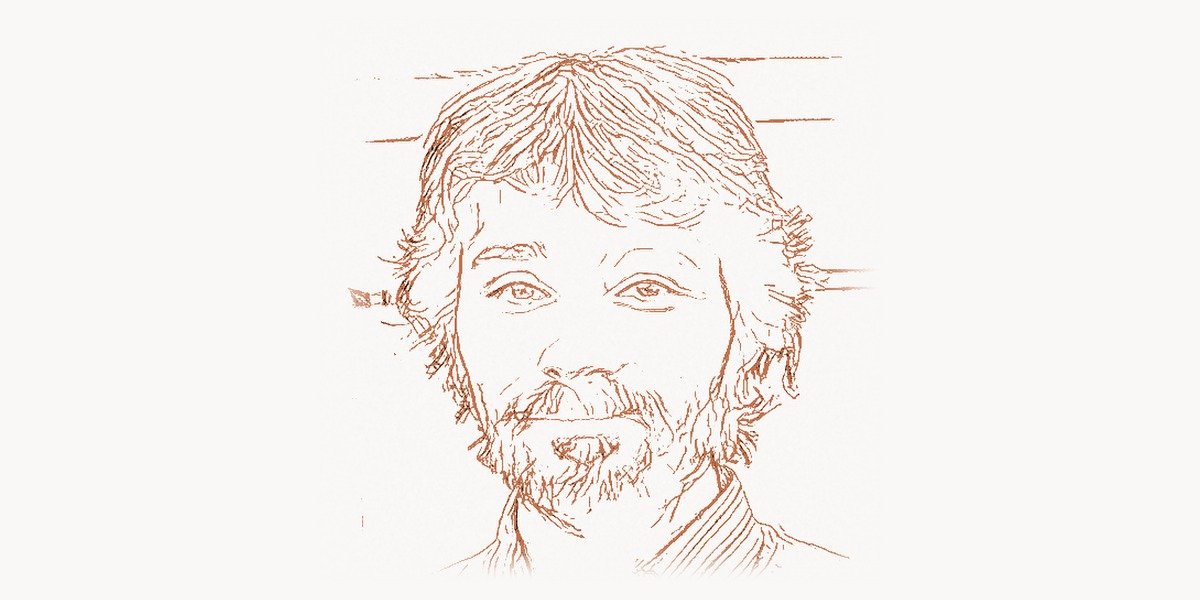
In March 2013, at PyCon in Santa Clara, California, a 30-year-old French-American engineer named Solomon Hykes gave a five-minute lightning talk that altered the trajectory of software infrastructure. He demonstrated Docker — an open-source tool that could package any application into a lightweight, portable container that ran identically on any Linux system. The demo was brief and deceptively simple: build a container, ship it, run it anywhere. Within twelve months, Docker had become the fastest-adopted infrastructure technology in history. Within five years, containers had replaced virtual machines as the default unit of deployment across the industry. Hykes did not invent containerization. Linux had namespaces and cgroups for years before Docker existed. What he built was something more powerful: an interface so clean and a workflow so intuitive that containers went from an obscure kernel feature used by a handful of companies to a universal standard that every developer understood.
Early Life and Education
Solomon Hykes was born in 1983 in Paris, France. He grew up in a bilingual household — his mother was French, his father American — giving him dual French-American citizenship. He spent his childhood and adolescence in France, growing up in an environment where technology was increasingly becoming central to everyday life. The late 1990s internet boom caught his attention early, and like many future technologists, he was drawn to computers and programming during his teenage years.
Hykes attended the prestigious EPITECH (European Institute of Technology) in Paris, a five-year computer science program known for its project-based, hands-on approach to teaching. EPITECH’s curriculum emphasized practical engineering over theory — students learned by building real systems rather than studying abstract concepts in lecture halls. This practical mindset would define Hykes’s career. He developed strong skills in systems programming, networking, and Linux internals during his time there.
After completing his studies, Hykes moved to the United States. He settled in San Francisco’s tech ecosystem, where the startup culture of the late 2000s was in full swing. The Bay Area gave him access to venture capital, talent, and an industry that was rapidly moving toward cloud computing. Amazon Web Services had launched EC2 in 2006. Heroku was making platform-as-a-service mainstream. The stage was set for someone to solve the fundamental problem that plagued every team building and deploying software: environment consistency.
The Docker Breakthrough
Technical Innovation
Before Docker, Hykes cofounded dotCloud in 2010 — a platform-as-a-service (PaaS) company that allowed developers to deploy applications written in multiple programming languages. DotCloud competed with Heroku, Google App Engine, and other PaaS providers. It was a solid product but struggled to differentiate in an increasingly crowded market. What made dotCloud technically interesting, however, was its internal tooling. The dotCloud team had built a container engine to manage application isolation on their platform. That internal tool would become Docker.
The core technical innovation of Docker was not the container itself. Linux containers existed since 2008, when LXC (Linux Containers) provided a userspace interface for the kernel’s cgroup and namespace features. Cgroups, originally developed by engineers at Google, limited and isolated the resource usage (CPU, memory, disk I/O, network) of process groups. Namespaces isolated processes so they had their own view of the system — their own process IDs, network interfaces, mount points, and user IDs. Together, these kernel features allowed one Linux system to run multiple isolated environments. But using them was painful. Configuring LXC required deep knowledge of kernel interfaces, manual setup of filesystem layers, and custom networking scripts. It was an expert’s tool, not a developer’s tool.
Docker made three critical design decisions that changed everything. First, it introduced the Dockerfile — a simple, declarative text file that described how to build a container image step by step. Instead of manually configuring a container, a developer could write a Dockerfile like this:
# Dockerfile: Docker's declarative build format
# Each instruction creates an immutable layer, cached and reusable
FROM node:20-alpine

# Set the working directory inside the container
WORKDIR /app

# Copy dependency manifests first — Docker caches this layer
# If package.json hasn't changed, npm install is skipped on rebuild
COPY package.json package-lock.json ./
RUN npm ci --production

# Copy application source code
COPY src/ ./src/
COPY public/ ./public/

# Expose the port the application listens on
EXPOSE 3000

# Define the command to start the application
CMD ["node", "src/server.js"]

# This file IS the deployment documentation.
# No wiki pages. No setup guides. No "works on my machine."
# Build it, ship it, run it. Anywhere.
This was revolutionary in its simplicity. A Dockerfile was version-controlled alongside the application code. It was readable by any developer, regardless of their infrastructure expertise. It was deterministic — building the same Dockerfile produced the same image every time. And it was layered: each instruction created a cached layer, so rebuilds were fast. Change one line of application code and only the final layers needed rebuilding, not the entire image.
Second, Docker introduced a layered filesystem using a union mount approach. Each instruction in a Dockerfile created a read-only layer. When a container ran, Docker added a thin read-write layer on top. Multiple containers could share the same base layers, dramatically reducing disk usage. A team running 50 microservices based on the same Node.js base image stored that base image only once.
Third, Docker built Docker Hub — a public registry for sharing container images. Any developer could push an image to Docker Hub and anyone else could pull it with a single command. This created a network effect similar to what npm did for JavaScript — a shared ecosystem of pre-built components that developers could compose into larger systems. Official images for PostgreSQL, Redis, Nginx, Python, and hundreds of other tools meant that setting up complex development environments took minutes, not hours.
Why It Mattered
Docker’s impact went far beyond convenience. It fundamentally changed how software was built, shipped, and operated.
The first transformation was the rise of microservices. Before Docker, deploying an application as a set of small, independent services was theoretically possible but operationally nightmarish. Each service needed its own server configuration, dependency management, and deployment pipeline. Docker made microservices practical. Each service got its own container with its own dependencies, communicating with other services over the network. Teams could develop, test, and deploy services independently. A change to the payment service did not require redeploying the user service.
The second transformation was DevOps. Docker blurred the line between development and operations. The same container image that a developer built and tested on their laptop was the exact artifact that ran in staging and production. The classic “it works on my machine” problem disappeared. Version control with Git tracked code changes; Docker images tracked environment changes. Together, they provided complete reproducibility.
The third transformation was the container orchestration ecosystem. Docker containers were easy to run individually, but running hundreds or thousands of them across a cluster required new tools. Google, drawing on a decade of internal container management experience with their Borg system, released Kubernetes in 2014. Kubernetes became the dominant container orchestrator, and its success was entirely predicated on Docker having made containers mainstream. Without Docker, Kubernetes would have had no ecosystem to orchestrate.
The numbers tell the story. Docker Hub accumulated over 100,000 container images within its first year. By 2024, Docker had been downloaded over 300 billion times. A Datadog survey found that 25% of all hosts monitored by their platform ran Docker containers. Gartner estimated that by 2025, over 85% of global organizations would be running containerized applications in production. Companies from the smallest startups to the largest banks adopted Docker as the standard packaging format for their software.
Other Major Contributions
While Docker was Hykes’s defining creation, his contributions to the technology ecosystem extend beyond the container engine itself.
dotCloud PaaS. Before pivoting to Docker, the dotCloud platform was among the early platform-as-a-service offerings that helped demonstrate the viability of abstracting away infrastructure for developers. While dotCloud did not win the PaaS market (the company pivoted entirely to Docker in 2013 and eventually sold the dotCloud platform to cloudControl), the experience of building and operating a PaaS gave Hykes the deep understanding of deployment pain points that informed Docker’s design.
Docker Compose. Originally called Fig and developed by Orchard (a startup Docker acquired in 2014), Docker Compose became the standard tool for defining multi-container applications. A single YAML file described an entire application stack — web server, database, cache, message queue — and docker compose up launched everything. This was transformative for local development. Instead of installing PostgreSQL, Redis, and Elasticsearch directly on their machines, developers defined them as services in a Compose file:
# Start an entire development stack with one command
# Docker Compose reads docker-compose.yml and creates all services

docker compose up -d

# Check the status of running services
docker compose ps

# View logs from the web service
docker compose logs -f web

# Tear everything down — containers, networks, volumes
docker compose down -v

# Rebuild after code changes
docker compose up -d --build web

# Run a one-off command in a service container
docker compose exec web npm test
Docker Compose remains ubiquitous. Open-source projects routinely include a docker-compose.yml file so contributors can set up the development environment in seconds. It became the de facto standard for local development environments, CI testing, and small-scale deployments.
Docker Hub and the container registry model. Docker Hub, launched in 2014, established the model for container image distribution. The concept of official images — curated, maintained, and verified base images for popular software — gave the ecosystem a foundation of trust. Docker Hub’s model was later replicated by every major cloud provider: Amazon ECR, Google Container Registry, Azure Container Registry, and GitHub Container Registry all followed the pattern Docker Hub established.
Dagger CI/CD. After stepping down as Docker’s CTO in 2018 and leaving the company entirely in 2019, Hykes founded Dagger in 2022 with the same core insight that drove Docker: developers need portable, programmable, and reproducible tooling. Dagger addresses the CI/CD pipeline problem — the fact that CI/CD pipelines, written in YAML for platforms like GitHub Actions, GitLab CI, or Jenkins, are notoriously difficult to test locally, debug, and maintain. Dagger lets developers define their CI/CD pipelines as code in their preferred programming language (Go, Python, TypeScript, or others) and run them identically on any CI platform or on their local machine. It uses containers under the hood, applying Docker’s portability principle to the build and deployment pipeline itself. The project has received significant venture funding and represents Hykes’s continued belief that developer tooling should be portable, composable, and locally testable — the same principles that made Docker successful.
Philosophy and Approach
Hykes’s career reflects a consistent set of engineering principles. Understanding these principles explains not just what he built, but why Docker succeeded where earlier container technologies did not.
Key Principles
Developer experience above all. The most important decision in Docker’s design was prioritizing the developer’s experience over raw capability. LXC was more configurable. systemd-nspawn was more integrated with the Linux ecosystem. But Docker was easier to use. A developer could go from zero to running their first container in under five minutes. Hykes understood something that many infrastructure engineers missed: a tool that is 80% as powerful but 10 times easier to use will win every time. Docker’s CLI was clean and intuitive. docker build, docker run, docker push, docker pull — the vocabulary was simple and the mental model was clear. This is the same principle that guided Guido van Rossum’s design of Python: readability and simplicity lead to adoption, and adoption is what creates ecosystems.
Batteries included, but swappable. Docker shipped with sensible defaults: a default storage driver, a default network mode, a default logging mechanism. New users did not need to make decisions before they could start working. But every component was pluggable. Advanced users could swap the storage driver, configure custom network plugins, or replace the runtime entirely. This principle — making the simple case trivial and the complex case possible — came directly from Hykes’s experience with dotCloud, where he saw that developer tools that required upfront configuration decisions never gained traction.
Immutable artifacts. Docker images were immutable once built. You did not modify a running container and hope to remember what you changed. You changed the Dockerfile, rebuilt the image, and deployed the new version. This immutability was not just a technical feature; it was a philosophical commitment. Immutable artifacts made deployments reproducible, rollbacks trivial, and auditing straightforward. This principle aligned with the broader industry movement toward infrastructure as code, championed by tools like Terraform and Ansible. Modern DevOps teams that use task management platforms to coordinate their deployment pipelines rely on this immutability guarantee — when a deployment fails, you roll back to the previous image, and it works exactly as it did before.
The shipping container metaphor. Hykes explicitly modeled Docker after the intermodal shipping container — the standardized metal box that revolutionized global trade in the 1950s. Before the shipping container, cargo was loaded and unloaded by hand in irregular shapes and sizes. After the shipping container, any port, any truck, and any ship could handle any cargo. Docker did the same for software: any application, packaged as a Docker container, could run on any Docker host. The metaphor was not just marketing — it was a design principle. Docker containers had to be self-contained, standardized, and portable, just like their physical namesake.
Open source as ecosystem strategy. Hykes released Docker as open-source software from the very beginning. He understood, as Linus Torvalds had demonstrated with Linux and Git, that open-source tools create ecosystems, and ecosystems create standards. Docker’s open-source nature encouraged an explosion of complementary tools: container orchestrators (Kubernetes, Docker Swarm, Mesos), monitoring tools (Prometheus, cAdvisor), service meshes (Istio, Linkerd), and CI/CD platforms that integrated container workflows. An approach that aligns well with how modern web agencies structure their development workflows — using standardized, open tooling that enables consistent collaboration across distributed teams.
Legacy and Impact
Solomon Hykes’s impact on the software industry is measured in the infrastructure that every developer now takes for granted. Before Docker, deploying an application meant writing detailed server setup scripts, managing dependency conflicts, and praying that the production environment matched the development environment closely enough. After Docker, deployment meant building an image and running it. Anywhere.
The container revolution that Docker ignited reshaped the entire cloud computing landscape. Kubernetes, now the dominant platform for running production workloads at scale, exists because Docker made containers accessible. Cloud-native computing — the approach of building applications as collections of loosely coupled, independently deployable services — became viable because Docker provided the packaging format. The Cloud Native Computing Foundation (CNCF), which oversees Kubernetes, Prometheus, Envoy, and dozens of other projects, was founded in response to the ecosystem Docker created.
Docker also changed how developers think about environments. The concept of “infrastructure as code” existed before Docker, but Docker made it tangible and immediate. A Dockerfile was infrastructure as code that any developer could write, not just operations specialists. This democratization of infrastructure knowledge was as significant as the technical innovation itself. Junior developers who had never configured a server could define complete production environments in a Dockerfile.
Hykes’s influence extends to the broader developer tooling movement. His insistence that developer experience matters — that tools should be simple by default, portable across environments, and composable into larger systems — set a standard that new tools are now measured against. When developers evaluate a new technology, they ask: can I get started in five minutes? Does it work the same way everywhere? Can I version-control its configuration? Docker established these expectations.
With Dagger, Hykes is now applying the same principles to CI/CD pipelines — the last major piece of the development workflow that remains largely unportable and untestable. If Dagger succeeds, it will complete the vision that Docker started: a world where every aspect of software delivery is portable, reproducible, and under the developer’s control.
The Open Container Initiative (OCI), founded in 2015 with Docker’s support, standardized the container image format and runtime specification. This means Docker’s legacy is not tied to any single company or product. The container format Hykes helped create is an open standard, implemented by multiple runtimes (containerd, CRI-O, Podman) and supported by every major cloud provider. Like Tim Berners-Lee’s web standards, the container standard is bigger than any one organization.
Key Facts
- Full name: Solomon Hykes
- Born: 1983, Paris, France
- Nationality: French-American
- Education: EPITECH (European Institute of Technology), Paris
- Key creations: Docker (2013), dotCloud PaaS (2010), Dagger CI/CD (2022)
- Role at Docker: Co-founder, CTO (2010–2018)
- Docker downloads: Over 300 billion cumulative pulls from Docker Hub
- Dagger: Founded 2022, programmable CI/CD engine using containers
- Awards: Named in MIT Technology Review’s Innovators Under 35 (2014)
- Known for: Making container technology accessible to every developer
Frequently Asked Questions
Who is Solomon Hykes and what did he create?
Solomon Hykes is a French-American software engineer who created Docker, the containerization platform that transformed how software is built, shipped, and deployed. Born in Paris in 1983, Hykes cofounded dotCloud in 2010 as a platform-as-a-service company, then pivoted the company to focus entirely on Docker after its open-source release in 2013. Docker enabled developers to package applications with all their dependencies into portable containers that run identically on any system. After leaving Docker in 2019, Hykes founded Dagger, a programmable CI/CD engine that applies Docker’s portability principles to build and deployment pipelines.
How did Docker change software development?
Docker changed software development in three fundamental ways. First, it eliminated the “works on my machine” problem by ensuring that applications ran in identical environments from development to production. Second, it made microservices architecture practical by providing lightweight, isolated containers for each service. Third, it created the container ecosystem that enabled Kubernetes and cloud-native computing, reshaping how companies deploy and scale their applications. Docker also democratized infrastructure knowledge — any developer could define a complete server environment in a Dockerfile without needing operations expertise.
What is the difference between Docker and a virtual machine?
A virtual machine (VM) includes a complete operating system with its own kernel, running on a hypervisor that emulates hardware. Each VM typically consumes gigabytes of RAM and takes minutes to start. A Docker container shares the host operating system’s kernel and isolates only the application and its dependencies using Linux namespaces and cgroups. Containers start in milliseconds, use megabytes of RAM, and dozens can run on a single machine that might support only a few VMs. Docker containers are lighter, faster, and more efficient, making them ideal for microservices and development environments.
What is Solomon Hykes working on now?
After leaving Docker in 2019, Solomon Hykes founded Dagger in 2022. Dagger is a programmable CI/CD engine that lets developers write their build, test, and deployment pipelines in real programming languages (Go, Python, TypeScript) instead of platform-specific YAML. Dagger pipelines run in containers, making them portable across any CI platform and testable on local machines — applying the same “build once, run anywhere” principle that made Docker successful. The company has raised significant venture funding and is actively developing the platform as an open-source project.