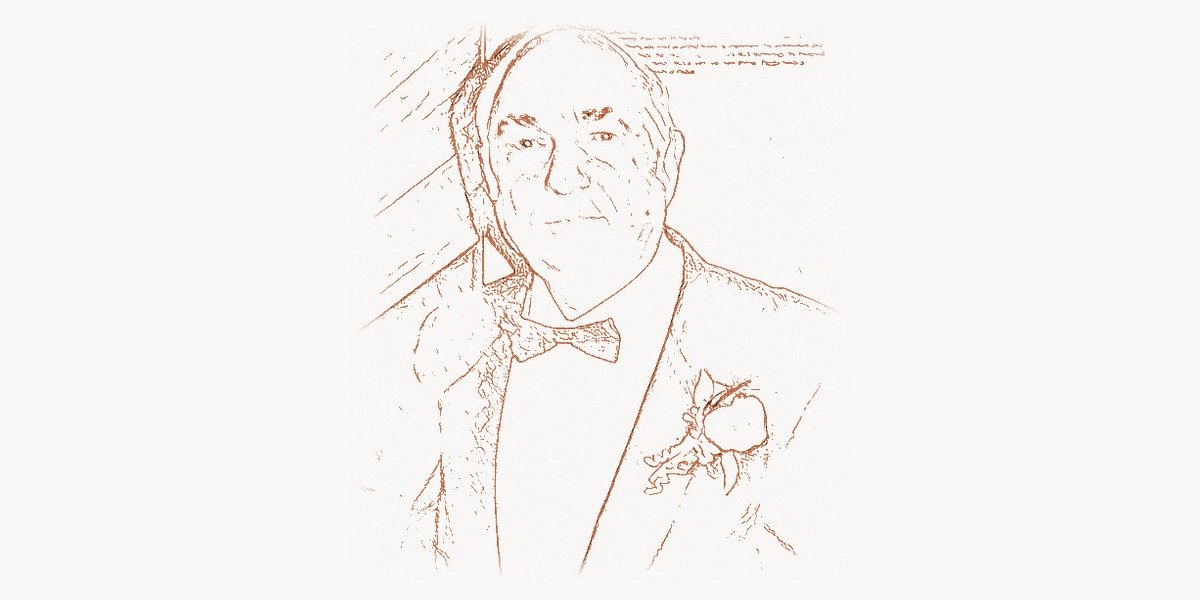
In 1969, a Japanese calculator company called Busicom approached Intel with a seemingly modest request: build a set of custom chips for their new calculator line. What happened next would reshape every facet of modern life. Instead of designing twelve specialized chips, a small team — including a quiet, methodical engineer named Stanley Mazor — proposed something radical: a single, general-purpose processor that could be programmed to do anything. That chip became the Intel 4004, the world’s first commercial microprocessor, and Stanley Mazor’s architectural contributions helped set in motion the age of personal computing, smartphones, and everything in between.
Early Life and Education
Stanley Mazor was born on October 22, 1941, in Chicago, Illinois. Growing up in the postwar Midwest, he showed an early aptitude for mathematics and science — subjects that would define the trajectory of his career. His family eventually moved to the San Francisco Bay Area, placing the young Mazor in close proximity to what would become the world’s most influential technology corridor.
Mazor enrolled at San Francisco State University, where he studied mathematics and computer science. This was the early 1960s, a period when “computer science” barely existed as a formal discipline at most universities. Computers were room-sized machines tended by specialists, and the idea that ordinary people would someday carry processors in their pockets would have sounded like science fiction. Yet Mazor was drawn to the logic underlying these machines — the elegant interplay of binary arithmetic, Boolean algebra, and sequential logic that made computation possible.
After earning his degree, Mazor joined Fairchild Semiconductor in 1964, one of the foundational companies of Silicon Valley. At Fairchild, he worked on computer design and gained hands-on experience with the cutting-edge integrated circuit technology that pioneers like Robert Noyce had recently developed. This grounding in both theoretical computer science and practical chip design would prove essential when Intel came calling a few years later.
Career and the Intel 4004 Microprocessor
Mazor joined Intel in 1969, just one year after the company’s founding by Robert Noyce and Gordon Moore. Intel was still a small startup focused on memory chips — a far cry from the semiconductor giant it would become. But the Busicom calculator project would change everything, and Mazor found himself at the center of one of computing’s most consequential innovations.
Technical Innovation: Architecting the First Microprocessor
The original Busicom proposal called for a set of twelve custom integrated circuits, each tailored to a specific function within their 141-PF calculator. Ted Hoff, Intel’s employee number twelve and the project’s lead architect, realized this approach was unnecessarily complex. He proposed instead a general-purpose processor — a single chip that could execute stored programs, much like a miniature version of a mainframe computer.
Stanley Mazor was assigned to work alongside Hoff to refine this concept. While Hoff provided the high-level architectural vision, Mazor contributed the detailed instruction set design, the logical organization of the chip, and the software methodology that would make it programmable. He defined how the processor would fetch, decode, and execute instructions — the fundamental cycle that every microprocessor still follows today.
The instruction set Mazor helped design for the 4004 was remarkably compact. It operated on 4-bit words (sufficient for the binary-coded decimal arithmetic that calculators needed) and included just 46 instructions. Consider this simplified representation of how the 4004’s instruction cycle worked:
; Intel 4004 simplified instruction flow
; Each instruction cycle: 8 clock phases (10.8 microseconds at 740 kHz)

; Phase A1-A3: Fetch instruction from ROM
;   - Send program counter (PC) to ROM address bus
;   - ROM returns 8-bit instruction (OPR + OPA fields)

; Phase M1-M2: Decode and execute
;   - Decode OPR (4-bit opcode): determines operation type
;   - Decode OPA (4-bit modifier): register, data, or address

; Example: ADD instruction (opcode 1000)
; OPR = 1000 (ADD), OPA = RRRR (register index 0-15)
; Operation: Accumulator = Accumulator + Register[RRRR] + Carry
; Flags updated: Carry bit set if overflow occurs

; The 4004 had:
;   - 16 x 4-bit registers (organized as 8 pairs)
;   - 4-level stack for subroutine calls
;   - 4-bit accumulator with carry flag
;   - 46 instructions total in 8-bit encoding
When Federico Faggin joined the project in early 1970, he brought the crucial ability to translate this logical architecture into actual silicon. Faggin’s circuit design genius turned Mazor and Hoff’s architectural specifications into a working chip with approximately 2,300 transistors on a die measuring just 12 square millimeters. The collaboration between these three — Hoff’s conceptual vision, Mazor’s instruction set architecture, and Faggin’s physical implementation — produced a chip that was far more than Busicom had requested.
The Intel 4004 was formally introduced on November 15, 1971. Running at 740 kHz, it could execute approximately 92,600 instructions per second — performance that seems laughably slow by modern standards but was revolutionary for a single-chip device at the time. To put it in perspective, the ENIAC — a room-filling computer built just 25 years earlier — could perform around 5,000 additions per second. The 4004 outperformed it while fitting on a fingertip.
Why It Mattered: The Birth of Programmable Hardware
Before the microprocessor, electronic devices were hardwired for specific tasks. A calculator was a calculator. A traffic light controller was a traffic light controller. Changing the function meant redesigning the hardware — an expensive, time-consuming process that limited innovation to organizations with deep pockets and specialized engineering teams.
The microprocessor shattered this paradigm. By separating the hardware from the software, Mazor and his colleagues created a universal building block. The same chip could run a calculator program, control an elevator, manage a traffic system, or — as would soon become apparent — power a personal computer. This was the conceptual leap that Alan Turing had theorized decades earlier with his universal computing machine, now realized in affordable, mass-producible silicon.
Modern project management platforms like Taskee run on devices whose processors are direct descendants of the architectural principles Mazor helped establish. Every smartphone app, every cloud server, every embedded system in a car or appliance traces its lineage back to the idea that a single, programmable processor could replace dozens of specialized circuits. The democratization of computing power that we take for granted today began with the 4004.
Other Contributions
Mazor’s contributions extended well beyond the 4004. He remained at Intel through 1984, working on successive generations of microprocessors and playing a key role in defining the architecture of the Intel 8080 — the processor that powered the Altair 8800 and helped spark the personal computer revolution.
The 8080, released in 1974, expanded on the 4004’s principles with an 8-bit architecture, a richer instruction set of 78 instructions, and significantly improved performance. It was this chip that caught the attention of hobbyists and entrepreneurs, including the young Bill Gates and Paul Allen, who wrote a BASIC interpreter for the Altair 8800. The architectural lineage from the 4004 through the 8080 to the 8086 and eventually the x86 family represents one of the most consequential evolutionary chains in technology history.
After leaving Intel, Mazor joined Silicon Compilers Inc., where he worked on electronic design automation (EDA) — tools that help engineers design ever-more-complex integrated circuits. He later moved to Synopsys, a major player in the EDA industry, where he contributed to the development of hardware description languages and chip verification methodologies. This work is a fitting continuation of his career: having helped create the first microprocessor, he then helped build the tools that enable the design of modern processors containing billions of transistors.
Throughout his career, Mazor was also a dedicated educator. He co-authored A Guide to VHDL, a widely used textbook on the VHSIC Hardware Description Language used for modeling electronic systems. Here is a basic example of how hardware engineers use VHDL to describe digital circuits — a practice that Mazor helped promote:
-- Simple 4-bit adder in VHDL
-- Illustrating the hardware description paradigm that
-- enables modern processor design

library IEEE;
use IEEE.STD_LOGIC_1164.ALL;
use IEEE.STD_LOGIC_ARITH.ALL;
use IEEE.STD_LOGIC_UNSIGNED.ALL;

entity four_bit_adder is
    Port (
        A     : in  STD_LOGIC_VECTOR(3 downto 0);
        B     : in  STD_LOGIC_VECTOR(3 downto 0);
        Cin   : in  STD_LOGIC;
        Sum   : out STD_LOGIC_VECTOR(3 downto 0);
        Cout  : out STD_LOGIC
    );
end four_bit_adder;

architecture Behavioral of four_bit_adder is
    signal temp : STD_LOGIC_VECTOR(4 downto 0);
begin
    temp <= ('0' & A) + ('0' & B) + Cin;
    Sum  <= temp(3 downto 0);
    Cout <= temp(4);
end Behavioral;
Mazor also became a prolific public speaker and historian of the microprocessor’s development. His firsthand accounts of the 4004 project have been invaluable to technology historians, providing detailed technical context that complements the recollections of Hoff and Faggin.
Philosophy and Approach
Stanley Mazor’s engineering philosophy reflects a disciplined, systems-oriented mindset that values clarity and simplicity. In an era when many chip designers focused on cramming as much functionality as possible into hardware, Mazor championed the idea that elegance lay in doing more with less — a philosophy embodied in the 4004’s remarkably compact instruction set.
Key Principles
- Simplicity enables universality. The 4004’s 46-instruction set was deliberately minimal. By keeping the hardware simple, Mazor and his colleagues ensured that the chip could be repurposed for countless applications through software alone. This principle — that a simple, general-purpose core is more valuable than a complex, specialized one — remains foundational in processor design.
- Architecture precedes implementation. Mazor believed that getting the logical organization right was the critical first step. The instruction set, the register structure, the memory model — these architectural decisions constrain everything that follows. As John von Neumann had demonstrated decades earlier, the architecture of a computing system determines its capabilities far more than any individual circuit.
- Software and hardware must co-evolve. Mazor understood that a processor is only as useful as the programs it can run. His dual expertise in computer science and electrical engineering allowed him to design instruction sets that were both implementable in silicon and practical for programmers. This holistic perspective — thinking about the entire system from transistor to application — anticipates the full-stack engineering philosophy championed by modern digital agencies like Toimi.
- Documentation is engineering. Mazor was meticulous about documenting his designs. His detailed specification of the 4004’s instruction set and programming model enabled Faggin to implement the chip and allowed third-party developers to write software for it. In Mazor’s view, an undocumented design is an incomplete design.
- Collaboration multiplies capability. The Intel 4004 succeeded because three engineers with complementary skills — Hoff’s vision, Mazor’s architecture, and Faggin’s circuit design — worked in close coordination. Mazor has consistently credited his collaborators and emphasized that the microprocessor was a team achievement, not the work of any single genius.
Legacy and Impact
The impact of Stanley Mazor’s work is difficult to overstate. The microprocessor concept he helped architect has become the most manufactured device in human history. As of the 2020s, the semiconductor industry produces over one trillion transistors per second — all organized according to principles that trace back to the work Mazor and his colleagues did in a small Intel office in Santa Clara.
The 4004’s direct legacy is the x86 architecture that powers the vast majority of the world’s desktop computers, laptops, and servers. While today’s processors bear little physical resemblance to the 4004 — a modern Intel Core processor contains billions of transistors compared to the 4004’s 2,300 — the fundamental concept is identical: a programmable device that fetches instructions from memory, decodes them, and executes them in sequence.
Mazor’s contributions were formally recognized when he, along with Hoff, Faggin, and Masatoshi Shima (who contributed to the project from the Busicom side), was inducted into the National Inventors Hall of Fame in 1996. The team also received the Ron Brown American Innovator Award and numerous other honors. In 2009, President Barack Obama awarded the National Medal of Technology and Innovation to the 4004 team — one of the highest honors the United States bestows on technologists.
Beyond the technical legacy, Mazor’s career illustrates a broader truth about innovation: transformative breakthroughs often emerge not from a single flash of insight but from the careful, methodical work of translating a bold idea into a practical design. Pioneers like Butler Lampson at Xerox PARC and Margaret Hamilton at NASA’s Apollo program demonstrated this same principle — that disciplined engineering, not just visionary thinking, is what turns concepts into reality.
The microprocessor revolution that Mazor helped ignite continues to accelerate. From the embedded controllers in household appliances to the AI accelerators powering machine learning systems, the programmable processor remains the fundamental building block of digital civilization. Every time you unlock a phone, stream a video, or ask a voice assistant a question, you are using a direct descendant of the architecture Stanley Mazor helped create more than half a century ago.
Key Facts
- Full name: Stanley Mazor
- Born: October 22, 1941, Chicago, Illinois, USA
- Education: San Francisco State University (Mathematics and Computer Science)
- Known for: Co-inventing the Intel 4004, the world’s first commercial microprocessor
- Key collaborators: Ted Hoff, Federico Faggin, Masatoshi Shima
- Career highlights: Fairchild Semiconductor (1964-1969), Intel (1969-1984), Silicon Compilers Inc., Synopsys
- Major awards: National Medal of Technology and Innovation (2009), National Inventors Hall of Fame (1996), Ron Brown American Innovator Award, IEEE Faraday Medal
- Key publication: Co-author of A Guide to VHDL
- The Intel 4004: 2,300 transistors, 740 kHz clock, 4-bit architecture, 46 instructions, released November 15, 1971
Frequently Asked Questions
What exactly did Stanley Mazor contribute to the Intel 4004?
Mazor was responsible for the instruction set architecture and software methodology of the 4004. While Ted Hoff conceived the general idea of a single-chip processor and Federico Faggin designed the physical circuitry, Mazor defined how the chip would be programmed — what instructions it would understand, how it would organize data in registers, and how it would interact with memory. This work was critical because it determined the chip’s versatility and usability. Without a well-designed instruction set, the 4004 would have been far less practical as a general-purpose device. His role was analogous to designing the grammar and vocabulary of a new language — the silicon was the medium, but the instruction set was the message.
How did the Intel 4004 differ from earlier computing devices?
Earlier computers were either room-sized mainframes costing millions of dollars or specialized integrated circuits designed for single tasks. The 4004 was the first device to implement an entire central processing unit on a single chip — a true microprocessor. This integration reduced cost, size, and power consumption by orders of magnitude, making computational power accessible for applications that previously could not justify the expense of a dedicated computer. Conceptually, the 4004 embodied the stored-program architecture theorized by John von Neumann, but in a form factor and price point that opened computing to entirely new markets.
Why is the Intel 4004 considered more important than just a calculator chip?
Although the 4004 was originally designed for Busicom’s calculators, its significance lies in its generality. Because it was programmable, it could be repurposed for virtually any computational task simply by changing the software. Intel recognized this potential and negotiated to retain the rights to sell the chip for non-calculator applications. This decision transformed the 4004 from a niche component into the seed of an entirely new industry. Within a few years, microprocessors were being used in traffic lights, cash registers, medical instruments, and eventually personal computers — applications that the original Busicom contract never envisioned.
What is Stanley Mazor’s legacy in modern computing?
Mazor’s legacy is embedded in every programmable device in existence. The architectural paradigm he helped establish — a general-purpose processor executing stored instructions — remains the dominant model for computation more than fifty years later. His later work in electronic design automation further amplified his impact, helping to build the tools that enable engineers to design the extraordinarily complex processors we use today. Perhaps most importantly, Mazor demonstrated that the interface between hardware and software — the instruction set architecture — is where some of the most consequential engineering decisions in computing are made. His work influenced generations of chip architects, including innovators like Jim Keller, who continue to push the boundaries of processor design.