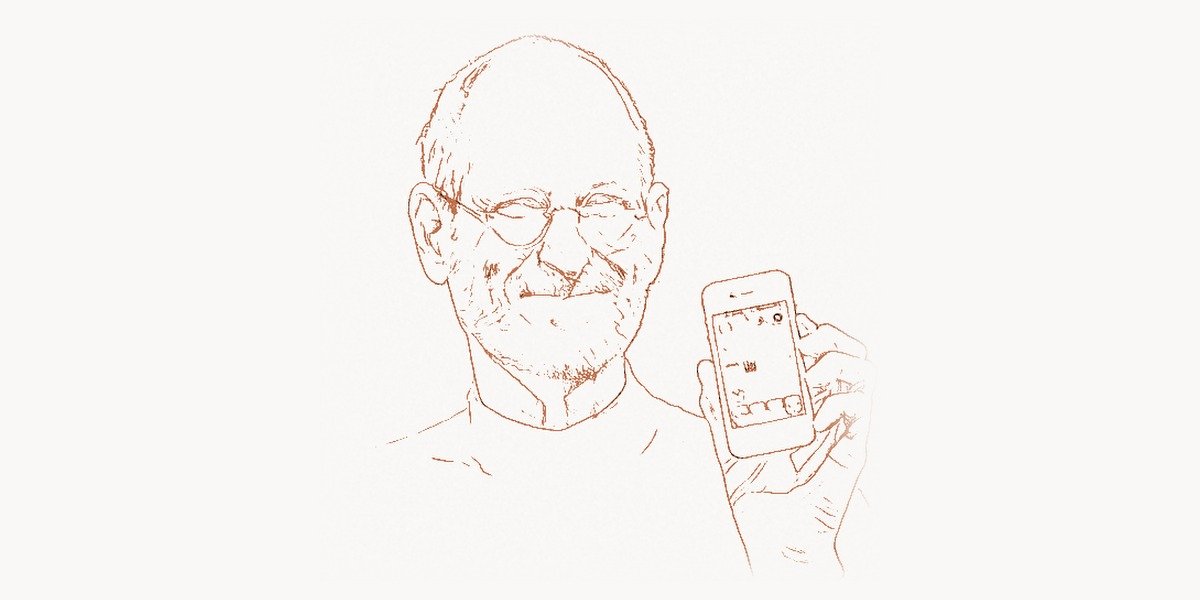
In the span of a single career, Steve Jobs transformed at least five industries — personal computing, animated filmmaking, music distribution, mobile telephony, and tablet computing. He did not write code, design circuits, or draft engineering blueprints. Instead, he possessed something rarer: an unyielding conviction that technology should be simple, beautiful, and deeply human. From a suburban garage in Los Altos, California, to the most valuable company on Earth, Jobs proved that the intersection of liberal arts and technology is where the most profound innovations are born. His story is not merely a corporate biography — it is a blueprint for everyone who believes that relentless focus, impeccable taste, and the courage to say “no” to a thousand things can reshape the world.
Early Life and the Seeds of Revolution
Steven Paul Jobs was born on February 24, 1955, in San Francisco, California, and adopted by Paul and Clara Jobs of Mountain View. Paul Jobs, a machinist and amateur craftsman, instilled in his son a lifelong appreciation for meticulous craftsmanship — even the parts no one would ever see had to be finished perfectly. This principle would later define Apple products, from the hidden circuit boards of the original Macintosh to the seamless aluminum unibody of the MacBook.
Growing up in what would become Silicon Valley, Jobs was surrounded by electronics hobbyists and engineers from companies like Hewlett-Packard and Lockheed. As a teenager, he cold-called Bill Hewlett to ask for spare parts for a frequency counter project — and got a summer internship out of the call. At Homestead High School, he met Steve Wozniak, a gifted engineer five years his senior. Their friendship — one the visionary showman, the other the quiet hardware genius — would become the most consequential partnership in the history of technology.
Jobs enrolled at Reed College in Portland, Oregon, in 1972 but dropped out after one semester. Unable to afford tuition, he continued to audit courses that fascinated him, most notably a calligraphy class taught by Robert Palladino. That course, Jobs later said, was the reason every Macintosh shipped with beautiful proportionally spaced typefaces — a feature that the Windows platform would not match for years. His time at Reed also deepened his interest in Zen Buddhism, counterculture philosophy, and the idea that simplicity is the ultimate sophistication.
Apple Computer: From Garage to Global Icon
The Apple I and Apple II
In 1976, Jobs and Wozniak founded Apple Computer in the Jobs family garage, joined by Ronald Wayne, who drafted the original partnership agreement. While Wozniak built the Apple I — a single-board computer aimed at hobbyists — Jobs handled sales, distribution, and vision. He secured a pivotal order of 50 units from Paul Terrell’s Byte Shop, marking Apple’s transition from a hobby to a business.
The Apple II, released in 1977, was the machine that made Apple a household name. Wozniak’s elegant engineering combined with Jobs’s insistence on an integrated, consumer-friendly product — complete with a molded plastic case, color graphics, and built-in BASIC — created the first mass-market personal computer. VisiCalc, the first spreadsheet application, ran exclusively on the Apple II, turning it into an indispensable business tool and foreshadowing how software ecosystems would drive hardware sales for decades to come. This vision of tightly integrated hardware and software remains central to how modern platforms are designed today.
The Macintosh and the 1984 Moment
By the early 1980s, Jobs had become obsessed with the graphical user interface he saw during a legendary visit to Xerox PARC. The Lisa project, and later the Macintosh, aimed to bring windows, icons, menus, and a pointing device to everyday users. The Mac launched on January 24, 1984, with a Ridley Scott-directed Super Bowl commercial that declared Apple would prevent 1984 from becoming Orwell’s “1984.”
The original Macintosh was limited — 128 KB of RAM, a 9-inch monochrome screen, no hard drive — but its graphical interface, built-in fonts, and mouse-driven interaction were revolutionary. Jobs demanded that the internal circuit board be aesthetically pleasing, and he insisted every team member’s signature be molded inside the case. It was both an engineering product and a cultural statement. The design philosophy Jobs crystallized at Apple — that the experience of using technology matters as much as its specifications — influenced everything from modern web frameworks to the code editors developers use today.
Exile and Reinvention: NeXT and Pixar
In 1985, following a boardroom power struggle with CEO John Sculley, Jobs was ousted from the company he had co-founded. It was a devastating public humiliation — but it turned out to be the best thing that ever happened to him, as he later reflected in his famous Stanford commencement speech.
Jobs founded NeXT Computer, building a workstation aimed at higher education and enterprise. The NeXT Cube was commercially unsuccessful, but its software stack was a masterpiece. NeXTSTEP, the operating system, introduced an object-oriented development environment built on Objective-C and the Mach microkernel. Its developer tools were so advanced that Tim Berners-Lee used a NeXT workstation to create the first web browser and web server at CERN — literally inventing the World Wide Web on Jobs’s hardware.
The development paradigm Jobs championed at NeXT — reusable object frameworks, Interface Builder, and a clean separation of concerns — was years ahead of its time. Here is a glimpse of what Objective-C code looked like in the NeXTSTEP era, a pattern that would eventually become the foundation of macOS and iOS development:
// NeXTSTEP Objective-C — Application delegate pattern (circa 1990)
// This architecture became the backbone of macOS and iOS development

#import <appkit/appkit.h>

@interface AppController : Object
{
    id textField;
    id window;
}

- appDidInit:sender;
- showGreeting:sender;

@end

@implementation AppController

- appDidInit:sender
{
    [window setTitle:"NeXTSTEP Application"];
    [window makeKeyAndOrderFront:self];
    return self;
}

- showGreeting:sender
{
    [textField setStringValue:"Hello from NeXT!"];
    return self;
}

@end

// The delegate pattern, target-action mechanism, and
// Interface Builder NIB files all survived into modern
// Swift/UIKit and SwiftUI development on Apple platforms.
Simultaneously, Jobs acquired The Graphics Group from Lucasfilm for $5 million in 1986, renaming it Pixar. For nearly a decade, Pixar burned through cash while perfecting its computer animation technology. Jobs personally funded the studio, investing over $50 million. The gamble paid off spectacularly in 1995 when Toy Story became the first fully computer-animated feature film, grossing $373 million worldwide and launching an era of digital filmmaking. Disney acquired Pixar in 2006 for $7.4 billion, making Jobs Disney’s largest individual shareholder.
The Return to Apple and the Digital Hub Strategy
Apple acquired NeXT in December 1996 for $429 million, bringing Jobs back. By 1997, he was interim CEO of a company that was 90 days from bankruptcy. What followed was one of the most remarkable turnarounds in corporate history.
Jobs immediately streamlined Apple’s bloated product line from over 40 products down to four — a simple two-by-two grid of consumer/pro and desktop/portable. He killed the Newton, discontinued the clones, and forged a surprising partnership with Microsoft. The iMac G3, launched in 1998, was a translucent Bondi Blue all-in-one that made personal computing approachable — and profitable — again.
But the real masterstroke was the Digital Hub strategy. Jobs envisioned the Mac as the center of a digital lifestyle: music, photos, videos, and eventually everything else. This philosophy produced iTunes (2001), the iPod (2001), the iTunes Music Store (2003), and a seamless ecosystem that transformed how music was consumed worldwide. The concept of tight hardware-software integration that Jobs perfected directly inspired how Alan Kay’s vision of personal computing finally reached hundreds of millions of people.
iPhone: The Device That Changed Everything
On January 9, 2007, Jobs walked onto the Macworld stage and announced that Apple was introducing three revolutionary products: a widescreen iPod with touch controls, a revolutionary mobile phone, and a breakthrough internet communications device. Then he revealed they were all the same device — the iPhone.
The iPhone eliminated the physical keyboard, replaced it with a multi-touch glass screen, and introduced a software-defined user experience that could evolve with updates. Competitors dismissed it; Microsoft’s Steve Ballmer famously laughed at the idea of a $500 phone. Within five years, the iPhone had destroyed Nokia’s dominance, marginalized BlackBerry, and created the smartphone era we live in today.
The App Store, launched in 2008, created a new economy for software developers. Suddenly, a single developer working from a coffee shop could distribute an application to hundreds of millions of users — no retail chain, no publisher, no packaging required. This democratization of software distribution mirrors the open platform philosophy seen in communities like those around Linux and Git, though Apple’s approach was famously more curated. The discipline of managing app development and distribution at scale has become a core challenge for modern project management platforms.
Technical Philosophy: Design as Engineering
Jobs was not a programmer, but his technical philosophy shaped how millions of engineers approach their work. Several principles defined his approach:
End-to-end integration. Jobs believed that the best user experience required controlling both hardware and software. This conviction led Apple to design its own chips (starting with the A4 in 2010), write its own operating systems, and even build its own retail stores. The full-stack approach is now emulated by companies across the tech industry.
Simplicity as a discipline. “Simple can be harder than complex,” Jobs told BusinessWeek in 1998. He stripped away features rather than adding them, reduced button counts, eliminated ports, and demanded that every interaction feel intuitive. The Mac’s original one-button mouse, the iPod’s click wheel, and the iPhone’s home button all embodied this principle.
Typography and visual design matter. Jobs’s calligraphy course at Reed College was not an anecdote — it was foundational. Every Apple product, from system fonts to packaging, reflected obsessive attention to typographic detail. When Apple introduced San Francisco as its system typeface, it was designed specifically for legibility on small screens — a direct descendant of Jobs’s belief that letters are as important as logic. Modern web developers who agonize over font loading strategies and performance optimization are inheriting this same tradition.
Saying no. Jobs rejected far more ideas than he approved. Focus, he argued, meant saying no to the hundred other good ideas. This curatorial instinct kept Apple’s product line small and each product exceptional. The approach stands in contrast to competitors who shipped dozens of SKUs hoping something would stick.
The configuration philosophy Jobs championed — opinionated defaults that work beautifully out of the box — can be seen even in modern build tools. Consider how Apple’s Xcode project configuration enforces sensible defaults, a concept that resonates with today’s developer tooling:
// Xcode Build Configuration — .xcconfig file
// Opinionated defaults reflecting Jobs's "it just works" philosophy

// Base configuration for an iOS application
IPHONEOS_DEPLOYMENT_TARGET = 15.0
SWIFT_VERSION = 5.9
ENABLE_BITCODE = NO
ALWAYS_EMBED_SWIFT_STANDARD_LIBRARIES = YES

// Security defaults — enabled by default, not optional
ENABLE_APP_SANDBOX = YES
ENABLE_HARDENED_RUNTIME = YES
CODE_SIGN_IDENTITY = Apple Development

// Performance and optimization
SWIFT_OPTIMIZATION_LEVEL = -O
GCC_OPTIMIZATION_LEVEL = s
DEAD_CODE_STRIPPING = YES
STRIP_INSTALLED_PRODUCT = YES

// UI and experience
ASSETCATALOG_COMPILER_APPICON_NAME = AppIcon
INFOPLIST_KEY_UILaunchStoryboardName = LaunchScreen
INFOPLIST_KEY_UISupportedInterfaceOrientations = UIInterfaceOrientationPortrait

// The "opinionated defaults" pattern Jobs championed
// is now standard in frameworks like Next.js, Rails,
// and SwiftUI — convention over configuration.
iPad, iCloud, and the Post-PC Vision
In 2010, Jobs introduced the iPad, declaring it a new category between a smartphone and a laptop. Critics called it a giant iPod Touch, but Jobs understood that a larger multi-touch canvas would enable new kinds of interaction — reading, drawing, music creation, and casual computing — that neither phones nor laptops handled well. The iPad became the fastest-selling consumer electronics device in history at its launch, reaching 3 million units in 80 days.
Jobs also laid the groundwork for iCloud, Apple’s cloud services platform, which launched in October 2011. His vision was that the device should fade into the background, with data seamlessly available everywhere. This “post-PC” thesis — that most people do not need a traditional computer — proved prescient as smartphone and tablet usage surpassed desktop computing within a few years.
Leadership Style and Cultural Impact
Jobs was a polarizing leader. His “reality distortion field” — a term borrowed from Star Trek by Apple engineer Bud Tribble — described his ability to convince people that the impossible was achievable. He could be brutal in meetings, dismissing work as “garbage” or demanding complete redesigns days before a deadline. But he also inspired extraordinary loyalty and effort, and many former colleagues describe working with him as the most intense, rewarding experience of their careers.
His product announcements — the “One more thing” keynotes — became cultural events. Jobs turned corporate presentations into theater, using dramatic pauses, live demonstrations, and carefully scripted reveals. Every tech CEO who walks a stage today, from Sundar Pichai to Jensen Huang, is performing in a format that Jobs perfected.
Beyond technology, Jobs influenced design culture broadly. Industrial designer Jony Ive, who partnered with Jobs from 1997 to 2011, described their collaboration as the most creatively fulfilling of his life. Together, they created the iMac, iPod, iPhone, iPad, and MacBook — a portfolio of products that reshaped consumer expectations about what technology should look and feel like. The emphasis on design thinking and user experience that Jobs championed is now embedded in how digital agencies approach client projects across every industry.
Legacy and Lasting Impact
Steve Jobs passed away on October 5, 2011, at the age of 56, following a long battle with pancreatic neuroendocrine tumor. His death prompted an outpouring of tributes from world leaders, competitors, and millions of ordinary users who felt they had lost someone who personally improved their lives through technology.
Jobs’s legacy is measured not just in products but in paradigms. He proved that technology companies could be taste-driven, that design and engineering are not separate disciplines but one unified craft. He demonstrated that a CEO could be a product person first and a business person second — and that this order of priorities could produce the most valuable company in the world.
Apple’s market capitalization surpassed $3 trillion in 2023, built on the foundation Jobs laid. The Apple Silicon transition — from Intel processors to Apple’s own ARM-based chips — is a direct continuation of his full-stack integration philosophy. The Vision Pro mixed-reality headset, announced in 2023, carries forward his belief that computing should be spatial, intuitive, and beautiful.
The influence extends far beyond Apple. The app economy Jobs created supports millions of developers worldwide. The emphasis on user experience he championed is now standard practice in software development. His insistence that technology should serve human creativity — not the other way around — remains the animating principle for the best work being done in our industry. The tools, frameworks, and development workflows we use today all carry, in some way, the imprint of a college dropout from California who believed that the people who are crazy enough to think they can change the world are the ones who do.
Frequently Asked Questions
Did Steve Jobs know how to code?
Jobs had basic programming knowledge — he learned some from Steve Wozniak and worked at Atari as a young man, where he was involved in circuit design for the game Breakout. However, he was not a professional programmer. His genius was in product vision, user experience, and the ability to synthesize technology, design, and liberal arts into products that millions of people wanted to use. He often described himself as operating at the intersection of technology and humanities.
What programming languages were used to build Apple’s key products?
The Apple II was programmed primarily in 6502 assembly language by Wozniak. The Macintosh used Pascal and 68000 assembly. NeXTSTEP introduced Objective-C as its primary language, which later became the language of macOS and iOS development. In 2014, Apple introduced Swift, designed by Chris Lattner, as a modern replacement. Today, Apple’s platforms use a mix of Swift, Objective-C, C++, and Metal shading language.
Why was Jobs fired from Apple in 1985?
Jobs was not technically fired but was stripped of all operational responsibilities by the Apple board of directors following a power struggle with CEO John Sculley. The conflict centered on the commercial underperformance of the Macintosh and fundamental disagreements about Apple’s direction. Jobs resigned and founded NeXT Computer. His exile lasted 11 years, and he later called it a necessary period of growth that made his return to Apple possible.
What was Steve Jobs’s relationship with open-source software?
It was complex. macOS (originally Mac OS X) was built on Darwin, an open-source Unix foundation derived from NeXTSTEP and FreeBSD. Apple released WebKit as an open-source project, and LLVM/Clang received significant Apple investment. However, Jobs’s philosophy favored tight control over the user experience, which meant Apple’s consumer products remained closed ecosystems. He once compared Android’s open approach unfavorably to Apple’s curated model, arguing that integration produced a better experience for end users.
How did Steve Jobs influence modern product management?
Jobs redefined the role of a product leader. He demonstrated that the best products come from small teams with a single decision-maker who has deep taste and the authority to say no. His approach — start with the user experience and work backward to the technology — is now taught in business schools and practiced at tech companies worldwide. Modern product managers who build detailed roadmaps, prioritize ruthlessly, and advocate for the end user are all working in a tradition that Jobs established. Tools like Taskee help teams maintain the kind of focused execution that Jobs demanded.
What is Steve Jobs’s most underrated contribution to technology?
Many technology historians argue that Jobs’s most underrated contribution was the NeXTSTEP operating system and its development tools. While commercially unsuccessful, NeXTSTEP’s technology became the foundation of macOS, iOS, watchOS, and tvOS — the operating systems that run on over two billion active Apple devices today. Without NeXT, the modern Apple software stack simply would not exist, and Tim Berners-Lee would not have had the platform on which he created the World Wide Web.