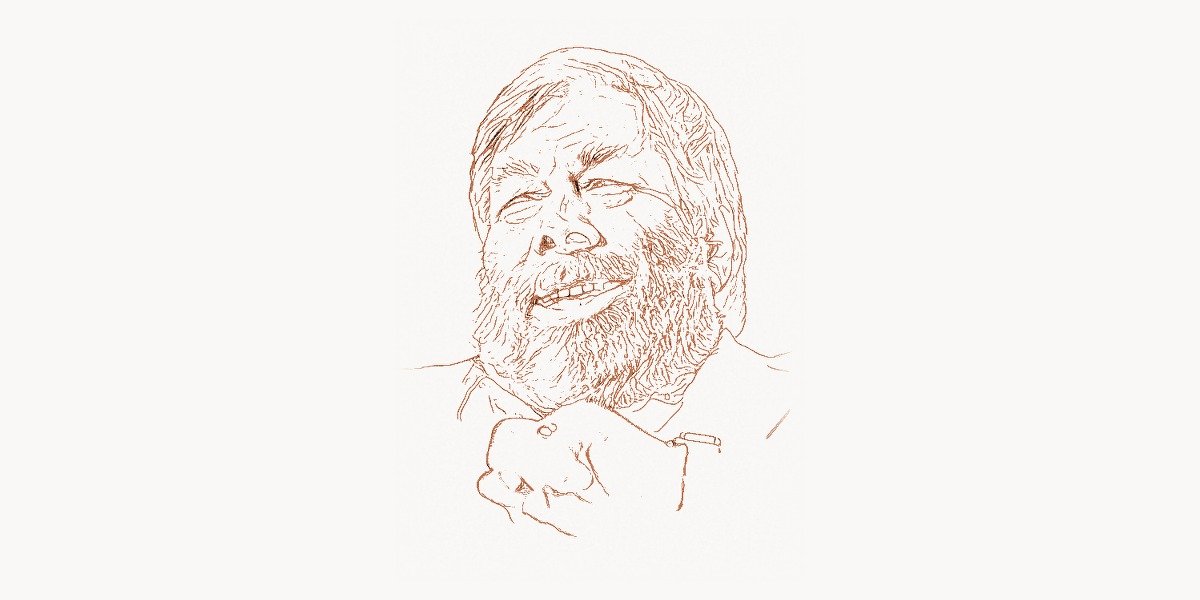
On the evening of June 29, 1975, Steve Wozniak typed a character on a keyboard and watched it appear on a television screen. It was a moment no one else in the world had witnessed: a single person, working alone in a bedroom in Los Altos, California, had built a complete computer from scratch — processor, memory, display logic, keyboard interface — on a single circuit board. The machine would become the Apple I, and the man who built it would become one of the most important engineers in the history of computing. But that night, Steve Wozniak was not thinking about revolution. He was thinking about elegance. He was counting chips. He had designed the entire computer using fewer integrated circuits than anyone thought possible, not because he was trying to save money, but because reducing the chip count was, to him, a form of art. Every chip eliminated was proof of a more elegant solution, a deeper understanding of how logic gates could be combined and reused. This obsession with doing more with less — with engineering as aesthetic expression — would produce the Apple II, the machine that launched the personal computer industry and changed the relationship between humans and technology forever.
Early Life and Education
Stephen Gary Wozniak was born on August 11, 1950, in San Jose, California, the heart of what would become Silicon Valley. His father, Francis Jacob “Jerry” Wozniak, was an engineer at Lockheed Martin working on missile defense systems. Jerry Wozniak’s influence on his son was profound and specific: he taught young Steve the fundamentals of electronics, explaining Boolean algebra and logic gates at the kitchen table when the boy was in elementary school. By the time most children were learning to multiply, Wozniak understood AND gates, OR gates, and NOT gates — the fundamental building blocks of digital circuits.
Wozniak’s talent for electronics was evident almost immediately. At age 11, he built a transistor-based calculator. At 13, he won a science fair prize for a binary adder-subtractor that he designed and built himself. By high school at Homestead High in Cupertino, he was reading computer manuals from companies like Digital Equipment Corporation and designing computers on paper — not because he had access to a computer (almost no one did in the mid-1960s), but because the act of designing logic circuits was intrinsically satisfying. He would spend hours minimizing the number of chips required for a particular function, treating each design as a puzzle to be solved with maximum elegance.
After graduating from Homestead High in 1968, Wozniak attended the University of Colorado Boulder for one year before transferring to De Anza College in Cupertino due to financial constraints. He later enrolled at the University of California, Berkeley, but left before completing his degree to work at Hewlett-Packard as a calculator engineer. He would eventually return to Berkeley and complete his bachelor’s degree in electrical engineering and computer science in 1986, graduating under the pseudonym “Rocky Raccoon Clark” because he did not want the attention his fame would bring. This combination of extraordinary talent and genuine modesty defined Wozniak throughout his career and set him apart from the larger-than-life personalities that dominated Silicon Valley, including his own business partner.
It was during his time at Homestead High that Wozniak met Steve Jobs, who was five years younger. Jobs recognized Wozniak’s engineering genius immediately, and the two formed a friendship that would shape the technology industry. Their collaboration on “blue boxes” — illegal devices that allowed free long-distance phone calls by generating specific tones that fooled the phone system — was an early demonstration of their complementary skills: Wozniak designed the hardware with characteristic elegance, and Jobs figured out how to sell them. This dynamic — Wozniak the engineer, Jobs the entrepreneur — would repeat itself on a much larger scale with Apple Computer.
The Apple II Breakthrough
Technical Innovation
The Apple II, released in June 1977, was not the first personal computer — the Altair 8800, the IMSAI 8080, and Wozniak’s own Apple I preceded it. But the Apple II was the first personal computer that a normal person could actually use. Wozniak designed every aspect of the hardware, and his engineering decisions were nothing short of brilliant. The machine used the MOS Technology 6502 processor, running at approximately 1 MHz, with 4 KB of RAM (expandable to 48 KB). But the raw specifications do not convey what made the Apple II revolutionary. What made it revolutionary was how Wozniak achieved its capabilities with astonishingly few components.
The most celebrated example of Wozniak’s engineering genius was the Apple II’s color graphics system. Generating color video output from a microcomputer in 1977 was considered extremely difficult — it typically required dozens of dedicated chips and complex timing circuits. Wozniak achieved it with a handful of components by exploiting a quirk of the NTSC color television standard. The NTSC signal encodes color information as a phase shift relative to a reference frequency (the color burst signal at 3.579545 MHz). Wozniak realized that by carefully timing the pixel output relative to this reference frequency, he could generate different colors using only the digital output of the processor and a few passive components. Each pixel’s color was determined by its position within the NTSC color cycle — a trick that required no dedicated color generation hardware at all. The entire color system was essentially free, encoded in the timing of the digital signal itself.
This technique was so clever that engineers at other companies studied the Apple II’s schematics in disbelief. The conventional approach would have required a dedicated graphics chip, a color lookup table, analog mixing circuits, and substantial support logic — adding perhaps 20 to 30 chips and significant cost to the design. Wozniak achieved the same result with virtually zero additional hardware, because he understood the underlying physics of television signals deeply enough to exploit them at the logic level. It was engineering at its most creative — not brute force, but insight.
The Apple II also featured eight expansion slots, a design decision that proved transformative. Wozniak designed the slot architecture to be simple and open — any engineer could build a card that plugged into the Apple II and extended its capabilities. This openness, unusual in an era when computer manufacturers tried to lock customers into proprietary ecosystems, created a thriving third-party hardware market. VisiCalc, the first spreadsheet program — which alone drove thousands of Apple II sales to businesses — ran on the Apple II in part because the machine’s architecture supported the necessary memory expansion and display capabilities. The expansion slot architecture was a precursor to the open platform model that would later define the IBM PC and, eventually, the entire computing industry.
To understand the density of Wozniak’s innovation, consider the Apple II’s memory architecture. The 6502 processor could address 64 KB of memory, and Wozniak needed to map RAM, ROM, I/O, and the display buffer into this single address space while allowing the processor and the video display circuitry to access memory without conflicting with each other. He solved this by interleaving processor and video access on alternate half-cycles of the system clock — a technique called “cycle stealing” that allowed both the processor and the display to access memory at full speed without any wait states or arbitration logic. This was an extraordinarily elegant solution that eliminated the need for dedicated video memory (saving cost and complexity) while maintaining full processing speed (preserving performance).
; Apple II display memory mapping (simplified)
; Wozniak's interleaved memory architecture
; Video hardware reads during Phase 0 of clock
; CPU reads/writes during Phase 1 of clock
; No wait states — both run at full speed

; Screen memory layout (40 columns x 24 rows text mode)
; Not sequential — interleaved for hardware simplicity:
; Row 0:  $0400-$0427  (base page 1)
; Row 8:  $0428-$044F
; Row 16: $0450-$0477
; Row 1:  $0480-$04A7
; Row 9:  $04A8-$04CF
; Row 17: $04D0-$04F7
; ...pattern repeats for all 24 rows

; Hi-Res graphics: 280x192 pixels, 6 colors
; Each byte controls 7 horizontal pixels
; Bit 7 selects color palette (violet/green or blue/orange)
; Bits 0-6 are the pixel data

        ORG $0300

; Simple routine to clear hi-res screen page 1
; Demonstrates Wozniak's memory-mapped video design
HIRES_PAGE1 EQU $2000      ; Hi-res page 1 starts at $2000
HIRES_SIZE  EQU $2000      ; 8192 bytes (8 KB per page)

CLEAR_HIRES:
        LDA #$00            ; Black pixels
        LDX #$20            ; High byte of start address
        STX PTR+1
        LDY #$00
        STY PTR
.LOOP:  STA (PTR),Y         ; Store zero to screen memory
        INY
        BNE .LOOP
        INC PTR+1           ; Next page
        LDX PTR+1
        CPX #$40            ; End of hi-res page 1 ($3FFF)
        BNE .LOOP
        RTS

PTR:    DS 2                ; Pointer storage
Why It Mattered
The Apple II was commercially successful on a scale that no personal computer had achieved before. It sold for approximately $1,298 with 4 KB of RAM (about $6,500 in today’s dollars), and between 1977 and 1993, Apple sold between five and six million Apple II series computers. The machine was adopted by schools across the United States, introducing an entire generation to computing. It was adopted by small businesses, particularly after VisiCalc (1979) and later Lotus 1-2-3 proved that personal computers could replace ledger books and adding machines. It was adopted by hobbyists and enthusiasts who used the expansion slots to build everything from music synthesizers to laboratory instruments.
The Apple II’s success created Apple Computer as a viable company. Apple’s IPO on December 12, 1980, generated more capital than any IPO since Ford Motor Company in 1956 and created more millionaires (approximately 300) than any company in history to that point. Steve Wozniak, at age 30, was worth over $100 million. But the financial success was a consequence, not a goal, of Wozniak’s engineering. He had designed the Apple II to be the computer he wanted to use — elegant, capable, and accessible — and it turned out that millions of other people wanted to use it too.
The impact went beyond sales figures. The Apple II established the paradigm of what a personal computer should be: a self-contained unit with a keyboard, display output, storage, and expansion capability that a single person could own, set up, and use without specialized training. Before the Apple II, computers were institutional machines — they belonged to universities, corporations, and government agencies, staffed by trained operators. After the Apple II, a computer was something you could buy at a store and put on your desk. This paradigm shift, which Gordon Moore’s law of exponential transistor growth had made physically possible, required an engineer of Wozniak’s caliber to make practically real. The design principles he embedded in the Apple II — integrated hardware, user-friendly operation, expandable architecture — became the template for the entire personal computer industry.
Other Contributions
Before the Apple II, Wozniak designed the Apple I in 1976 — the machine that founded Apple Computer. The Apple I was a bare circuit board (no case, no keyboard, no power supply) that Wozniak built to impress his friends at the Homebrew Computer Club, a gathering of electronics enthusiasts in Menlo Park, California. Steve Jobs saw the commercial potential and convinced Wozniak to sell them. They hand-built 200 units in the Jobs family garage, selling each for $666.66 (a price Wozniak chose because he liked repeating digits). The Apple I was the first single-board computer with built-in video output — previous hobbyist computers required separate terminal equipment to display output. This integration of the video display circuit onto the main board was a preview of the integrated design philosophy that would make the Apple II revolutionary.
One of Wozniak’s most underappreciated innovations was the Disk II floppy disk controller, introduced in 1978. Floppy disk controllers in 1978 typically required 50 or more chips. Wozniak, characteristically, designed one that used only eight. He achieved this by moving most of the controller logic into software — a technique called “soft-sectoring” — and by using a state machine architecture that handled the complex timing requirements of disk I/O with minimal hardware. The Disk II controller was so efficient that it read and wrote data faster than competing controllers while using a fraction of the components. It sold for $495 with a single drive (competing systems cost $1,000 or more), and it transformed the Apple II from a hobbyist toy into a serious computing platform. Without affordable, reliable disk storage, the Apple II could not have run VisiCalc or any other business application that required data persistence. The Disk II was the enabler that made the Apple II’s business success possible.
10  REM === DISK II DEMO — APPLESOFT BASIC ===
20  REM Wozniak's Disk II made this possible:
30  REM storing and retrieving data on floppy disk
40  REM
50  REM Before the Disk II, Apple II users relied
60  REM on cassette tape — slow and unreliable.
70  REM Wozniak's 8-chip controller changed everything.
80  REM
100 HOME
110 PRINT "WOZNIAK DISK II FILE DEMO"
120 PRINT "========================="
130 PRINT
140 DIM SCORES(10)
150 FOR I = 1 TO 10
160   SCORES(I) = INT(RND(1) * 100) + 1
170 NEXT I
180 REM Write data to disk
190 PRINT CHR$(4);"OPEN SCORES.DAT"
200 PRINT CHR$(4);"WRITE SCORES.DAT"
210 FOR I = 1 TO 10
220   PRINT SCORES(I)
230 NEXT I
240 PRINT CHR$(4);"CLOSE SCORES.DAT"
250 PRINT "DATA SAVED TO DISK II DRIVE"
260 PRINT
270 REM Read data back from disk
280 PRINT CHR$(4);"OPEN SCORES.DAT"
290 PRINT CHR$(4);"READ SCORES.DAT"
300 FOR I = 1 TO 10
310   INPUT S
320   PRINT "SCORE ";I;": ";S
330 NEXT I
340 PRINT CHR$(4);"CLOSE SCORES.DAT"
350 PRINT
360 PRINT "DISK I/O COMPLETE — 8 CHIPS ONLY"
After leaving Apple in 1985 (following an airplane accident and a period of recovery), Wozniak pursued a variety of projects that reflected his eclectic interests. He founded CL 9, a company that created the first programmable universal remote control in 1987 — a device that could learn and replicate infrared signals from multiple remote controls, consolidating them into a single unit. While not as historically significant as the Apple II, the universal remote demonstrated Wozniak’s consistent philosophy: use engineering to simplify the user’s experience.
Wozniak’s philanthropic work has been extensive and focused primarily on education. He funded and personally participated in the Unuson (Unite Us in Song) project, which organized large-scale music festivals. He has been deeply involved in educational initiatives, donating computers and time to local schools in the Los Altos area for decades. He served as a volunteer teacher at his local school district, teaching children about computers — not because he needed to, but because he believed education was the most important application of technology. In 2014, he co-founded Woz U, an online education platform focused on technology training and career development, aiming to make tech education accessible to people who could not attend traditional four-year universities. For teams managing educational technology projects at scale, platforms like Taskee offer structured approaches to organizing curriculum development and collaborative content creation.
He has been a consistent advocate for the right to repair movement, arguing that people should be able to open, modify, and fix the devices they own — a position rooted in his own experience as a builder and tinkerer who learned electronics by taking things apart. He has also been an outspoken supporter of electronic privacy rights and net neutrality, positions that align with his belief that technology should empower individuals rather than control them.
Philosophy and Engineering Approach
Key Principles
Wozniak’s engineering philosophy can be distilled to a single principle: elegance through minimalism. He measured the quality of a design not by what it could do, but by how few components it needed to do it. Every chip eliminated was a victory. Every clever trick that combined two functions into one was a source of genuine joy. This was not about cost reduction (though it had that effect) — it was about understanding. To reduce a chip count, you had to understand the problem so deeply that you could see redundancies invisible to other engineers. You had to know Boolean algebra, timing constraints, signal characteristics, and processor architecture well enough to find the one solution — among thousands of possible solutions — that accomplished the goal with the fewest parts.
This philosophy connected Wozniak to a long tradition in engineering and mathematics. The principle of parsimony — achieving maximum effect with minimum means — is a hallmark of great engineering across all disciplines. In software, the same principle appears in the Unix philosophy articulated by Dennis Ritchie and Ken Thompson: do one thing and do it well. In computer science, it appears in algorithmic efficiency — the quest for the algorithm that solves a problem with the fewest operations. In Wozniak’s hardware designs, it appeared as the relentless drive to reduce chip count while maintaining or increasing functionality. The theoretical foundations that made such optimization possible trace back to Alan Turing’s work on computability, which established the mathematical framework for understanding what machines can and cannot do.
Wozniak was also deeply committed to openness and sharing. He gave away the schematics for the Apple I at the Homebrew Computer Club before Jobs convinced him to sell the machines commercially. He designed the Apple II with expansion slots because he believed users should be able to modify and extend their computers. He has consistently argued against closed systems and proprietary lock-in. This philosophy of openness — the belief that technology advances fastest when knowledge is shared freely — places Wozniak in the tradition of the early hacker culture that produced the internet, open-source software, and the free software movement.
His approach to problem-solving was characteristically hands-on and iterative. Unlike engineers who design on paper and hand off to fabrication, Wozniak built and tested his designs himself, wire by wire, chip by chip. He would spend days or weeks on a single circuit, trying different approaches, counting chips, measuring timing margins, looking for the solution that felt right. This intimate, tactile relationship with hardware gave him an intuitive understanding of electronics that purely theoretical engineers could not match. Grace Hopper, who similarly bridged the gap between theoretical computer science and practical engineering, exemplified this same principle that deep understanding comes from building things yourself.
Legacy and Modern Relevance
Steve Wozniak’s legacy is embedded in the fundamental architecture of personal computing. The integrated personal computer — a self-contained unit with processor, memory, display, keyboard, and storage in a single package designed for individual use — is his creation. Before Wozniak, computers were either room-sized institutional machines or bare circuit boards for electronics hobbyists. The Apple II bridged that gap, creating a category of product that did not previously exist: the personal computer as consumer appliance. Every laptop, desktop, tablet, and smartphone descends, conceptually if not architecturally, from the design principles Wozniak embedded in the Apple II.
His engineering approach — minimalist, elegant, integrated — influenced generations of hardware designers. The idea that fewer components means a better design, that engineering is an art form with aesthetic criteria as well as functional ones, that the best solution is the simplest one that works — these principles continue to guide hardware engineering today, from chip design to embedded systems. Modern system-on-chip designs, which integrate processor, memory controller, graphics, and I/O onto a single piece of silicon, are the philosophical descendants of Wozniak’s integrated Apple II design. Sophie Wilson’s work on the ARM processor, which prioritized efficiency and simplicity over raw power, reflects the same design philosophy that Wozniak championed. For engineers and designers working on complex hardware projects today, modern code editors and development tools continue the tradition of making technical work more accessible and efficient.
The expansion slot architecture of the Apple II established the principle of open, extensible platform design that would later define the IBM PC, the PCI bus, the USB standard, and ultimately the app store model of modern smartphones. Wozniak demonstrated that an open platform — one that third parties can extend — creates more value than a closed one, a lesson the computing industry has learned and re-learned many times since.
Wozniak was inducted into the National Inventors Hall of Fame in 2000 for the personal computer. He received the National Medal of Technology from President Reagan in 1985 (jointly with Jobs). He has received the ACM Grace Murray Hopper Award (1979), the Heinz Award for Technology (2001), and numerous other recognitions. But perhaps his most important legacy is cultural: he demonstrated that a single engineer, working alone with deep knowledge and creative insight, could build something that changed the world. In an era of massive engineering teams and billion-dollar development budgets, Wozniak’s achievement with the Apple II remains a reminder that the most important ingredient in technological innovation is not money or manpower, but understanding. When Margaret Hamilton and her team built the Apollo guidance software, they too demonstrated that deep engineering understanding could solve problems that brute-force approaches could not.
The personal computer revolution that Wozniak ignited with the Apple II fundamentally changed how humans work, communicate, learn, and create. The digital agency landscape that exists today — with firms like Toimi building sophisticated web experiences — exists because Wozniak and a handful of other pioneers proved that computing power belonged on every desk, not locked behind institutional doors. Every time a person opens a laptop, launches an application, or writes a line of code, they are operating within the technological paradigm that Steve Wozniak, more than almost anyone else, brought into existence.
Key Facts
- Born: August 11, 1950, San Jose, California, United States
- Known for: Co-founding Apple Computer, designing the Apple I and Apple II, pioneering the integrated personal computer
- Key inventions: Apple I (1976), Apple II (1977), Disk II floppy controller (1978), CL 9 universal remote (1987)
- Education: University of California, Berkeley — BS in Electrical Engineering and Computer Science (1986)
- Awards: National Medal of Technology (1985), ACM Grace Murray Hopper Award (1979), National Inventors Hall of Fame (2000), Heinz Award for Technology (2001)
- Apple II sales: Approximately 5–6 million units (1977–1993), established the personal computer as a consumer product
- Disk II controller: Reduced floppy disk controller from 50+ chips to 8, making affordable disk storage possible for personal computers
- Philosophy: Engineering as art — measuring design quality by minimalism, elegance, and chip count reduction
Frequently Asked Questions
Who is Steve Wozniak?
Stephen Gary Wozniak (born August 11, 1950) is an American electronics engineer, computer scientist, programmer, philanthropist, and technology entrepreneur. He co-founded Apple Computer with Steve Jobs and Ronald Wayne in 1976. Wozniak single-handedly designed the hardware, circuit board layout, and operating system for the Apple I and Apple II personal computers. The Apple II, released in 1977, became one of the first commercially successful mass-produced personal computers and is widely credited with launching the personal computer revolution. Wozniak’s engineering genius lay in his ability to achieve extraordinary functionality with minimal hardware — his designs consistently used far fewer integrated circuits than competing products while delivering equal or superior performance.
What did Steve Wozniak invent?
Wozniak’s most important inventions include the Apple I (1976), the first single-board computer with built-in video output; the Apple II (1977), which introduced color graphics, sound, expansion slots, and integrated design to personal computing; and the Disk II floppy disk controller (1978), which reduced the component count from over 50 chips to just 8 while achieving faster performance than competing controllers. He also created the first programmable universal remote control through his company CL 9 in 1987. His color graphics system for the Apple II, which exploited NTSC signal timing to generate color with virtually no dedicated hardware, is considered one of the most ingenious hardware hacks in computing history.
Why is Steve Wozniak important to the history of computing?
Wozniak is important because he transformed the personal computer from a hobbyist curiosity into a practical consumer product. Before the Apple II, personal computers were either bare circuit boards or expensive, limited machines. Wozniak’s integrated design — combining processor, memory, color graphics, sound, keyboard input, expansion slots, and (with the Disk II) disk storage into a single affordable package — created the template for what a personal computer should be. This template was adopted by the entire industry, from the IBM PC to modern laptops. His engineering philosophy of minimalist elegance influenced generations of hardware designers, and his commitment to open, expandable architecture established principles that continue to shape technology platform design today. The Apple II’s success also created Apple Computer as a major corporation, which went on to produce the Macintosh, the iPod, the iPhone, and other products that reshaped multiple industries.