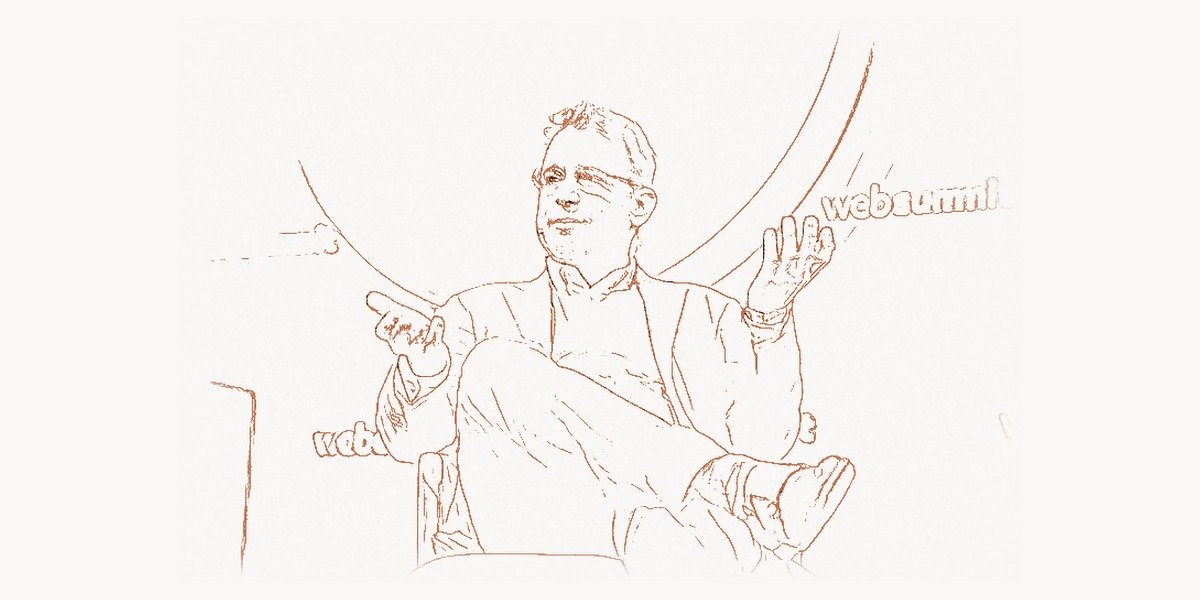
In February 2004, a small team in Vancouver was running out of money. They had spent three years building an online multiplayer game called Game Neverending — a whimsical, browser-based world where players could interact, trade objects, and build things together. The game was ambitious, creative, and financially unsustainable. The company, Ludicorp, had roughly five weeks of runway left. Most founders in that position would have shut everything down, sent apologetic emails to investors, and moved on. Stewart Butterfield looked at the photo-sharing tool his team had built as a side feature inside the game and said: that is the product. Within weeks, the team pivoted entirely. They stripped the photo-sharing functionality out of Game Neverending, rebuilt it as a standalone web application, and launched it as Flickr. Within a year, Yahoo acquired Flickr for an estimated $25 million. Then, almost exactly a decade later, Butterfield did it again. Another game company. Another failed game. Another pivot. This time, the internal communication tool his team had built became Slack — a product that would reach a $27.7 billion acquisition by Salesforce in 2021 and fundamentally change how millions of people work. No one in the history of technology has turned failure into success quite like Stewart Butterfield. He did not just pivot once; he pivoted twice, from the same starting point, into two products that each defined their category. The pattern is not coincidence. It reveals something profound about how great products actually get built — not through grand plans executed perfectly, but through the willingness to see what is actually working when the original plan falls apart.
Early Life and the Unlikely Path to Tech
Dharma Jeremy Butterfield was born on March 21, 1973, in Lund, British Columbia, a small rural community on the Sunshine Coast north of Vancouver. His parents were back-to-the-land hippies who lived in a log cabin without electricity or running water for the first years of his life. The name “Dharma” reflected their spiritual orientation; he later changed his legal first name to “Stewart” as a child, though the counterculture sensibility of his upbringing would echo throughout his career in ways neither he nor his parents could have predicted.
The family eventually moved to Victoria, British Columbia, where Butterfield attended school. He was a voracious reader and an excellent student, but his interests were eclectic rather than narrowly technical. Unlike many tech founders who grew up writing BASIC on home computers, Butterfield’s intellectual formation was rooted in the humanities. He studied philosophy at the University of Victoria, earning a bachelor’s degree, and then completed a master’s degree in philosophy at the University of Cambridge, focusing on the philosophy of mind and cognitive science. His thesis explored questions about consciousness and the relationship between mental states and physical processes — questions that seem far removed from building internet products but that gave him an unusual capacity for thinking about how people experience technology, not just how technology functions.
Butterfield’s first exposure to the internet came in the mid-1990s, during the first wave of the web. He taught himself web design and began freelancing, building websites for clients. He was drawn to the web not as a programming challenge but as a design and communication problem — how to create experiences that people would find meaningful, useful, and enjoyable. This design-first, human-centered orientation would define every product he subsequently built.
Ludicorp and Game Neverending: The First Attempt
Building the Game That No One Would Play
In 2002, Butterfield co-founded Ludicorp Research & Development with Jason Classon and Caterina Fake, who was also his wife at the time. The company’s mission was to build Game Neverending, a massively multiplayer online game (MMOG) that was radically different from the dominant games of the era. While titles like EverQuest and the soon-to-launch World of Warcraft focused on combat, leveling, and fantasy adventure, Game Neverending was explicitly non-violent and social. Players could create objects, trade with each other, form groups, send messages, and share content. The game was built as a web application using PHP and Flash — a technical choice that made it accessible through any browser but limited its graphical capabilities compared to dedicated game clients.
The development team was tiny — never more than a dozen people — and worked out of a small office in Vancouver. They built the game iteratively, releasing features to a small community of beta testers and refining the experience based on feedback. The game developed a passionate but small following. Players loved the social aspects — the ability to communicate, share, and collaborate — more than the game mechanics themselves.
One of the features the team built into the game was the ability to share photos. It was a natural extension of the social design: players could upload images and share them with friends within the game world. The photo-sharing tool was relatively simple, but it worked well, and players used it enthusiastically. The team noticed that the photo-sharing feature had a vitality and engagement that the rest of the game lacked. People who were not particularly interested in the game itself were drawn to the photo-sharing tool.
# The basic architecture of early Flickr (2004)
# Evolved from Game Neverending's photo-sharing module
# Originally built as a feature inside a Flash-based MMOG

# The game used a real-time messaging backbone (XMPP-inspired)
# that became the foundation for Flickr's social features

# Simplified view of the early upload and sharing flow:

class PhotoUpload:
    """
    Flickr's early upload pipeline — stripped from
    Game Neverending and rebuilt as standalone service.

    Key insight: the game's social graph and real-time
    messaging layer made photo sharing feel alive.
    Users could see friends' photos appear in real time.
    """

    def __init__(self, user, file_data):
        self.user = user
        self.file_data = file_data
        self.metadata = {}
        self.tags = []
        self.permissions = {
            'public': True,
            'friends': True,
            'family': True
        }

    def process(self):
        # Generate multiple sizes — a Flickr innovation
        # that made photos embeddable across the web
        sizes = {
            'square_75': self.resize(75, 75, crop=True),
            'thumbnail': self.resize(100, None),
            'small_240': self.resize(240, None),
            'medium_500': self.resize(500, None),
            'large_1024': self.resize(1024, None),
            'original': self.file_data
        }

        # Store with unique photo ID
        photo_id = self.generate_id()
        self.store(photo_id, sizes)

        # The crucial social layer — inherited from
        # Game Neverending's real-time messaging system
        self.notify_contacts(photo_id)
        self.add_to_photostream(photo_id)
        self.index_tags(photo_id, self.tags)

        return photo_id

    def add_tags(self, tag_string):
        """
        Flickr popularized folksonomy — user-generated tags
        for organizing content. This was revolutionary in 2004.
        Before Flickr, web content was organized by editors
        into fixed hierarchies. Tags let users create their
        own fluid, overlapping categories.
        """
        self.tags = [
            tag.strip().lower()
            for tag in tag_string.split(',')
        ]
        return self.tags
The Pivot to Flickr
By late 2003, it was clear that Game Neverending was not going to succeed as a commercial product. The market for browser-based MMOGs was small, the competition from dedicated game clients was intense, and Ludicorp was burning through its limited funding. Butterfield and Fake made the decision to pivot the company entirely to photo sharing. They extracted the photo-sharing functionality from the game, rebuilt it as a standalone web application, and launched it in February 2004 under the name Flickr (the vowel-dropping naming convention was popular in early Web 2.0).
Flickr was not the first photo-sharing site — services like Ofoto, Shutterfly, and Snapfish already existed — but it was fundamentally different from everything that came before. The existing services treated photo sharing as a utility: upload photos, organize them into albums, share the album link with family and friends. Flickr treated photo sharing as a social experience. It inherited the social DNA of Game Neverending: real-time interactions, a sense of community, tagging, commenting, groups, and a public photostream that made sharing feel immediate and alive.
Several innovations made Flickr category-defining. First, Flickr introduced tagging as a primary organizational mechanism. Instead of sorting photos into rigid folder hierarchies, users could add multiple free-form tags to any photo. A single photo could be tagged “sunset,” “beach,” “vacation,” and “California” simultaneously, making it discoverable through multiple paths. This approach — known as folksonomy, a portmanteau of “folk” and “taxonomy” — influenced the design of virtually every social platform that followed, from Twitter’s hashtags to YouTube’s tagging system.
Second, Flickr offered a public API from its earliest days, allowing third-party developers to build applications on top of Flickr’s photo data. This was a radical decision in 2004, when most web companies treated their data as proprietary assets to be locked behind walls. Flickr’s API turned the platform into a building block for the broader web, and it became one of the most widely used REST APIs of the early Web 2.0 era. The API approach established a pattern that Amazon, Google, and Facebook would later adopt at massive scale.
Third, Flickr embraced Creative Commons licensing, allowing photographers to specify how their photos could be reused. This made Flickr an enormous resource for bloggers, journalists, educators, and designers who needed legal, high-quality images. It also positioned Flickr at the center of the open web movement, aligning the platform with the values of sharing and collaboration that defined early Web 2.0.
Yahoo acquired Flickr in March 2005 for a reported $22-25 million. At the time of acquisition, Flickr had approximately 1.5 million registered users. The acquisition was widely seen as a smart move by Yahoo to gain a foothold in the social web. In retrospect, Yahoo’s stewardship of Flickr is often cited as one of the great missed opportunities in tech history — Yahoo failed to invest sufficiently in the platform, imposed its own login system, and allowed competitors like Facebook and Instagram to overtake Flickr in the photo-sharing market. But none of that diminishes what Butterfield and his team built: the prototype for social media as we know it.
The Wilderness Years and Tiny Speck
After leaving Yahoo in 2008, Butterfield spent a period consulting, investing in startups, and thinking about what to build next. By 2009, he had co-founded a new company called Tiny Speck with several members of the original Ludicorp and Flickr team, including Cal Henderson (Flickr’s original engineering lead), Eric Costello, and Serguei Mourachov. The company’s stated mission was, once again, to build a game.
The game was called Glitch — a browser-based multiplayer game set in the minds of eleven giants. Like Game Neverending before it, Glitch was non-violent, creative, and social. Players could explore a whimsical world, learn skills, collect resources, and collaborate on building projects. The art style was distinctive — hand-drawn, colorful, deliberately quirky — and the game attracted a devoted community. Glitch launched in September 2011, was pulled back into beta in November 2011 due to retention problems, relaunched in September 2012, and was finally shut down in November 2012. The game simply could not attract enough paying players to sustain its development costs.
But once again, while building the game, the team had built something else. To coordinate their own work during Glitch’s development, they had built an internal communication tool. It combined real-time messaging, file sharing, search, and integrations with the development tools they were already using. The tool was designed for how the team actually worked: asynchronous, distributed, organized around specific topics and projects rather than individual inboxes. When Glitch died, Butterfield and the team looked at their internal communication tool and recognized the pattern from a decade earlier. The side project was better than the main project. The tool they had built for themselves was the real product.
Slack: Rewriting Workplace Communication
The Architecture of a Pivot
Slack — the name stands for “Searchable Log of All Communication and Knowledge” — launched in a limited preview in August 2013. From the beginning, it was clear that Slack was not just another messaging app. The product was designed around a set of insights about how teams actually communicate, drawn from Butterfield’s own experience running development teams at Ludicorp, Flickr, and Tiny Speck.
First, Slack organized communication into channels — persistent, searchable, topic-based conversations that anyone on the team could join or leave. This was a radical departure from email, where conversations were locked inside individual inboxes, and from earlier chat tools like IRC or HipChat, which offered channels but lacked the integration, search, and user experience to make them truly useful for non-technical teams. Slack’s channels made information accessible to anyone who needed it, reducing the information silos that plague organizations of every size.
Second, Slack made search a first-class feature. Every message, file, and interaction was indexed and searchable. This turned the communication stream into an organizational knowledge base — a living record of decisions, discussions, and context that new team members could explore and that existing members could reference. The “Searchable Log” in Slack’s name was not marketing; it was the core architectural principle.
Third, Slack invested heavily in integrations. From its earliest days, Slack offered a robust API and a growing ecosystem of integrations with other tools — GitHub, Jira, Google Drive, Salesforce, Trello, and hundreds more. These integrations turned Slack from a messaging tool into a coordination layer: a central place where notifications, updates, and workflows from across the organization’s entire tool stack converged. This integration-first approach was directly influenced by Flickr’s API-first philosophy, but applied to enterprise communication rather than consumer photos.
// Example: Slack webhook integration pattern
// This architectural pattern — using webhooks and bots to
// connect tools — became the standard for workplace software.
// Butterfield's team essentially defined the integration model
// that every SaaS product now follows.

// Incoming webhook: send notifications to Slack from external services
const sendDeployNotification = async (deployData) => {
  const webhookUrl = process.env.SLACK_WEBHOOK_URL;

  // Slack's Block Kit — a structured UI framework for messages
  // that went far beyond plain text chat
  const payload = {
    blocks: [
      {
        type: "header",
        text: {
          type: "plain_text",
          text: `Deploy: ${deployData.service} → ${deployData.environment}`
        }
      },
      {
        type: "section",
        fields: [
          {
            type: "mrkdwn",
            text: `*Branch:*\n${deployData.branch}`
          },
          {
            type: "mrkdwn",
            text: `*Commit:*\n${deployData.commitHash.slice(0, 8)}`
          },
          {
            type: "mrkdwn",
            text: `*Author:*\n${deployData.author}`
          },
          {
            type: "mrkdwn",
            text: `*Status:*\n${deployData.status === 'success'
              ? '✅ Success' : '❌ Failed'}`
          }
        ]
      },
      {
        type: "actions",
        elements: [
          {
            type: "button",
            text: { type: "plain_text", text: "View Logs" },
            url: deployData.logsUrl
          },
          {
            type: "button",
            text: { type: "plain_text", text: "Rollback" },
            style: "danger",
            action_id: "rollback_deploy",
            value: deployData.deployId
          }
        ]
      }
    ]
  };

  // The webhook pattern that Slack popularized became
  // the backbone of DevOps notification systems everywhere
  const response = await fetch(webhookUrl, {
    method: 'POST',
    headers: { 'Content-Type': 'application/json' },
    body: JSON.stringify(payload)
  });

  return response.ok;
};

// Slash command handler — Slack's interaction model
// allowed users to trigger workflows directly from chat
// e.g., /deploy staging my-service
const handleSlashCommand = (req, res) => {
  const { command, text, user_id, channel_id } = req.body;

  if (command === '/deploy') {
    const [environment, service] = text.split(' ');
    triggerDeploy({ environment, service, requestedBy: user_id });
    res.json({
      response_type: 'in_channel',
      text: `Deploying *${service}* to *${environment}*...`
    });
  }
};
Growth and Market Dominance
Slack’s growth was extraordinary by any measure. The product launched its public beta in February 2014 and had 15,000 daily active users within two weeks. By the end of 2014, Slack had over 500,000 daily active users. By 2015, that number reached 1.1 million. The growth was driven almost entirely by word of mouth and organic adoption: teams would try Slack, fall in love with it, and introduce it to other teams. The product spread through organizations like a virus — often starting with a single engineering team and expanding until the entire company was using it.
Butterfield’s approach to growth was characteristically product-obsessed. Rather than investing heavily in sales and marketing, he insisted on investing in the product itself. Every interaction, every notification, every onboarding flow was designed and refined with obsessive attention to detail. The loading messages (witty one-liners displayed while Slack started up), the custom emoji, the threads, the reactions — these were not afterthoughts but deliberate design choices that made Slack feel human, playful, and enjoyable in a market dominated by drab, utilitarian enterprise software.
Slack went public through a direct listing on the New York Stock Exchange in June 2019, opening at $38.50 per share and giving the company a valuation of approximately $23 billion. By then, Slack had over 12 million daily active users and more than 600,000 organizations on its platform. In December 2020, Salesforce announced its acquisition of Slack for $27.7 billion — one of the largest software acquisitions in history. The deal closed in July 2021.
The acquisition reflected both Slack’s success and the intense competition it faced from Microsoft Teams, which Microsoft had launched in 2017 and bundled with its Office 365 suite. Teams grew rapidly, eventually surpassing Slack in total users (though the comparison is complicated by the fact that Teams was distributed to every Office 365 subscriber). Butterfield and Slack’s leadership concluded that joining forces with Salesforce — the dominant CRM platform — would give Slack the enterprise distribution and integration ecosystem it needed to compete effectively against Microsoft’s bundling strategy. For teams exploring modern collaboration and project management solutions, the Slack story illustrates how a thoughtfully designed tool can reshape entire workflows.
Product Philosophy and Engineering Culture
The Art of the Pivot
Butterfield’s two successful pivots are often cited as examples of entrepreneurial agility, but they reveal something deeper than mere flexibility. Both pivots followed the same pattern: a team building something ambitious discovers that a secondary tool they built for their own use is more valuable than the primary product. This pattern suggests a philosophy that Butterfield has articulated explicitly — the best products are built by teams solving their own problems, and the most important thing a founder can do is pay attention to what is actually working rather than clinging to what they planned.
In interviews, Butterfield has described the pivot moment as requiring a combination of honesty and courage — honesty to acknowledge that the original plan has failed, and courage to abandon years of work in favor of something that might succeed. This is harder than it sounds. Founders are emotionally invested in their original vision; investors have funded that vision; team members have been hired for it. The pivot requires telling everyone — yourself included — that the thing you have been working on does not matter, but the thing you barely noticed does.
Butterfield has also emphasized that both Flickr and Slack succeeded not because they were technically superior to alternatives but because they were designed with an unusual sensitivity to how people actually feel when they use software. He has described this as “the texture of the experience” — the cumulative effect of thousands of small design decisions that make a product feel delightful or dreadful. This focus on emotional experience over feature lists is directly traceable to his background in philosophy and the humanities, and it distinguishes his approach from the engineering-first mentality that dominates Silicon Valley.
Design Principles in Practice
Several specific principles characterize Butterfield’s approach to product design. First, he has consistently prioritized reducing friction over adding features. Slack succeeded not because it could do things that email and IRC could not, but because it made communication feel effortless. Messages appeared instantly. Search actually worked. Files were just there, attached to the conversations where they were shared. Integrations brought information to where people were working rather than forcing them to switch between tools.
Second, Butterfield has emphasized the importance of what he calls “the magic moment” — the point at which a new user first understands the value of the product. For Slack, this was the moment when a new team member searched for something and found it instantly, or when a notification from GitHub appeared in the relevant channel without anyone configuring anything. Butterfield invested heavily in making these magic moments happen as quickly as possible in the onboarding process, which is a methodology now standard across modern SaaS development.
Third, he has been a vocal advocate for building products that respect users’ attention and time. In a market where engagement metrics reward addictive design patterns, Butterfield has argued that the best workplace tools should help people get their work done and then get out of the way. Slack’s “Do Not Disturb” features, scheduled messages, and thread management were all designed to give users control over their attention — a philosophy that aligns with the growing emphasis on intentional task management in modern software.
Legacy and Influence on Modern Technology
Stewart Butterfield’s influence on the technology industry extends far beyond Flickr and Slack as individual products. He helped establish several ideas that are now foundational to how software is built and how people think about technology companies.
The concept of the “strategic pivot” — radically changing a company’s direction based on what is working rather than what was planned — entered the mainstream business vocabulary largely because of Butterfield’s story. While other companies had pivoted before (YouTube started as a video dating site, Instagram started as a location-based check-in app), Butterfield’s two consecutive pivots from failed games into category-defining products made the concept vivid and concrete. Eric Ries’s Lean Startup methodology, which formalized the pivot as a strategic tool, was developed during the same period and frequently cited Flickr and later Slack as exemplary cases.
Butterfield’s API-first approach at Flickr helped establish the architectural pattern that would define Web 2.0 and eventually the entire SaaS industry. The idea that a product should expose its functionality through APIs, enabling an ecosystem of third-party integrations, is now standard practice. At Slack, this philosophy was taken even further — the platform’s integration ecosystem became one of its primary competitive advantages and a model for how enterprise software platforms should be designed. The pattern of building integration marketplaces, now common at companies from digital agencies managing complex toolchains to enterprise platforms, owes a direct debt to the approach Butterfield pioneered.
His emphasis on design quality in enterprise software challenged the long-standing assumption that business tools could afford to be ugly, confusing, and unpleasant to use. Before Slack, enterprise software was designed primarily for the executives who purchased it, not the employees who used it daily. Slack demonstrated that workplace tools could be as well-designed and enjoyable as consumer products — and that when they were, adoption happened from the bottom up, driven by users rather than purchasing committees. This insight reshaped the entire enterprise software market, influencing products from Notion to Figma to Linear.
Butterfield’s career also illustrates the value of non-traditional backgrounds in technology. His education in philosophy — particularly the philosophy of mind — gave him a framework for thinking about user experience that went deeper than conventional design thinking. He could ask not just “Is this easy to use?” but “What does it feel like to use this?” and “What mental model does this create?” This philosophical depth, combined with practical design skills and business acumen, produced products that were not just functional but meaningful — products that changed how people related to their work and to each other.
After Salesforce’s acquisition of Slack, Butterfield served as a senior executive at Salesforce before departing in December 2022. His post-Salesforce activities have included angel investing, advising startups, and engagement with climate and sustainability initiatives. He remains one of the most respected and influential figures in the technology industry — not for building the largest company or writing the most code, but for demonstrating, twice, that the most important skill in technology is the ability to see what matters when everything else falls away.
The next time a team discovers that the internal tool they built is more interesting than the product they set out to create, they will be following in Stewart Butterfield’s footsteps. The next time a founder kills a beloved project to pursue something with actual traction, they will be enacting the lesson Butterfield taught. And the next time a product leader argues that software should be designed for how people feel, not just what they need to accomplish, they will be channeling the philosophy that made Flickr and Slack possible. In an industry obsessed with disruption, Butterfield’s most disruptive act was paying attention.
Key Facts
- Born: March 21, 1973, Lund, British Columbia, Canada
- Education: BA in Philosophy, University of Victoria; MPhil in Philosophy, University of Cambridge
- Co-founded Ludicorp: 2002 (with Caterina Fake and Jason Classon)
- Flickr launched: February 2004
- Flickr acquired by Yahoo: March 2005 (~$22-25 million)
- Founded Tiny Speck: 2009
- Glitch (game) launched and shut down: 2011-2012
- Slack launched (preview): August 2013
- Slack IPO (direct listing): June 2019, ~$23 billion valuation
- Slack acquired by Salesforce: July 2021, $27.7 billion
- Awards: Time 100 Most Influential People (2015), named to numerous industry lists
- Known for: Two successful pivots from failed games into category-defining products (Flickr and Slack)
Frequently Asked Questions
What was Game Neverending?
Game Neverending was a browser-based massively multiplayer online game developed by Ludicorp starting in 2002. It was a non-violent, social game where players could interact, trade objects, and share content. The game never achieved commercial success, but its photo-sharing feature was extracted and relaunched as Flickr in February 2004. The game itself was never publicly released as a finished product.
How did Flickr change photo sharing?
Flickr introduced several innovations that became standard across social platforms. It pioneered folksonomy (user-generated tagging as an organizational system), offered a public API that allowed third-party developers to build on the platform, embraced Creative Commons licensing, and treated photo sharing as a social experience rather than a utility. Its real-time social features — commenting, groups, public photostreams — created the template for social media platforms that followed.
What does SLACK stand for?
SLACK is a backronym standing for “Searchable Log of All Communication and Knowledge.” The name reflects the product’s core architectural principle: every message, file, and interaction is indexed and searchable, turning the communication stream into a persistent, queryable knowledge base for organizations.
How did Slack grow so quickly?
Slack grew primarily through organic, bottom-up adoption. Individual teams within organizations would try Slack, find it vastly more pleasant and efficient than email or existing chat tools, and spread it to other teams. The product’s emphasis on design quality, seamless integrations with developer tools, and a freemium model that let teams start using it without purchasing approval drove viral growth. Slack reached 500,000 daily active users within its first year of public availability.
Why did Salesforce acquire Slack?
Salesforce acquired Slack in 2021 for $27.7 billion primarily to compete with Microsoft Teams and to add a communication and collaboration layer to its CRM and enterprise platform. For Slack, the acquisition provided access to Salesforce’s enterprise sales force and customer base, helping it compete against Microsoft’s bundling of Teams with Office 365. The acquisition was one of the largest in enterprise software history.
What is Stewart Butterfield doing now?
Butterfield departed Salesforce in December 2022. Since then, he has been active as an angel investor, startup advisor, and advocate for climate and sustainability initiatives. He remains an influential voice in the technology industry on topics including product design, company culture, and the future of workplace collaboration.
What can developers learn from Butterfield’s pivot strategy?
Butterfield’s career demonstrates several lessons for developers and founders. Pay attention to what users actually use, not what you intended them to use. Build tools that solve your own team’s problems — the best products often emerge from internal needs. Be willing to abandon plans that are not working, even when you are emotionally invested. And prioritize design quality and user experience as competitive advantages, not afterthoughts. These principles apply whether you are building a startup product, managing a small agile team, or designing internal tools for your organization.