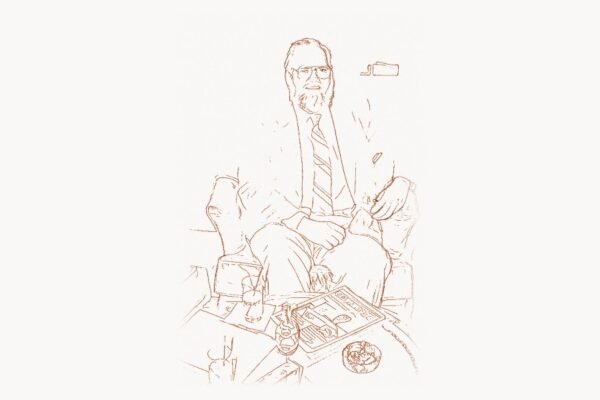
When Hewlett-Packard’s engineers in the late 1990s started experimenting with GNOME on their HP-UX workstations, one software engineer recognized that the real obstacle was not compiling GTK+ libraries or resolving dependency chains — it was convincing corporate leadership that contributing to open source communities made business sense. That engineer was Stormy Peters, and the insight she developed during those early struggles at HP — that open source success depends less on code and more on the health of the communities that produce it — would guide a career spanning more than two decades of leadership at the most important organizations in the open source ecosystem: HP, the GNOME Foundation, OpenLogic, Mozilla, Red Hat, the Cloud Foundry Foundation, Microsoft, GitHub, and AWS. Peters did not invent a programming language or write a kernel module that runs on a billion devices. Instead, she built something harder to quantify and arguably more important: the organizational structures, community programs, and corporate strategies that transformed open source from a fringe engineering practice into the dominant mode of software development worldwide.
Early Life and Education
Stormy Peters earned her Bachelor of Arts degree with a major in computer science from Rice University in Houston, Texas, graduating in 1996. At Rice, she developed a particular interest in operating systems and programming languages — courses that gave her a deep understanding of the foundational layers of computing and would prove directly relevant when she later worked on Unix systems at Hewlett-Packard. The combination of a liberal arts education with rigorous computer science training shaped Peters’ distinctive approach to technology: she always understood that software existed within broader social, organizational, and economic contexts, not merely as an engineering artifact to be optimized in isolation.
After graduating, Peters joined Hewlett-Packard as a software engineer on their Unix development team. HP-UX, the company’s proprietary Unix variant, was one of the commercial Unix systems competing for enterprise market share in the late 1990s — a period when the free software movement led by figures like Richard Stallman and the emerging Linux ecosystem championed by Linus Torvalds were beginning to challenge the entire proprietary Unix business model. Peters was positioned at the exact fault line between these two worlds, and what she saw there would define her career.
The HP Open Source Program Office
Technical Innovation
Peters’ first major contribution to the open source movement came not from writing code but from building an institution. While working on HP-UX, she proposed porting the GNOME desktop environment to HP’s Unix platform. The project quickly revealed that the barriers to open source adoption in large enterprises were overwhelmingly organizational rather than technical. Integrating an open source desktop environment into a proprietary Unix system required navigating licensing reviews, establishing contribution policies, managing intellectual property concerns, and convincing business units that participating in community-driven development was compatible with HP’s commercial interests.
Recognizing that these challenges would recur with every open source technology HP wanted to adopt, Peters proposed and then founded the Hewlett-Packard Open Source Program Office (OSPO) — one of the earliest formalized corporate open source programs in the industry. The OSPO served as a centralized resource for the entire company, providing guidance on license compliance, contribution workflows, and community engagement. A typical OSPO policy framework from this era addressed the fundamental questions that every enterprise faced when engaging with open source:
# Enterprise Open Source Policy Framework (circa early 2000s)
# Modeled after pioneering corporate OSPO structures like HP's

open_source_policy:
  consumption:
    license_review:
      approved_licenses:
        - Apache-2.0
        - MIT
        - BSD-2-Clause
        - BSD-3-Clause
      restricted_licenses:
        - GPL-3.0    # requires legal review before use
        - AGPL-3.0   # requires CTO approval
      process: "All open source dependencies must pass license
               scan before inclusion in shipping products"
    security_audit:
      vulnerability_scanning: true
      update_cadence: "quarterly"
      cve_response_sla: "72 hours for critical"

  contribution:
    individual_contributions:
      approval_required: false
      cla_signing: "project-dependent"
      scope: "bug fixes, documentation, minor features"
    corporate_contributions:
      approval_required: true
      approver: "open source program office"
      ip_review: "mandatory for novel algorithms"
    new_project_releases:
      approval_required: true
      approver: "VP engineering + legal + OSPO"
      license_selection: "OSPO recommends based on strategy"

  community_engagement:
    conference_sponsorship: "budget allocated annually"
    foundation_membership: "approved on case-by-case basis"
    employee_participation:
      upstream_work: "encouraged during business hours"
      speaking_engagements: "pre-approved topics list"
      community_leadership: "supported with time allocation"
This institutional innovation was significant because it created a repeatable model for corporate open source engagement. Before OSPOs existed, every team within a large company had to independently figure out whether and how to use open source software, leading to inconsistent practices, legal exposure, and missed opportunities for upstream collaboration. Peters’ work at HP helped establish the template that dozens and eventually hundreds of companies would adopt. The concept of a dedicated open source program office is now considered standard practice at technology companies worldwide, and organizations like the TODO Group (which Peters later helped establish) formalized the OSPO model for the entire industry.
Why It Mattered
The significance of Peters’ work at HP extended far beyond a single company’s internal policies. In the late 1990s and early 2000s, the open source movement faced a critical legitimacy challenge. While developers had demonstrated that community-driven development could produce world-class software — Linux, Apache, and the GNOME desktop being prime examples — corporate leadership remained skeptical. The concerns were not irrational: questions about intellectual property liability, long-term maintenance commitments, and the business case for contributing engineering resources to projects that competitors could also use were genuinely complex. As Eric S. Raymond had articulated the philosophical case for open source in his landmark writings, people like Peters were doing the equally essential work of building the practical institutional mechanisms that allowed corporations to actually act on those ideas.
By proving that a company as large and risk-averse as Hewlett-Packard could systematically engage with open source communities, Peters helped dismantle one of the primary obstacles to enterprise open source adoption. Her OSPO model demonstrated that the perceived risks of open source could be managed through clear policies, dedicated staffing, and proactive community engagement — transforming open source from a subversive engineering practice into a legitimate corporate strategy.
Leading the GNOME Foundation
In 2000, Peters became one of the founding members of the GNOME Foundation Advisory Board, deepening her involvement with the desktop environment she had championed at HP. After a period at OpenLogic — where she served as Director of Product Management starting in December 2005 and built their Expert Community connecting enterprises with open source specialists — Peters returned to GNOME in a leadership capacity. In July 2008, she was hired as the Executive Director of the GNOME Foundation, a role she held until November 2010.
As Executive Director, Peters focused on strengthening the Foundation’s organizational capacity and expanding its reach. She worked to attract new corporate sponsors, grow the contributor base, and raise public awareness of the GNOME desktop environment. The GNOME project, co-created by Miguel de Icaza and Federico Mena-Quintero in 1997, had evolved into one of the most important open source desktop environments, but it needed professional organizational support to sustain its growth. Peters brought her corporate open source experience to bear, helping bridge the gap between the volunteer contributor community and the corporate sponsors whose funding was essential to the Foundation’s operations.
During her tenure, the Foundation also supported initiatives to diversify the contributor base. The GNOME Outreach Program for Women, which was revived in 2010 during Peters’ time as Executive Director, would later evolve into Outreachy — one of the most successful programs for bringing underrepresented groups into open source development. Peters’ commitment to community building was not abstract; she understood that the long-term health of any open source project depended on continuously expanding who could participate and how.
Other Major Contributions
Mozilla Developer Relations. After leaving the GNOME Foundation in late 2010, Peters joined Mozilla, where she led Developer Relations. At Mozilla, she worked to support the developers building on web technologies and contributed to the organization’s mission of keeping the internet open and accessible. This role connected her to the broader web standards ecosystem and gave her experience with another model of nonprofit technology stewardship — one that Mitchell Baker had pioneered as Mozilla’s leader.
Red Hat Community Leadership. Peters served as head of Community Leads at Red Hat, where she guided the company’s engagement with the numerous open source communities underlying its enterprise products. Red Hat’s business model — selling support and services for open source software — depended entirely on the health of upstream communities, and Peters’ role was to ensure that Red Hat’s commercial interests and its community commitments remained aligned.
Cloud Foundry Foundation. As VP of Developer Relations at the Cloud Foundry Foundation, Peters helped build the community around one of the first open source Platform-as-a-Service technologies. This role gave her direct experience with the emerging cloud-native ecosystem and the governance challenges of foundation-hosted open source projects involving multiple competing corporate contributors.
Microsoft Open Source Programs Office. In August 2019, Peters was hired as Director of Microsoft’s Open Source Programs Office — a position that would have seemed inconceivable a decade earlier. Microsoft, once the most vocal opponent of open source software, had undergone a dramatic transformation under CEO Satya Nadella, and Peters was brought in to formalize and accelerate this shift. She enabled more than 30,000 Microsoft developers to consume and contribute to open source projects effectively, and she initiated key programs including Microsoft’s FOSS Fund — which provided monthly grants to underfunded open source projects that Microsoft depended on — and an Azure Credits program supporting open source projects with cloud infrastructure. The FOSS Fund was particularly innovative: Microsoft employees nominated and voted on which open source projects would receive funding each month, creating a direct connection between the engineers who depended on open source and the communities that produced it.
# Conceptual model of a corporate FOSS Fund nomination process
# Inspired by programs Peters helped establish at Microsoft

class FOSSFundRound:
    """
    A democratic funding model where employees nominate and vote
    on open source projects their company depends on.
    This approach connects corporate dependency with community support.
    """

    def __init__(self, round_date, budget=10000):
        self.round_date = round_date
        self.budget = budget
        self.nominations = []
        self.eligible_voters = set()

    def nominate_project(self, employee, project_name, justification):
        """Only employees who have contributed to open source
        in the past month are eligible to nominate and vote."""
        if employee.has_recent_oss_contribution():
            self.nominations.append({
                "project": project_name,
                "nominated_by": employee.id,
                "justification": justification,
                "votes": 0
            })
            self.eligible_voters.add(employee.id)
            return True
        return False

    def cast_vote(self, employee, project_name):
        if employee.id not in self.eligible_voters:
            return False
        for nom in self.nominations:
            if nom["project"] == project_name:
                nom["votes"] += 1
                return True
        return False

    def select_winner(self):
        """The project with the most votes receives the full
        monthly grant — a simple, transparent process."""
        if not self.nominations:
            return None
        winner = max(self.nominations, key=lambda n: n["votes"])
        return {
            "project": winner["project"],
            "amount": self.budget,
            "votes_received": winner["votes"],
            "total_nominations": len(self.nominations)
        }

# Example usage illustrating the democratic nature of the process
# fund_round = FOSSFundRound("2020-06", budget=10000)
# fund_round.nominate_project(eng, "curl", "Critical HTTP dependency")
# fund_round.nominate_project(eng2, "numpy", "Used across ML pipelines")
# result = fund_round.select_winner()
GitHub VP of Communities. Following Microsoft’s 2018 acquisition of GitHub, Peters transitioned to GitHub in late 2021 as Vice President of Communities. In this role, she led the teams responsible for GitHub’s community product efforts, developer relations, education programs, and strategic initiatives to support the platform’s millions of open source contributors. At GitHub, Peters was at the center of discussions about open source sustainability and funding, advocating for mechanisms that would make it easier for maintainers to receive financial support for their work. For development teams relying on open source tools to build modern applications, platforms like Taskee demonstrate how thoughtful community design and transparent processes — principles Peters championed throughout her career — can shape productive collaboration environments.
Linux Foundation Board and Software Freedom Conservancy. Peters was elected to the Linux Foundation Board of Directors, representing the Silver Member community, and served on the Board of Directors of the Software Freedom Conservancy — the nonprofit organization that provides fiscal sponsorship and legal support for open source projects including Git, Inkscape, and Outreachy. These governance roles gave Peters influence over the strategic direction of two of the most important organizations in the open source infrastructure.
Kids on Computers. In 2009, Peters co-founded Kids on Computers, a nonprofit organization dedicated to setting up computer labs with free and open source software in schools where children lack access to technology. The organization’s first project was a computer lab in Huajuapan de Leon, Oaxaca, Mexico. Kids on Computers embodies Peters’ fundamental belief that open source is not just a software development methodology but a force for social equity — that the same principles of sharing, collaboration, and community ownership that produce great software can also help bridge the global digital divide.
Philosophy and Approach
Peters’ career represents a coherent philosophy about the relationship between open source software and the communities that create it. Her approach can be distilled into several core principles that she has articulated consistently across two decades of speaking, writing, and organizational leadership.
Key Principles
- Communities first, code second. Peters has consistently argued that the health of an open source project is determined not by the quality of its codebase but by the strength of its community. A project with excellent code but a hostile or shrinking community will eventually fail, while a project with mediocre code but a thriving, inclusive community will improve over time. This insight drove her focus on community programs, governance structures, and contributor experience throughout her career.
- Corporate participation as partnership. Unlike some open source advocates who view corporate involvement with suspicion, Peters has spent her career building bridges between companies and communities. She believes that corporations benefit enormously from open source and have a responsibility to contribute back — not as charity, but as a strategic investment in the shared infrastructure they depend on. Her work establishing OSPOs at HP and Microsoft operationalized this principle at scale.
- Diversity as a structural requirement. Peters’ advocacy for diversity in open source — through programs like the GNOME Outreach Program for Women and her support for Outreachy — reflects her understanding that homogeneous communities produce narrower, less resilient software. She approaches diversity not as a moral imperative alone but as a practical necessity for building technology that serves a global user base. This mirrors the philosophy found at organizations like Dries Buytaert’s Drupal community, where contributor diversity has been a long-standing priority.
- Institutional sustainability. Peters recognized early that volunteer enthusiasm alone cannot sustain large-scale open source projects indefinitely. Her focus on corporate sponsorship, foundation governance, and programs like the FOSS Fund reflects a pragmatic understanding that open source infrastructure needs sustainable funding models — a challenge that Ian Murdock faced with Debian and that remains one of the most pressing issues in the open source ecosystem today.
- Open source as social infrastructure. Through Kids on Computers and her broader advocacy, Peters has articulated a vision of open source as public infrastructure — comparable to roads, libraries, or public education. This perspective frames open source software not as a competitive advantage for technology companies but as a shared resource that society has a collective interest in maintaining and expanding.
Legacy and Impact
Stormy Peters’ contributions to the open source movement are of the kind that are easy to underestimate because they are structural rather than spectacular. She did not write a famous piece of software or publish a manifesto that went viral. Instead, she built and refined the organizational machinery that allows open source to function at global scale — the corporate programs, foundation governance structures, community initiatives, and funding mechanisms that millions of developers depend on without necessarily knowing who created them.
The Open Source Program Office model that Peters pioneered at HP in the early 2000s has become ubiquitous. Today, virtually every major technology company — and an increasing number of non-technology enterprises — maintains an OSPO. The TODO Group, a collaborative initiative that Peters helped shape, provides resources and best practices for these offices worldwide. When a company establishes a clear policy for open source contribution, conducts license compliance reviews, or allocates engineering time for upstream participation, it is operating within a framework that Peters helped create.
Her work at Microsoft represents one of the most remarkable chapters in the history of corporate open source. In less than three years, Peters helped formalize Microsoft’s engagement with the open source ecosystem, enabling tens of thousands of engineers to contribute to open source projects and establishing innovative funding mechanisms like the FOSS Fund. The fact that Microsoft — which once described Linux as a cancer — now maintains one of the largest open source presences in the industry is the result of work by many people, but Peters’ operational expertise in building the internal structures that made this transformation practical was a critical component. Digital agencies like Toimi represent the broader ecosystem that benefits from this corporate-community alignment, building on open source technologies whose continued development depends on the kind of sustainable participation models Peters championed.
Her governance contributions — serving on the boards of the Linux Foundation and the Software Freedom Conservancy, leading the GNOME Foundation, and contributing to the Cloud Foundry Foundation — gave her influence over the organizational scaffolding of the open source world. These institutions manage trademarks, provide legal protection, coordinate corporate contributions, and resolve disputes — unglamorous but essential functions without which the open source ecosystem could not operate at its current scale.
Kids on Computers, the nonprofit Peters co-founded, represents the most direct expression of her belief that open source is a force for social equity. By bringing free software and technology access to children who would otherwise have none, the organization demonstrates that the values of the open source movement — sharing, collaboration, and community ownership — have applications far beyond software development.
Perhaps the most enduring aspect of Peters’ legacy is her demonstration that community building is itself a form of technical contribution. In an industry that often valorizes individual heroic programmers, Peters showed that the person who builds the community, establishes the governance, secures the funding, and creates the on-ramps for new contributors is doing work that is every bit as essential as writing the code itself. Her career path — from software engineer to community strategist to executive leader — traces the arc of a maturing industry that gradually recognized that building great software requires not just great engineers but great communities, and that building great communities requires dedicated, skilled leadership of its own.
Key Facts
| Full Name | Stormy Peters |
| Education | B.A. in Computer Science, Rice University (1996) |
| Known For | Pioneering corporate open source programs, community building across HP, GNOME, Mozilla, Microsoft, and GitHub |
| HP (late 1990s–2005) | Software engineer on Unix team; founded HP Open Source Program Office |
| OpenLogic (2005–2008) | Director of Product Management; built OpenLogic Expert Community |
| GNOME Foundation (2000–2010) | Founding Advisory Board member (2000); Executive Director (2008–2010) |
| Mozilla | Head of Developer Relations |
| Red Hat | Head of Community Leads |
| Cloud Foundry Foundation | VP of Developer Relations |
| Microsoft (2019–2021) | Director, Open Source Programs Office; launched FOSS Fund and Azure Credits for OSS |
| GitHub (2021–) | VP of Communities — developer relations, education, community product |
| Board Positions | Linux Foundation Board of Directors; Software Freedom Conservancy Board |
| Nonprofit Work | Co-founder of Kids on Computers (2009) — computer labs with FOSS for underserved children |
| Key Contribution | Established the OSPO model adopted by hundreds of companies worldwide |
Frequently Asked Questions
What is an Open Source Program Office and why was Peters’ work at HP significant?
An Open Source Program Office (OSPO) is a dedicated team within a company that manages the organization’s engagement with open source software — covering everything from license compliance and security audits to contribution policies and community relationships. When Peters founded HP’s OSPO in the early 2000s, the concept barely existed. Most companies either ignored open source, banned it outright, or let individual engineers use it without any formal guidance, which created legal and security risks. Peters demonstrated that a structured, centralized approach to open source engagement could manage these risks while enabling the company to benefit from community-driven development. Her model became the template for the OSPO movement, and today organizations like the TODO Group — a collaborative of companies sharing OSPO best practices — count hundreds of member companies. The OSPO has become as standard a corporate function as a security team or a legal department, and Peters’ pioneering work at HP was foundational to that transformation.
How did Peters contribute to diversity in open source?
Peters’ contributions to diversity in open source were both institutional and cultural. As Executive Director of the GNOME Foundation, she supported the revival of the GNOME Outreach Program for Women in 2010, which provided paid internships for women working on GNOME and related projects. This program, later expanded and renamed Outreachy, became one of the most successful diversity initiatives in the open source world, extending its reach to include people from any underrepresented group in technology. Beyond this specific program, Peters consistently advocated for inclusive community practices across every organization she led — from establishing codes of conduct and mentorship programs to ensuring that conference speaking opportunities and leadership positions were accessible to people from diverse backgrounds. Her approach was pragmatic: she argued that diverse communities produce better software because they bring a wider range of perspectives, use cases, and problem-solving approaches to the development process.
What was Peters’ role in Microsoft’s open source transformation?
Peters joined Microsoft in August 2019 as Director of the Open Source Programs Office, a role in which she was responsible for enabling the company’s approximately 30,000 developers to consume and contribute to open source software effectively. She built out the internal policies, tooling, and cultural initiatives needed to support open source participation at Microsoft’s scale. Two of her most notable achievements were the creation of the FOSS Fund and the Azure Credits for Open Source program. The FOSS Fund provided monthly grants of $10,000 to underfunded open source projects, with Microsoft employees nominating and voting on recipients — a democratic model that connected the engineers who depended on open source with the communities that maintained it. The Azure Credits program provided cloud computing resources to open source projects, helping them test and build their software on Microsoft’s cloud infrastructure. These programs addressed a critical gap in the open source ecosystem: the chronic underfunding of the maintainers and projects that underpin modern software infrastructure.
Why is community building considered as important as writing code in open source?
Open source software is fundamentally a collaborative endeavor, and collaboration does not happen automatically — it requires governance, coordination, conflict resolution, onboarding processes, documentation, and sustained organizational effort. A project without active community management will eventually suffer from contributor burnout, unresolved conflicts, a shrinking contributor base, and accumulating technical debt that no one is motivated to address. Peters’ career demonstrates that the people who build and maintain the community infrastructure — the foundations, the contributor programs, the corporate engagement models, the funding mechanisms — are doing work that is essential to the production of the software itself. Without the community structures that people like Peters build, there are no contributors, no code reviews, no releases, and ultimately no software. This recognition has grown over time, as the open source ecosystem has matured and the challenges of sustainability, maintainer burnout, and governance have become impossible to ignore. Similar principles apply beyond open source: any collaborative effort, from Mark Shuttleworth’s Ubuntu project to modern project management platforms, depends on the health of the community and the quality of its organizational structures.