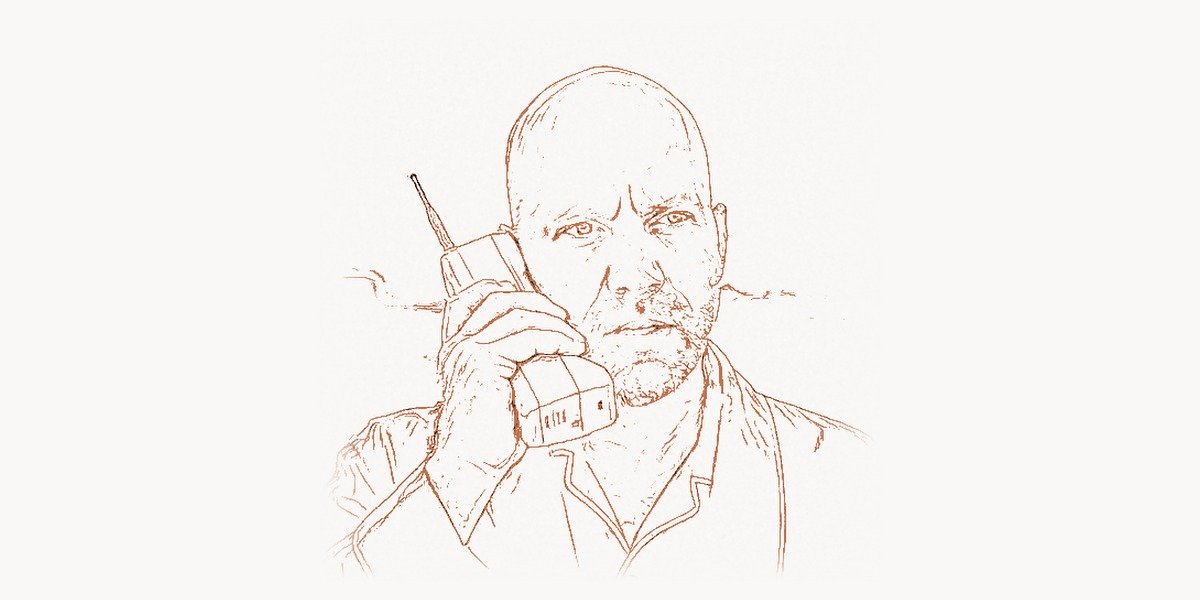
In June 2011, a young developer from Arkansas named Taylor Otwell released a PHP framework called Laravel. At the time, the PHP ecosystem was dominated by frameworks like CodeIgniter, Zend Framework, and Symfony — each powerful in its own way, but none of them felt joyful to use. CodeIgniter was aging and lacked modern features like dependency injection and migrations. Zend Framework was enterprise-grade but notoriously verbose. Symfony was architecturally sophisticated but had a steep learning curve. Otwell looked at this landscape and asked a question that would reshape PHP development: what if a framework could be both powerful and beautiful? What if writing PHP code could feel as elegant as writing Ruby on Rails? The answer was Laravel, and within a decade it became the most popular PHP framework in the world — surpassing 78,000 GitHub stars by 2026, powering hundreds of thousands of production applications, and single-handedly triggering what many developers call the “PHP Renaissance.” Laravel did not just give PHP developers a better framework. It gave them a reason to be proud of their language again.
Early Life and Path to Technology
Taylor Otwell grew up in Arkansas, United States, far from the traditional tech hubs of Silicon Valley or Seattle. He studied at the University of Arkansas, where he earned a degree in political science — not computer science, not software engineering, but political science. Programming was something Otwell taught himself, driven by curiosity and a genuine love of building things for the web. This self-taught background would prove crucial to Laravel’s design philosophy: Otwell understood the frustrations of developers who learned by doing, who read documentation at midnight, who wanted tools that worked with them rather than against them.
Before Laravel, Otwell worked as a .NET developer, building applications in Microsoft’s ecosystem. He was familiar with C# and ASP.NET, and he appreciated the developer experience that Microsoft’s tooling provided — the fluent APIs, the strongly-typed ORM (Entity Framework), the elegant LINQ queries. When he transitioned to PHP for web projects, the contrast was jarring. PHP’s ecosystem in 2010 felt scattered and inconsistent. There was no standard package manager (Composer would not arrive until 2012), no agreed-upon coding standards, and the available frameworks either lacked modern features or buried useful functionality under layers of configuration XML. Otwell believed PHP deserved better tooling — not just functional tooling, but tooling that was a pleasure to use.
This conviction — that developer experience matters as much as raw capability — became the founding principle of everything Otwell would build. He was not the first person to think this way. David Heinemeier Hansson had built Ruby on Rails on a similar philosophy in 2004, proving that a framework could be both productive and elegant. Otwell admired Rails deeply, and Laravel’s earliest versions show clear Rails influence in their routing syntax, migration system, and convention-over-configuration approach. But Otwell was building for PHP — a language with a vastly larger installed base, a different runtime model, and a community that had been told for years that their language was somehow lesser. Laravel would prove that thesis wrong.
The Laravel Breakthrough
Technical Innovation
Laravel 1.0 (June 2011) was modest by today’s standards — a lightweight MVC framework with routing, controllers, models, views, and basic authentication. But even in version 1.0, Otwell’s emphasis on clean, readable code was evident. By Laravel 3 (February 2012), the framework introduced Artisan (a powerful CLI tool), bundles (an early package system), and database migrations. Laravel 4 (May 2013) was a complete rewrite built on top of Symfony components and the Composer package manager, marking Laravel’s transformation from a standalone framework into a modern, composable architecture that could leverage the entire PHP ecosystem.
The real watershed moment was Laravel 5 (February 2015), which introduced a restructured directory layout, middleware, form requests, the scheduler (replacing cron entries with expressive PHP code), and — critically — a mature ecosystem of first-party tools. Each subsequent release refined and expanded the framework: Laravel 5.3 brought Laravel Echo for real-time events, Laravel 5.5 introduced auto-discovery of packages, and Laravel 5.8 improved the testing experience.
At the core of Laravel’s technical appeal is Eloquent, its ActiveRecord ORM. Eloquent made database interactions feel natural and expressive, replacing verbose SQL queries with fluent PHP method chains. Consider how Eloquent handles a common scenario — fetching users with their recent posts and filtering by status:
// Eloquent ORM — expressive, readable database queries
$activeAuthors = User::query()
    ->whereHas('posts', function (Builder $query) {
        $query->where('status', 'published')
              ->where('created_at', '>=', now()->subMonths(6));
    })
    ->with(['posts' => fn ($q) => $q->latest()->limit(5)])
    ->withCount('posts')
    ->orderByDesc('posts_count')
    ->paginate(20);

// Route definition — clean, expressive syntax
Route::middleware(['auth', 'verified'])->group(function () {
    Route::get('/dashboard', [DashboardController::class, 'index'])
        ->name('dashboard');
    Route::resource('projects', ProjectController::class);
    Route::post('/projects/{project}/deploy', [DeployController::class, 'store'])
        ->middleware('can:deploy,project');
});
This code reads almost like English. Compare it to the raw SQL queries and manual route configuration that PHP developers dealt with before Laravel, and the improvement is dramatic. Eloquent relationships (hasMany, belongsTo, morphMany, belongsToMany) allowed developers to define complex database relationships in a few lines of code, and eager loading (the with() method) solved the N+1 query problem that plagued many PHP applications.
Laravel’s service container — its dependency injection system — was another cornerstone innovation. The container automatically resolved class dependencies, making it trivial to write testable, loosely-coupled code. Combined with facades (static-like proxies to underlying services) and the powerful Blade templating engine, Laravel provided a complete toolkit for building modern web applications without requiring developers to wire together dozens of third-party libraries.
Why It Mattered
Before Laravel, PHP had a reputation problem. Developers in the Ruby, Python, and JavaScript communities often dismissed PHP as an outdated language with inconsistent APIs and poor architectural patterns. And they were not entirely wrong — much of the PHP code written in the 2000s was procedural, poorly structured, and riddled with security vulnerabilities. The frameworks that existed were either too simple (CodeIgniter) or too complex (Zend Framework) to change this perception.
Laravel changed the conversation. It proved that PHP applications could be elegant, well-architected, and testable. It showed that you could build a modern web application in PHP using the same patterns — MVC, dependency injection, ORM, migrations, queues, events — that developers praised in Rails or Django. For the first time, PHP developers could point to their framework and say: this is not just functional, it is beautiful. The impact on PHP’s reputation was measurable — the annual Stack Overflow Developer Survey showed PHP’s sentiment improving year over year as Laravel adoption grew.
Laravel also lowered the barrier to entry for professional web development. Its documentation — written largely by Otwell himself and maintained with meticulous care — became a gold standard in the open-source world. The WordPress ecosystem had shown that PHP could power the web at massive scale; Laravel showed that PHP could also power sophisticated, enterprise-grade applications with clean architecture and modern development practices. Tools like Taskee demonstrate how modern web applications can leverage frameworks like Laravel to deliver professional-grade project management experiences that rival anything built in other language ecosystems.
Building the Laravel Ecosystem
What truly sets Otwell apart from other framework creators is not just Laravel itself, but the comprehensive ecosystem he built around it. While most open-source framework authors rely on the community to fill tooling gaps, Otwell systematically identified every pain point in the web development workflow and built first-party solutions:
Laravel Forge (2013) — a server management platform that automated the provisioning and deployment of Laravel applications on cloud providers like DigitalOcean, AWS, and Linode. Before Forge, deploying a PHP application to a VPS required manual server configuration — installing Nginx, PHP-FPM, MySQL, configuring SSL certificates, setting up deployment scripts. Forge reduced this to a few clicks. It became Otwell’s first commercial product and proved that a sustainable business could be built around open-source software.
Laravel Envoyer (2015) — zero-downtime deployment for PHP applications. While Forge handled server provisioning, Envoyer handled the deployment process itself, ensuring that users never saw a broken page during deployments.
Laravel Cashier (2014) — an expressive, fluent interface for Stripe and Braintree’s subscription billing services. Cashier abstracted the complexity of recurring payments, trials, coupons, and invoice generation into a few method calls, enabling thousands of SaaS applications to be built on Laravel.
Laravel Spark (2016) — a paid starter kit for SaaS applications that provided authentication, team management, billing, and an admin dashboard out of the box. Spark embodied Otwell’s belief that developers should spend time on their unique business logic, not on boilerplate.
Laravel Nova (2018) — a beautifully designed administration panel for Laravel applications. Nova generated CRUD interfaces, dashboards, and management tools from Eloquent models, replacing the need for custom admin panels that ate up development time on every project.
Laravel Vapor (2019) — a serverless deployment platform for Laravel, powered by AWS Lambda. Vapor was a technical breakthrough — it demonstrated that a full-featured PHP framework could run in a serverless environment, auto-scaling to zero when idle and handling massive traffic spikes without manual infrastructure management. This was a radical departure from the traditional PHP deployment model and positioned Laravel at the forefront of cloud-native PHP development.
Laravel Livewire — created by Caleb Porzio but embraced as a core part of the Laravel ecosystem — brought reactive, dynamic UI components to Laravel without requiring developers to write JavaScript. Combined with Alpine.js, Livewire created a full-stack development experience where a single PHP developer could build interactive applications that previously required separate frontend and backend teams. For agencies and freelancers managing multiple projects — the kind of work coordinated through platforms like Toimi — this meant dramatically reduced development costs and faster delivery times.
Laravel Octane (2021) — a high-performance application server that kept the Laravel application in memory between requests (using Swoole or RoadRunner), delivering performance improvements of 5-10x over traditional PHP-FPM deployments. Octane silenced critics who claimed PHP’s request-lifecycle model made it inherently slower than Node.js or Go.
Laravel Breeze, Jetstream, and Starter Kits — authentication scaffolding packages that provided login, registration, password reset, email verification, and two-factor authentication out of the box, with options for Blade, Vue, React, or Livewire frontends.
Philosophy and Engineering Approach
Key Principles
Otwell’s overarching philosophy can be summarized in a phrase he uses frequently: “developer happiness.” This is not a vague sentiment — it translates into concrete design decisions that permeate every aspect of Laravel:
Expressive syntax over terse syntax. Laravel methods and APIs are named for readability. Instead of cryptic abbreviations, Laravel uses full English words: belongsToMany, withTrashed, firstOrCreate, updateOrInsert. When a developer reads Laravel code six months after writing it, they can understand what it does without consulting documentation. This philosophy echoes the readability-first approach of Guido van Rossum’s Python, where code clarity is treated as a feature, not a luxury.
Convention over configuration. Laravel makes sensible default assumptions about project structure, naming conventions, and behavior. A model named User automatically maps to a users table. A controller method named store handles POST requests. A migration file timestamped 2024_01_15_create_users_table runs in chronological order. These conventions eliminate hundreds of configuration decisions that add no value to the application.
Batteries included, but replaceable. Laravel ships with a complete toolkit — authentication, authorization, caching, queues, events, mail, notifications, file storage, search — but every component can be swapped out. Want to use Redis instead of the database for queues? Change one configuration value. Want to use a different code editor or IDE? Laravel’s tooling works with all of them. This modularity, built on top of PSR standards and Symfony components, means Laravel applications are not locked into any single vendor or technology.
Documentation as a first-class feature. Otwell treats Laravel’s documentation with the same care as its code. The official docs at laravel.com are widely considered the best documentation of any PHP framework — clear, comprehensive, and updated with every release. Laracasts, the video tutorial platform created by Jeffrey Way, became the de facto learning resource for Laravel (and PHP in general), with thousands of lessons covering everything from basic routing to advanced architecture patterns.
Testing should be easy. Laravel made testing a natural part of the development workflow rather than an afterthought. Built-in HTTP testing helpers, database factories (generating realistic fake data for tests), and assertions for common scenarios meant that writing tests required minimal setup. The framework even included a RefreshDatabase trait that automatically rolled back database changes between tests, keeping the test suite fast and isolated.
Legacy and Influence
Taylor Otwell’s impact on the PHP ecosystem is difficult to overstate. Before Laravel, PHP was a language that many talented developers were leaving for Ruby, Python, or JavaScript. Laravel reversed that trend. It attracted developers back to PHP, convinced new developers to choose PHP for their projects, and created a thriving commercial ecosystem that demonstrated open-source software could sustain profitable businesses.
The numbers tell the story. Laravel has over 78,000 stars on GitHub, making it one of the most-starred repositories of any kind. Packagist (PHP’s package registry) shows billions of Laravel-related package installs. The Laravel ecosystem generates millions in annual revenue through Forge, Vapor, Nova, and other commercial products — proving Otwell’s model of funding open-source through complementary paid services. Laravel has inspired similar approaches in other ecosystems, and its influence on modern PHP development patterns — from the adoption of Composer to the embrace of testing and CI/CD — extends far beyond users of the framework itself.
Otwell also proved something that the broader tech industry often forgets: you do not need to be in Silicon Valley to build world-changing software. From Arkansas, with no computer science degree, working outside every traditional tech power structure, Otwell created the framework that defines modern PHP. His story resonates with the self-taught developers, the freelancers in small towns, the programmers in countries far from tech hubs — anyone who has been told that their background or location disqualifies them from making a real impact. Laravel’s success is proof that great software comes from great taste, relentless iteration, and a deep empathy for the developers who will use it.
The framework continues to evolve. Recent versions have embraced modern PHP features — enums, readonly properties, intersection types — while maintaining the backward compatibility and upgrade paths that production applications depend on. The Laravel community, anchored by Laracon conferences worldwide, remains one of the most active and welcoming in the PHP ecosystem. And Otwell continues to ship — new features, new tools, new ideas — with the same energy and attention to developer experience that characterized Laravel’s very first release in 2011.
In an industry obsessed with the next new language or paradigm, Taylor Otwell took an “uncool” language that powered a third of the web and made it exciting again. That is a legacy few framework creators can claim. Rasmus Lerdorf created PHP and gave the web its most ubiquitous server-side language. Tim Berners-Lee gave us the web itself. Taylor Otwell gave PHP developers the tools and the confidence to build anything — and to enjoy the process.
Key Facts
- Full name: Taylor Otwell
- Location: Arkansas, United States
- Known for: Creating Laravel, the most popular PHP framework in the world
- Key projects: Laravel (2011–present), Forge, Vapor, Nova, Envoyer, Cashier, Spark, Octane
- Education: University of Arkansas (Political Science)
- First release: Laravel 1.0, June 2011
- GitHub stars: 78,000+ (Laravel framework repository)
- Business model: Open-source framework funded by commercial ecosystem products (Forge, Vapor, Nova)
Frequently Asked Questions
Who is Taylor Otwell?
Taylor Otwell is an American software developer and entrepreneur who created Laravel, the most popular PHP web application framework. Released in 2011, Laravel introduced an expressive, elegant syntax to PHP development and built a comprehensive ecosystem of tools including Forge (server management), Vapor (serverless deployment), Nova (admin panels), and many others. Otwell is self-taught in programming, holds a degree in political science from the University of Arkansas, and built Laravel and its ecosystem from Arkansas — far from traditional tech hubs. His work is widely credited with revitalizing the PHP ecosystem and proving that PHP can support modern, well-architected web applications.
What is Laravel and why is it so popular?
Laravel is a free, open-source PHP web application framework that follows the MVC (Model-View-Controller) architectural pattern. It is popular because it combines powerful features — an expressive ORM (Eloquent), a robust routing system, built-in authentication, queues, events, and real-time broadcasting — with an emphasis on developer experience and code readability. Laravel’s documentation is considered among the best in the open-source world, and its ecosystem of first-party tools (Forge, Vapor, Nova, Livewire, Octane) covers the entire web development workflow from coding to deployment. As of 2026, Laravel has over 78,000 GitHub stars and is used by hundreds of thousands of applications worldwide, from small startups to large enterprises.
How did Taylor Otwell change PHP development?
Before Laravel, PHP was often criticized for producing poorly structured, hard-to-maintain code, and many developers were leaving PHP for Ruby on Rails, Django, or Node.js. Otwell changed this by creating a framework that brought modern software engineering practices — dependency injection, database migrations, comprehensive testing, clean architecture — to PHP in an accessible, well-documented package. He also built a sustainable commercial ecosystem around the open-source framework, proving a viable business model for open-source maintainers. Laravel attracted talented developers back to PHP, improved the language’s reputation in the broader software community, and inspired a generation of PHP developers to adopt professional practices like automated testing, continuous integration, and clean code architecture.