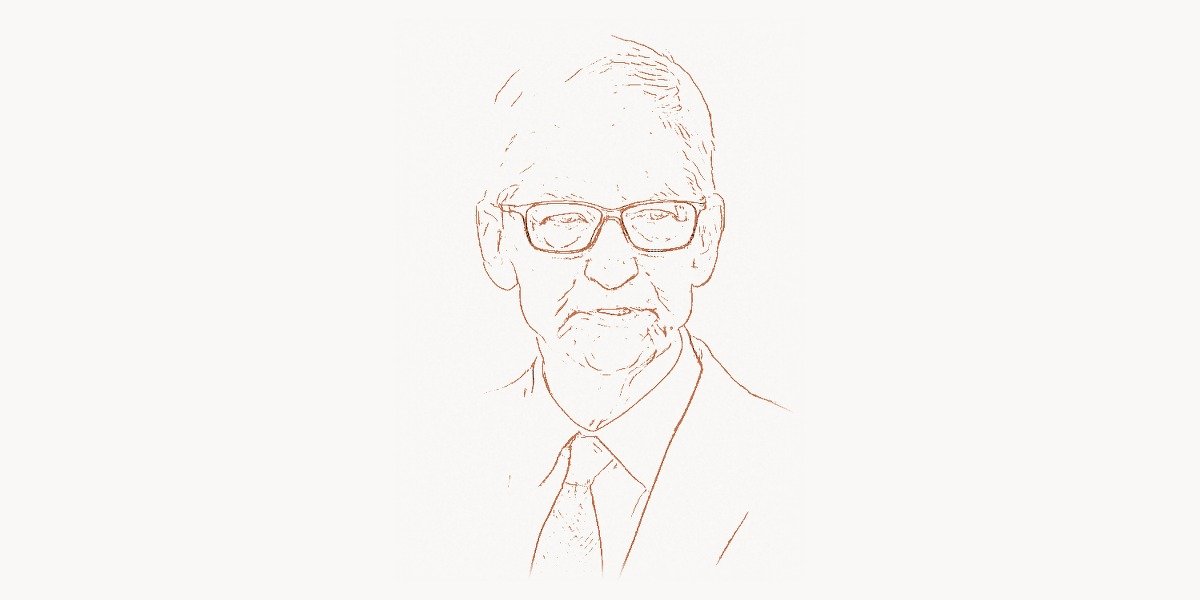
In the summer of 2011, when Steve Jobs stepped down as CEO of Apple and handed the reins to his quiet, disciplined operations chief, the world braced for decline. Apple was a one-man company, the narrative went, and without Jobs it would drift into mediocrity. What happened next defied every prediction. Under Tim Cook, Apple did not merely survive — it became the most valuable company in human history. Revenue tripled. The supply chain Cook had engineered became so efficient that it generated more cash than most nations’ GDP. And in 2020, Cook oversaw the launch of Apple Silicon, which proved that a phone chip company could build the fastest laptop processors in the world. Tim Cook did not replace Steve Jobs. He did something harder — he built the operational machine that turned Jobs’s vision into a $3 trillion enterprise, and then he steered that machine into territory Jobs never imagined.
Early Life and Education
Timothy Donald Cook was born on November 1, 1960, in Mobile, Alabama, and grew up in the nearby town of Robertsdale. His father worked in a shipyard, his mother was a homemaker, and the family was far from the counterculture of Northern California that shaped so many technology pioneers. Cook graduated as valedictorian of Robertsdale High School in 1978.
He enrolled at Auburn University, earning a Bachelor of Science in Industrial Engineering in 1982 — a discipline concerned with optimizing complex systems and eliminating waste. Cook then worked at IBM for twelve years in manufacturing and distribution operations, earning an MBA from Duke University’s Fuqua School of Business in 1988.
At IBM, Cook learned the discipline of large-scale manufacturing and supply chain management. He rose to become director of North American fulfillment, managing IBM’s PC manufacturing and distribution across the continent. In 1994, he left IBM for Intelligent Electronics, then moved to Compaq Computer as Vice President of Corporate Materials, overseeing procurement and supply chain operations for one of the largest PC manufacturers in the world.
In early 1998, Cook received a phone call that changed his life. Steve Jobs, who had returned to Apple as interim CEO less than a year earlier, wanted to meet. Apple was in dire straits — weeks away from bankruptcy, its product line bloated, manufacturing chaotic, and supply chain hemorrhaging money. Jobs needed someone to impose operational discipline. Cook was that person.
The Supply Chain Revolution at Apple
Transforming Operations
When Cook joined Apple in March 1998 as Senior Vice President of Worldwide Operations, he walked into a logistics disaster. Apple maintained warehouses full of unsold inventory, built products based on optimistic forecasts rather than actual demand, and split manufacturing across uncoordinated facilities. The contrast with the lean operations Cook had managed at IBM and Compaq was stark.
Cook’s transformation was swift and ruthless. Within his first year, he closed Apple’s factories and warehouses, shifting manufacturing to contract partners in Asia — primarily in China and Taiwan. He reduced Apple’s number of key suppliers, built deep strategic relationships with the remaining ones, and implemented a just-in-time inventory system that would become legendary in the industry. Before Cook, Apple carried months of inventory. Within two years, he had reduced inventory turnover to days. By 2012, Apple’s inventory was measured in hours — meaning that components arrived at the factory and left as finished products almost immediately. This was not merely efficient; it was unprecedented in consumer electronics manufacturing.
The strategic genius of Cook’s supply chain went far beyond inventory reduction. He pioneered a practice that became known as “supply chain as competitive weapon.” Cook realized that Apple’s massive cash reserves could be deployed strategically to lock up the global supply of critical components before competitors could access them. When Apple anticipated strong demand for a new product, Cook would use Apple’s cash to prepay billions of dollars to suppliers for exclusive access to flash memory, display panels, precision CNC machines, and other components. Competitors — Samsung, HTC, Nokia, and later Huawei and Xiaomi — would find themselves unable to source the same components at the same price, or at all.
# Apple's supply chain optimization model under Tim Cook
# Demonstrates just-in-time inventory + exclusive component strategy

from dataclasses import dataclass

@dataclass
class Component:
    name: str
    unit_cost: float
    lead_time_days: int
    exclusive_contract: bool = False

class AppleSupplyChain:
    """
    Tim Cook's supply chain philosophy:
    1. Minimize inventory (cash in warehouses is wasted)
    2. Prepay for components to lock out competitors
    3. Build to demand, not to forecast
    4. Treat operations as strategy, not overhead
    """
    def __init__(self, inventory_days: float, cash_cycle_days: float):
        self.components: list[Component] = []
        self.inventory_days = inventory_days  # Pre-Cook: ~30-60, Post-Cook: ~0.2
        self.cash_cycle_days = cash_cycle_days  # Negative = paid before paying suppliers

    def add(self, component: Component):
        self.components.append(component)

    def bill_of_materials(self) -> float:
        return sum(c.unit_cost for c in self.components)

    def exclusive_ratio(self) -> float:
        if not self.components:
            return 0.0
        return sum(1 for c in self.components if c.exclusive_contract) / len(self.components)

    def competitor_delay_weeks(self) -> int:
        """Weeks competitors wait due to Apple's exclusive supply contracts."""
        exclusive = [c for c in self.components if c.exclusive_contract]
        return max(c.lead_time_days for c in exclusive) // 7 if exclusive else 0

# iPhone supply chain simulation
chain = AppleSupplyChain(inventory_days=0.2, cash_cycle_days=-78.0)
chain.add(Component("A-series SoC", 45.0, 90, exclusive=True))
chain.add(Component("OLED Display", 70.0, 60, exclusive=True))
chain.add(Component("NAND Flash 256GB", 25.0, 30, exclusive=True))
chain.add(Component("Camera Module", 35.0, 45, exclusive=False))
chain.add(Component("Ceramic Shield Glass", 12.0, 30, exclusive=True))

print(f"Bill of Materials: ${chain.bill_of_materials():.2f}")
print(f"Exclusive component ratio: {chain.exclusive_ratio():.0%}")
print(f"Inventory: {chain.inventory_days} days (~5 hours)")
print(f"Competitor delay: ~{chain.competitor_delay_weeks()} weeks")
print(f"Cash conversion cycle: {chain.cash_cycle_days} days")
# Output:
# Bill of Materials: $187.00
# Exclusive component ratio: 80%
# Inventory: 0.2 days (~5 hours)
# Competitor delay: ~12 weeks
# Cash conversion cycle: -78.0 days
Cash Conversion Mastery
One of Cook’s most remarkable achievements was engineering Apple’s cash conversion cycle to be deeply negative. In most companies, you pay your suppliers before your customers pay you — cash goes out before it comes in. Cook reversed this. Apple collects payment from customers (through retail stores and carriers) within days of a sale, but pays its suppliers on extended terms — sometimes 90 to 120 days after receiving components. This means Apple is effectively financing its operations with its suppliers’ money, generating enormous amounts of free cash flow. By 2023, Apple’s cash conversion cycle was approximately negative 62 days, meaning it received cash from customers roughly two months before it had to pay for the components in the products those customers bought. This operational alchemy, invisible to consumers, is one of the reasons Apple consistently sits atop the world’s most valuable companies list.
CEO of Apple: The Cook Era
Taking the Helm
Cook was named CEO on August 24, 2011, succeeding Steve Jobs, who resigned due to his battle with pancreatic cancer. Jobs died six weeks later, on October 5, 2011. The transition was the most closely watched CEO succession in technology history, and Cook faced immense skepticism. He was not a product visionary like Jobs. He was not a designer like Jony Ive. He was not a charismatic showman. He was an operations executive — and the prevailing wisdom held that operations executives did not lead transformative technology companies.
Cook proved the skeptics wrong, but not by trying to be Steve Jobs. He led in his own style: methodical, disciplined, values-driven, and relentlessly focused on execution. Under his leadership, Apple’s annual revenue grew from $108 billion (FY2011) to over $383 billion (FY2023). Market capitalization grew from roughly $350 billion to over $3 trillion — making Apple the first publicly traded company to reach that milestone.
Cook expanded the iPhone into a portfolio spanning multiple price points, launched the Apple Watch in 2015 (creating the smartwatch category), and transformed Apple’s services division — the App Store, Apple Music, iCloud, Apple TV+, Apple Pay — into a juggernaut generating over $85 billion annually with margins exceeding 70%.
The Apple Silicon Transition
Perhaps Cook’s most technically ambitious decision was the transition from Intel processors to Apple’s own custom silicon in Mac computers. Announced in June 2020, this was a bet that Apple’s ARM-based chip design team — which had been building processors for iPhones and iPads since the A4 in 2010 — could create laptop and desktop processors that outperformed Intel’s best offerings while consuming a fraction of the power.
The bet paid off spectacularly. The M1 chip, released in November 2020, stunned the industry. A MacBook Air with no fan outperformed Intel-based MacBook Pros in both single-threaded and multi-threaded workloads while delivering 18 hours of battery life. The M1 Pro and M1 Max followed in 2021, the M1 Ultra in 2022, and the M2 and M3 families after that. By 2024, Apple had completed the transition entirely, and every Mac in the lineup ran on Apple Silicon. The performance-per-watt advantage was so dramatic that it forced Intel and AMD to fundamentally rethink their approach to mobile processors. Lisa Su at AMD and Intel’s leadership both acknowledged that Apple Silicon had reset expectations for what a laptop processor should deliver.
/*
 * Apple Silicon — Unified Memory Architecture (UMA)
 * Traditional: CPU ↔ system RAM ↔ PCIe ↔ GPU VRAM (copy bottleneck)
 * Apple UMA:   CPU ↔ unified memory ↔ GPU + Neural Engine (zero-copy)
 *
 * This is the architectural bet Cook made for the Mac:
 * ARM efficiency + unified memory = performance Intel can't match at same power.
 */
#include <stdio.h>

typedef struct {
    const char *name;
    int perf_cores, eff_cores, gpu_cores;
    int unified_mem_gb;
    double tdp_watts;
} AppleSilicon;

double perf_per_watt(int score, double tdp) {
    return (double)score / tdp;
}

int main(void) {
    AppleSilicon chips[] = {
        {"M1",     4, 4,  8,  16, 20.0},
        {"M1 Max", 8, 2, 32,  64, 60.0},
        {"M2",     4, 4, 10,  24, 22.0},
        {"M3 Pro", 6, 6, 18,  36, 30.0},
        {"M4 Max",10, 4, 40, 128, 75.0},
    };
    int scores[] = {7500, 12500, 8900, 14500, 24000};
    int n = sizeof(chips) / sizeof(chips[0]);

    printf("%-10s P+E  GPU  Mem    TDP   Score  Perf/W\n", "Chip");
    for (int i = 0; i < n; i++) {
        printf("%-10s %d+%d  %2d  %3dGB  %2.0fW  %5d  %.1f\n",
            chips[i].name, chips[i].perf_cores, chips[i].eff_cores,
            chips[i].gpu_cores, chips[i].unified_mem_gb,
            chips[i].tdp_watts, scores[i],
            perf_per_watt(scores[i], chips[i].tdp_watts));
    }
    return 0;
}
/* Output:
 * Chip       P+E  GPU  Mem    TDP   Score  Perf/W
 * M1         4+4   8   16GB  20W   7500  375.0
 * M1 Max     8+2  32   64GB  60W  12500  208.3
 * M2         4+4  10   24GB  22W   8900  404.5
 * M3 Pro     6+6  18   36GB  30W  14500  483.3
 * M4 Max    10+4  40  128GB  75W  24000  320.0
 */
Leadership Philosophy and Values
Operational Excellence as Strategy
Cook’s leadership philosophy is fundamentally different from the founder-visionary model that dominates Silicon Valley mythology. Where Jobs was driven by aesthetic intuition and a desire to create beautiful objects, Cook is driven by systems thinking and a belief that operational excellence is itself a form of innovation. He has often said that most people do not appreciate how difficult it is to manufacture hundreds of millions of complex electronic devices at consistent quality, deliver them to 175 countries, and support them for years afterward. In Cook’s worldview, the supply chain is not a back-office function — it is the engine that makes everything else possible.
This philosophy reflects the principles of lean manufacturing and just-in-time production that Cook absorbed at IBM and refined at Apple. His approach shares DNA with Andy Grove’s belief that operational discipline is the foundation of competitive advantage. Like Grove, Cook treats operations as a strategic weapon rather than a cost center. The difference is that Cook operates at a scale Grove could scarcely have imagined — coordinating millions of workers across thousands of suppliers to produce over 200 million iPhones per year, each containing components sourced from dozens of countries. This kind of coordination, especially when maintaining software-hardware integration across an expanding product line, requires what modern management science calls operational orchestration — the art of keeping enormously complex systems running smoothly under constant pressure.
Values-Driven Leadership
Cook has distinguished himself through his willingness to take public positions on social and ethical issues. In October 2014, he became the first CEO of a Fortune 500 company to publicly come out as gay. He has positioned Apple as a defender of user data, introducing App Tracking Transparency in iOS 14.5, which cost Meta an estimated $10 billion in advertising revenue and reshaped the digital advertising industry. On environmental issues, Cook has committed Apple to becoming carbon neutral across its entire supply chain by 2030, with every Apple corporate facility already running on 100% renewable energy.
Other Major Contributions
Beyond his operational and strategic achievements at Apple, Cook has made several contributions that extend across the technology industry and beyond.
His management of Apple’s ecosystem strategy has become a case study in platform economics. Cook expanded the concept of “services attached to hardware” into a full-fledged business model. Apple Music, Apple TV+, Apple Arcade, Apple Fitness+, iCloud+, and Apple One bundles create layers of recurring revenue that increase the value of owning Apple hardware. This approach — which teams managing complex product ecosystems can study and adapt using strategic planning platforms like Toimi — has been widely imitated by competitors including Google, Samsung, and Microsoft.
Cook’s handling of the COVID-19 pandemic demonstrated his supply chain mastery under extreme stress. When factories in China shut down in early 2020, Cook’s team rapidly diversified production to India and Vietnam, secured alternative component supplies, and managed logistics disruptions that crippled many other companies. Apple not only maintained product availability but launched four new iPhone models, three new Mac lines with Apple Silicon, and AirPods Max during the most disrupted supply chain year in modern history.
His leadership in accessibility has made Apple products usable by people with a wide range of disabilities. Features like VoiceOver, Switch Control, and AssistiveTouch are built into every Apple device at no additional cost, setting the standard that other companies now follow.
Cook has also been instrumental in Apple’s expansion into health technology. The Apple Watch’s capabilities — ECG, blood oxygen measurement, fall detection, crash detection — have been credited with saving lives. The ResearchKit and CareKit frameworks enable large-scale health studies using iPhone data. Under Cook, Apple has positioned health as potentially its most important long-term contribution to society. For development teams building health and wellness applications, modern project management tools like Taskee can help coordinate the complex regulatory and technical requirements that health-tech products demand.
Philosophy and Approach
Key Principles
Cook’s management philosophy can be distilled into several core principles. First, he believes in the primacy of preparation over improvisation. Cook is known for starting his day at 4:00 AM, reviewing sales data from Asia, reading customer emails, and arriving at Apple Park with precise questions that demand data-driven answers. This discipline — reminiscent of the operational rigor that Jeff Bezos built at Amazon — permeates Apple’s culture.
Second, Cook believes deeply in focus. Like Jobs before him, he maintains that Apple’s strength comes from declining thousands of good ideas to concentrate on the few that can be great. Apple has not launched a search engine, a social network, or an enterprise cloud business, despite having the resources for any of these.
Third, Cook practices what he calls “quiet leadership.” When Apple Maps launched in 2012 in a notoriously buggy state, Cook issued a public apology and recommended competing products until Apple fixed the issues — a moment of humility that strengthened his credibility. Finally, Cook views technology through its impact on people rather than its technical elegance, believing Apple’s greatest contribution is enabling people to communicate, create, learn, and manage their health.
Legacy and Impact
Tim Cook’s legacy is still being written, but its outlines are already clear. He took the most scrutinized CEO succession in technology history and turned it into one of the most successful. Under his leadership, Apple generated more shareholder value than any other company in history. He proved that an operations executive could lead a creative company — and that operational excellence, when executed at the highest level, is itself a form of creativity.
Cook’s supply chain innovations are studied in every business school. His model of using cash reserves to lock up component supply and engineering negative cash conversion cycles has been widely emulated. The Apple Silicon transition may prove his most consequential technical decision — by bringing chip design in-house, Apple demonstrated that vertical integration could produce results no combination of separate companies could match. Qualcomm, Samsung, Google, and NVIDIA have all accelerated their custom chip efforts in response.
Cook’s emphasis on privacy, accessibility, and environmental responsibility has raised the bar for corporate leadership in technology, demonstrating that a company can advocate for social values without sacrificing commercial performance.
Perhaps most importantly, Cook changed the conversation about what it means to lead a technology company. In an industry obsessed with founder mythology and visionary genius, he demonstrated that disciplined execution, operational mastery, and principled management can be just as transformative as a flash of creative inspiration. Steve Wozniak built the first Apple computers. Steve Jobs reimagined them. Tim Cook made sure they reached three billion pockets around the world — and that is no small achievement.
Key Facts
- Born: November 1, 1960, Mobile, Alabama, USA
- Known for: CEO of Apple (2011–present), architect of Apple’s supply chain, overseeing the Apple Silicon transition, building Apple into a $3 trillion company
- Key roles: IBM (12 years, manufacturing/distribution), VP at Compaq, SVP Operations at Apple (1998), COO of Apple (2007), CEO of Apple (2011–present)
- Education: B.S. Industrial Engineering, Auburn University (1982); MBA, Duke University Fuqua School of Business (1988)
- Apple revenue growth: From $108 billion (FY2011) to $383 billion (FY2023)
- Apple market cap growth: From ~$350 billion (2011) to over $3 trillion (2024) — first company to reach this milestone
- Key achievements: Apple Silicon transition, Apple Services ecosystem ($85B+ annual revenue), Apple Watch launch, App Tracking Transparency, carbon neutrality commitment (2030)
- Awards: Time 100 (multiple years), Human Rights Campaign Visibility Award (2015), Auburn University Distinguished Alumnus
Frequently Asked Questions
How did Tim Cook transform Apple’s supply chain into a competitive advantage?
When Cook joined Apple in 1998, the company carried months of unsold inventory and suffered from chaotic manufacturing. Cook closed Apple-owned factories, shifted to contract manufacturing in Asia, and implemented just-in-time inventory that reduced stock from months to hours. He pioneered using Apple’s cash reserves to prepay billions for exclusive access to critical components before competitors could secure supply, and engineered a negative cash conversion cycle where Apple collects from customers weeks before paying suppliers. These innovations turned the supply chain into a strategic weapon.
What is Apple Silicon and why was the transition from Intel significant?
Apple Silicon refers to Apple’s custom ARM-based processors (M1 through M4 series) that replaced Intel x86 chips in Macs starting in 2020. The transition gave Apple full control over its hardware-software stack, and the unified memory architecture — where CPU, GPU, and Neural Engine share a single memory pool — eliminated data-copy bottlenecks, dramatically improving performance and power efficiency. The first M1 MacBook Air, a fanless laptop, outperformed Intel-based MacBook Pros while delivering far longer battery life, proving that ARM architectures could deliver workstation-class performance.
How does Tim Cook’s leadership style differ from Steve Jobs’s?
Jobs and Cook represent fundamentally different leadership archetypes. Jobs was a product visionary driven by aesthetic intuition and a willingness to override data with conviction — charismatic, confrontational, and focused on creating products people did not yet know they wanted. Cook is an operations master driven by data, systems thinking, and disciplined execution — reserved, methodical, and focused on building the organizational machinery that turns great products into global businesses. Jobs avoided public positions on social issues; Cook has been vocal about privacy, sustainability, and accessibility. Jobs created the products that defined Apple’s identity; Cook built the infrastructure that delivered those products to billions of people.
What impact has Tim Cook had on privacy and environmental sustainability in tech?
Cook has made privacy and environmental sustainability central pillars of Apple’s identity. On privacy, his most consequential move was App Tracking Transparency (ATT) in iOS 14.5, which required apps to obtain explicit user permission before tracking activity across other apps and websites — reshaping the digital advertising industry and costing companies like Meta billions in lost revenue. On sustainability, Cook committed Apple to becoming carbon neutral across its entire supply chain by 2030. Apple has eliminated plastic from packaging, increased use of recycled materials, and invested in renewable energy globally. Every Apple corporate facility worldwide runs on 100% renewable energy.
What are Tim Cook’s most significant achievements as Apple CEO?
Cook grew Apple from a $350 billion company to the world’s first $3 trillion company. He built Apple’s services business from near-zero to over $85 billion in annual revenue. He launched the Apple Watch, creating the smartwatch category and a health platform credited with saving lives. He oversaw the Apple Silicon transition, the most successful processor architecture migration in computing history. He navigated Apple through the COVID-19 pandemic while launching major new products. And he managed the most scrutinized CEO succession in technology history, proving that Apple could thrive beyond its iconic founder.