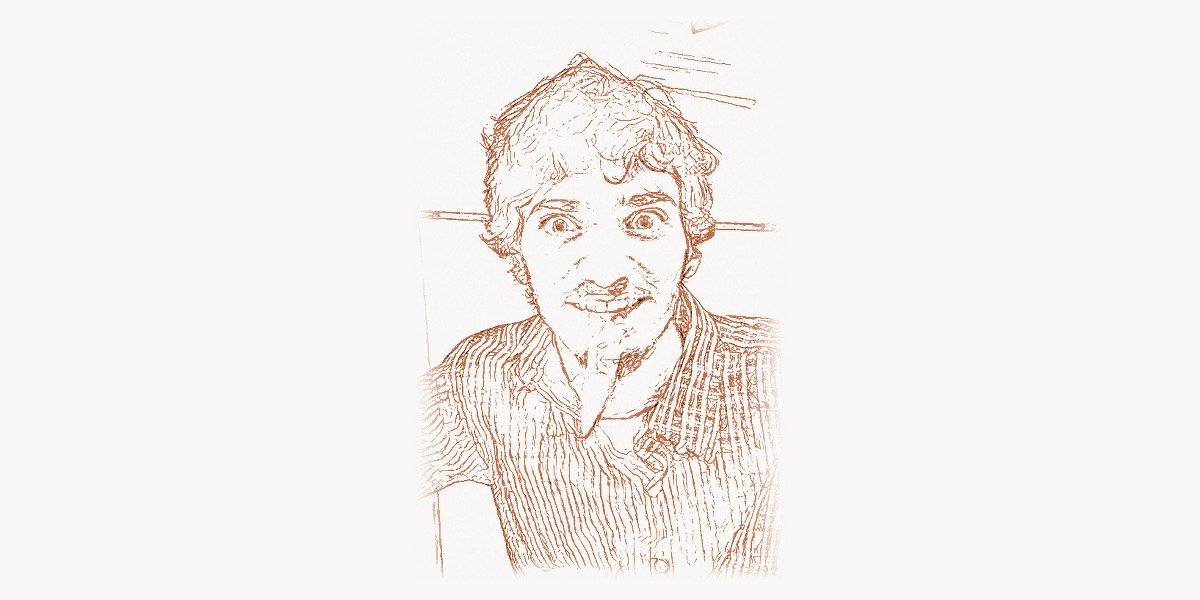
In an industry where AAA studios employ hundreds of developers and spend millions on production, Toby Fox did something that shouldn’t have been possible. Working almost entirely alone, he created Undertale — a game that not only became one of the most critically acclaimed RPGs of the 2010s but fundamentally challenged what role-playing games could be. He composed every track of its celebrated soundtrack, designed every encounter, wrote every line of dialogue, and programmed the entire experience in GameMaker: Studio. The result was a game that sold millions of copies, inspired a generation of indie developers, and proved that a single person with a clear creative vision could compete with — and surpass — the output of teams numbering in the hundreds. Toby Fox did not just make a game; he redefined the relationship between player and creator in interactive storytelling.
Early Life & Education
Toby Fox was born Robert F. Fox on October 11, 1991, in Manchester, New Hampshire. He grew up immersed in video games, particularly the classic RPGs of the Super Nintendo era. Games like EarthBound (Mother 2), developed by Shigesato Itoi, had a profound influence on his creative sensibility — their blend of humor, emotional depth, and willingness to subvert player expectations would later become defining characteristics of his own work.
Fox demonstrated creative ambition from an early age. As a teenager, he became active in the online community surrounding the webcomic Homestuck, created by Andrew Hussie. Fox contributed original music to the project, composing tracks like “MeGaLoVania” — a piece that would later become one of the most recognizable themes in gaming history when it reappeared in Undertale. This early experience in collaborative online creation taught Fox how to compose music that served a narrative purpose, a skill that would prove essential to his later game development.
Fox attended Northeastern University in Boston, studying environmental science — a field seemingly unrelated to game development. Yet during his college years, he was already deeply engaged in teaching himself the tools of game creation. He learned GameMaker: Studio, a relatively accessible game development environment that allowed a single developer to build complete 2D games without needing a dedicated engineering team. His formal education gave him discipline and analytical thinking, but his real training happened in the evenings and weekends he spent composing music, designing game mechanics, and studying the RPGs that had shaped his childhood.
Career & Technical Contributions
Toby Fox’s career as a game developer is inseparable from the games he created. Unlike many figures in tech who build platforms or tools, Fox’s contributions are embodied in specific creative works that pushed the boundaries of their medium. His approach to game development — solo creation with an emphasis on narrative innovation — represents a distinct philosophy within the indie game movement that gained momentum alongside creators like Markus “Notch” Persson, who similarly demonstrated the power of individual vision in game design.
Technical Innovation
Undertale, released on September 15, 2015, was built almost entirely by Fox alone using GameMaker: Studio. The game’s central technical innovation was its combat system, which merged traditional RPG turn-based mechanics with bullet-hell gameplay elements. During enemy encounters, the player’s soul — represented as a small heart — had to navigate through patterns of projectiles unique to each enemy, transforming what would traditionally be a menu-selection exercise into a dynamic, skill-based experience.
What made this system technically remarkable was how Fox implemented it within GameMaker’s architecture. Each enemy encounter was essentially a custom mini-game with its own physics, projectile patterns, and behavioral logic. The Papyrus fight alone contains dozens of distinct attack patterns, each requiring its own collision detection, animation timing, and difficulty scaling. Fox achieved this through extensive use of GameMaker’s scripting language (GML), building reusable systems for projectile generation and movement patterns.
A simplified example of how bullet-hell patterns might be structured in GML demonstrates the elegance of Fox’s approach:
/// scr_create_bone_attack(count, speed, direction_spread)
/// Generates a wave of bone projectiles in Papyrus-style attack
var _count = argument0;
var _speed = argument1;
var _spread = argument2;

for (var i = 0; i < _count; i++) {
    var _bone = instance_create_layer(x, y, "Attacks", obj_bone_projectile);
    _bone.direction = (180 / _count) * i - (_spread / 2);
    _bone.speed = _speed + random_range(-0.5, 0.5);
    _bone.image_angle = _bone.direction;
    // Blue bones: player must stay still to avoid damage
    if (i mod 3 == 0) {
        _bone.bone_type = BONE_TYPE.BLUE;
        _bone.sprite_index = spr_bone_blue;
    }
}
But the real innovation was not just the combat mechanics — it was how Fox wove the game's narrative directly into its systems. Undertale tracks virtually every action the player takes: which enemies they spare, which they kill, how many times they've reset the game, and even whether they've completed previous playthroughs. This data persists across saves and resets, creating a system where the game "remembers" the player's choices in ways that feel almost eerily aware.
The game features three major routes — Pacifist, Neutral, and Genocide — each with substantially different content, dialogue, and boss encounters. The Genocide route, in which the player systematically eliminates every creature in the game, triggers entirely different game mechanics: random encounters become unavoidable, the atmosphere shifts from whimsical to oppressive, and the final confrontation with Sans becomes one of the most notoriously difficult boss fights in RPG history. This route also permanently alters subsequent playthroughs, embedding consequences into the game's save files that survive even complete deletion attempts.
Fox's approach to game state management was sophisticated for a solo project. He used a layered system of global variables, persistent data files, and save manipulation to create the illusion of a game that exists beyond the player's control:
/// scr_check_genocide_state()
/// Monitors kill count per area for genocide route detection
var _area = global.current_area;
var _kills = global.kill_count[_area];
var _max = global.max_enemies[_area];

if (_kills >= _max) {
    global.area_cleared[_area] = true;
    // Silence the music — area is emptied
    audio_stop_all();
    // Switch encounter table to "empty" — no random battles
    global.encounter_table[_area] = ENCOUNTER_EMPTY;
    // Update save flag that persists across resets
    ini_open("undertale_persistent.ini");
    ini_write_real("genocide", "area_" + string(_area), 1);
    ini_close();
}

// Check if player has broken genocide route by sparing
if (global.spared_any == true && global.genocide_active) {
    global.genocide_active = false;
    // Flowey will comment on this in the ending
    global.genocide_aborted = true;
}
Why It Mattered
Undertale mattered because it proved that a single developer could create a game that competed with — and in many ways surpassed — the narrative depth of games made by large teams. The game received universal critical acclaim, earning a 92 on Metacritic for its PC release. It sold over a million copies within its first year and has since moved well beyond three million units across multiple platforms.
The game's approach to player agency was revolutionary. While games like BioShock had explored the illusion of choice, Fox built a system where choices had genuine, persistent consequences that challenged the player's moral assumptions. The Genocide route was not designed to be "fun" — it was designed to make the player feel uncomfortable about the very act of playing a game for completionism's sake. This meta-narrative approach influenced an entire generation of indie developers, much as the design philosophies of Shigeru Miyamoto had shaped the mainstream gaming industry decades earlier.
Fox also demonstrated that a game's soundtrack could be its most powerful storytelling tool. He composed all 101 tracks on the Undertale soundtrack, and tracks like "Megalovania," "Hopes and Dreams," and "His Theme" became cultural phenomena. The soundtrack alone has accumulated billions of streams across platforms, and "Megalovania" became so iconic that it was featured as Sans's theme when the character was added to Super Smash Bros. Ultimate — a recognition typically reserved for characters from major gaming franchises. This achievement resonated within the broader tradition of game audio pioneering, a domain where technical craft meets artistic expression.
Other Notable Contributions
Following Undertale's success, Fox began development on Deltarune, a thematic companion to Undertale set in an alternate universe with many of the same characters. Chapter 1 was released as a surprise free download on October 31, 2018, and Chapter 2 followed on September 17, 2021. Deltarune expands on Undertale's mechanics with a party-based combat system, a more complex overworld with puzzle elements, and an even more ambitious meta-narrative that questions the nature of player control over game characters.
Deltarune represents a significant technical evolution from Undertale. While the original game was built entirely in GameMaker: Studio, Deltarune's later chapters employ more sophisticated rendering techniques, a broader palette of gameplay mechanics (including a turn-based card game within the game), and a more complex save system. The project is being developed with a small team, but Fox remains the primary designer, writer, and composer — maintaining the singular creative vision that defined Undertale while scaling up the production ambition.
Fox's contributions to the Homestuck soundtrack — including the original version of "MeGaLoVania" — helped establish a model for community-driven creative collaboration that prefigured modern approaches to open-source game development and modding communities. His willingness to release Deltarune Chapter 1 for free demonstrated a player-first philosophy that echoes the community-oriented approach seen in platforms like Valve's Steam, built by Gabe Newell, which similarly prioritized accessibility and community engagement.
Fox has also contributed music to other games, including composing a track for the Nintendo Switch title Pokemon Sword and Shield — the "Battle Tower" theme — making him one of the few Western indie developers to contribute to a mainline Pokemon game. This cross-cultural recognition reflects the universal appeal of his compositional style, which blends chiptune aesthetics, orchestral arrangements, and electronic elements into something distinctly his own.
Philosophy & Key Principles
Toby Fox's philosophy as a creator can be understood through several core principles that run through all his work.
Creative singularity over delegation. Fox's insistence on doing virtually everything himself — design, programming, writing, music — is not merely a practical choice but a philosophical one. He believes that the most cohesive creative works emerge when a single vision guides every element. This mirrors the approach of game designers like Sid Meier, who emphasized the designer's role as the unifying intelligence behind every system in a game. For indie developers looking to follow a similar path, project management tools like Taskee can help solo creators organize the enormous complexity of single-person production — tracking music composition, level design, narrative scripting, and QA testing within a unified workflow.
Subversion as a design language. Fox consistently uses player expectations as raw material. If the player expects a fight, the game offers mercy. If the player expects consequences to reset with a save file, the game remembers. If the player expects the game to follow the rules of its genre, the game breaks them. This principle of systematic subversion transforms familiar RPG conventions into tools for narrative commentary.
Music as narrative architecture. For Fox, music is not accompaniment — it is structure. Key emotional beats in Undertale and Deltarune are timed to musical cues, and the reuse and transformation of musical themes (leitmotifs) across the soundtrack creates a narrative layer that operates independently of dialogue or visuals. The way "Your Best Friend" transforms into "Your Best Nightmare" and eventually resolves into "Hopes and Dreams" tells a complete emotional story through music alone.
Consequences should be real. Fox's games reject the common RPG convention that the player exists outside the game's moral framework. In Undertale, violence has genuine costs — not just narrative ones, but mechanical ones that alter the game permanently. This design principle challenges players to consider whether "winning" a game means the same thing as "completing" it.
Accessibility of tools, not ambition. Fox built Undertale in GameMaker: Studio, a tool often dismissed by "serious" developers as a beginner's engine. His success demonstrated that the sophistication of a game lies in its design, not its technology stack — a principle that resonates with the broader indie development community and echoes the pragmatic tool-selection philosophy championed by developers like John Carmack, who has long argued that understanding your tools deeply matters more than choosing the most powerful ones.
Legacy & Impact
Toby Fox's impact on gaming extends far beyond sales figures. Undertale catalyzed a wave of indie RPGs that prioritized narrative innovation over graphical fidelity. Games like Deltarune, OneShot, Everhood, and Inscryption all bear the influence of Fox's approach to meta-narrative and player agency. The "indie RPG" as a genre category gained mainstream legitimacy in large part because Undertale proved there was a massive audience for it.
The game's community impact has been equally significant. Undertale spawned one of the most active fan communities in gaming history, generating enormous volumes of fan art, music remixes, fan games, and analytical content. The Undertale modding community has produced full-length fan games and alternative routes that extend the original experience, creating an ecosystem reminiscent of the modding cultures that grew around titles like Doom — the revolutionary FPS created by John Romero and John Carmack at id Software.
Fox's influence on game music is equally profound. The Undertale soundtrack is widely studied in game audio courses and has been performed by orchestras worldwide. Its approach to leitmotif — the systematic reuse and transformation of musical themes to mirror narrative development — has become a reference point for game composers. "Megalovania" alone has transcended gaming to become a broader internet cultural artifact, appearing in memes, remixes, and live performances that reach audiences who have never played the game.
In the context of the broader indie game movement, Fox stands alongside figures like Notch and the creators of early narrative indies as proof that the most innovative games often come from the smallest teams. His work has inspired a generation of solo developers to pursue ambitious creative visions, and game development communities frequently cite Undertale as the reason they started making games. For teams working on ambitious creative projects of any kind, having a structured approach to managing complex creative workflows — such as those offered by Toimi — can make the difference between a project that ships and one that stays in perpetual development.
Perhaps most importantly, Fox demonstrated that games could be genuinely about something — that the medium's unique capacity for interactivity could be leveraged to make philosophical arguments about violence, mercy, choice, and the nature of play itself. In an industry often criticized for shallow narratives, Undertale showed that a game's deepest truths could be embedded in its mechanics, not just its cutscenes.
Key Facts
| Detail | Information |
|---|---|
| Full Name | Robert F. Fox (Toby Fox) |
| Born | October 11, 1991, Manchester, New Hampshire, USA |
| Education | Northeastern University (Environmental Science) |
| Known For | Undertale, Deltarune, game music composition |
| Primary Tools | GameMaker: Studio (development), FL Studio (music production) |
| Undertale Release | September 15, 2015 |
| Undertale Sales | Over 3 million copies across all platforms |
| Soundtrack Tracks | 101 original compositions (Undertale) |
| Deltarune Chapter 1 | Released October 31, 2018 (free) |
| Deltarune Chapter 2 | Released September 17, 2021 (free) |
| Awards | BAFTA nominee, multiple Game Awards nominations, IGF finalist |
| Pokemon Contribution | Composed "Battle Tower" theme for Pokemon Sword and Shield |
Frequently Asked Questions
Did Toby Fox really create Undertale entirely by himself?
Nearly, but not completely alone. Toby Fox handled all programming, game design, writing, and music composition for Undertale by himself. The primary external contribution came from Temmie Chang, who created most of the game's sprite art and visual assets. Fox also sourced a few additional art contributions and used existing sound effects. However, the game's core creative vision — its mechanics, narrative, dialogue, and 101-track soundtrack — was the work of a single person, making it one of the most remarkable solo development achievements in gaming history.
What programming language was Undertale built in?
Undertale was built using GameMaker: Studio, which uses its own scripting language called GML (GameMaker Language). GML is a C-like scripting language designed specifically for game development, offering straightforward syntax for handling game objects, collision detection, rendering, and audio. Fox chose GameMaker because it allowed him to work as a solo developer without needing expertise in lower-level programming languages, demonstrating that tool accessibility matters more than raw technical power — a principle that resonates with how pioneering developers like Will Wright approached creative game development.
How did Undertale influence the indie game industry?
Undertale's success had a cascading effect on the indie game industry. It proved that a solo-developed RPG could achieve both critical acclaim and commercial success without high-fidelity graphics or a large team. This inspired a wave of narrative-focused indie RPGs and encouraged platforms like Steam to feature indie titles more prominently. The game also popularized meta-narrative techniques — games that acknowledge and respond to player behavior in ways that break the fourth wall — which became a defining feature of many subsequent indie titles. Its soundtrack-driven approach to storytelling influenced how indie developers think about audio as a core design element rather than an afterthought.
What is the relationship between Undertale and Deltarune?
Deltarune is a thematic companion to Undertale rather than a direct sequel. It features many of the same characters in an alternate setting — a world where monsters and humans live together on the surface. The name "Deltarune" is an anagram of "Undertale," and the game explores complementary themes about choice, determinism, and player agency. While Undertale asked whether the player would choose mercy or violence, Deltarune raises the more unsettling question of whether the player's choices matter at all — a philosophical inversion that suggests Fox views the two games as two sides of the same argument about interactive storytelling.