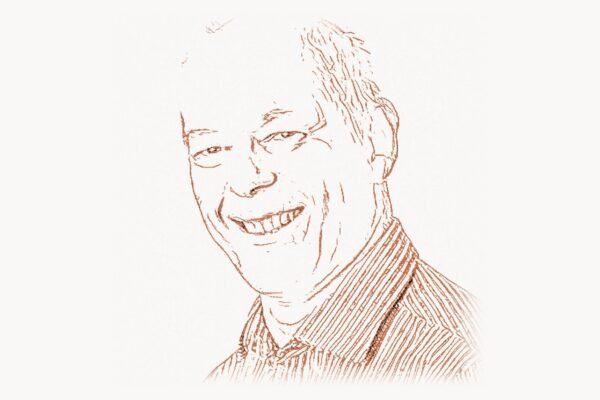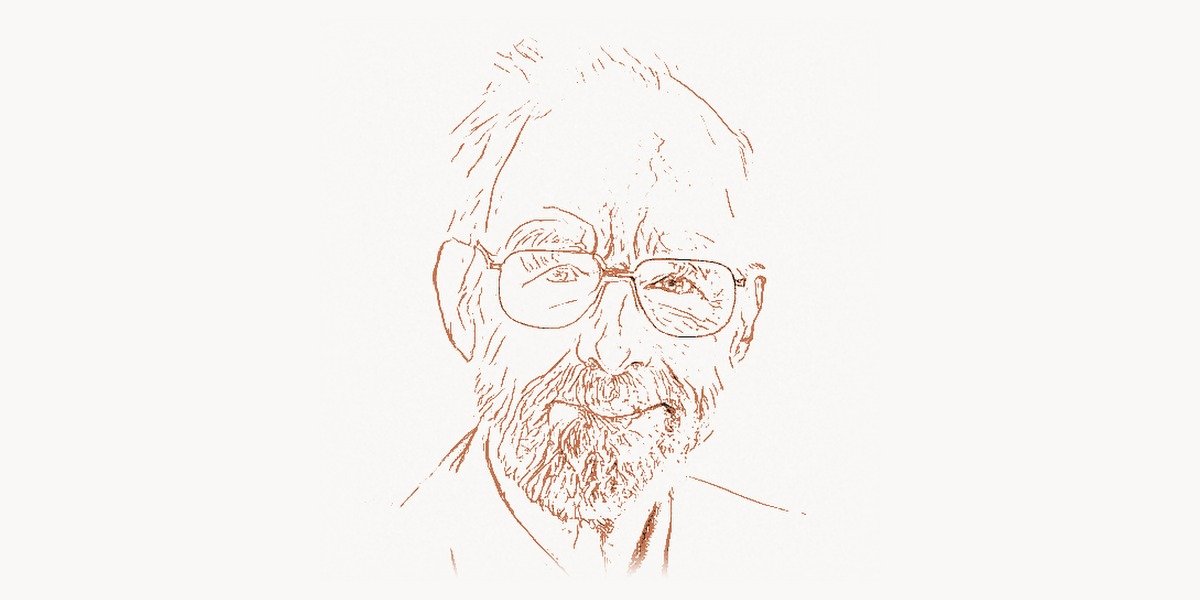
In 1960, a 26-year-old British programmer working at Elliott Brothers in London needed to sort data for a machine translation project. The algorithm he devised in a matter of days — Quicksort — would become the most widely used sorting algorithm in the history of computing, implemented in virtually every standard library of every major programming language. But Tony Hoare’s contributions extended far beyond a single algorithm. Over a career spanning six decades, Charles Antony Richard Hoare invented Communicating Sequential Processes (CSP), a mathematical framework for reasoning about concurrent systems that directly influenced the design of Go’s goroutines and channels; formulated Hoare logic, which provided the first rigorous method for proving that programs are correct; and delivered one of the most honest and consequential confessions in computer science history — that his invention of the null reference was a “billion-dollar mistake” that had caused countless software failures over decades. For these and other contributions, he received the Turing Award in 1980 at the age of just 46, and a knighthood in 2000. Hoare’s work represents a rare combination: foundational algorithms that power everyday computing, theoretical frameworks that underpin software verification, and a philosophical commitment to simplicity and correctness that continues to shape how programmers think about their craft.
Early Life and Education
Charles Antony Richard Hoare was born on January 11, 1934, in Colombo, Sri Lanka (then Ceylon), where his father worked in the British colonial administration. He grew up in southern England and received a classical education that emphasized Latin, Greek, and philosophy alongside mathematics and science. This humanistic foundation would profoundly influence his approach to computing — Hoare has always written with unusual clarity for a computer scientist, and his papers read more like carefully reasoned philosophical arguments than the dense technical prose typical of the field.
Hoare studied Classics at the University of Oxford, graduating with a Bachelor of Arts in 1956. He then undertook a postgraduate Certificate in Statistics, which introduced him to the mathematical foundations that would prove essential to his computing career. But his path into computer science was neither direct nor planned. In 1956, he traveled to Moscow State University to study probability theory and to learn Russian — a choice shaped by the Cold War era, when understanding the Soviet Union seemed both intellectually exciting and practically important.
It was in Moscow that Hoare first encountered computers. The university had recently acquired several Soviet-made machines, and Hoare began learning to program on them. He studied machine translation, the ambitious project of using computers to automatically translate between natural languages — in this case, between Russian and English. This work required him to process and sort large amounts of linguistic data, which would directly lead to his most famous algorithm. The Moscow experience was formative in another way: it exposed Hoare to the rigorous mathematical tradition of Soviet computer science, which emphasized formal methods and proofs of correctness far more than the pragmatic Anglo-American tradition of the time.
Hoare returned to England in 1959 and joined Elliott Brothers, a small British computer manufacturer. It was there, working on practical programming problems for commercial clients, that he would make his first great contribution to computer science.
The Quicksort Breakthrough
Technical Innovation
The problem was straightforward: Hoare needed to sort words for his machine translation work at Elliott Brothers. The existing sorting methods were functional but slow. Shell sort, bubble sort, and insertion sort all had average-case performance of O(n2) — meaning that doubling the amount of data roughly quadrupled the time needed to sort it. For the large linguistic datasets Hoare was working with, this was impractical.
Hoare’s insight was to use a divide-and-conquer strategy. Choose an element from the array (the “pivot”), partition the remaining elements into two groups — those less than the pivot and those greater — and then recursively sort each group. The elegance of the approach was that the partitioning step could be done in linear time, and if the pivot was chosen reasonably well, the recursion would divide the problem roughly in half at each level, giving an average-case performance of O(n log n). This was dramatically faster: for a million elements, the difference between n2 and n log n is the difference between a trillion operations and roughly twenty million.
def quicksort(arr):
    """
    Tony Hoare's Quicksort (1960)
    Average case: O(n log n) — the algorithm that changed sorting forever.
    This implementation uses Hoare's original partitioning scheme.
    """
    if len(arr) <= 1:
        return arr

    # Hoare's key insight: pick a pivot, partition around it
    pivot = arr[len(arr) // 2]

    left = [x for x in arr if x < pivot]
    middle = [x for x in arr if x == pivot]
    right = [x for x in arr if x > pivot]

    # Recursively sort the partitions
    return quicksort(left) + middle + quicksort(right)


def hoare_partition(arr, low, high):
    """
    Hoare's original partition scheme (1962 publication).
    Two pointers move inward from both ends, swapping elements
    that are on the wrong side of the pivot. Elegant and efficient.
    """
    pivot = arr[low]
    i = low - 1
    j = high + 1

    while True:
        # Move right pointer leftward until finding
        # an element smaller than pivot
        j -= 1
        while arr[j] > pivot:
            j -= 1

        # Move left pointer rightward until finding
        # an element larger than pivot
        i += 1
        while arr[i] < pivot:
            i += 1

        if i < j:
            arr[i], arr[j] = arr[j], arr[i]
        else:
            return j
What made Quicksort particularly remarkable was its in-place partitioning scheme. Unlike merge sort, which required additional memory proportional to the size of the input, Hoare's partition algorithm rearranged elements within the existing array using only a constant amount of extra memory. The two-pointer technique — one pointer advancing from the left, the other from the right, swapping elements that were on the wrong side of the pivot — was both simple and cache-friendly on modern hardware, giving Quicksort excellent practical performance even beyond what its theoretical complexity predicted.
Hoare first described the algorithm in 1960 and published it formally in 1961 in the Communications of the ACM. The paper was remarkable for its brevity and clarity — a hallmark of Hoare's writing style throughout his career. He later published an improved version in 1962 in the Computer Journal, which included the partition scheme that bears his name.
Why It Mattered
Quicksort became, and remains, the most widely used sorting algorithm in practice. The C standard library's qsort() function is typically implemented as Quicksort or a hybrid that uses Quicksort as its primary strategy. Java's Arrays.sort() for primitive types uses a dual-pivot Quicksort. Python's Timsort, while technically a different algorithm, was developed specifically to outperform Quicksort on real-world data — a testament to Quicksort's dominance as the benchmark against which all other sorting algorithms are measured.
The algorithm's influence extended beyond sorting. The divide-and-conquer paradigm that Quicksort exemplified became one of the fundamental algorithm design strategies, analyzed extensively by Donald Knuth in The Art of Computer Programming and taught in every algorithms course worldwide. The partition operation itself found applications in selection algorithms (finding the k-th smallest element), in database query processing, and in parallel computing. Quicksort taught generations of computer scientists that elegant algorithms could also be practical — that theoretical beauty and real-world performance were not opposing goals. This idea would become a central theme of Hoare's entire career.
The impact was also deeply personal for the field of algorithm analysis. Edsger Dijkstra later used Quicksort as a key example in his work on structured programming and the formal derivation of algorithms, demonstrating how the algorithm could be understood and proved correct through systematic reasoning rather than ad hoc testing. The analysis of Quicksort's average-case behavior became a standard exercise in probabilistic analysis, connecting computer science to the mathematical theory of recurrences and probability.
Other Major Contributions
Hoare Logic: Proving Programs Correct
In 1969, Hoare published "An Axiomatic Basis for Computer Programming" in the Communications of the ACM, introducing what is now known as Hoare logic or Hoare triples. The idea was deceptively simple: every statement in a program can be described by a precondition (what must be true before the statement executes) and a postcondition (what will be true after it executes), written as {P} S {Q} — meaning "if P is true before executing statement S, then Q will be true afterward."
This was a watershed moment in computer science. Before Hoare logic, the only way to gain confidence that a program was correct was to test it — but as Dijkstra famously observed, testing can only show the presence of bugs, never their absence. Hoare logic provided a mathematical framework for proving that a program met its specification, just as a mathematician proves a theorem. The preconditions and postconditions served as a formal contract between the programmer and the program, and the proof rules allowed this contract to be verified mechanically.
Hoare logic became the foundation of formal verification, a field that has grown enormously in importance as software has become critical to safety and security. Modern tools like Microsoft's Spec# and Code Contracts, the SPARK subset of Ada used in aviation software, and the Frama-C framework for analyzing C code all descend directly from Hoare's 1969 paper. The design-by-contract methodology popularized by Bertrand Meyer in the Eiffel language is essentially Hoare logic applied as a programming discipline. Today, when engineers at companies like Toimi build mission-critical software, the formal verification techniques they rely on trace their intellectual lineage directly to Hoare's axiomatic approach.
Communicating Sequential Processes (CSP)
In 1978, Hoare published "Communicating Sequential Processes" in the Communications of the ACM, which became one of the most cited papers in computer science history. CSP proposed a fundamentally different approach to concurrent programming: instead of having processes share memory and use locks to coordinate access (the approach that Per Brinch Hansen and Hoare himself had explored with monitors), processes should be completely independent entities that communicate exclusively by sending and receiving messages through channels.
The paper introduced a concise mathematical notation for describing concurrent systems. Processes were defined by the sequences of events they could engage in, and the parallel composition of processes was defined by how their event sequences interleaved and synchronized on shared channels. This notation allowed concurrent systems to be analyzed formally — their properties could be proved mathematically, rather than merely tested and hoped to be correct.
/*
 * CSP's influence on Go (2009)
 * Rob Pike and Ken Thompson explicitly cited Hoare's CSP
 * as the inspiration for Go's goroutines and channels.
 *
 * "Don't communicate by sharing memory;
 *  share memory by communicating." — Go proverb
 */

#include <stdio.h>
#include <pthread.h>

/*
 * In Go (directly inspired by CSP):
 *
 *   func producer(ch chan<- int) {
 *       for i := 0; i < 10; i++ {
 *           ch <- i * i   // send to channel
 *       }
 *       close(ch)
 *   }
 *
 *   func consumer(ch <-chan int) {
 *       for val := range ch {
 *           fmt.Println("Received:", val)
 *       }
 *   }
 *
 *   func main() {
 *       ch := make(chan int)  // Hoare's channel
 *       go producer(ch)       // Hoare's process
 *       consumer(ch)
 *   }
 *
 * No shared memory. No locks. No race conditions.
 * This is Hoare's CSP vision, realized in 2009.
 */
Hoare expanded the 1978 paper into a full book, also titled Communicating Sequential Processes, published in 1985 and made freely available online. The book developed CSP into a complete process algebra — a mathematical theory for reasoning about concurrent and distributed systems with the same rigor that Boolean algebra brings to logic circuits.
The practical impact of CSP has been enormous. The occam programming language, developed at INMOS for the Transputer parallel processor in the 1980s, was a direct implementation of CSP. The Erlang programming language, created at Ericsson for telecommunications systems, adopted CSP's message-passing model and used it to build systems with extraordinary reliability — Ericsson's AXD 301 switch achieved "nine nines" availability (99.9999999% uptime). Most visibly, Rob Pike and Ken Thompson explicitly cited CSP as the primary inspiration for Go's goroutines and channels when they created the Go programming language at Google in 2009. Today, when development teams use platforms like Taskee to manage concurrent workflows in complex projects, they benefit from the same fundamental insight Hoare articulated: independent processes communicating through well-defined channels are easier to reason about, test, and maintain than shared-state systems tangled in locks.
The Billion-Dollar Mistake: Null References
In 1965, while designing the type system for the ALGOL W programming language at the suggestion of Niklaus Wirth, Hoare introduced the null reference — a special value indicating that a reference points to no object. The idea seemed harmless and convenient at the time. If a variable was supposed to hold a reference to an object but no suitable object existed yet, null provided a simple placeholder.
The consequences were catastrophic and cumulative. Every language that adopted null references — and virtually all of them did, from C and C++ to Java, C#, Python, Ruby, and JavaScript — inherited an entire class of bugs: null pointer exceptions, null reference errors, segmentation faults caused by dereferencing null. These bugs were insidious because they often appeared far from their cause. A null value might be created in one part of a program, passed through dozens of function calls, and only cause a crash when some distant piece of code finally tried to use it. The resulting errors were among the most common and costly in all of software engineering.
In a 2009 presentation at the QCon conference, Hoare made a remarkable admission. He called the null reference his "billion-dollar mistake," estimating that the bugs, crashes, and security vulnerabilities caused by null references over the preceding four decades had cost the software industry at least that much — and the true cost was almost certainly far higher. It was a confession of extraordinary intellectual honesty. Most inventors would defend their creation or minimize its flaws. Hoare publicly and unequivocally declared that he had made a serious error of judgment, and he encouraged language designers to learn from it.
Modern programming languages have taken his warning to heart. Rust uses the Option<T> type to make nullability explicit and checked at compile time. Kotlin distinguishes between nullable and non-nullable types. Swift uses optionals. TypeScript added strict null checks. Hoare's billion-dollar mistake became, through his honest reckoning with it, one of the most powerful cautionary tales in software engineering — a lesson that the convenience of a language feature must always be weighed against the bugs it enables.
Formal Verification and Later Work
After his foundational work on Quicksort, Hoare logic, and CSP, Hoare continued to push the boundaries of formal methods. In the 1980s and 1990s, he worked on the refinement calculus, a mathematical framework for systematically transforming abstract specifications into concrete implementations while preserving correctness at every step. This work connected to the broader program of Dijkstra's approach to structured programming — the idea that programs should be derived from their specifications through a series of correctness-preserving transformations, rather than written first and debugged afterward.
In 1999, at the age of 65, Hoare joined Microsoft Research in Cambridge, England, where he led research into verified software. The Verified Software Initiative, which Hoare championed, aimed to develop the tools, theories, and practices needed to create software that was mathematically proved correct — not just for small academic examples, but for real-world, industrial-scale systems. This work contributed to Microsoft's development of tools like Spec#, VCC (a verifier for concurrent C code), and the static analysis capabilities built into Visual Studio.
Philosophy and Approach
Hoare's influence extends beyond specific algorithms and theories to a broader philosophy of computing that has shaped how generations of programmers think about their work. His Turing Award lecture, delivered in 1980 and titled "The Emperor's Old Clothes," is one of the most eloquent and persuasive statements about the importance of simplicity in software design ever written.
In that lecture, Hoare argued passionately against complexity. He described his experience with the design of ALGOL 60 (a language he admired for its elegance) and the subsequent ALGOL 68 (which he criticized for its baroque complexity). He warned that the greatest danger in software engineering was not inadequate features but excessive ones — that every feature added to a language or system increased the number of potential interactions, edge cases, and bugs, and that this growth was combinatorial, not linear.
Key Principles
- Simplicity above all. Hoare consistently argued that the primary goal of language design and software engineering should be simplicity. "There are two ways of constructing a software design," he wrote. "One way is to make it so simple that there are obviously no deficiencies, and the other way is to make it so complicated that there are no obvious deficiencies." This aphorism has become one of the most quoted statements in computer science, and it captures a profound truth about how complexity conceals bugs.
- Correctness before efficiency. Hoare believed that getting a program right was more important than making it fast. "Premature optimization is the root of all evil," a principle often attributed to Donald Knuth (who stated it most memorably), was one that Hoare also championed throughout his career. His Hoare logic was designed precisely to allow programmers to verify correctness rigorously before worrying about performance.
- Mathematical rigor in programming. From his earliest work, Hoare insisted that programming should be treated as a mathematical discipline, not a craft or an art. Programs should have specifications, and those specifications should be precise enough to allow mathematical proof. This vision, radical in the 1960s, has become increasingly mainstream as formal methods tools have matured.
- Honest self-criticism. Hoare's willingness to publicly denounce his own invention (the null reference) as a billion-dollar mistake exemplifies a principle that is rare in any field: the willingness to admit error and learn from it. This intellectual honesty has made Hoare's critiques particularly powerful — when a scientist criticizes their own work, the criticism carries a weight that external criticism cannot match.
- Language design as safety engineering. Hoare viewed programming language design not as a matter of convenience or expressiveness but as a matter of safety. A language that made it easy to write incorrect programs was, in his view, a badly designed language, regardless of how powerful or flexible it might be. This perspective directly influenced the design of languages that prioritize safety, from Ada to Rust.
Legacy and Impact
Tony Hoare's legacy is woven into the daily practice of computing at every level. Every time a programmer calls a sort function, there is a high probability that Quicksort — or a variant refined from Hoare's original algorithm — is executing under the hood. Every time a Go programmer launches a goroutine and sends a value through a channel, they are using a mechanism directly inspired by Hoare's CSP. Every time a software engineer writes a precondition or postcondition, or uses a design-by-contract framework, they are applying Hoare logic. And every time a language designer decides to eliminate null references in favor of option types, they are heeding Hoare's billion-dollar warning.
The formal recognition of Hoare's contributions has been extensive. He received the ACM Turing Award in 1980, the highest honor in computer science. He was knighted by Queen Elizabeth II in 2000, becoming Sir Charles Antony Richard Hoare. He received the Kyoto Prize in 2000 and the John von Neumann Medal from the IEEE in 2011. He is a Fellow of the Royal Society, a Fellow of the Royal Academy of Engineering, and a member of numerous other learned societies.
But perhaps the most enduring aspect of Hoare's legacy is his insistence that computer science is, at its core, a science — that programs are mathematical objects that can and should be reasoned about with mathematical precision. In an era when software failures cause billions of dollars in damage annually and can cost human lives (in aviation, medical devices, autonomous vehicles, and critical infrastructure), Hoare's vision of verified, provably correct software is not merely an academic ideal. It is an urgent practical necessity. The tools and theories he created — Quicksort, Hoare logic, CSP, and the formal methods they enabled — provide the foundation on which that vision continues to be built.
Key Facts
- Full name: Sir Charles Antony Richard Hoare (known as Tony Hoare or C.A.R. Hoare)
- Born: January 11, 1934, in Colombo, Ceylon (now Sri Lanka)
- Education: BA in Classics, University of Oxford (1956); postgraduate Certificate in Statistics; studied at Moscow State University (1956-1959)
- Key inventions: Quicksort (1960), Hoare logic (1969), Communicating Sequential Processes/CSP (1978), null reference (1965)
- Turing Award: 1980 — for his fundamental contributions to the definition and design of programming languages
- Knighthood: 2000 — Knight Bachelor for services to computer science
- Notable positions: Professor at Queen's University Belfast (1968-1977), Oxford University (1977-1999), Principal Researcher at Microsoft Research Cambridge (1999-present)
- Famous quote: "There are two ways of constructing a software design: one way is to make it so simple that there are obviously no deficiencies, and the other way is to make it so complicated that there are no obvious deficiencies."
- CSP influence: Directly inspired Go's goroutines and channels, Erlang's message passing, Rust's channels, and the occam language
- Billion-dollar mistake: Hoare's own term for his invention of the null reference in ALGOL W (1965), publicly acknowledged in 2009
Frequently Asked Questions
Why is Quicksort still used when merge sort has guaranteed O(n log n) performance?
While merge sort guarantees O(n log n) worst-case performance (compared to Quicksort's O(n2) worst case), Quicksort is faster in practice for several reasons. It operates in-place, requiring only O(log n) additional memory for the recursion stack, while merge sort requires O(n) additional memory. Quicksort has excellent cache locality — it accesses memory sequentially, which is significantly faster on modern CPUs with hierarchical cache systems. The constant factors in Quicksort's running time are smaller than those of merge sort, meaning that for the same number of comparisons, Quicksort completes faster. Modern implementations also use techniques like median-of-three pivot selection and introsort (which switches to heapsort when Quicksort's recursion depth becomes excessive) to avoid the worst-case scenario. For these reasons, Quicksort or its variants remain the default sorting algorithm in most standard libraries, including C's qsort() and Java's sort for primitive arrays.
How did CSP influence modern programming languages?
CSP's influence is most visible in Go, where goroutines (lightweight concurrent processes) and channels (typed communication pipes) are direct implementations of CSP concepts. Rob Pike, one of Go's creators, explicitly acknowledged CSP as the primary theoretical foundation. Beyond Go, CSP influenced Erlang's actor model and message passing, Clojure's core.async library, Rust's channel-based communication (via std::sync::mpsc), and the design of many concurrent frameworks in other languages. The fundamental CSP insight — that independent processes communicating through channels are easier to reason about than shared-memory concurrency — has become one of the dominant paradigms in concurrent programming, particularly for distributed systems where shared memory is not physically possible.
What exactly is Hoare logic and why does it matter today?
Hoare logic is a formal system for reasoning about the correctness of computer programs. It uses "Hoare triples" of the form {P} S {Q}, where P is a precondition, S is a program statement, and Q is a postcondition. If P is true before S executes, then Q is guaranteed to be true after. For example, {x = 5} x := x + 1 {x = 6} states that if x is 5 before the assignment, it will be 6 after. Hoare logic provides rules for combining these triples — for sequential composition, conditional statements, and loops — allowing correctness proofs of entire programs. Today, Hoare logic underpins formal verification tools used in aerospace (SPARK Ada for flight control software), operating systems (Microsoft's verified Hyper-V hypervisor), and cryptography (verified implementations of TLS). As software increasingly controls safety-critical systems — from autonomous vehicles to medical devices — the ability to mathematically prove correctness, rather than merely test for bugs, has become not just academically interesting but practically essential.
Why did Hoare call the null reference a "billion-dollar mistake"?
Hoare introduced null references in 1965 when designing ALGOL W's type system. The null reference allowed any reference variable to hold a special "null" value meaning "points to nothing." While convenient, this created a pervasive problem: any operation on a null reference causes a runtime error (a NullPointerException in Java, a segmentation fault in C, a TypeError in Python). These errors account for a large percentage of all software crashes. The cost comes not just from the crashes themselves but from the engineering time spent preventing, diagnosing, and fixing null-related bugs, and from the security vulnerabilities they create (null pointer dereferences are a common attack vector). Hoare estimated in 2009 that the cumulative cost exceeded a billion dollars — likely a conservative figure. His public admission motivated language designers to create safer alternatives: Rust's Option<T>, Kotlin's nullable types, and Swift's optionals all force programmers to explicitly handle the case where a value might be absent, catching potential null errors at compile time rather than at runtime.