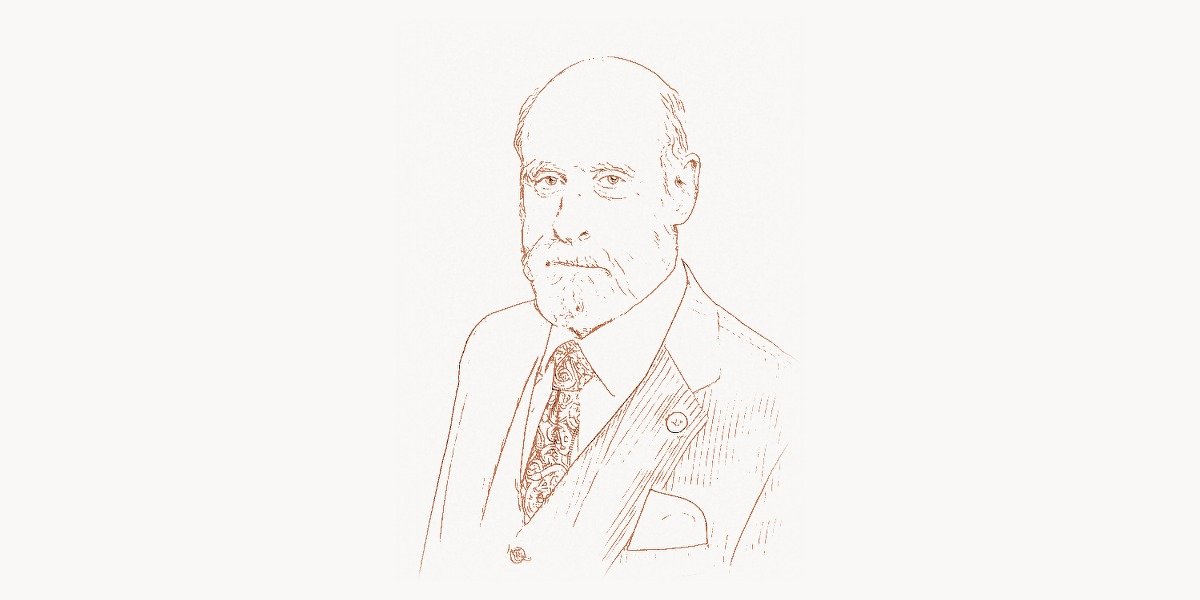
On January 1, 1983, the entire ARPANET — the precursor to the modern internet — switched from its original Network Control Protocol (NCP) to a new protocol suite called TCP/IP. The transition, known as “flag day,” was the culmination of nearly a decade of work by Vinton Gray Cerf and Robert Kahn, who had published the original TCP/IP specification in May 1974. The switch was anything but smooth — teams at sites across the United States spent months preparing, and Cerf himself wore a button that read “I survived the TCP/IP transition” — but it worked. That protocol switch was the moment the internet as we know it was born. The genius of TCP/IP was its architecture: it separated the problem of networking into layers, allowed different physical networks (Ethernet, radio, satellite) to be interconnected transparently, and gave every connected device a unique address. Before TCP/IP, computer networks were isolated islands — ARPANET, SATNET, packet radio networks, and university networks could not communicate with each other. After TCP/IP, they were all part of one interconnected network: an “inter-net.” Today, TCP/IP carries approximately 5 exabytes of data per day across the global internet. Every web page you load, every API call your application makes, every email you send, every video you stream travels through the protocol stack that Cerf and Kahn designed. Cerf has been called the “Father of the Internet” — a title he shares with Kahn and consistently deflects to the broader community — but the TCP/IP architecture he co-created is the single most important technical standard in modern computing.
Early Life and Path to Technology
Vinton Gray Cerf was born on June 23, 1943, in New Haven, Connecticut. His father, Vinton Thurston Cerf, was an aerospace executive who worked for North American Aviation (later Rockwell International). The family moved to the Los Angeles area when Vint was young, and he grew up in the San Fernando Valley. From childhood, Cerf experienced significant hearing loss, and he has worn hearing aids for most of his life. This disability, he has said, made him more attuned to the challenges of communication — a fitting sensitivity for someone who would spend his career making computers communicate.
Cerf attended Van Nuys High School, where he became close friends with Steve Crocker, who would later write the first RFC (Request for Comments) document. Cerf showed an early aptitude for mathematics and science, and after graduating from high school in 1961, he enrolled at Stanford University, where he earned a B.S. in Mathematics in 1965. After college, he worked briefly at IBM as a systems engineer, then enrolled at UCLA for graduate school, earning his M.S. and Ph.D. in computer science in 1970 and 1972, respectively.
At UCLA, Cerf worked in the laboratory of Leonard Kleinrock, one of the pioneers of packet switching. It was here that Cerf participated in one of the seminal events of internet history: on October 29, 1969, the first ARPANET message was sent from UCLA to the Stanford Research Institute (SRI). Cerf was part of the UCLA team that helped establish this first node of what would become the internet. His doctoral thesis was on the architecture of packet switching networks, and he was deeply involved in the ARPANET’s Network Working Group, which was developing the protocols that allowed the network’s computers to communicate.
The Breakthrough: TCP/IP
The Technical Innovation
By 1973, the ARPANET was operational but limited. It was a single network — computers connected to ARPANET could talk to each other, but they could not communicate with computers on other networks (like the SATNET satellite network or the packet radio network PRNET that the U.S. military was developing). Robert Kahn, who had joined DARPA (Defense Advanced Research Projects Agency) and was managing the packet radio program, approached Cerf with a challenge: design a protocol that could interconnect different types of networks into a single, seamless system.
Cerf and Kahn worked together on the design, and in May 1974, they published “A Protocol for Packet Network Intercommunication” in the IEEE Transactions on Communications. This paper described the Transmission Control Protocol (TCP), which combined two functions: reliable end-to-end data delivery and routing between networks. Later, in 1978, the design was split into two separate protocols: TCP (Transmission Control Protocol), which handled reliable data delivery, and IP (Internet Protocol), which handled addressing and routing. This separation — TCP/IP — was a critical architectural decision.
# The TCP/IP model — Cerf and Kahn's layered architecture
# This is the foundation of ALL internet communication

# Layer 4: Application (HTTP, FTP, SMTP, DNS, SSH)
# Layer 3: Transport (TCP for reliable streams, UDP for datagrams)
# Layer 2: Internet (IP — addressing and routing between networks)
# Layer 1: Link (Ethernet, Wi-Fi, fiber — physical transmission)

# A simplified demonstration of TCP connection establishment
# The "three-way handshake" Cerf and Kahn designed:

import socket

# Server side — listening for connections
server = socket.socket(socket.AF_INET, socket.SOCK_STREAM)
server.bind(('0.0.0.0', 8080))
server.listen(1)  # TCP ensures reliable, ordered delivery

# Client side — initiating connection
client = socket.socket(socket.AF_INET, socket.SOCK_STREAM)
client.connect(('192.168.1.1', 8080))

# Three-way handshake (happens automatically):
# 1. Client → Server: SYN (synchronize sequence numbers)
# 2. Server → Client: SYN-ACK (acknowledge + synchronize)
# 3. Client → Server: ACK (acknowledge)
# Connection established — reliable bidirectional stream ready

# This is the protocol behind EVERY web request:
# Every time you load a page, this handshake occurs
client.send(b'GET / HTTP/1.1\r\nHost: example.com\r\n\r\n')
response = client.recv(4096)

# TCP guarantees: data arrives in order, without duplicates,
# and any lost packets are automatically retransmitted.
# This reliability layer is what makes the web possible.
The key architectural decisions in TCP/IP were revolutionary. First, the protocol was designed to be network-agnostic: it did not care whether the underlying physical network was Ethernet, radio, satellite, or anything else. Each physical network only needed to be able to send packets of data; TCP/IP handled everything else. This meant that fundamentally different networks could be interconnected without modifying them. Second, intelligence was pushed to the edges — the routers in the middle of the network were kept simple (they only needed to forward IP packets based on destination addresses), while the endpoints handled reliability, flow control, and error recovery. This “end-to-end principle” allowed the network to scale massively without becoming complex at its core.
Third, the IP addressing scheme gave every device on the interconnected network a unique 32-bit address (later expanded to 128 bits with IPv6). This flat, universal addressing was critical: it meant that any device could communicate with any other device, regardless of which physical network it was on. This was the fundamental property that created the internet — not just a network, but a network of networks, all speaking the same protocol.
Why It Mattered
The TCP/IP transition on January 1, 1983, connected approximately 400 hosts on the ARPANET. By 1989, when Tim Berners-Lee proposed the World Wide Web at CERN, the internet (still running TCP/IP) had grown to about 100,000 hosts. By 1995, when the NSFNET backbone was decommissioned and the internet became fully commercialized, there were approximately 6 million hosts. As of 2024, there are over 5 billion internet users and tens of billions of connected devices, all communicating through the TCP/IP protocol stack that Cerf and Kahn designed in the 1970s.
The protocol’s success was due to its architectural elegance. The layered design allowed each layer to evolve independently. The physical network layer moved from 56 kilobit ARPANET links to gigabit fiber without changing TCP or IP. The application layer grew from simple file transfer and remote login to the World Wide Web, streaming video, real-time communication, and cloud computing. HTTP, the protocol that powers the web, runs on top of TCP. WebSockets, which enable real-time web applications, run on top of TCP. DNS, which translates domain names to IP addresses, uses both TCP and UDP. Every internet application, without exception, depends on TCP/IP.
Beyond TCP/IP: Other Contributions
Cerf’s contributions extend well beyond the original TCP/IP design. He played a central role in the development of the internet’s governance structure. In 1986, he helped create the Internet Engineering Task Force (IETF), which develops internet standards through an open, consensus-based process. The RFC (Request for Comments) system, which he helped establish, is the standard mechanism for publishing internet protocol specifications — from the original TCP/IP RFCs to modern standards like HTTP/2 and TLS 1.3.
Cerf was instrumental in the commercialization of the internet. As vice president of MCI Digital Information Services from 1982 to 1986, he led the development of MCI Mail, one of the first commercial email services connected to the internet. He later served as senior vice president at MCI, where he helped build one of the internet’s major commercial backbone networks.
At ICANN (Internet Corporation for Assigned Names and Numbers), Cerf served as chairman of the board from 2000 to 2007, guiding the organization that manages the internet’s domain name system and IP address allocation. This governance work was critical for maintaining the internet’s stability and openness as it grew from an academic experiment to the foundation of the global economy.
Since 2005, Cerf has served as Vice President and Chief Internet Evangelist at Google. In this role, he has advocated for internet access as a fundamental right, pushed for the adoption of IPv6 (the successor to IPv4 that provides a vastly larger address space), and worked on the Interplanetary Internet project — an effort to extend internet-like communication protocols to space, supporting communication between Earth, Mars, and other destinations in the solar system. The Delay-Tolerant Networking (DTN) protocol that Cerf has helped develop was tested on the International Space Station in 2008 and is being considered for future deep-space missions.
Philosophy and Engineering Approach
Key Principles
Cerf’s engineering philosophy is deeply collaborative. Unlike many tech pioneers who are associated with individual genius, Cerf has always emphasized that the internet was built by a community. The RFC process — which invites open review and discussion of proposed standards — reflects this philosophy. Cerf and Kahn’s original TCP paper was the product of discussions with dozens of researchers across multiple institutions. The protocol evolved through years of experimentation, testing, and revision by groups at Stanford, BBN Technologies, University College London, and DARPA.
A core architectural principle that Cerf championed is the end-to-end argument: keep the network core simple and push complexity to the edges. The internet’s routers do not understand HTTP, email, or video — they just forward packets. This simplicity is what allowed the network to scale from hundreds to billions of devices. It also enabled permissionless innovation: anyone can create a new application protocol and deploy it on the internet without modifying the network infrastructure. This is why the World Wide Web could be invented on top of the existing internet, and why new applications from progressive web apps to real-time video conferencing can be deployed without changing the underlying network.
Cerf is also a strong advocate for internet openness and accessibility. He has consistently argued against network fragmentation (“splinternets”), censorship, and the creation of walled gardens that restrict users’ ability to communicate freely. He views internet access as essential infrastructure — comparable to electricity or water — and has advocated for universal access policies. His hearing disability has made him particularly sensitive to accessibility issues in technology design, and he has been a vocal supporter of assistive technologies and inclusive design standards.
Another principle is forward compatibility. TCP/IP was designed with extensibility in mind. The IP header includes a version field that allowed the transition from IPv4 to IPv6. TCP’s option mechanism allows new features to be added without breaking existing implementations. This foresight — building systems that can evolve without being replaced — is a recurring theme in Cerf’s work and a key reason TCP/IP has survived for over four decades with only incremental updates.
Legacy and Modern Relevance
The internet that Cerf co-created is now the backbone of the global economy. E-commerce, cloud computing, social media, remote work, telemedicine, digital entertainment, and the entire web development industry exist because of TCP/IP. As of 2024, the global internet economy is estimated at over $15 trillion annually. Every React application, every REST API, every Docker container communicating over a network, every CI/CD pipeline deploying code to cloud servers — all of it runs on TCP/IP.
The protocol suite has proven remarkably durable. While individual application protocols come and go (Gopher, FTP for web use, NNTP), TCP and IP remain. HTTP has evolved from 1.0 to 1.1 to 2 to 3, but it still runs on TCP (or QUIC, which runs on UDP, another protocol from the original TCP/IP suite). TLS encrypts most internet traffic, but it runs on top of TCP. WebSockets enable real-time bidirectional communication, but they initiate over TCP. The foundation Cerf and Kahn laid in 1974 has supported fifty years of innovation without requiring replacement.
IPv6, which Cerf has championed, is gradually being adopted worldwide. IPv4’s 32-bit addresses provide approximately 4.3 billion unique addresses, which have been exhausted. IPv6’s 128-bit addresses provide 340 undecillion addresses (3.4 x 10^38) — enough for every atom on the surface of the Earth to have its own IP address. Google’s statistics show that as of 2024, approximately 45% of users reaching Google services do so over IPv6, with adoption growing steadily.
Cerf and Kahn received the Turing Award in 2004 for “pioneering work on internetworking, including the design and implementation of the Internet’s basic communications protocols, TCP/IP, and for inspired leadership in networking.” Cerf also received the Presidential Medal of Freedom (2005, from President George W. Bush), the National Medal of Technology (1997), the Japan Prize (2008), the IEEE Alexander Graham Bell Medal (1997), and membership in the National Academy of Engineering. He holds over 20 honorary doctorates from universities around the world.
At 81 (as of 2024), Cerf continues to work at Google and advocate for internet access, digital preservation, and the extension of internet protocols to space. His career spans the entire history of the internet — from the first ARPANET message in 1969 to the present day — and the protocol architecture he co-created remains the invisible foundation of modern life.
Key Facts
- Born: June 23, 1943, New Haven, Connecticut, USA
- Known for: Co-inventing TCP/IP, co-founding the internet, “Father of the Internet”
- Key projects: TCP/IP protocol suite (1974/1978), ARPANET development, MCI Mail, internet governance (IETF, ICANN), Interplanetary Internet (DTN)
- Awards: Turing Award (2004), Presidential Medal of Freedom (2005), National Medal of Technology (1997), Japan Prize (2008)
- Education: B.S. in Mathematics from Stanford (1965), M.S. and Ph.D. in CS from UCLA (1970, 1972)
- Career: Stanford (1972–1976), DARPA (1976–1982), MCI (1982–2005), Google (2005–present)
Frequently Asked Questions
Who is Vint Cerf?
Vinton Gray Cerf (born 1943) is an American computer scientist who, together with Robert Kahn, designed the TCP/IP protocol suite that is the technical foundation of the internet. He participated in the first ARPANET message transmission in 1969, co-authored the TCP specification in 1974, and has been involved in internet development and governance for over five decades. He currently serves as Vice President and Chief Internet Evangelist at Google. He is often called the “Father of the Internet.”
What did Vint Cerf create?
Cerf co-created (with Robert Kahn) the TCP/IP protocol suite (1974/1978), which is the fundamental communication protocol of the internet. He helped develop the ARPANET, the internet’s predecessor. He contributed to the creation of internet governance institutions including IETF and ICANN. He led the development of MCI Mail, one of the first commercial email services. He is currently working on the Interplanetary Internet project, extending internet protocols for space communication.
Why is Vint Cerf important?
Cerf is important because TCP/IP — the protocol he co-invented — is the technical foundation of the entire internet. Every website, every app, every connected device, every cloud service communicates using TCP/IP. The architectural decisions Cerf and Kahn made in the 1970s — layered protocols, end-to-end design, network-agnostic transport, universal addressing — enabled the internet to scale from a few hundred academic computers to billions of devices supporting a multi-trillion-dollar global digital economy. Without TCP/IP, the modern internet, the World Wide Web, and the entire web development industry would not exist.