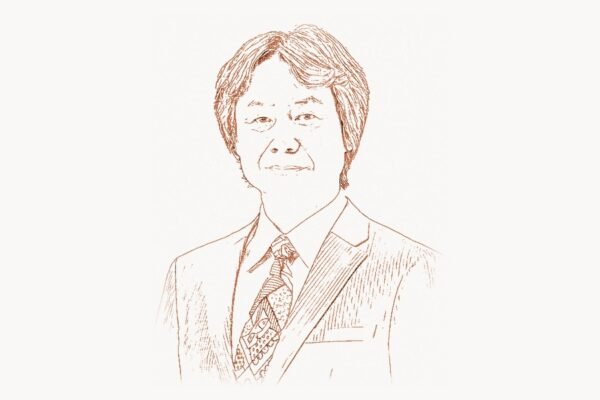
In 2012, a small team of researchers quietly released a programming language that would go on to reshape scientific computing, numerical analysis, and high-performance data work across the globe. Among them was Viral Shah, an Indian-born computer scientist whose deep frustration with the compromises forced by existing languages — write prototypes in one, rewrite in another for speed — fueled the creation of Julia. Unlike typical academic projects that fade into obscurity, Julia tackled a fundamental tension in computing: the forced trade-off between ease of use and raw performance. Shah’s contributions, spanning distributed computing architecture, numerical linear algebra, and open-source community building, helped transform Julia from a daring experiment into a language trusted by NASA, the Federal Reserve, and thousands of researchers worldwide.
Early Life and Education
Viral B. Shah grew up in India, where he developed an early fascination with mathematics and computing. He pursued his undergraduate studies at the Indian Institute of Technology Delhi (IIT Delhi), one of India’s most prestigious engineering institutions. IIT Delhi’s rigorous curriculum in computer science gave Shah a strong foundation in algorithms, systems programming, and mathematical theory — all of which would prove essential in his later work on Julia.
After completing his bachelor’s degree, Shah moved to the United States to pursue graduate studies at the University of California, Santa Barbara (UCSB). There, he worked under Alan Edelman and other faculty members whose research sat at the intersection of numerical computing and parallel systems. His doctoral work focused on parallel computing and random matrix theory, exploring how large-scale mathematical computations could be distributed across multiple processors efficiently. This research planted the seeds for what would eventually become Julia’s approach to parallelism and distributed computing — ideas that Shah would carry forward into the language’s core architecture.
During his time at UCSB and later at MIT, Shah became acutely aware of a recurring problem in computational science. Researchers would prototype algorithms in high-level languages like MATLAB or Python for readability and rapid iteration, then painstakingly rewrite everything in C or Fortran when performance mattered. This “two-language problem” wasted enormous amounts of time and introduced countless bugs during translation. The frustration was not unique to Shah — his future collaborators Jeff Bezanson, Stefan Karpinski, and Alan Edelman shared it — but Shah’s background in distributed systems gave him a specific lens on the issue: the problem was not just about speed on a single machine but about scaling computation across clusters and networks.
Career and the Creation of Julia
Shah’s career before Julia included significant work at institutions where large-scale computation was a daily reality. He spent time working on projects related to India’s national identification system (Aadhaar), one of the largest biometric databases in the world. The experience of building systems that needed to scale to over a billion users reinforced his conviction that programming tools for numerical and data-intensive work were fundamentally broken. The tools either scaled but were painful to write in, or were pleasant to use but choked on real-world data volumes.
In 2009, Shah joined forces with Jeff Bezanson, Stefan Karpinski, and Alan Edelman to begin building Julia. The language was publicly announced in February 2012 with a blog post titled “Why We Created Julia,” which laid out their ambitious manifesto: they wanted a language that was as fast as C, as general as Python, as useful for statistics as R, as powerful for linear algebra as MATLAB, and as good at string processing as Perl. It was a deliberately audacious list, and the computing community took notice.
Technical Innovation
Julia’s core technical innovation was its use of multiple dispatch as the central organizing principle of the language, combined with a sophisticated just-in-time (JIT) compiler built on top of LLVM. Multiple dispatch means that when you call a function, the specific method that runs is selected based on the types of all its arguments — not just the first one, as in traditional object-oriented languages. This seemingly simple design choice unlocked extraordinary flexibility and performance.
Shah’s specific contributions centered on the distributed computing layer and the numerical infrastructure. He designed much of Julia’s approach to parallel and distributed computation, ensuring that the language could spread work across cores and machines with minimal overhead. His work on sparse matrix support and numerical linear algebra routines meant that Julia could compete with specialized libraries like LAPACK and SuiteSparse right out of the box.
Consider how Julia handles type-based dispatch for mathematical operations. The following example demonstrates how multiple dispatch allows clean specialization:
# Multiple dispatch in Julia: same function name, different behavior
# based on ALL argument types

# Generic distance calculation
function distance(a::Vector{Float64}, b::Vector{Float64})
    sqrt(sum((a .- b).^2))
end

# Specialized method for sparse vectors (Shah's area of focus)
using SparseArrays
function distance(a::SparseVector{Float64}, b::SparseVector{Float64})
    # Only iterate over non-zero elements for efficiency
    nz_indices = union(a.nzind, b.nzind)
    s = 0.0
    for i in nz_indices
        s += (a[i] - b[i])^2
    end
    sqrt(s)
end

# Julia automatically selects the right method at runtime
dense_a = [1.0, 2.0, 3.0]
dense_b = [4.0, 5.0, 6.0]
println(distance(dense_a, dense_b))  # Uses dense method

sparse_a = sparsevec([1, 3], [1.0, 3.0], 1000)
sparse_b = sparsevec([1, 2], [4.0, 5.0], 1000)
println(distance(sparse_a, sparse_b))  # Uses sparse method automatically
This design meant that library authors could extend the language’s behavior without modifying its source code, and the compiler could generate highly optimized machine code for each specific combination of types. The result was a language where writing generic, readable code did not come at the cost of performance — a direct attack on the two-language problem that had motivated Shah and his co-creators.
Shah also played a key role in Julia’s approach to distributed arrays and parallel computing primitives. The following example shows Julia’s built-in support for distributed computation:
using Distributed
addprocs(4)  # Add 4 worker processes

# Distribute a computation across all workers
@distributed (+) for i = 1:1_000_000
    # Each worker handles a chunk of the range
    rand()^2
end

# SharedArrays for shared-memory parallelism
using SharedArrays
S = SharedArray{Float64}(100, 100)

@sync @distributed for i in 1:100
    for j in 1:100
        S[i, j] = sin(i * j / 100.0)
    end
end

# The result is immediately available on all processes
println("Sum: ", sum(S))
Why It Mattered
Before Julia, scientists and engineers faced a painful choice. Languages like Python and R offered clean syntax and rich ecosystems for prototyping, but they were often hundreds of times slower than C or Fortran for numerically intensive tasks. This forced a workflow where ideas were first explored in a high-level language, then rewritten in a low-level one for production use. The rewriting process was not just tedious — it introduced bugs, slowed down research cycles, and created a barrier between the people who understood the science and the people who could write fast code.
Julia eliminated this barrier. A researcher could write an algorithm in Julia that was as readable as Python code but ran at speeds comparable to hand-tuned C. This was not a marginal improvement — it was a fundamental change in how computational science could be done. Climate scientists at Caltech’s CliMA project adopted Julia to build next-generation climate models. The Federal Reserve Bank of New York used Julia to model the U.S. economy. Pharmaceutical companies used it for drug discovery simulations. NASA’s Jet Propulsion Laboratory used Julia for trajectory optimization.
Shah’s distributed computing work was particularly important for these large-scale applications. Climate modeling, economic simulation, and space mission planning all involve computations that must span multiple machines. Julia’s built-in parallel computing primitives, which Shah helped architect, meant that researchers did not need to bolt on a separate framework for distribution — it was part of the language from the start, similar to the integrated system philosophy that has driven other successful open-source projects.
Other Major Contributions
Beyond the Julia language itself, Shah has made significant contributions to India’s technology infrastructure and to the open-source ecosystem broadly. His work on the Aadhaar project — India’s biometric identification system covering over 1.3 billion people — placed him at the center of one of the most ambitious digital infrastructure projects in human history. Shah contributed to the technology architecture underlying the system, working on problems of scale, data management, and identity verification that had never been attempted at such magnitude.
Shah co-founded Julia Computing (later renamed JuliaHub) in 2015, which became the commercial entity behind Julia’s continued development and enterprise adoption. JuliaHub provides cloud-based tools for deploying Julia applications, manages the language’s package ecosystem, and offers commercial support to organizations adopting Julia. Under Shah’s leadership as CEO, the company secured funding and partnerships with major technology firms and government agencies, ensuring that Julia’s development was financially sustainable beyond academic grants.
His contributions to numerical computing libraries within Julia extended well beyond the language’s core. Shah was instrumental in developing Julia’s standard library support for linear algebra, sparse matrices, and random number generation. These components are foundational — virtually every scientific computing application relies on them, and their quality determines whether a language is taken seriously by the computational science community. Shah’s work here drew on his doctoral research and ensured that Julia’s numerical foundations were competitive with decades-old Fortran libraries, which is an achievement comparable to how Richard Hipp built SQLite to be as reliable as enterprise databases despite being a much smaller project.
Shah has also been an active voice in promoting open-source software development in India and across the Global South. He has advocated for open-source approaches to government technology, arguing that publicly funded software should be publicly available. His work bridging the academic and commercial worlds of Julia development has served as a model for how programming language communities can sustain themselves — a challenge that many open-source projects, as noted by thinkers like Richard Stallman, have struggled with for decades.
Philosophy and Approach
Viral Shah’s technical philosophy is shaped by a conviction that the tools researchers use directly determine the quality of the science they produce. When scientists spend their time fighting with programming languages — translating algorithms between languages, debugging performance issues, or wrestling with deployment — they are not doing science. Shah has consistently argued that a well-designed programming language is not just a convenience but a force multiplier for human knowledge, much like how Tim Berners-Lee’s invention of the web multiplied humanity’s ability to share information.
His approach to software design reflects a deep pragmatism. While Julia incorporates ideas from programming language theory — multiple dispatch, parametric polymorphism, metaprogramming — Shah has always prioritized practical usability over theoretical elegance. The language was designed for working scientists and engineers, not for programming language researchers. This practical focus extends to Julia’s package manager, its REPL environment, and its interoperability with C, Python, and Fortran — all areas where Shah pushed for solutions that met users where they already were, rather than demanding they change their workflows entirely.
For teams building modern software products, whether in scientific computing or web development, the principle of eliminating unnecessary translation layers resonates broadly. Platforms like Taskee embody a similar philosophy in project management — reducing friction between planning and execution so that teams can focus on the work that matters. And in digital product development, agencies like Toimi understand that choosing the right tools and architecture from the start prevents costly rewrites later.
Key Principles
- Solve the two-language problem — Never force users to choose between expressiveness and performance. A language should deliver both, eliminating the need to prototype in one language and rewrite in another.
- Composability over inheritance — Multiple dispatch enables code from different packages to interoperate seamlessly without requiring shared class hierarchies, creating an ecosystem where libraries naturally work together.
- Parallelism as a first-class citizen — Distributed and parallel computing should be built into the language, not bolted on as an afterthought. Scale should be a default capability, not a premium feature.
- Open source as public infrastructure — Publicly funded research tools should be publicly available. Open-source development creates ecosystems that are more robust, more trustworthy, and more equitable than proprietary alternatives.
- Meet users where they are — Interoperability with existing languages (C, Python, Fortran, R) is not a compromise but a requirement. No language exists in isolation, and refusing to integrate with existing ecosystems is a design failure.
- Correctness through design — Type system features like parametric types and multiple dispatch should catch errors at compile time while remaining transparent to users who do not want to think about types explicitly.
Legacy and Impact
Julia, as of 2025, has been downloaded over 45 million times and is used by over 10,000 companies and research institutions worldwide. The language consistently ranks among the top programming languages for scientific computing and data science, and its community has produced over 9,000 registered packages covering everything from machine learning to quantum computing to bioinformatics.
Shah’s impact extends beyond the language itself. His work on Aadhaar helped establish a pattern for how large-scale digital identity systems can be built — a pattern now studied and adapted by governments across Africa and Southeast Asia. His leadership of JuliaHub demonstrated that an open-source programming language could sustain a viable commercial ecosystem without sacrificing the community-driven development model that made it successful in the first place.
The technical ideas that Shah and his collaborators introduced have influenced language design well beyond Julia. Python’s efforts to improve performance through projects like Mojo and the faster-cpython initiative explicitly acknowledge the pressure that Julia placed on the Python ecosystem. The concept of solving the two-language problem has become a standard benchmark against which new scientific computing tools are measured.
In the broader history of programming languages, Shah’s work connects to a lineage that runs through Simon Peyton Jones’s work on Haskell (advancing type systems and compiler technology), Don Syme’s creation of F# (bringing functional programming to practical industrial use), and David Heinemeier Hansson’s Rails philosophy (proving that developer happiness and productivity are legitimate design goals). Like these predecessors, Shah understood that a programming language is ultimately a tool for thought — and that improving the tool improves the thinking.
Perhaps most significantly, Julia proved that a new programming language could emerge in the 2010s and gain serious traction despite the dominance of established ecosystems. In a world where Python, R, MATLAB, and C++ had decades of momentum, Julia carved out a substantial niche by refusing to accept the compromises that those languages demanded. That achievement — ambitious, practical, and deeply technical — is Viral Shah’s most enduring contribution to computing.
Key Facts
- Full name: Viral B. Shah
- Nationality: Indian
- Education: B.Tech from IIT Delhi; Ph.D. from University of California, Santa Barbara
- Known for: Co-creating the Julia programming language
- Co-founders of Julia: Jeff Bezanson, Stefan Karpinski, Alan Edelman
- Julia first released: February 2012
- Company: Co-founder and CEO of Julia Computing (now JuliaHub)
- Other notable work: Technology architecture for India’s Aadhaar biometric ID system
- Julia downloads: Over 45 million (as of 2025)
- Julia packages: Over 9,000 registered in the General registry
- Research focus areas: Parallel computing, random matrix theory, numerical linear algebra, sparse matrices
FAQ
What is the “two-language problem” that Julia solves?
The two-language problem refers to the common practice in scientific computing where researchers write prototype code in a high-level, easy-to-use language like Python or MATLAB, then rewrite performance-critical sections in a low-level language like C or Fortran. This doubles development effort, introduces translation bugs, and creates a divide between domain experts who understand the science and systems programmers who can write fast code. Julia solves this by providing a single language that is both high-level and high-performance, using LLVM-based just-in-time compilation and multiple dispatch to generate machine code that matches or approaches C-level speeds while maintaining Python-like readability.
How does Julia’s multiple dispatch differ from traditional object-oriented polymorphism?
In traditional object-oriented programming, method selection is based on the type of a single object — the receiver (or “this”/”self”). If you call shape.area(), the language looks at the type of shape to decide which area() method to run. Julia’s multiple dispatch selects the method based on the types of all arguments to a function. So interact(particle_a, particle_b) can have different implementations depending on whether both arguments are electrons, both are photons, or one of each. This makes Julia exceptionally good at expressing mathematical and scientific operations where the behavior genuinely depends on multiple operands — a common situation in physics, chemistry, and engineering simulations.
What role did Viral Shah play in India’s Aadhaar system?
Shah contributed to the technology infrastructure underlying Aadhaar, India’s national biometric identification system that covers over 1.3 billion residents. He worked on challenges related to data management, system scalability, and the technical architecture required to handle identity verification at unprecedented scale. The experience of building systems for a billion-plus users informed his later work on Julia, particularly his focus on distributed computing and the importance of performance at scale. Aadhaar has since become one of the most studied examples of large-scale digital public infrastructure globally.
Can Julia really match C performance, and if so, how?
Julia can match C performance for many computational workloads, and in some cases comes within a few percent of hand-optimized C code. It achieves this through several mechanisms: LLVM-based just-in-time compilation generates native machine code at runtime; the type system allows the compiler to infer types and eliminate runtime overhead; multiple dispatch enables the compiler to specialize functions for specific type combinations; and the absence of a traditional interpreter loop means that compiled Julia code runs as native instructions. Benchmarks published by the Julia team and independently verified show Julia performing within 1-2x of C on standard numerical benchmarks, compared to Python which is often 10-100x slower. The key insight is that Julia was designed from the ground up to be compiled efficiently, unlike Python and R which were designed for interpretation and had performance added as an afterthought.