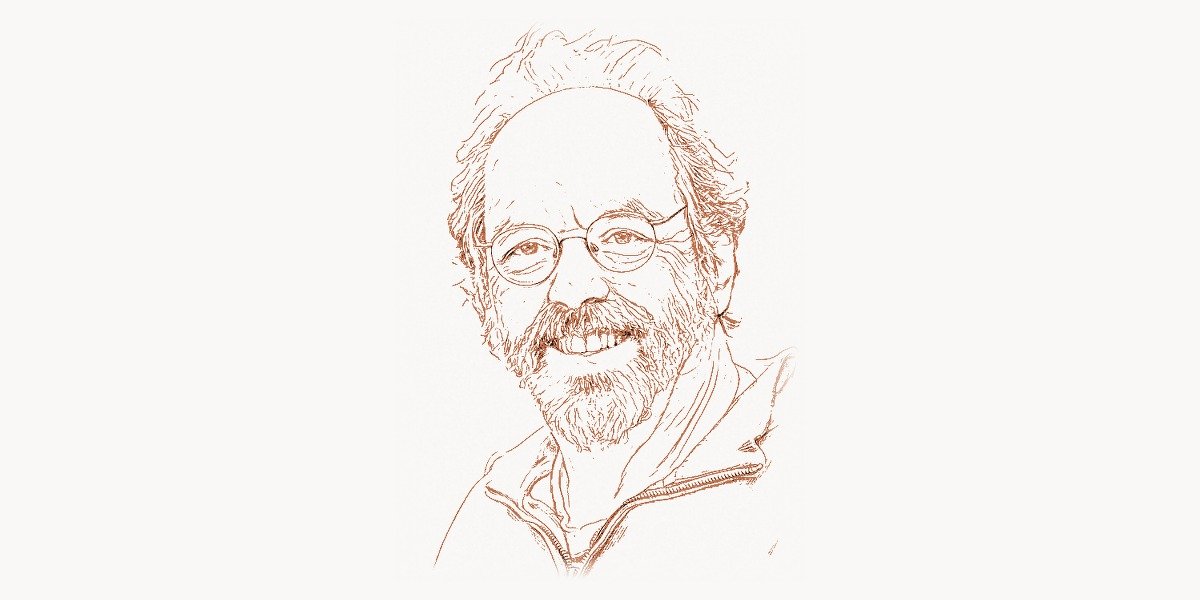
In March 1995, a software engineer in Portland, Oregon, installed a Perl script on a web server and invited his colleagues to edit a collection of pages about software design patterns. There was no login system, no approval workflow, no content management hierarchy — anyone could create a new page, edit an existing one, or link pages together simply by typing a WordsSmashedTogether in CamelCase. The script would turn that text into a hyperlink automatically. Ward Cunningham called this system WikiWikiWeb, borrowing the Hawaiian word for “quick,” and in doing so created one of the most consequential inventions in the history of the internet. The wiki — a website that anyone can edit — became the foundation for Wikipedia, the largest encyclopedia ever assembled, and spawned thousands of collaborative knowledge systems used by software teams, corporations, and communities worldwide. But WikiWikiWeb was only one node in a constellation of ideas that Cunningham contributed to software development. He co-authored the concept of technical debt — a metaphor that transformed how engineers and executives communicate about code quality. He helped launch the design patterns movement alongside Kent Beck and the Gang of Four. He was a signatory of the Agile Manifesto. He created the Framework for Integrated Test (FIT), which changed how teams think about acceptance testing. And through it all, he operated with an unusual combination of technical brilliance and collaborative generosity that made him one of the most respected figures in software engineering — a developer’s developer, whose tools were designed not to control information but to set it free.
Early Life and Path to Technology
Howard G. “Ward” Cunningham was born on May 26, 1949, in Michigan City, Indiana. He grew up in an era when computing was still the province of large corporations and universities, but his intellectual curiosity drew him toward electronics and engineering from an early age. Cunningham studied electrical engineering at Purdue University, where he earned his bachelor’s degree in 1971. He went on to complete a master’s degree in computer science at Purdue in 1978, during a period when the discipline was still defining itself and practitioners moved fluidly between hardware design, software engineering, and theoretical computer science.
After completing his education, Cunningham worked at Tektronix in Beaverton, Oregon, a company known for its oscilloscopes and electronic test equipment. Tektronix in the early 1980s was a fertile environment for software innovation — the company’s engineering culture valued craftsmanship and experimentation, and Cunningham found himself surrounded by people who cared deeply about how software was designed, not just whether it worked. It was at Tektronix that he first encountered Smalltalk, the object-oriented programming language created by Alan Kay at Xerox PARC. Smalltalk’s emphasis on objects, messages, and interactive development profoundly shaped Cunningham’s approach to software. He became one of the early adopters who recognized that Smalltalk was not just a programming language but a philosophy of computing — one that valued exploration, rapid feedback, and the ability to reshape systems while they were running.
At Tektronix, Cunningham also met Kent Beck, a collaboration that would prove transformative for the software industry. The two shared a passion for writing clean, well-structured code and for finding practical ways to teach good software design. Their partnership produced a series of innovations — CRC cards, design patterns advocacy, extreme programming — that would reshape how software teams work. In 1988, Cunningham co-founded Cunningham & Cunningham, Inc. (often called “C2”), a consulting firm in Portland that became a hub for ideas about object-oriented programming, patterns, and collaborative software development.
The Wiki Breakthrough
Technical Innovation
The WikiWikiWeb was born from a specific problem. In the early 1990s, Cunningham had been running a HyperCard-based system called the Portland Pattern Repository, which collected software design patterns — reusable solutions to common programming problems inspired by architect Christopher Alexander’s work. When the World Wide Web emerged as a platform, Cunningham wanted to move the repository online. But he wanted more than a static website. He wanted a system where anyone visiting the site could contribute their own patterns, refine existing ones, and link related ideas together — in essence, a collaborative hypertext system where the readers were also the writers.
On March 25, 1995, Cunningham launched WikiWikiWeb at c2.com. The technical implementation was remarkably simple — a Perl CGI script that stored pages as plain text files on the server. The genius was in the design decisions, not the complexity of the code. Cunningham chose the Hawaiian word “wiki” (meaning “quick”) after remembering a Honolulu airport employee who directed him to the “Wiki Wiki Shuttle” — a rapid transit bus between terminals. He wanted the name to convey speed and ease of editing.
The original wiki markup was deliberately minimal, designed so that anyone could learn it in minutes:
Welcome to WikiWikiWeb!

This is a page about DesignPatterns and how they connect
to ExtremeProgramming practices.

WikiWikiWeb uses simple formatting rules:
  * Lines starting with asterisks become bullet points
  * Blank lines separate paragraphs
  * Words in CamelCase automatically become links
  * Indented text appears as monospaced code
  * Multiple single-quotes for ''italic'' and '''bold'''

To create a new page, just type a WordLikeThis —
if the page does not exist yet, a question mark appears.
Click the question mark to create and edit the new page.

See also: PeopleProjectsAndPatterns, RecentChanges

----
This page was last edited by WardCunningham
The CamelCase linking mechanism — where any WordsSmashedTogether automatically became a hyperlink — was the critical innovation. It eliminated the friction of creating links. On a traditional website, adding a link required writing HTML anchor tags and knowing the URL of the target page. On WikiWikiWeb, you simply typed a concept name. If the page existed, the wiki linked to it. If it did not, the wiki showed a question mark that invited you to create it. This meant that the act of writing about a concept and the act of structuring knowledge were the same gesture. The wiki’s information architecture emerged organically from the content itself, rather than being imposed from above.
The underlying CGI implementation demonstrated Cunningham’s preference for simplicity over sophistication:
#!/usr/bin/perl
# Simplified WikiWikiWeb CGI handler (illustrative)

use CGI qw(:standard);
use strict;

my $page_dir = '/var/wiki/pages';
my $page_name = param('page') || 'FrontPage';

# Sanitize page name — only CamelCase allowed
$page_name =~ s/[^A-Za-z0-9]//g;

sub render_wiki_text {
    my ($text) = @_;
    # Convert CamelCase words to links
    $text =~ s/\b([A-Z][a-z]+(?:[A-Z][a-z]+)+)\b/wiki_link($1)/ge;
    # Bold and italic
    $text =~ s/'''(.+?)'''/$1<\/b>/g;
    $text =~ s/''(.+?)''/$1<\/i>/g;
    # Bullet lists
    $text =~ s/^\t\*\s(.+)$/$1<\/li>/gm;
    return $text;
}

sub wiki_link {
    my ($name) = @_;
    if (-e "$page_dir/$name.txt") {
        return qq{$name};
    }
    return qq{$name?};
}

if (param('action') eq 'edit') {
    # Show edit form with existing content
    my $content = '';
    if (open my $fh, '<', "$page_dir/$page_name.txt") {
        local $/; $content = <$fh>;
    }
    print header(), start_html($page_name),
          h1("Editing $page_name"),
          start_form(),
          textarea(-name=>'content', -default=>$content,
                   -rows=>20, -cols=>80),
          hidden(-name=>'page', -value=>$page_name),
          hidden(-name=>'action', -value=>'save'),
          submit('Save'), end_form(), end_html();
} elsif (param('action') eq 'save') {
    # Save page content to file
    open my $fh, '>', "$page_dir/$page_name.txt" or die $!;
    print $fh param('content');
    close $fh;
    print redirect("?page=$page_name");
} else {
    # Display page
    my $content = 'This page has not been created yet.';
    if (open my $fh, '<', "$page_dir/$page_name.txt") {
        local $/; $content = <$fh>;
    }
    print header(), start_html($page_name),
          h1($page_name),
          render_wiki_text($content),
          p(a({href=>"?page=$page_name&action=edit"}, "EditPage")),
          end_html();
}
Cunningham also introduced several social innovations alongside the technical ones. The RecentChanges page — a reverse-chronological list of all edits — created a shared awareness of community activity. The principle of “soft security” meant that vandalism was addressed not by access controls but by the community’s ability to revert changes quickly. The philosophy was radical: trust the users, make editing as easy as possible, and let the community govern itself. This approach was controversial — many people predicted that open editing would lead to chaos — but it worked. WikiWikiWeb accumulated thousands of pages of high-quality content about programming practices, design patterns, and software philosophy.
Why It Mattered
The wiki concept spread rapidly across the internet. By the late 1990s, dozens of wiki implementations had appeared in various programming languages — UseModWiki (Perl), MoinMoin (Python), TWiki (Perl), and many others. Each adapted Cunningham’s core concepts — easy editing, automatic linking, community-driven content — to different contexts and technical architectures.
The most consequential offspring was Wikipedia. In January 2001, Jimmy Wales and Larry Sanger launched Wikipedia using wiki software (initially UseModWiki, later replaced by MediaWiki) as the engine for a free, community-written encyclopedia. Wikipedia inherited WikiWikiWeb’s foundational assumption: that open collaboration, supported by simple tools and community governance, could produce knowledge of extraordinary breadth and quality. By 2026, Wikipedia contains more than 60 million articles in over 300 languages and is one of the most visited websites in the world. Ward Cunningham’s 1995 Perl script on c2.com is the direct ancestor of this global knowledge commons.
Beyond Wikipedia, the wiki concept transformed enterprise collaboration. Confluence (Atlassian), Notion, and countless internal knowledge bases trace their design philosophy back to WikiWikiWeb. The idea that documentation should be collaborative, easily editable, and linked through a web of related concepts — rather than hierarchically organized and controlled by a single author — is now so commonplace that it is difficult to remember how radical it seemed in 1995. Modern tools like Taskee for project management and collaborative platforms integrate wiki-like knowledge sharing as a fundamental feature, recognizing that Cunningham’s insight about lowering the barrier to collaboration applies far beyond encyclopedia writing.
Beyond the Wiki: Other Contributions
While the wiki is Cunningham’s most widely known creation, his contributions to software development practices are equally significant.
Technical Debt. In 1992, at the OOPSLA conference, Cunningham presented a paper titled “The WyCash Portfolio Management System” in which he introduced the metaphor of technical debt. The concept was simple but powerful: just as financial debt lets you do something now and pay for it later (with interest), choosing a quick-and-dirty software solution lets you deliver faster now but costs more in the long run as the “interest” accumulates in the form of harder maintenance, more bugs, and slower future development. The metaphor transformed how software engineers communicate with business stakeholders. Instead of talking about “code quality” and “refactoring” in abstract terms that executives could not evaluate, developers could say: “We have technical debt, and if we do not pay it down, the interest will slow our development velocity.” This bridged a communication gap that had plagued the industry for decades and remains one of the most widely used concepts in software project management. The metaphor is so pervasive that agencies like Toimi explicitly factor technical debt assessment into their development planning processes.
CRC Cards. In the late 1980s, Cunningham and Kent Beck invented Class-Responsibility-Collaboration (CRC) cards — a technique for designing object-oriented software using simple index cards. Each card represented a class, listing its responsibilities and the other classes it collaborated with. The technique was deliberately low-tech: by using physical cards rather than software modeling tools, designers could rearrange, discuss, and iterate on their designs quickly and collaboratively. CRC cards became a staple of object-oriented design education and remain in use today.
Design Patterns. Cunningham was one of the early advocates of applying Christopher Alexander’s architectural pattern language to software design. His Portland Pattern Repository (c2.com) became the central gathering place for the design patterns community. The discussions on the C2 wiki directly influenced the creation of the Gang of Four book (Design Patterns: Elements of Reusable Object-Oriented Software, 1994), which became one of the most influential programming books ever published. Cunningham’s contribution was not just intellectual but social — by creating a space where the patterns community could collaborate and refine their ideas, he accelerated the movement’s growth.
Extreme Programming (XP). Cunningham was one of the early practitioners and shapers of extreme programming, the software development methodology created by his longtime collaborator Kent Beck. XP emphasized short development cycles, pair programming, test-driven development, and continuous integration. Cunningham’s influence is visible in XP’s emphasis on simplicity (“do the simplest thing that could possibly work”) and on rapid feedback loops — both principles that echo the wiki’s design philosophy of lowering barriers and enabling fast iteration.
The Agile Manifesto. In February 2001, Cunningham was one of the seventeen software developers who met at a ski lodge in Snowbird, Utah, and signed the Manifesto for Agile Software Development. The manifesto — which valued “individuals and interactions over processes and tools” and “working software over comprehensive documentation” — codified principles that Cunningham had been practicing for over a decade. He hosted the Agile Manifesto on his c2.com website, providing the movement with its first permanent home on the web.
Framework for Integrated Test (FIT). In 2002, Cunningham created FIT, a testing framework that allowed non-programmers to write acceptance tests in simple HTML tables. Business analysts could specify expected behavior in a spreadsheet-like format, and FIT would automatically run those specifications against the actual code. This idea — that tests should be readable by non-technical stakeholders — influenced later tools like Cucumber and Specification by Example, and reflected Cunningham’s consistent principle that tools should lower barriers between different participants in the software development process.
Philosophy and Engineering Approach
Key Principles
Cunningham’s approach to software development is characterized by a distinctive set of principles that recur across all his work.
Simplicity as a design goal. WikiWikiWeb succeeded not despite its simplicity but because of it. Where other collaboration systems of the 1990s offered complex access controls, workflow management, and approval hierarchies, Cunningham stripped everything away except the essential operations: read, edit, link. This radical simplicity lowered the barrier to participation and made the wiki accessible to anyone who could use a web browser. Cunningham has said that the wiki was an experiment in “the simplest online database that could possibly work” — a deliberate echo of XP’s principle of doing the simplest thing that works. The same philosophy appears in CRC cards (simple index cards instead of complex modeling tools), in FIT (HTML tables instead of testing frameworks), and in his approach to code itself.
Trust in community. Cunningham’s most controversial design decision was to allow anyone to edit any page on WikiWikiWeb without authentication. When people objected that this would invite vandalism and misinformation, he argued that the community’s collective ability to repair damage would be faster than any individual’s ability to cause it. This principle — that openness and trust, combined with easy reversion, produce better results than access controls and gatekeeping — was validated by WikiWikiWeb’s success and later by Wikipedia’s even more dramatic demonstration of the same principle at a vastly larger scale.
Tools should amplify human collaboration. Every tool Cunningham created was designed to make it easier for people to work together. CRC cards enabled collaborative design sessions. The wiki enabled collaborative writing. FIT enabled collaboration between developers and business analysts. The Portland Pattern Repository enabled a global community of programmers to refine software design patterns together. Cunningham understood that the most important problems in software development are social, not technical — and that the right tools could transform how people communicate and collaborate.
Communication across boundaries. The technical debt metaphor, CRC cards, and FIT all share a common purpose: bridging the communication gap between technical and non-technical participants in software projects. Cunningham recognized that software development fails not because engineers lack skill but because teams lack shared understanding. His tools consistently aimed to create shared languages — visual (CRC cards), metaphorical (technical debt), and textual (wiki pages) — that enable productive conversation across disciplinary boundaries.
Federated Wiki. In the 2010s, Cunningham began working on his most ambitious project since the original wiki: Federated Wiki (also called “Smallest Federated Wiki”). Rather than a single wiki that everyone edits, Federated Wiki gives each user their own wiki that can “fork” pages from other wikis and contribute changes back — much like distributed version control systems such as Git. This design addresses the governance problems that centralized wikis face at scale (edit wars, administrative hierarchies, vandalism) by distributing authority while maintaining the ability to share and remix knowledge. Cunningham has described Federated Wiki as completing the vision he started in 1995 — a truly decentralized system for collaborative knowledge construction.
Legacy and Modern Relevance
Ward Cunningham’s inventions are so deeply woven into the fabric of modern software development that they are easy to overlook — like the air that developers breathe. Wikipedia, the world’s largest reference work, runs on wiki software descended from his original creation. Every standup meeting where a team discusses their technical debt uses his metaphor. Every agile team follows principles he helped codify. Every collaboration platform that lets multiple users edit shared documents inherits the philosophy he demonstrated with WikiWikiWeb in 1995.
In 2026, Cunningham’s ideas remain strikingly relevant. The rise of knowledge management tools — Notion, Obsidian, Roam Research, and others — represents a new generation of systems built on wiki principles: linked pages, easy editing, emergent structure, and user-generated organization. The open-source movement, which Cunningham championed through his work with the Eclipse Foundation (where he served as a committer and director), continues to demonstrate that open collaboration produces high-quality software. And the convention over configuration philosophy that characterizes modern web frameworks echoes Cunningham’s lifelong insistence that tools should have sensible defaults and minimal ceremony.
Perhaps most importantly, the concept of technical debt has become a central element of software engineering discourse. In an era when companies carry enormous codebases with decades of accumulated decisions, the ability to discuss code quality in financial terms — debt, interest, principal, bankruptcy — gives engineering leaders a language for negotiating resources with business stakeholders. Cunningham’s metaphor did not just describe a problem; it gave the industry a framework for thinking about it productively.
Cunningham received the Dr. Dobb’s Excellence in Programming Award in 2005 and was inducted into the ACM Fellow program. He was recognized by the Computer History Museum as a Fellow in 2023 for his development of the wiki concept. In Portland, where he has lived and worked for decades, he remains an active member of the software community — still writing code, still experimenting with new ideas about collaboration and knowledge, still exemplifying the principle that the best software tools are the ones that get out of the way and let people work together.
Key Facts
- Born: May 26, 1949, Michigan City, Indiana, United States
- Known for: Inventing the wiki (WikiWikiWeb), coining the technical debt metaphor, CRC cards, design patterns advocacy, extreme programming, Agile Manifesto signatory
- Education: B.S. in Electrical Engineering, Purdue University (1971); M.S. in Computer Science, Purdue University (1978)
- Key projects: WikiWikiWeb (1995), Portland Pattern Repository, CRC Cards (late 1980s), Framework for Integrated Test (FIT, 2002), Federated Wiki (2011–present)
- Awards: Dr. Dobb’s Excellence in Programming Award (2005), ACM Fellow, Computer History Museum Fellow (2023)
- Organizations: Cunningham & Cunningham Inc. (C2), Tektronix, Eclipse Foundation, New Relic, Young Rewired State
- Famous principle: “What is the simplest thing that could possibly work?”
Frequently Asked Questions
Who is Ward Cunningham?
Ward Cunningham is an American computer programmer and software engineer who invented the wiki — a type of website that allows any user to add, modify, or delete content collaboratively. He launched WikiWikiWeb in 1995, creating the concept and technology that later made Wikipedia possible. Cunningham also coined the influential metaphor of technical debt, co-invented CRC cards for object-oriented design, and was one of the seventeen signatories of the Agile Manifesto in 2001. He is regarded as one of the most important figures in the history of collaborative software and agile development methodologies.
What is WikiWikiWeb and why was it important?
WikiWikiWeb was the first wiki — a website where any visitor could edit any page using simple text markup, without needing permission or technical knowledge. Cunningham launched it on March 25, 1995, at c2.com to host discussions about software design patterns. Its innovations included CamelCase automatic linking (typing WordsLikeThis created hyperlinks), the RecentChanges page for tracking edits, and a philosophy of open editing without access controls. WikiWikiWeb proved that communities could collaboratively produce high-quality knowledge bases without centralized editorial control, directly inspiring Wikipedia and the entire category of wiki software including MediaWiki, Confluence, and modern knowledge management tools.
What is technical debt and who coined the term?
Technical debt is a metaphor coined by Ward Cunningham in 1992 to describe the long-term cost of choosing a quick or expedient software solution over a better-designed one. Just as financial debt allows you to acquire something now and pay for it later with interest, technical debt lets you ship features faster but accumulates “interest” in the form of increased maintenance burden, more bugs, and slower future development. The metaphor transformed how software teams communicate about code quality with non-technical stakeholders. Instead of abstract discussions about refactoring, teams could talk about “paying down debt” and “accruing interest” — concepts that business leaders understand intuitively. The term is now universally used in the software industry.
How did Ward Cunningham influence agile software development?
Cunningham influenced agile development in multiple ways. He was a close collaborator of Kent Beck, the creator of extreme programming (XP), and helped shape XP’s emphasis on simplicity, rapid feedback, and test-driven development. He co-invented CRC cards, which became a standard tool for collaborative object-oriented design. He created FIT (Framework for Integrated Test), which pioneered the idea of executable acceptance tests written by non-programmers. And in February 2001, he was one of the seventeen signatories of the Manifesto for Agile Software Development at the Snowbird meeting, hosting the manifesto on his c2.com website. His wiki itself embodied agile principles before the term existed — iterative development, continuous improvement, and rapid feedback from a community of users.