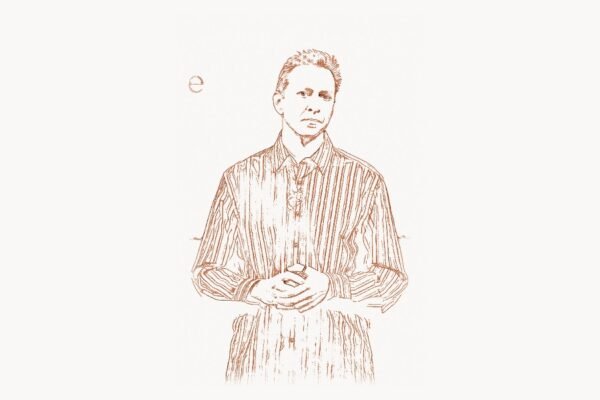
In 2006, at an MIT conference on emerging technologies, a tall Dutchman with a pronounced accent stood before an audience of skeptical academics and declared that the future of computing would not be owned — it would be rented. That the datacenter as enterprises knew it was already a relic. That software architecture would evolve to embrace failure as a first-class design principle, not something to be avoided. Most of the audience dismissed the talk as corporate salesmanship. The speaker was Werner Vogels, and within a decade his predictions would reshape how every technology company on Earth builds and deploys software.
Early Life and Academic Roots
Werner Vogels was born in 1958 in Amsterdam, the Netherlands. He grew up during a period when European computer science was carving its own path distinct from Silicon Valley’s semiconductor-driven narrative. The Dutch academic tradition, with its emphasis on formal methods and distributed systems theory, shaped his intellectual foundations in ways that would prove surprisingly relevant to the cloud era decades later.
Vogels pursued his education at the Vrije Universiteit Amsterdam, where he studied computer science. The department had a strong reputation in distributed systems research, partly due to the influence of Andrew Tanenbaum, whose work on MINIX and distributed operating systems created an environment where thinking about networked computation was second nature. Vogels earned his PhD focusing on large-scale distributed systems — a topic that, at the time, felt deeply academic but would become the backbone of modern internet infrastructure.
After completing his doctorate, Vogels moved to the United States and joined Cornell University as a research scientist. At Cornell, he worked in the Department of Computer Science, focusing on scalable, reliable distributed systems. His research centered on protocols for wide-area network communication, gossip-based information dissemination, and fault-tolerant system design. This was not glamorous work. It involved deep theoretical analysis of how systems behave when nodes fail, networks partition, and messages get lost — precisely the problems that would define cloud computing a decade later.
Career and the Architecture of the Cloud
In 2004, Werner Vogels made a leap that surprised many of his academic colleagues: he joined Amazon as its Chief Technology Officer. Amazon at the time was primarily known as an online bookstore that had survived the dot-com bust. What most outsiders did not see was that internally, Amazon had been waging a quiet war against its own monolithic architecture — and losing. The company’s systems were buckling under scale, deployments took weeks, and teams were locked in dependency chains that slowed innovation to a crawl.
Vogels arrived into an organization that was already experimenting with radical decentralization. Jeff Bezos had famously issued his API mandate, requiring all teams to expose their functionality through service interfaces. But the technical vision for what this meant at infrastructure level — and for the world beyond Amazon — needed an architect. Vogels became that architect.
Technical Innovation: Building AWS from Distributed Systems Theory
The fundamental insight that Vogels brought from academia to Amazon was deceptively simple: large-scale systems must be designed for failure because failure is inevitable. This was not a new idea in academic circles — Leslie Lamport had formalized distributed consensus decades earlier, and Jim Gray had built transaction processing theory on similar foundations. But Vogels was the first to translate these principles into a commercially viable infrastructure platform available to anyone with a credit card.
Under his technical leadership, Amazon Web Services launched its first major services. S3 (Simple Storage Service) arrived in March 2006, followed by EC2 (Elastic Compute Cloud) in August of the same year. These were not just products — they were manifestations of a distributed systems philosophy. S3 was built on the principles Vogels had studied for years: data replication across failure domains, eventual consistency where strong consistency was not required, and horizontal scaling as the default pattern.
Vogels authored and co-authored several influential papers during this period. His 2007 paper on Amazon’s Dynamo database is considered one of the most important systems papers of the 21st century. Dynamo described a highly available key-value store that sacrificed strong consistency for availability and partition tolerance — a direct application of the CAP theorem that Eric Brewer had conjectured. The paper demonstrated practical techniques including consistent hashing, vector clocks, and sloppy quorums:
# Simplified consistent hashing — core concept from Dynamo paper
import hashlib

class ConsistentHashRing:
    def __init__(self, replicas=150):
        self.replicas = replicas
        self.ring = {}
        self.sorted_keys = []

    def add_node(self, node):
        for i in range(self.replicas):
            key = self._hash(f"{node}:{i}")
            self.ring[key] = node
            self.sorted_keys.append(key)
        self.sorted_keys.sort()

    def get_node(self, data_key):
        if not self.ring:
            return None
        h = self._hash(data_key)
        for ring_key in self.sorted_keys:
            if h <= ring_key:
                return self.ring[ring_key]
        return self.ring[self.sorted_keys[0]]

    def _hash(self, key):
        return int(hashlib.md5(key.encode()).hexdigest(), 16)

# Each data key maps to a node on the ring
# When a node fails, only its portion redistributes
ring = ConsistentHashRing()
ring.add_node("us-east-1a")
ring.add_node("us-east-1b")
ring.add_node("us-west-2a")
print(ring.get_node("user:12345"))  # deterministic placement
The Dynamo paper became foundational. It directly inspired the creation of Apache Cassandra (originally built at Facebook), Riak, and Voldemort. Its influence extends to virtually every modern distributed database that prioritizes availability over strict consistency.
Why It Mattered: Democratizing Infrastructure
Before AWS, launching a technology startup required significant capital expenditure on hardware. A founder with a good idea needed to estimate peak traffic, purchase servers, negotiate colocation contracts, hire system administrators, and wait weeks for provisioning — all before writing a single line of application code. The failure mode was binary: over-provision and burn capital, or under-provision and crash under success.
Vogels understood this problem viscerally from his academic research on scalable systems. His vision for AWS was not merely to rent servers — it was to abstract away infrastructure entirely. The concept of "utility computing" that he championed meant that compute, storage, and networking would become metered resources, consumed like electricity. You would pay for what you used, scale automatically with demand, and never think about physical hardware.
This was transformative. Startups that would have needed millions in infrastructure investment could now launch for hundreds of dollars per month. The entire generation of companies that defined the 2010s — from Airbnb to Slack to Netflix's streaming pivot — were built on AWS infrastructure. The barrier to entry for technology entrepreneurship dropped by orders of magnitude, and Vogels was the technical mind who made that reduction architecturally sound. Companies seeking to build effective digital products could now focus on design and development rather than datacenter management.
Other Contributions
Beyond AWS itself, Vogels has been one of the technology industry's most articulate voices on system design principles. His blog, "All Things Distributed," has become required reading for systems engineers and architects worldwide. Unlike typical corporate executive blogs, Vogels writes with genuine technical depth — discussing topics like cell-based architecture, event-driven design, and the nuances of consistency models.
He has been instrumental in popularizing the concept of "two-pizza teams" — small, autonomous groups that own their services end-to-end. This organizational pattern, while originating from Bezos's management philosophy, was given technical substance by Vogels's insistence on service-oriented architecture. Each team would own its service, its deployment pipeline, its operational monitoring, and its on-call rotation. This approach anticipated the microservices movement by nearly a decade.
Vogels also championed the "you build it, you run it" philosophy, which fundamentally changed the relationship between software development and operations. In the traditional model, developers wrote code and "threw it over the wall" to operations teams who were responsible for running it. Vogels argued that this separation created perverse incentives — developers had no skin in the game when their code caused production incidents. By making developers responsible for operating their own services, quality improved dramatically. This principle became one of the cornerstones of the DevOps movement, influencing how Solomon Hykes would later think about containerization and deployment workflows.
His keynotes at AWS re:Invent, the annual AWS conference, have become legendary in the industry. Vogels uses these presentations not to simply announce products but to teach architectural principles. His talks on event-driven architecture, serverless computing, and the evolution from monoliths to microservices to function-based computing have educated hundreds of thousands of engineers. His influence extends to how teams plan and manage their project workflows in distributed environments.
Philosophy: Everything Fails All the Time
Werner Vogels's most enduring contribution may be philosophical rather than purely technical. His mantra — "Everything fails all the time" — has become the foundational axiom of modern cloud-native engineering. This phrase, which he has repeated at countless conferences and in numerous publications, encapsulates an entire approach to system design.
The philosophy stands in direct contrast to the traditional approach of building "reliable" systems by using expensive, redundant hardware. Vogels argued that instead of trying to prevent failure (an impossible goal at scale), systems should be designed to tolerate failure gracefully. Disks will fail. Networks will partition. Entire availability zones will go offline. The question is not whether failure will occur but how the system behaves when it does.
This thinking connects directly to the academic tradition Vogels came from. The theoretical foundations laid by distributed systems researchers like Leslie Lamport and the practical engineering of fault-tolerant systems that Jeff Dean pioneered at Google were parallel tracks. Vogels synthesized these into a coherent operational philosophy that could be adopted by organizations of any size.
Key Principles
- Design for failure: Every component will eventually fail. Architect systems so that no single failure brings down the whole. Use redundancy, circuit breakers, and graceful degradation as default patterns.
- Embrace eventual consistency: Not every operation requires immediate consistency. Understanding where strong consistency is truly needed versus where eventual consistency suffices allows systems to scale more effectively and remain available during partitions.
- Decompose ruthlessly: Monolithic systems create monolithic failure modes. Service-oriented architecture isolates blast radius and allows independent scaling, deployment, and evolution of components.
- Automate everything: Human intervention is the slowest and most error-prone response to incidents. Automated detection, mitigation, and recovery should be the default, with human judgment reserved for novel situations.
- Measure obsessively: You cannot improve what you do not measure. Operational metrics, latency percentiles (not averages), error budgets, and customer-impact metrics should drive all architectural decisions.
- Build with cells: Cell-based architecture limits the blast radius of failures by partitioning workloads into independent units that share nothing. When a cell fails, only its portion of traffic is affected.
- Optimize for the customer backward: Technical architecture should be driven by customer needs, not by engineering elegance. Start with the customer experience and work backward to the technology required to deliver it.
These principles are reflected in how AWS services are built internally. Each service is designed as an independent system with its own data store, deployment pipeline, and operational runbook. The following YAML represents a simplified version of the kind of infrastructure-as-code that Vogels's philosophy made standard practice:
# Cell-based architecture pattern — inspired by Vogels's principles
# Each cell is an independent failure domain
AWSTemplateFormatVersion: '2010-09-09'
Description: Cell-based microservice with isolated failure domains

Resources:
  ServiceCell:
    Type: AWS::ECS::Service
    Properties:
      ServiceName: order-processing-cell-1
      DesiredCount: 3
      DeploymentConfiguration:
        MaximumPercent: 200
        MinimumHealthyPercent: 50
      # Circuit breaker prevents cascading failures
      DeploymentCircuitBreaker:
        Enable: true
        Rollback: true
      HealthCheckGracePeriodSeconds: 60

  # Each cell has its own data store — no shared state
  CellDatabase:
    Type: AWS::DynamoDB::Table
    Properties:
      TableName: orders-cell-1
      BillingMode: PAY_PER_REQUEST
      # Multi-AZ replication for cell-level resilience
      SSESpecification:
        SSEEnabled: true
      PointInTimeRecoverySpecification:
        PointInTimeRecoveryEnabled: true

  # Automated health monitoring per cell
  CellAlarm:
    Type: AWS::CloudWatch::Alarm
    Properties:
      AlarmName: cell-1-error-rate
      MetricName: 5XXError
      Threshold: 5
      EvaluationPeriods: 2
      # Auto-remediation on cell failure
      AlarmActions:
        - !Ref AutoRemediationTopic
Legacy and Lasting Influence
Werner Vogels's impact on the technology industry operates at multiple levels. At the most visible level, AWS under his technical stewardship grew from an experimental side project into a business generating over $100 billion in annual revenue — the most profitable division of one of the world's most valuable companies. AWS currently holds roughly a third of the global cloud infrastructure market, with millions of active customers ranging from solo developers to the largest enterprises and government agencies on the planet.
But the deeper legacy is architectural. Vogels did not just build a cloud platform — he established the patterns and principles that define how modern software is built. The microservices architecture that dominates contemporary software development traces directly to the service-oriented approach he championed at Amazon. The DevOps movement owes its "you build it, you run it" ethos to his philosophy. The entire serverless computing paradigm — where developers write functions without provisioning or managing servers — is the logical endpoint of the abstraction journey Vogels began.
His influence on the open-source ecosystem has been substantial as well. While AWS has faced criticism for commercializing open-source projects, Vogels has also driven significant contributions back to the community. AWS is now among the largest contributors to the Linux kernel, Kubernetes, and numerous open-source projects. The Dynamo paper inspired an entire generation of distributed databases, and Vogels's public advocacy for open standards has shaped how cloud APIs evolve. His work intersects with the broader open-source tradition championed by figures like Linus Torvalds in operating systems and Tim Berners-Lee in web standards.
Within the Java and JVM ecosystem — which powers a significant portion of AWS's internal services — Vogels helped push the boundaries of what was possible with garbage-collected languages at massive scale. The engineering challenges of running services like DynamoDB and S3 at Amazon's scale required innovations in memory management, concurrency, and JIT compilation that benefited the broader James Gosling-created Java community.
Perhaps most importantly, Vogels demonstrated that deep academic research in distributed systems could translate directly into world-changing commercial impact. In an industry that often celebrates move-fast-and-break-things pragmatism over theoretical rigor, Vogels proved that the careful, principled approach to system design — rooted in formal analysis of consistency models, failure modes, and scalability limits — was not just compatible with commercial success but essential to it.
Key Facts
- Born in 1958 in Amsterdam, the Netherlands
- PhD in Computer Science from Vrije Universiteit Amsterdam, specializing in distributed systems
- Research scientist at Cornell University before joining industry
- Appointed CTO of Amazon in 2004, a position he still holds
- Co-author of the foundational Dynamo paper (2007), which inspired Cassandra, Riak, and Voldemort
- Coined the operational philosophy "Everything fails all the time"
- Championed the "you build it, you run it" DevOps principle at Amazon
- Delivers the flagship keynote at AWS re:Invent annually to audiences of 50,000+
- Maintains the influential technical blog "All Things Distributed"
- AWS under his technical leadership grew to over $100 billion in annual revenue
- Holds a private pilot's license and is an avid photographer
Frequently Asked Questions
What does Werner Vogels mean by "Everything Fails All the Time"?
This phrase encapsulates Vogels's core engineering philosophy: at sufficient scale, hardware failures, software bugs, network partitions, and human errors are not exceptional events but routine occurrences. Rather than attempting to build systems that never fail (an impossible goal), engineers should design systems that continue operating correctly despite individual component failures. This means building in redundancy, using techniques like circuit breakers and bulkheads, implementing automated failover, and testing failure scenarios regularly through practices like chaos engineering. The philosophy shifted the industry's mindset from failure prevention to failure resilience.
How did Werner Vogels's academic background influence AWS?
Vogels's PhD research in distributed systems at Vrije Universiteit Amsterdam and his subsequent work at Cornell University directly shaped AWS's architecture. His deep understanding of consistency models, consensus protocols, and fault-tolerance theory informed fundamental design decisions in services like S3 and DynamoDB. The Dynamo paper, which he co-authored, applied academic concepts like consistent hashing, vector clocks, and tunable consistency to a production system serving millions of requests. This academic rigor gave AWS a theoretical foundation that competitors, who often took more ad-hoc approaches, lacked.
What is Werner Vogels's role at Amazon today?
As CTO of Amazon, Vogels oversees the company's technology strategy and drives innovation across all of Amazon's businesses, not just AWS. He is responsible for setting the long-term technical direction, ensuring that architectural principles are applied consistently, and communicating Amazon's technology vision to the outside world. He continues to write technical content on his blog, delivers keynotes at major conferences, and actively engages with the developer community. His role bridges the gap between Amazon's business objectives and the engineering culture that executes on them.
How did the Dynamo paper change database design?
Published in 2007, the Dynamo paper described a production system at Amazon that prioritized availability and partition tolerance over strong consistency — a practical application of the CAP theorem. It introduced techniques that became standard in distributed database design: consistent hashing for data partitioning, vector clocks for conflict resolution, sloppy quorums for high availability during failures, and anti-entropy protocols using Merkle trees for data synchronization. The paper directly inspired several major open-source databases including Apache Cassandra, Riak, and Project Voldemort, and its principles continue to influence the design of modern distributed data stores.