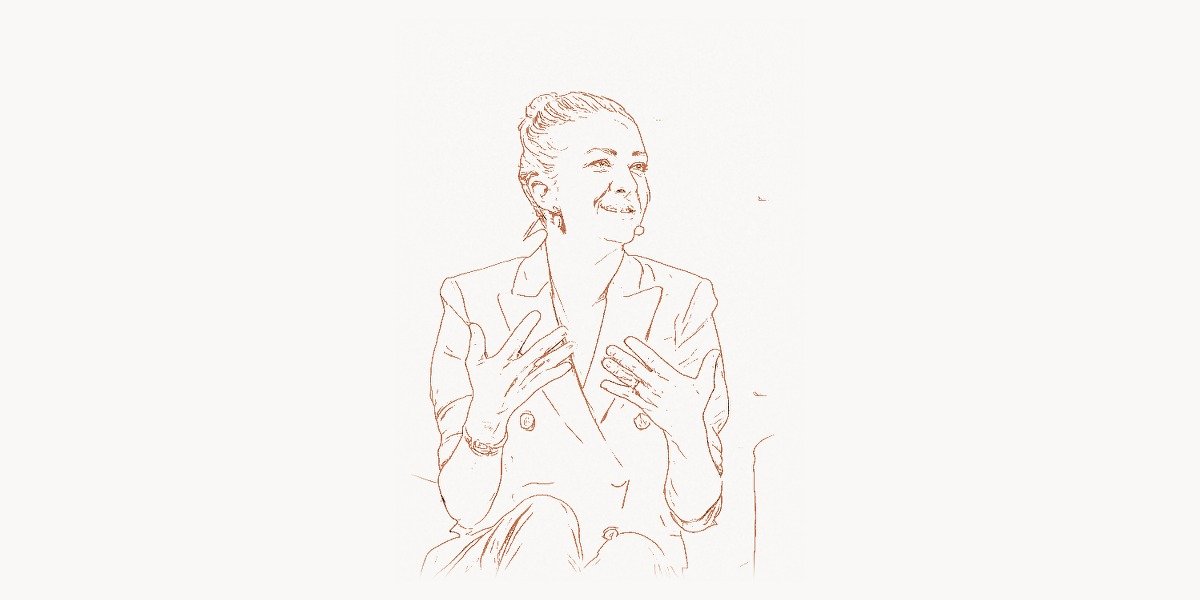
In 2014, a 25-year-old woman who had just survived a bruising public lawsuit against the dating app she helped build decided that instead of retreating, she would build something better. Whitney Wolfe Herd did not merely create another dating app. She redesigned the fundamental dynamics of online human connection — putting women in control of the first move, embedding safety into the architecture, and proving that a technology platform could be both profitable and principled. By 2021, when Bumble went public at a valuation of $8.2 billion, Wolfe Herd became the youngest woman ever to take a company public as CEO. Her story is not just about building a successful app. It is about recognizing that the way technology mediates human relationships is a design problem — and that the defaults built into that design carry enormous social consequences.
Early Life and the Road to Tech
Whitney Wolfe was born on July 1, 1989, in Salt Lake City, Utah. She grew up in a middle-class household, showing early signs of the entrepreneurial instinct that would define her career. While still a student at Southern Methodist University in Dallas, Texas, she launched a small business selling bamboo tote bags to raise money for victims of the BP oil spill in the Gulf of Mexico — a project that caught the attention of celebrity supporters and gave her an early lesson in the power of combining commerce with social purpose.
After graduating with a degree in International Studies in 2011, Wolfe moved to Los Angeles and entered the orbit of the startup world. She joined Hatch Labs, an incubator backed by IAC (InterActiveCorp), where she became involved with a new project that would become one of the most culturally significant applications of the decade: Tinder.
The Tinder Years and a Painful Departure
Wolfe Herd was among the earliest members of the Tinder team. Her contributions were substantial — she is widely credited with coming up with the name “Tinder” itself, and she drove the app’s early growth by spearheading grassroots marketing campaigns on college campuses across the United States. Her strategy of targeting sororities and fraternities at schools like SMU and the University of Southern California was instrumental in creating the Critical Mass of users that transformed Tinder from a prototype into a cultural phenomenon.
However, her time at Tinder ended acrimoniously. In 2014, Wolfe Herd filed a lawsuit against Tinder and its parent company alleging sexual harassment and discrimination. The lawsuit was settled out of court. The experience, while painful, became the catalyst for everything that followed. Rather than allowing the experience to define her as a victim, Wolfe Herd channeled it into a vision for what technology platforms could be — spaces designed not merely for engagement and growth, but for safety, respect, and equity.
This trajectory — from a painful departure to a transformative founding — mirrors patterns seen in other technology pioneers. Sandy Lerner’s forced exit from Cisco and Jessica Livingston’s insight that the startup world needed a more human approach both illustrate how adversity can become the raw material for innovation.
Founding Bumble: Women Make the First Move
The Core Innovation
In late 2014, Wolfe Herd partnered with Andrey Andreev, the Russian-British entrepreneur behind the European dating platform Badoo, to launch Bumble. The app’s defining feature was deceptively simple: in heterosexual matches, women must send the first message. If they do not message within 24 hours, the match expires.
This single design decision rewired the dynamics of online dating. On every other platform at the time, women were inundated with unsolicited messages — many aggressive, many crude, many harassing. The sheer volume made the experience exhausting and often hostile. By requiring women to initiate contact, Bumble shifted the power balance. Women chose who they wanted to engage with. Men could not bombard them with openers. The result was an environment that felt fundamentally different — calmer, more intentional, more respectful.
The 24-hour expiration timer added urgency without pressure. It prevented the accumulation of stale matches — a common problem on other platforms where connections pile up but conversations never start. It also introduced an element of behavioral economics: the scarcity of time made each match feel more valuable, encouraging users to be more deliberate in their choices.
Technical Architecture of the Matching System
Beneath the simple user experience, Bumble’s matching and recommendation system involved sophisticated engineering. The platform needed to score potential matches based on user preferences, behavioral signals, and compatibility metrics while ensuring that the women-first messaging constraint was enforced at every layer of the stack. The following pseudocode illustrates the core logic of a preference-weighted matching pipeline with the Bumble-specific initiation rules baked in.
# Bumble-style matching engine: preference scoring + women-first initiation
# Demonstrates how platform design encodes social values into algorithms

from dataclasses import dataclass, field
from datetime import datetime, timedelta
from enum import Enum
from typing import Optional
import math

class Gender(Enum):
    FEMALE = "female"
    MALE = "male"
    NON_BINARY = "non_binary"

class MatchState(Enum):
    PENDING_MUTUAL = "pending_mutual"     # Awaiting both swipes
    MATCHED = "matched"                    # Both swiped right
    AWAITING_FIRST_MOVE = "awaiting_first" # Timer started
    ACTIVE_CONVERSATION = "active"         # First message sent
    EXPIRED = "expired"                    # 24h timer ran out

@dataclass
class UserProfile:
    user_id: str
    gender: Gender
    age: int
    location: tuple  # (latitude, longitude)
    interests: set = field(default_factory=set)
    activity_score: float = 0.0  # engagement metric 0-1

@dataclass
class Match:
    user_a: UserProfile   # the initiator (female in hetero matches)
    user_b: UserProfile
    state: MatchState
    matched_at: Optional[datetime] = None
    expires_at: Optional[datetime] = None
    first_message_at: Optional[datetime] = None

    FIRST_MOVE_WINDOW = timedelta(hours=24)

    def start_timer(self):
        """After mutual swipe, women-first timer begins."""
        self.state = MatchState.AWAITING_FIRST_MOVE
        self.matched_at = datetime.utcnow()
        self.expires_at = self.matched_at + self.FIRST_MOVE_WINDOW

    def check_expiration(self) -> bool:
        if (self.state == MatchState.AWAITING_FIRST_MOVE
                and datetime.utcnow() > self.expires_at):
            self.state = MatchState.EXPIRED
            return True
        return False

    def send_first_message(self, sender: UserProfile) -> bool:
        """Enforce women-first rule for heterosexual matches."""
        if self.state != MatchState.AWAITING_FIRST_MOVE:
            return False
        # In hetero matches, only user_a (female) can send first
        if sender.gender == Gender.MALE and self.user_b.gender == Gender.FEMALE:
            raise PermissionError("In Bumble, women make the first move.")
        self.state = MatchState.ACTIVE_CONVERSATION
        self.first_message_at = datetime.utcnow()
        return True

def compatibility_score(a: UserProfile, b: UserProfile) -> float:
    """Multi-factor compatibility scoring."""
    # Interest overlap (Jaccard similarity)
    if a.interests and b.interests:
        jaccard = len(a.interests & b.interests) / len(a.interests | b.interests)
    else:
        jaccard = 0.0

    # Geographic proximity (inverse distance, km)
    dist_km = haversine(a.location, b.location)
    proximity = 1.0 / (1.0 + dist_km / 50.0)  # 50km half-life

    # Activity alignment (both active = better experience)
    activity = (a.activity_score + b.activity_score) / 2.0

    return 0.45 * jaccard + 0.35 * proximity + 0.20 * activity

def haversine(loc1: tuple, loc2: tuple) -> float:
    """Distance between two lat/lon points in km."""
    R = 6371.0
    lat1, lon1, lat2, lon2 = map(math.radians,
        [loc1[0], loc1[1], loc2[0], loc2[1]])
    dlat, dlon = lat2 - lat1, lon2 - lon1
    a = math.sin(dlat/2)**2 + math.cos(lat1)*math.cos(lat2)*math.sin(dlon/2)**2
    return R * 2 * math.asin(math.sqrt(a))

# Example: matching pipeline
alice = UserProfile("u_001", Gender.FEMALE, 28, (40.7128, -74.0060),
                    {"hiking", "photography", "startups"}, 0.85)
bob = UserProfile("u_002", Gender.MALE, 30, (40.7580, -73.9855),
                  {"hiking", "cooking", "startups"}, 0.72)

score = compatibility_score(alice, bob)
print(f"Compatibility: {score:.3f}")  # ~0.62

match = Match(user_a=alice, user_b=bob, state=MatchState.PENDING_MUTUAL)
match.start_timer()
print(f"Match state: {match.state.value}")         # awaiting_first
print(f"Expires: {match.expires_at}")               # +24 hours
match.send_first_message(alice)                      # OK — Alice is female
print(f"Conversation: {match.state.value}")          # active
Building a Safety-First Platform
Photo Verification and Anti-Harassment Systems
Wolfe Herd’s personal experience with harassment informed a company-wide obsession with user safety. Bumble became one of the first major dating platforms to implement photo verification — requiring users to submit a real-time selfie matching a specific pose, which was then compared against their profile photos using a combination of human moderation and machine learning. This drastically reduced catfishing and fake profiles, problems that plagued competitors.
In 2019, Bumble went further, deploying an AI-based system called Private Detector that automatically identified and blurred unsolicited explicit images sent in chat. Users who received such images could choose whether to view, report, or block the sender. The system, which used convolutional neural network architectures for image classification — the same class of technology that Ian Goodfellow’s work on adversarial networks helped advance — achieved over 98% accuracy in detecting inappropriate content.
Bumble also introduced features allowing users to block and report abusive contacts, filter matches by verified status, and enable video calling within the app so that users could verify someone’s identity before meeting in person. Each of these decisions reflected a philosophy that safety was not a feature to be bolted on after launch — it was a core architectural principle.
Content Moderation Architecture
The technical challenge of moderating content at scale while maintaining user privacy required a layered architecture. Bumble’s approach combined on-device preprocessing, server-side classification, and human review in a pipeline designed to minimize both false positives (blocking legitimate content) and false negatives (missing harmful content). The architecture below illustrates how such a multi-tier safety system operates.
# Multi-tier content moderation pipeline
# Inspired by Bumble's safety-first architecture

from dataclasses import dataclass
from enum import Enum
from typing import Optional

class ThreatLevel(Enum):
    SAFE = "safe"
    SUSPICIOUS = "suspicious"
    HARMFUL = "harmful"
    BLOCKED = "blocked"

class ContentType(Enum):
    TEXT = "text"
    IMAGE = "image"
    VIDEO = "video"

@dataclass
class ModerationResult:
    threat_level: ThreatLevel
    confidence: float
    flagged_categories: list
    action_taken: str
    requires_human_review: bool = False

class SafetyPipeline:
    """
    Three-tier moderation: on-device → server ML → human review.
    Each tier escalates if confidence is below threshold.
    """
    ESCALATION_THRESHOLD = 0.85
    BLOCK_THRESHOLD = 0.95
    HARMFUL_KEYWORDS = {
        "threat", "kill", "hate", "slur_placeholder",
        "harass", "stalk", "doxx"
    }

    def tier_1_keyword_filter(self, text: str) -> Optional[ModerationResult]:
        """Fast keyword + regex scan (runs on-device or edge)."""
        words = set(text.lower().split())
        flagged = words & self.HARMFUL_KEYWORDS
        if flagged:
            return ModerationResult(
                threat_level=ThreatLevel.SUSPICIOUS,
                confidence=0.70,
                flagged_categories=list(flagged),
                action_taken="escalated_to_tier2",
                requires_human_review=False,
            )
        return None  # passes to normal flow

    def tier_2_ml_classifier(self, text: str, content_type: ContentType
                             ) -> ModerationResult:
        """Server-side ML classification (NLP or CV model)."""
        # In production: call to trained model endpoint
        # Simulated scoring based on content signals
        toxicity_score = self._mock_toxicity(text)

        if toxicity_score >= self.BLOCK_THRESHOLD:
            return ModerationResult(
                threat_level=ThreatLevel.BLOCKED,
                confidence=toxicity_score,
                flagged_categories=["high_toxicity"],
                action_taken="auto_blocked",
            )
        elif toxicity_score >= self.ESCALATION_THRESHOLD:
            return ModerationResult(
                threat_level=ThreatLevel.HARMFUL,
                confidence=toxicity_score,
                flagged_categories=["moderate_toxicity"],
                action_taken="auto_blocked_pending_review",
                requires_human_review=True,
            )
        elif toxicity_score >= 0.5:
            return ModerationResult(
                threat_level=ThreatLevel.SUSPICIOUS,
                confidence=toxicity_score,
                flagged_categories=["low_toxicity"],
                action_taken="flagged_for_review",
                requires_human_review=True,
            )
        return ModerationResult(
            threat_level=ThreatLevel.SAFE,
            confidence=1.0 - toxicity_score,
            flagged_categories=[],
            action_taken="allowed",
        )

    def tier_3_human_review(self, result: ModerationResult) -> ModerationResult:
        """Human moderator makes final decision on edge cases."""
        # In production: queued to trained content moderator
        # with context (conversation history, user report history)
        result.action_taken = "human_reviewed_" + result.action_taken
        return result

    def moderate(self, text: str, content_type: ContentType = ContentType.TEXT
                 ) -> ModerationResult:
        """Full pipeline: keyword → ML → human (if needed)."""
        # Tier 1: fast filter
        t1 = self.tier_1_keyword_filter(text)
        if t1 and t1.confidence >= self.BLOCK_THRESHOLD:
            return t1

        # Tier 2: ML classification
        t2 = self.tier_2_ml_classifier(text, content_type)
        if t2.requires_human_review:
            return self.tier_3_human_review(t2)
        return t2

    @staticmethod
    def _mock_toxicity(text: str) -> float:
        """Placeholder for real ML scoring."""
        if any(w in text.lower() for w in ("threat", "kill", "hate")):
            return 0.96
        if any(w in text.lower() for w in ("harass", "ugly")):
            return 0.78
        return 0.12

# Usage example
pipeline = SafetyPipeline()
safe_msg = pipeline.moderate("Hi, love your hiking photos! Want to grab coffee?")
print(f"Safe message: {safe_msg.threat_level.value} → {safe_msg.action_taken}")
# Output: safe → allowed

toxic_msg = pipeline.moderate("I will find you and make you regret this threat")
print(f"Toxic message: {toxic_msg.threat_level.value} → {toxic_msg.action_taken}")
# Output: blocked → auto_blocked
From Dating App to Social Networking Empire
Expanding Beyond Romance
Wolfe Herd recognized early that the women-first model had applications far beyond dating. In 2016, Bumble launched Bumble BFF, a mode for finding platonic friendships using the same swipe-and-match interface. In 2017, Bumble Bizz followed, targeting professional networking. This expansion transformed Bumble from a dating app into a multi-modal social networking platform — a vision that directly competed with Mark Zuckerberg’s Meta on social connections, LinkedIn on professional networking, and specialized apps on friendship discovery.
The strategic reasoning was sound. User acquisition costs in dating apps are among the highest in mobile software, because users who find a successful relationship leave the platform. By offering friendship and professional networking, Bumble could retain users who had found romantic partners — converting them from dating customers into social networking users. This extended user lifetime value and reduced churn, two metrics that obsess every product team in mobile technology.
This kind of multi-product strategic expansion — reusing a core platform mechanic across adjacent markets — is a pattern that Reed Hastings applied at Netflix when moving from DVD rentals to streaming and then to content production. Wolfe Herd executed the same playbook in social networking, using the swipe-and-match interaction model as the foundational primitive that could be adapted to any context where two people need to discover each other.
Global Growth and Cultural Adaptation
Under Wolfe Herd’s leadership, Bumble expanded to over 150 countries. This expansion required more than translation — it demanded cultural adaptation. In India, where arranged marriages remain common and women’s autonomy in relationship initiation carries different social weight, Bumble launched with marketing campaigns featuring Priyanka Chopra Jonas and partnerships with local women’s empowerment organizations. The approach worked: India became one of Bumble’s fastest-growing markets.
In markets across Southeast Asia, the Middle East, and Latin America, Bumble adapted its features while maintaining the core women-first principle. The company opened offices in London, Austin, Moscow, and Mumbai, building local teams that understood regional nuances. Teams coordinating this kind of multi-market product rollout — where core features must remain consistent while interfaces, marketing, and compliance vary by region — benefit enormously from structured project management tools like Taskee that can track parallel workstreams across time zones.
The IPO and Making History
On February 11, 2021, Bumble Inc. went public on the NASDAQ under the ticker symbol BMBL. The stock opened at $76 per share, giving the company a valuation of approximately $8.2 billion on its first day of trading. Whitney Wolfe Herd, then 31 years old, became the youngest woman to take a company public as CEO in the United States.
The IPO was significant beyond the financial milestone. It demonstrated that a technology company built explicitly around women’s safety and empowerment could achieve the same scale and returns as companies that had historically optimized for engagement above all else. While platforms like Jack Dorsey’s Twitter and Evan Spiegel’s Snapchat had each pioneered new forms of social interaction, Bumble was perhaps the first major platform to prove that embedding ethical constraints into the product design — specifically, constraining who can initiate contact — could enhance rather than diminish growth.
The Bumble IPO also underlined a broader trend in technology: the shift from pure growth metrics toward sustainable, values-aligned business models. Investors increasingly recognized that platforms with built-in safety mechanisms faced fewer regulatory risks, lower user acquisition costs in demographics underserved by competitors, and stronger brand loyalty. The era when “move fast and break things” was the only viable startup philosophy was ending, and Wolfe Herd’s company was proof.
Leadership Philosophy and Impact
Accountability and Legislation
Wolfe Herd extended her influence beyond the product. In 2019, she successfully lobbied the Texas state legislature to pass a law making the sending of unsolicited explicit images a criminal offense — the first law of its kind in the United States. The legislation, which became law in September 2019, reflected Bumble’s broader mission: using technology and policy together to create safer environments for women.
This willingness to engage with the regulatory landscape sets Wolfe Herd apart from many technology founders who view government regulation as an obstacle to be avoided. Her approach — proactively shaping policy rather than reacting to it — aligns with the philosophy of technology leaders like Dario Amodei, who has similarly argued that the technology industry must engage constructively with regulators rather than fighting them.
Redefining What a Tech CEO Looks Like
Wolfe Herd challenged the archetype of the technology CEO. In an industry dominated by hoodie-wearing engineers who celebrate disruption as an end in itself, she built a company around empathy, safety, and intention. She spoke openly about the challenges of being a young female founder in a male-dominated industry, and she used her platform to advocate for women in technology and entrepreneurship.
Her leadership style emphasizes what organizational psychologists call relational intelligence — the ability to build systems that optimize for the quality of human connections rather than merely the quantity of interactions. This approach resonated with users. By 2023, Bumble had over 40 million monthly active users, with women reporting significantly higher satisfaction rates compared to competitor platforms. Companies building products that prioritize user experience alongside strategic growth often rely on frameworks like Toimi for aligning product vision with market strategy, balancing the kind of values-first approach Wolfe Herd championed with measurable business outcomes.
Her journey also demonstrates an important truth about the technology industry that Rumman Chowdhury’s work on AI ethics has similarly highlighted: the people who build technology platforms make choices — about defaults, about permissions, about what behavior is encouraged or discouraged — that shape the experience of millions. Those choices are never neutral. The decision to let anyone message anyone is a design choice with social consequences. Wolfe Herd’s insight was that choosing differently — choosing to constrain certain behaviors — could produce both a better user experience and a more successful business.
Challenges and Evolution
Wolfe Herd’s journey has not been without challenges. After the IPO, Bumble’s stock price experienced significant volatility, declining from its opening high as the broader tech market corrected in 2022. Competition from entrenched players like Match Group (which owns Tinder, Hinge, and OkCupid) and newer entrants intensified. In some markets, user growth plateaued as the online dating market matured.
In early 2024, Wolfe Herd stepped down as CEO while remaining executive chair, handing operational leadership to Lidiane Jones, a former Salesforce executive. The transition reflected both the maturation of Bumble as a company and Wolfe Herd’s stated desire to focus on the company’s long-term strategic vision rather than day-to-day operations. This kind of founder-to-professional-CEO transition is a well-studied pattern in startup evolution — Paul Graham has written extensively about the distinct skills required at different stages of a company’s growth.
Despite these challenges, Bumble’s core innovations — women-first messaging, photo verification, AI-driven content moderation, and the expansion into friendship and professional networking — have permanently altered the landscape of social technology. Features that Bumble pioneered are now standard across the industry. Tinder, Hinge, and other platforms have all implemented verification systems and anti-harassment features that echo Bumble’s early designs.
Legacy and Lasting Contributions
Whitney Wolfe Herd’s contributions to technology extend across several dimensions. She proved that a social platform could be designed around safety and still achieve massive scale. She demonstrated that the defaults built into software carry ethical weight. She showed that a female founder could build a multi-billion-dollar technology company in an industry that remains stubbornly male-dominated. And she used her success as a platform to change actual laws, bridging the gap between technology and policy in a way that produced tangible improvements in people’s lives.
Bumble’s influence extends beyond dating. The concept of “women make the first move” has become a cultural shorthand for a broader rethinking of power dynamics in digital spaces. The company’s success has inspired a generation of founders — particularly women — to build companies that embed their values into their products rather than treating ethics as an afterthought or a PR exercise.
In the history of social technology, Wolfe Herd occupies a unique position. Kevin Systrom built Instagram around the idea that anyone could be a photographer. Mark Zuckerberg built Facebook around the idea that everyone should be connected. Wolfe Herd built Bumble around the idea that connection should be safe and equitable — and that the technology itself should enforce those values, not merely aspire to them.
Frequently Asked Questions
What is Bumble’s “women first” feature and why was it revolutionary?
Bumble’s signature feature requires women to send the first message in heterosexual matches within 24 hours, or the match expires. This was revolutionary because it fundamentally changed the dynamics of online dating, where women on other platforms were typically overwhelmed with unsolicited and often inappropriate messages. By putting initiation in women’s hands, Bumble created a calmer, more intentional environment that attracted users who were frustrated with the aggressive culture on competitor platforms. The feature also reduced harassment rates and made conversations more meaningful, proving that constraining user behavior could actually improve the overall experience.
How did Whitney Wolfe Herd go from Tinder to founding Bumble?
Wolfe Herd was an early team member at Tinder, where she contributed significantly to the app’s branding and early user acquisition through college campus marketing campaigns. In 2014, she departed after filing a lawsuit alleging sexual harassment and discrimination, which was settled out of court. Rather than leaving the dating technology space, she partnered with Andrey Andreev of Badoo to launch Bumble later that year. The experience at Tinder directly informed Bumble’s design philosophy — she built the platform she wished had existed, with safety and respect for women embedded into the core product mechanics rather than treated as secondary concerns.
What technologies does Bumble use to keep its platform safe?
Bumble employs a multi-layered safety architecture. Photo Verification uses real-time selfie comparison against profile photos, combining human moderators and machine learning classifiers to detect fake profiles. The Private Detector feature, launched in 2019, uses convolutional neural networks to automatically identify and blur unsolicited explicit images before the recipient sees them. The platform also uses natural language processing for real-time text moderation, behavioral analysis to detect suspicious account patterns, and a tiered content review system that escalates borderline cases from automated systems to human moderators. Video calling within the app allows users to verify identities before meeting in person.
Why was Bumble’s IPO historically significant?
When Bumble went public on the NASDAQ in February 2021, Whitney Wolfe Herd became the youngest woman in history to take a company public as CEO in the United States. She was 31 at the time. The company debuted at a valuation of approximately $8.2 billion, demonstrating that a technology company explicitly built around women’s safety and empowerment could achieve the same scale and investor interest as companies that prioritized growth above all else. The IPO signaled a shift in how the investment community valued ethical product design and user safety as business advantages rather than growth constraints.
What is Whitney Wolfe Herd’s role at Bumble today, and what is her broader impact?
In early 2024, Wolfe Herd transitioned from CEO to Executive Chair of Bumble, focusing on long-term strategy while Lidiane Jones handles day-to-day operations. Beyond her corporate role, Wolfe Herd’s broader impact includes successfully lobbying Texas to criminalize unsolicited explicit images (the first such law in the US), inspiring a generation of female founders in technology, and permanently changing industry standards around user safety in social platforms. Features that Bumble pioneered — photo verification, AI content moderation, women-first messaging — are now adopted across the dating app industry, making the entire ecosystem safer for users everywhere.