Most game designers seek to entertain. Yoko Taro seeks to unsettle. Over a career spanning more than two decades, the Japanese director behind the Drakengard and NieR series has consistently used interactive media to ask questions that other creators avoid — about violence, loss, the unreliability of narrative, and the moral weight of the player’s role in virtual destruction. His games do not reward players in the conventional sense; they dismantle expectations, force complicity in uncomfortable acts, and bury their most meaningful content behind endings that most players will never see. Where the industry has trended toward frictionless entertainment, Taro has built a body of work defined by deliberate friction — games that challenge players to question why they play at all. His collaboration with PlatinumGames on NieR: Automata in 2017 brought his philosophy to a global audience of millions, proving that uncompromising creative vision and commercial success are not mutually exclusive.
Early Life and Education
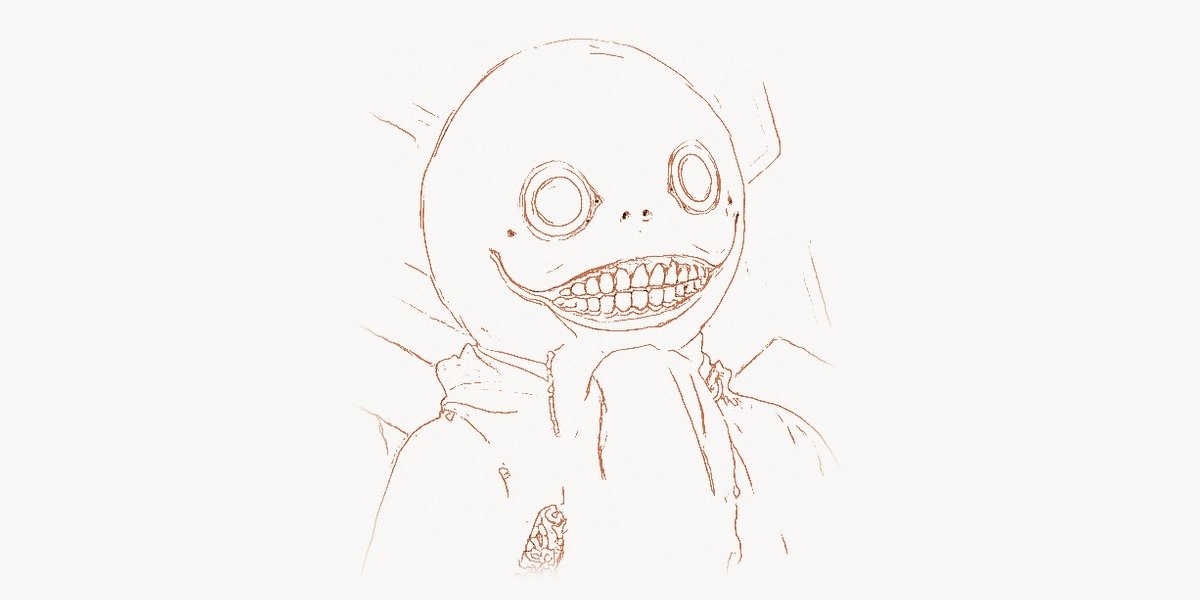
Yoko Taro was born on June 6, 1970, in Nagoya, Aichi Prefecture, Japan. Details about his childhood are sparse — Taro has cultivated a deliberately enigmatic public persona, frequently wearing a mask modeled after the character Emil from the NieR series during interviews and public appearances. What is known is that he developed an early fascination with both video games and narrative fiction, interests that would converge in his later career as a game director who treats interactive storytelling as a medium for philosophical inquiry rather than simple entertainment.
Taro studied at Kobe University, where he pursued studies in information systems engineering. This technical foundation proved crucial to his later career — unlike many game directors who come from purely artistic or design backgrounds, Taro understood the engineering constraints of game development from the ground up. His education gave him a pragmatic understanding of what game engines could and could not do, which allowed him to design narrative systems that worked within technical limitations rather than fighting against them. After graduating, he entered the Japanese game industry during the mid-1990s, a period of extraordinary creative ferment when studios were transitioning from 2D to 3D development and experimenting with new forms of interactive storytelling.
Taro joined what was then known as Cavia, Inc. (later absorbed into AQ Interactive and eventually into Marvelous AQL), a mid-tier Japanese development studio. His early years at Cavia were spent working on various projects in junior roles, learning the collaborative dynamics of Japanese game production — a system where directors exert significant creative control but must navigate complex relationships with publishers, producers, and platform holders. These formative experiences shaped Taro’s understanding of how to protect unconventional creative visions within the constraints of commercial game development.
Career and Technical Contributions
Yoko Taro’s career is defined by a remarkably consistent creative philosophy applied across increasingly ambitious projects. From the original Drakengard on PlayStation 2 through NieR: Automata on modern platforms, his work has systematically explored how game mechanics can serve as instruments of narrative meaning — an approach that aligns with the design philosophies of creators like Hideo Kojima, who similarly blurred the boundary between interactive systems and cinematic storytelling, though Taro’s methods are distinctly more subversive.
Technical Innovation: Branching Narratives and Structural Subversion
Taro’s first directorial project, Drakengard (Drag-on Dragoon in Japan), released in 2003 for PlayStation 2, established the structural template that would define his entire career. On its surface, Drakengard was an action RPG with aerial combat sequences — a hybrid of ground-based hack-and-slash combat and dragon-riding aerial missions. Beneath this conventional exterior, however, Taro embedded a branching narrative structure that deliberately punished players for engaging with the game on its own terms.
Drakengard featured five endings, labeled A through E, each progressively darker and more disturbing. The critical innovation was that reaching later endings required not just replaying the game but meeting specific hidden conditions — weapon collection thresholds, encounter sequences, and actions that the game never explicitly communicated to the player. The final ending, Ending E, transported the fantasy characters into modern-day Tokyo for a rhythm game boss fight against a giant deity — a sequence so jarring and genre-breaking that it remains one of the most discussed moments in gaming history. This ending would later serve as the canonical bridge to the entire NieR timeline.
The branching architecture Taro designed for Drakengard represented a fundamentally different approach to multiple endings than what existed in the industry at the time. While games like those from Warren Spector offered branching paths based on player choice, Taro’s endings were not alternatives — they were layers. Each subsequent ending revealed more of the narrative truth, with the “final” ending often recontextualizing everything the player had experienced. A simplified representation of this layered ending system illustrates the structural logic:
# Conceptual model of Yoko Taro's layered ending system
# Each ending reveals deeper narrative truth, not just alternate outcomes

class TaroEndingSystem:
    def __init__(self):
        self.endings_seen = set()
        self.weapons_collected = 0
        self.total_weapons = 65
        self.hidden_flags = {
            'witnessed_betrayal': False,
            'spared_enemy_commander': False,
            'found_sealed_verse': False,
            'genocide_count': 0
        }

    def evaluate_ending(self, playthrough_data):
        """
        Endings are not branches — they are archaeological layers.
        The 'true' story only emerges after all layers are excavated.
        """
        if not self.endings_seen:
            # First playthrough: surface narrative, heroic framing
            return 'ending_a'  # The comfortable lie

        if 'ending_a' in self.endings_seen:
            # Second playthrough: enemy perspective revealed
            # Player now understands both sides of the conflict
            return 'ending_b'  # The uncomfortable truth

        if self.weapons_collected >= self.total_weapons:
            # All weapons collected — each weapon has a story
            # revealing the world's hidden history
            return 'ending_c'  # The buried history

        if all(self.hidden_flags.values()):
            # All hidden conditions met across playthroughs
            # Game breaks its own genre conventions entirely
            return 'ending_d'  # The genre collapse

        return 'continue_searching'  # Not all layers excavated
This layered approach reached its most sophisticated expression in NieR: Automata (2017), developed in collaboration with PlatinumGames. Automata featured 26 endings labeled A through Z, with the first five (A through E) forming the core narrative arc. Routes A and B told the same story from the perspectives of two different android protagonists (2B and 9S), while Route C/D introduced a third perspective and radically reframed the entire narrative. Ending E — the true ending — asked players to sacrifice their save data permanently to help another player through the game, transforming a single-player experience into an act of anonymous communal generosity.
The technical implementation of this save-deletion mechanic was significant. PlatinumGames’ engine had to handle a sequence where the game’s own interface became the final boss — the credits themselves attacked the player, who could only survive with the help of other players’ sacrificed data. The system communicated with a server that tracked which players had deleted their saves, creating a persistent online memorial of selfless acts within a single-player game. This design was philosophically unprecedented — it weaponized the most fundamental mechanic of gaming (the save file) as a tool for emotional storytelling.
Why It Mattered
Taro’s structural innovations mattered because they expanded the vocabulary of interactive narrative design. Before Drakengard and NieR, multiple endings in games were generally understood as a branching tree — choices led to different outcomes, and the player picked their preferred path. Taro reimagined multiple endings as a vertical structure rather than a horizontal one: each ending was a deeper layer of truth, and the “complete” experience required seeing all of them. This approach influenced how designers think about replayability — not as repetition for its own sake but as a narrative mechanism where repetition itself carries meaning.
NieR: Automata’s commercial success — over 7.5 million copies sold worldwide — proved that this unconventional approach could find a massive audience. The game’s critical reception was equally extraordinary, earning near-universal acclaim and winning multiple awards for narrative design. It demonstrated that players were hungry for games that treated them as intellectually capable adults, willing to engage with complex philosophical themes about consciousness, identity, and the meaning of existence — themes explored through gameplay mechanics rather than passive cutscenes.
The collaboration with PlatinumGames was itself significant. PlatinumGames, renowned for the technical precision of their combat systems in titles like Bayonetta and Metal Gear Rising, brought a level of mechanical polish that Taro’s previous games had lacked. This partnership demonstrated that visionary creative direction and world-class technical execution could coexist — that Taro’s subversive narrative ambitions did not require sacrificing gameplay quality. The resulting game played as well as it provoked thought, combining the combat design legacy of studios with deep action game expertise and the narrative complexity that defined Taro’s vision.
Other Notable Contributions
Beyond the core Drakengard and NieR games, Taro has contributed to an expanding multimedia universe that spans games, stage plays, novels, manga, and concert performances. The NieR concert series — theatrical performances that combine live orchestral music with dramatic readings of new story content — represents an innovative approach to transmedia storytelling that extends the game’s narrative beyond the interactive medium. These concerts have been performed in Japan, North America, and Europe, attracting audiences that include both devoted fans and newcomers to the franchise.
Taro directed NieR Replicant ver.1.22474487139…, a 2021 remake/remaster of the original 2010 NieR game, which introduced a new ending (Ending E) that connected the original game’s narrative more explicitly to Automata’s themes. This project demonstrated Taro’s willingness to revisit and expand earlier works rather than treating them as finished products — an approach to game development as iterative storytelling that resonates with how pioneering game designers like Satoru Iwata at Nintendo viewed the relationship between technology and creative revisitation.
Taro also served as creative director for SINoALICE, a mobile game developed by Pokelabo and published by Square Enix, which reinterpreted fairy tale characters through a dark, psychological lens. While mobile gaming is often dismissed as a lesser medium, Taro’s involvement demonstrated his interest in reaching audiences wherever they are, applying the same narrative complexity to mobile platforms that he brought to console experiences. The game’s narrative structure — fragmented stories unlocked through gacha mechanics, where the monetization system itself became part of the storytelling — was characteristically subversive.
His influence extends to the NieR: Automata anime adaptation (2023), where Taro served as a scriptwriter, ensuring that the animated version maintained the narrative layering and philosophical depth of the source material. The anime’s structure deliberately diverged from the game in key moments, creating a complementary work rather than a faithful retelling — a decision consistent with Taro’s belief that each medium should leverage its unique strengths rather than simply reproducing content across platforms.
Philosophy and Key Principles
Yoko Taro’s creative philosophy is built on several distinctive principles that set him apart from nearly every other game director working today.
Emotion over logic in design. Taro has repeatedly stated that he designs games backward from the emotional response he wants to evoke, then constructs systems and narratives to produce that response. Where most game designers start with mechanics and build narrative around them, Taro starts with a feeling — grief, complicity, unease, unexpected tenderness — and works backward to the mechanics that will generate it. This inversion of the typical design process explains why his games often feel structurally unusual: they are engineered for emotional impact, not mechanical elegance. For creative teams attempting to manage this kind of emotionally-driven design process across multiple collaborators, structured project management through tools like Taskee can help maintain the coherence of a singular emotional vision across complex, multi-team development.
The mask as creative method. Taro’s decision to wear the Emil mask during public appearances is not merely eccentricity — it is a deliberate creative philosophy. By removing his personal identity from his public interactions, Taro shifts attention from the creator to the creation. He has stated that the mask frees him to be more honest, to say things he would be too embarrassed to say as himself. This approach to public identity reflects his broader belief that authorial persona should be subordinate to the work itself.
Player complicity as narrative device. Taro’s games consistently refuse to let players maintain moral distance from the violence they perform. In NieR, players spend dozens of hours killing machine lifeforms only to discover in later routes that these machines had developed consciousness, love, and culture. The game does not offer redemption for this — it simply makes the player aware of what they have done. This design philosophy treats the player not as a passive audience but as an active participant whose actions carry moral weight, an approach that resonates with how designers like Toby Fox would later use game mechanics to interrogate player behavior.
Imperfection as authenticity. Unlike many directors who pursue technical perfection, Taro embraces the rough edges in his work. He has openly discussed the technical limitations of his earlier games and views these imperfections as part of their character. This philosophy extends to his narrative structures, which deliberately leave gaps, ambiguities, and unresolved questions. Taro believes that a story that answers every question is a story that respects the audience less than one that trusts them to find meaning in uncertainty.
Genre as material, not constraint. Taro treats genre conventions the way a sculptor treats stone — as raw material to be shaped, broken, and reassembled. Drakengard shifts from action RPG to rhythm game without warning. Automata transitions from third-person action to twin-stick shooter to side-scrolling platformer to text adventure, sometimes within a single level. This approach to genre fluidity — treating the game itself as a mutable medium — reflects a design philosophy where no convention is sacred and every assumption is a potential target for subversion. A conceptual representation of this genre-shifting architecture demonstrates the technical ambition:
// Conceptual model: NieR Automata's dynamic genre-shifting system
// The game shifts perspective and mechanics fluidly within missions

const CAMERA_MODES = {
  THIRD_PERSON:  { fov: 60, distance: 5.0, inputMap: 'action_rpg' },
  TOP_DOWN:      { fov: 90, distance: 20.0, inputMap: 'twin_stick_shooter' },
  SIDE_SCROLL:   { fov: 45, distance: 8.0, inputMap: 'platformer_2d' },
  ISOMETRIC:     { fov: 50, distance: 15.0, inputMap: 'hack_and_slash' },
  TEXT_ADVENTURE: { fov: null, distance: null, inputMap: 'text_input' }
};

function transitionGameplay(currentMode, targetMode, trigger) {
  // Genre shifts are tied to narrative moments, not random variation
  // Each shift recontextualizes the player's understanding
  const transition = {
    from: currentMode,
    to: targetMode,
    narrativeJustification: trigger.storyBeat,
    duration: trigger.isInstant ? 0 : 2.0,  // seconds
    preservePlayerState: true
  };

  // Remap all input controls seamlessly
  inputManager.swapMapping(
    CAMERA_MODES[currentMode].inputMap,
    CAMERA_MODES[targetMode].inputMap,
    transition.duration
  );

  // Camera interpolation — the world reshapes around the player
  camera.lerpTo(
    CAMERA_MODES[targetMode].fov,
    CAMERA_MODES[targetMode].distance,
    transition.duration
  );

  // Combat system adapts: enemy AI, targeting, and damage
  // calculations all shift to match the new perspective
  combatSystem.adaptToMode(targetMode);

  return transition;
}
Legacy and Impact
Yoko Taro’s influence on game design extends far beyond sales numbers, though NieR: Automata’s 7.5 million units sold represent a remarkable commercial validation of uncompromising creative vision. His work has fundamentally altered how the industry thinks about several core design concepts.
His approach to multiple endings as narrative layers rather than branching alternatives has influenced a generation of game designers. The concept that a game’s “true” story only emerges after multiple completions — that repetition is not a flaw but a feature — has appeared in subsequent titles across the indie and AAA spectrum. Games that require players to replay content to access deeper narrative truths owe a structural debt to the framework Taro established with Drakengard in 2003 and refined through two decades of iteration.
The emotional resonance of NieR: Automata’s Ending E — where players sacrifice their save data to help strangers — created a template for how games can leverage their unique properties as interactive media to generate emotions impossible in any other art form. No film or novel can ask its audience to destroy something they have invested dozens of hours building. This mechanic has been analyzed in academic game studies courses worldwide and remains one of the most cited examples of games functioning as a unique artistic medium, much as the technical innovations of Shigeru Miyamoto demonstrated the artistic potential of game mechanics in earlier decades.
Taro’s willingness to collaborate across disciplines — working with PlatinumGames for combat design, Keiichi Okabe and MONACA for music, and various novelists and playwrights for extended universe content — has modeled a form of creative leadership where the director serves as a unifying philosophical vision rather than a hands-on implementer of every system. This collaborative model, where strong creative direction guides technically excellent execution, has influenced how Japanese studios approach the relationship between directors and development teams. For organizations managing similarly complex creative collaborations across multiple studios and media formats, strategic planning platforms like Toimi provide the structural framework needed to coordinate distributed creative teams while maintaining narrative coherence.
The NieR franchise’s transmedia expansion — encompassing games, stage plays, concerts, novels, manga, and anime — has also demonstrated a model for how game narratives can extend beyond the interactive medium without losing their philosophical depth. Unlike many game-to-anime adaptations that simplify their source material, the NieR ecosystem treats each medium as an opportunity to explore different facets of its themes, creating a body of work that rewards engagement across platforms.
Perhaps most significantly, Taro has proven that auteur-driven game development is commercially viable in the modern industry. In an era where risk aversion and design-by-committee dominate AAA development, Taro’s success offers evidence that audiences value distinctive creative voices — that a game directed by someone with a singular, uncompromising vision can outsell games designed to appeal to the widest possible audience. His career, alongside that of directors like Yu Suzuki, demonstrates that the game industry’s most enduring works tend to come from creators who refuse to smooth away their eccentricities in pursuit of mass market appeal.
Key Facts
| Detail | Information |
|---|---|
| Full Name | Yoko Taro |
| Born | June 6, 1970, Nagoya, Aichi Prefecture, Japan |
| Education | Kobe University (Information Systems Engineering) |
| Known For | Drakengard series, NieR series, NieR: Automata |
| First Directorial Work | Drakengard (2003, PlayStation 2) |
| Signature Collaboration | PlatinumGames (NieR: Automata, 2017) |
| NieR: Automata Sales | Over 7.5 million copies worldwide |
| Music Collaborator | Keiichi Okabe / MONACA |
| Public Persona | Wears Emil mask at public appearances |
| Multimedia Works | Stage plays, concerts, novels, manga, anime |
| Mobile Game | SINoALICE (Creative Director) |
| Remake | NieR Replicant ver.1.22474487139… (2021) |
Frequently Asked Questions
Why does Yoko Taro wear a mask during interviews and public appearances?
Taro wears a round mask modeled after the character Emil from the NieR series. He has explained this choice through several lenses: personal shyness, a desire to keep attention focused on the work rather than the creator, and a philosophical belief that removing his face from public discourse allows him to speak more freely. The mask has become an iconic part of his public identity, paradoxically making him one of the most visually recognizable game directors in the industry while simultaneously obscuring his actual appearance. It functions as both a practical tool for managing social anxiety and a creative statement about the relationship between artist and art.
What is the connection between Drakengard and NieR?
The NieR series is a direct narrative continuation of one specific ending from the original Drakengard. Ending E of Drakengard — the rhythm game boss fight that transports fantasy characters to modern Tokyo — establishes the canonical event that leads to the NieR timeline. The destruction of the giant deity in Tokyo triggers a chain of catastrophic events (a magical disease called White Chlorination Syndrome, the collapse of civilization, and eventually the creation of android and machine lifeform civilizations) that forms the backdrop for both NieR (2010) and NieR: Automata (2017). This connection means that the most absurd, genre-breaking moment in Drakengard is also the narrative foundation for one of the most acclaimed games of the 2010s — a characteristically Taro-like structural irony.
How did the collaboration with PlatinumGames change NieR: Automata?
PlatinumGames brought their world-class expertise in action game combat design to NieR: Automata, addressing the most common criticism of Taro’s previous games — that their gameplay mechanics did not match the ambition of their narratives. PlatinumGames’ combat system gave Automata fluid, responsive action gameplay that could stand alongside dedicated action titles, while Taro retained full creative control over the game’s story, structure, and emotional arc. The partnership was complementary rather than compromising: PlatinumGames made the moment-to-moment gameplay excellent, while Taro ensured that the structural and narrative ambitions remained uncompromised. The result was a game that satisfied both action game enthusiasts and narrative-focused players.
What makes NieR: Automata’s Ending E so significant in game design?
Ending E of NieR: Automata asks players to permanently delete their save data — all progress, all upgrades, all unlocked content — to help an anonymous stranger get through the game’s final sequence. During this sequence, the credits themselves become enemies that attack the player, and they can only survive by accepting help from other players who have already made this sacrifice. The mechanic is significant because it uses the unique properties of interactive media to create an emotional experience impossible in any other art form. It transforms a solo gaming experience into an act of communal generosity, turning the save file — typically the most possessively guarded element of a gaming experience — into a gift for a stranger. The system was backed by a real server tracking sacrifices, making each deletion part of a persistent, growing memorial to player selflessness.