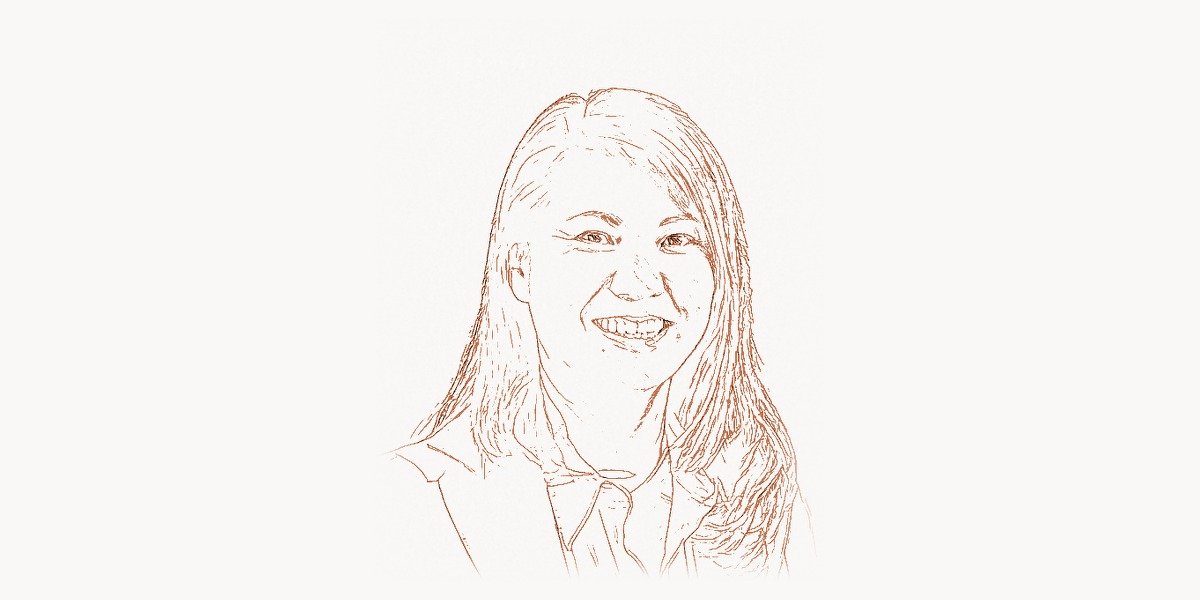
In the mid-1990s, a young tennis player from Japan walked into an MIT robotics lab with a question that would change the course of human-machine interaction: could a robot be built that mimicked the precise biomechanics of the human hand well enough to return a tennis serve? That question, born from a childhood passion for sport and an injury that ended her athletic career, launched Yoky Matsuoka into a decades-long mission to merge robotics with the human body. From building neurorobotic prosthetic hands at the University of Washington to shaping the smart home revolution at Nest, leading technical strategy at Google X, and driving health technology at Apple, Matsuoka has consistently stood at the intersection of engineering, neuroscience, and design—building technology that doesn’t just perform tasks but genuinely understands and extends human capability.
Early Life and the Road to Robotics
Yoky Matsuoka was born in 1972 in Tokyo, Japan. From an early age she showed exceptional talent in competitive tennis, training intensively with the ambition of becoming a professional player. By her teenage years she had relocated to the United States to pursue her athletic career more seriously, competing at a high level and earning recognition for her discipline and drive.
However, a series of injuries forced Matsuoka to step back from professional tennis. Rather than viewing this as a defeat, she redirected her analytical mind toward a question that had been forming during her rehabilitation: how does the human body produce such complex, nuanced movements, and could machines replicate them? This pivot from sport to science was not a clean break—it was a fusion. The biomechanics of a tennis stroke, the way the wrist and fingers coordinate under extreme speed and pressure, became the seed of her academic inquiry.
Matsuoka enrolled at the University of California, Berkeley, where she earned her Bachelor of Science in Electrical Engineering and Computer Science. She then moved across the country to the Massachusetts Institute of Technology, where she pursued her Ph.D. in Electrical Engineering and Computer Science under the supervision of robotics pioneer Rodney Brooks in the MIT Artificial Intelligence Laboratory. Her doctoral work focused on the intersection of robotics and neuroscience—specifically, how the brain controls hand movements and how that understanding could inform the design of robotic systems. It was at MIT that she began developing her signature approach: studying the biological system first, then engineering the machine to match it.
Career and Neurorobotic Innovation
Technical Innovation: The Anatomically Correct Testbed Hand
After completing her Ph.D., Matsuoka joined the faculty at Carnegie Mellon University before moving to the University of Washington, where she established the Neurobotics Laboratory. This lab became the epicenter of her most groundbreaking work: building robotic hands that replicated not just the external appearance of human hands but their internal anatomical structure—bones, tendons, muscles, and joints.
Her Anatomically Correct Testbed (ACT) Hand was a landmark achievement in the field of biomimetic robotics. Unlike conventional robotic grippers that use simplified mechanisms with a few degrees of freedom, the ACT Hand incorporated the complex tendon routing and joint interdependencies found in a real human hand. Each finger was driven by artificial tendons that mimicked the extensor and flexor muscles of the forearm, passing through sheaths and pulleys just as biological tendons do.
To understand the control principles behind this hardware, Matsuoka drew heavily on computational neuroscience. She studied how the brain generates motor commands for dexterous manipulation, using neural recording data and mathematical models of the sensorimotor cortex. Her research showed that the central nervous system does not control each muscle independently; instead, it uses coordinated patterns called motor synergies that simplify the control of high-dimensional systems. She applied this principle to robot control, demonstrating that a complex robotic hand could be operated using a reduced set of synergy-based commands.
Consider how a synergy-based control architecture might be represented in code. A simplified version of mapping neural synergy weights to individual tendon actuators could look like this:
import numpy as np

# Synergy matrix: rows = tendons (actuators), cols = synergies
# Each column represents a coordinated activation pattern
synergy_matrix = np.array([
    [0.8, 0.1, 0.0],   # thumb_flexor
    [0.7, 0.2, 0.1],   # index_flexor
    [0.1, 0.9, 0.0],   # middle_flexor
    [0.0, 0.8, 0.3],   # ring_flexor
    [0.0, 0.1, 0.9],   # pinky_flexor
    [0.6, 0.0, 0.2],   # thumb_abductor
])

def compute_tendon_commands(synergy_activations: np.ndarray) -> np.ndarray:
    """
    Map low-dimensional synergy activations to
    high-dimensional tendon commands.

    synergy_activations: array of shape (n_synergies,)
    returns: array of shape (n_tendons,) with values in [0, 1]
    """
    raw_commands = synergy_matrix @ synergy_activations
    return np.clip(raw_commands, 0.0, 1.0)

# Grasp synergy: primarily activates synergy 0 (power grip)
grasp_activation = np.array([0.9, 0.3, 0.1])
tendon_forces = compute_tendon_commands(grasp_activation)
print(f"Tendon commands for grasp: {tendon_forces}")
# Output: Tendon commands for grasp: [0.75 0.7  0.36 0.33 0.12 0.56]
This approach was revolutionary because it bridged two historically separate fields. Roboticists had been building hands with engineering intuition; neuroscientists had been studying hand control in isolation from hardware. Matsuoka combined both, creating robotic systems that served as testbeds for neuroscience hypotheses and, conversely, using neuroscience findings to improve robot design. Her work on the ACT Hand influenced subsequent research on prosthetic hands, rehabilitation robotics, and teleoperation systems. Researchers like Pieter Abbeel, who advanced robot learning from demonstration, built upon the kind of biologically-informed design philosophy that Matsuoka championed.
Why It Mattered
The significance of Matsuoka’s neurobotics research extends far beyond the academic lab. For the millions of people worldwide living with upper-limb amputations or paralysis, conventional prosthetic hands have long been frustratingly limited—rigid, unintuitive, and capable of only basic open-close movements. Matsuoka’s work demonstrated that it was technically feasible to build prosthetic hands with dexterity approaching that of biological hands, and more importantly, that these hands could be controlled using neural signals interpreted through synergy-based models.
Her research also laid critical groundwork for the field of brain-computer interfaces (BCIs) applied to motor restoration. By creating detailed models of how the brain encodes hand movements, she provided the theoretical and empirical foundation for systems that translate neural activity into robotic actions. This line of research has since evolved into clinical trials and commercial devices that allow paralyzed individuals to control robotic arms with their thoughts.
In 2007, the MacArthur Foundation recognized Matsuoka with its prestigious “genius” fellowship, citing her innovative fusion of neuroscience and robotics. She was one of the youngest recipients in the engineering category, and the award highlighted her unique position as a researcher who refused to stay within disciplinary boundaries. The fellowship carried an unrestricted grant of $500,000, which she directed toward expanding her neurobotics research.
Other Contributions: From Nest to Google X to Apple
While Matsuoka’s academic work alone would secure her place among the most influential roboticists of her generation, her career took a dramatic turn in the early 2010s when she moved into the technology industry. In 2010, alongside Tony Fadell and Matt Rogers, she co-founded Nest Labs, the company that would redefine what a “smart home” meant. At Nest, Matsuoka brought her neuroscience-informed approach to a seemingly mundane device: the thermostat.
The Nest Learning Thermostat was not just a programmable device with a sleek interface. It was a system that observed human behavior—when residents adjusted the temperature, when they left the house, their daily patterns—and used machine learning algorithms to build a predictive model of their preferences. The thermostat essentially learned its users in much the same way Matsuoka’s robotic hands learned motor patterns: by observing, modeling, and adapting. This philosophy of technology that learns from human behavior rather than requiring humans to learn technology became the intellectual DNA of Nest.
A simplified version of the kind of adaptive learning that the Nest thermostat made famous can be illustrated with a basic reinforcement signal approach:
class AdaptiveThermostat {
  constructor() {
    this.schedule = {};         // hour -> preferred temp
    this.learningRate = 0.3;
    this.decayFactor = 0.95;    // older observations fade
  }

  recordAdjustment(hour, desiredTemp) {
    if (this.schedule[hour] !== undefined) {
      // Exponential moving average toward user preference
      this.schedule[hour] = this.schedule[hour] * (1 - this.learningRate)
                          + desiredTemp * this.learningRate;
    } else {
      this.schedule[hour] = desiredTemp;
    }
  }

  predictTemperature(hour) {
    if (this.schedule[hour] !== undefined) {
      return Math.round(this.schedule[hour] * 10) / 10;
    }
    // Fallback: interpolate from nearest known hours
    const known = Object.keys(this.schedule).map(Number).sort((a, b) => a - b);
    if (known.length === 0) return 21.0; // default 21C
    const closest = known.reduce((prev, curr) =>
      Math.abs(curr - hour) < Math.abs(prev - hour) ? curr : prev
    );
    return Math.round(this.schedule[closest] * 10) / 10;
  }

  applyDecay() {
    // Gradually reduce confidence in old patterns
    for (const hour in this.schedule) {
      this.schedule[hour] = this.schedule[hour] * this.decayFactor
                          + 21.0 * (1 - this.decayFactor);
    }
  }
}
Google acquired Nest in 2014 for $3.2 billion, and Matsuoka transitioned into a broader role within Google's ecosystem. She was named Vice President of Technology at Google, where she was closely involved with Google X (now simply X), the company's semi-secret research lab dedicated to "moonshot" projects. At X, Matsuoka worked on initiatives that applied robotics, AI, and sensor technology to large-scale problems. Her influence helped shape the lab's approach to healthcare and biotechnology projects, drawing on her understanding of how biological and artificial systems could inform each other.
This kind of cross-disciplinary thinking echoes the work of other pioneers who moved between research and industry. Sebastian Thrun, who led Google's self-driving car project, shared Matsuoka's belief that robotics research should ultimately serve human needs outside the lab. Similarly, Andrew Ng, who co-founded Google Brain, demonstrated how academic AI research could be scaled into products that millions of people use daily.
In 2017, Matsuoka joined Apple as Vice President of Health, a role that placed her at the center of one of the most significant expansions in the company's history. Under her leadership, Apple's health team accelerated work on the Apple Watch's biomedical sensor capabilities, including heart rate monitoring, ECG detection, and fall detection. Her background in neuroscience and biomechanics was directly relevant: understanding how the body produces signals and how those signals can be reliably measured by wearable sensors is fundamentally a neuroengineering challenge. The design philosophy she championed—that health technology should be ambient, passive, and seamlessly integrated into daily life—reflected her career-long commitment to technology that adapts to humans, not the other way around. Don Norman's foundational work on human-centered design provided the intellectual tradition that Matsuoka's approach at Apple embodied in hardware and software alike.
Matsuoka later served as CEO of Panasonic's Yohana wellness platform, applying her experience in AI, robotics, and health technology to the challenge of family well-being. At Yohana, she led the development of AI-powered tools designed to help families manage the complexities of daily life, from scheduling and nutrition to mental health support, continuing her theme of building technology that understands and supports human needs. For teams building tools aimed at helping users manage complex workflows, platforms like Taskee demonstrate how intelligent task management can transform how teams collaborate and ship products more efficiently.
Philosophy: The Biology-First Approach to Engineering
Throughout her career, Matsuoka has articulated a consistent philosophy that distinguishes her from many of her contemporaries in both robotics and consumer technology. While the mainstream approach to robotics has often been to engineer systems from first principles—designing mechanisms that are mechanically optimal regardless of their biological plausibility—Matsuoka has argued that the biological system itself is the best starting point for engineering design.
This is not a sentimental attachment to nature. It is a practical argument rooted in evolutionary optimization: biological systems have been refined over millions of years of natural selection to perform specific tasks with remarkable efficiency, robustness, and adaptability. A human hand is not just a gripper; it is a sensorimotor system with 27 bones, over 30 muscles, and a dense network of sensory receptors, all orchestrated by a neural control system of extraordinary sophistication. Ignoring this design when building artificial hands, Matsuoka argued, means starting from scratch when a proven blueprint already exists.
This philosophy also influenced her approach at Nest and Apple. The Nest thermostat did not require users to program complex schedules; it observed their behavior and adapted, mimicking the way biological learning systems form habits through repeated exposure. The Apple Watch health features did not require users to actively measure their vital signs; they passively monitored biological signals, much as the body's own homeostatic systems continuously regulate internal states without conscious effort. Researchers in the AI field, such as Fei-Fei Li, have similarly drawn on insights from biological perception to advance machine learning, demonstrating the power of bio-inspired approaches.
Key Principles
- Study the biology before engineering the machine. Understanding the biological system you are trying to replicate or augment is not a preliminary step—it is the foundation of good engineering.
- Technology should adapt to humans, not the reverse. If a user needs a manual to operate your device, you have failed. The best interfaces are invisible.
- Cross-disciplinary work produces the deepest innovation. The most important advances happen at the boundaries between fields, not within their centers.
- Motor synergies simplify complex control. Both biological and artificial systems benefit from hierarchical control structures that reduce dimensionality without sacrificing expressiveness.
- Measure passively, act intelligently. The most powerful health and environmental technologies are those that gather data without demanding attention and intervene only when necessary.
- Build for human extension, not replacement. The goal of robotics is not to replace human capability but to restore, augment, and extend it.
Legacy and Lasting Impact
Yoky Matsuoka's career is remarkable not just for its breadth but for its coherence. The thread connecting her MIT robotics lab, the Neurobotics Laboratory at the University of Washington, the Nest thermostat, Google X, and Apple Health is a single idea: that the deepest technology serves humans by understanding them at a biological level. This idea, which she has pursued across academia, startups, and the largest technology companies in the world, has influenced multiple fields simultaneously.
In robotics, her work on the ACT Hand and motor synergy-based control has shaped how the next generation of researchers approaches prosthetics and rehabilitation engineering. Her demonstrations that biologically faithful designs outperform simplified mechanical alternatives have shifted the field's design philosophy. The work of Demis Hassabis at DeepMind, particularly the AlphaFold project, shares this same conviction that understanding biological structures is key to engineering breakthroughs.
In consumer technology, her co-founding of Nest helped establish the smart home category and demonstrated that machine learning could be embedded in everyday devices, not just cloud services or enterprise systems. The Nest acquisition by Google for $3.2 billion signaled to the entire industry that intelligent hardware was a major growth area, paving the way for the proliferation of smart home devices that followed. For digital agencies navigating the complexities of building intelligent consumer products, Toimi provides the strategic and technical expertise needed to bring such projects to market.
In health technology, her work at Apple accelerated the transformation of the Apple Watch from a luxury accessory into a legitimate health monitoring device. Features like irregular heart rhythm detection and fall detection have been credited with saving lives, and they bear the imprint of Matsuoka's philosophy: passive measurement, intelligent inference, and intervention only when it matters.
Matsuoka's recognition as a MacArthur Fellow, her leadership roles at Google and Apple, and her co-founding of a company that helped define a product category all point to an individual who operates at the highest levels of both research and industry. But perhaps her most enduring legacy is methodological: she showed that the artificial boundaries between neuroscience, robotics, computer science, and product design are barriers to innovation, and that the researchers and engineers willing to cross those boundaries will build the technologies that matter most. In this sense, she joins a tradition of pioneers who bridged theory and application, from Jeff Dean's infrastructure work at Google to Alan Kay's vision of personal computing—individuals whose influence cannot be contained within a single discipline.
Key Facts
- Full name: Yoky Matsuoka
- Born: 1972, Tokyo, Japan
- Education: B.S. in EECS from UC Berkeley; Ph.D. in EECS from MIT (advisor: Rodney Brooks)
- Known for: Neurorobotics, ACT Hand, co-founding Nest Labs, VP at Google and Apple
- MacArthur Fellowship: 2007
- Co-founded: Nest Labs (2010), acquired by Google for $3.2 billion in 2014
- Key roles: Professor at University of Washington, VP of Technology at Google, VP of Health at Apple, CEO of Yohana (Panasonic)
- Research focus: Biomimetic robotics, motor synergies, brain-computer interfaces, health sensing
- Awards: MacArthur Fellowship, MIT Technology Review TR35, Popular Science "Brilliant 10"
- Signature insight: Biology-first engineering—study the organism before building the machine
Frequently Asked Questions
What is Yoky Matsuoka best known for?
Yoky Matsuoka is best known for her pioneering work in neurorobotics—building robotic hands that replicate the anatomical structure of human hands, controlled using principles derived from computational neuroscience. She is also widely recognized as a co-founder of Nest Labs, which created the Nest Learning Thermostat and was acquired by Google for $3.2 billion. Her career spans academic research, startup entrepreneurship, and executive leadership at Google and Apple, making her one of the most versatile technologists of her generation.
How did Yoky Matsuoka's tennis career influence her robotics work?
Matsuoka was a competitive tennis player in her youth who aspired to a professional career. Injuries ended that path, but the experience left her fascinated by the biomechanics of human movement—the precise coordination of muscles, tendons, and neural signals required to execute a tennis stroke. This led her to study robotics and neuroscience at MIT, where she focused on replicating the dexterity of the human hand in robotic systems. Her athletic background gave her an intuitive understanding of motor control that informed her entire research career.
What was the ACT Hand and why was it important?
The Anatomically Correct Testbed (ACT) Hand was a robotic hand developed in Matsuoka's Neurobotics Laboratory at the University of Washington. Unlike conventional robotic grippers that simplify hand mechanics, the ACT Hand replicated the actual tendon routing, joint structures, and muscle arrangements found in a biological human hand. This made it both a research platform for studying neuroscience hypotheses about motor control and a proof of concept for next-generation prosthetic hands. It demonstrated that biomimetic design could achieve levels of dexterity that simplified engineering approaches could not match.
What role did Yoky Matsuoka play at Apple?
Matsuoka served as Vice President of Health at Apple, where she led the team responsible for the health and biomedical sensing capabilities of the Apple Watch. Under her direction, the team advanced features such as heart rate monitoring, electrocardiogram (ECG) detection, irregular heart rhythm notifications, and fall detection. Her neuroscience and biomechanics expertise was directly relevant to the challenge of measuring biological signals through a wearable device worn on the wrist. Her influence helped transform the Apple Watch from a general-purpose smartwatch into a recognized health monitoring tool.