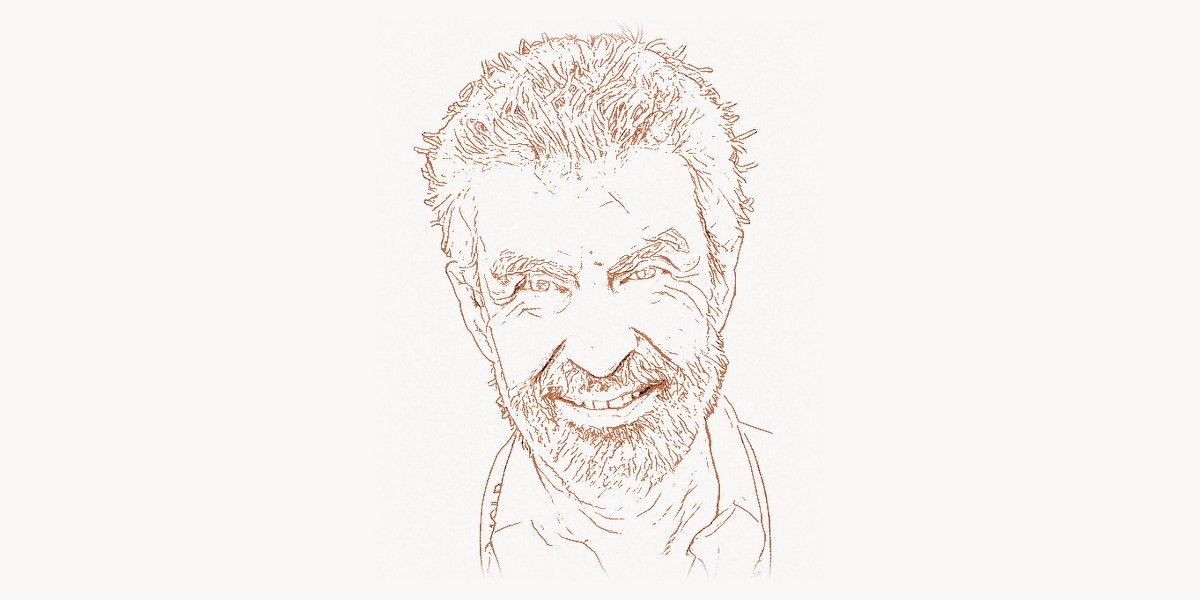
In 2018, Yoshua Bengio received a phone call that confirmed what his peers had known for years. The Association for Computing Machinery was awarding him the A.M. Turing Award — computing’s highest honor — alongside Geoffrey Hinton and Yann LeCun, for conceptual and engineering breakthroughs that have made deep neural networks a critical component of computing. Bengio was 54 years old. He had spent almost three decades in Montreal, quietly building one of the most influential AI research labs in the world while many of the field’s brightest minds drifted toward industry or abandoned neural networks entirely during the long winters when the approach fell out of favor. While Hinton worked on Boltzmann machines in Toronto and LeCun refined convolutional networks at Bell Labs and later NYU, Bengio pursued a different but equally essential thread: understanding how to train very deep networks, how to model sequences, and how machines could learn to represent language itself. His contributions to attention mechanisms, generative adversarial networks research, neural machine translation, and the theoretical foundations of deep learning have shaped virtually every modern AI system — from the large language models behind today’s chatbots to the translation engines, speech recognition systems, and recommendation algorithms that billions of people use daily. And unlike many who rode the deep learning wave into lucrative industry positions, Bengio chose to stay in academia, founding Mila — the Montreal Institute for Learning Algorithms — and becoming one of the most prominent voices calling for responsible AI development and safety research.
Early Life and Education
Yoshua Bengio was born on March 5, 1964, in Paris, France, into a family of Moroccan-Jewish heritage. His family moved to Montreal, Canada, when he was a child, and it was in Quebec’s bilingual academic environment that his intellectual trajectory took shape. His older brother, Samy Bengio, would also go on to become a prominent machine learning researcher, eventually leading research teams at Google. The Bengio family’s immersion in both French and English-speaking academic cultures gave Yoshua an early appreciation for the kind of cross-disciplinary, internationally minded thinking that would later characterize his research career.
Bengio completed his undergraduate studies at McGill University in Montreal, earning a Bachelor of Science in electrical engineering in 1986 — the same year that the landmark backpropagation paper by Rumelhart, Hinton, and Williams appeared in Nature, reigniting interest in neural networks. He then moved to the Université de Montréal for his graduate work, completing his Master’s degree in computer science in 1988 and his Ph.D. in 1991 under the supervision of Renato De Mori. His doctoral dissertation focused on neural network approaches to speech recognition — a domain where traditional statistical methods like hidden Markov models dominated and where neural approaches faced deep skepticism.
During and after his doctoral work, Bengio spent time as a postdoctoral researcher at MIT and AT&T Bell Labs, where he worked alongside Yann LeCun and absorbed the intensely practical, results-oriented research culture that Bell Labs was famous for. These postdoctoral years were formative. At Bell Labs, Bengio encountered the challenges of training deep networks on real-world data at scale — the vanishing gradient problem, the difficulty of optimizing high-dimensional loss surfaces, the gap between theoretical elegance and practical performance. These problems would define the next two decades of his research. In 1993, he returned to the Université de Montréal as a professor, a position he would hold for the rest of his career, building around himself one of the most productive deep learning research groups in the world.
The Deep Learning Breakthrough
Technical Innovation
Bengio’s central technical contribution was solving — or at least dramatically mitigating — the problem of training very deep neural networks. In the 1990s, while shallow networks with one or two hidden layers could achieve reasonable results on some tasks, attempts to train networks with many layers consistently failed. The culprit was the vanishing gradient problem: as error signals were backpropagated through many layers, the gradients that guided weight updates became exponentially smaller, effectively preventing the earliest layers from learning anything useful. Bengio, along with collaborators Patrice Simard and Paolo Frasconi, published a rigorous analysis of this problem in 1994, demonstrating both theoretically and empirically why standard recurrent neural networks struggled to capture long-range dependencies in sequential data.
This was not merely an academic observation. The vanishing gradient problem was the single biggest obstacle to deep learning’s practical viability. If you could not train networks with many layers, you could not build the hierarchical representations that gave deep learning its theoretical advantage over shallow methods. Bengio’s approach to solving this problem was multifaceted. He explored unsupervised pre-training methods, where each layer of a deep network was first trained independently as a generative model before the entire network was fine-tuned with backpropagation. This greedy layer-wise pre-training, demonstrated in a series of influential papers in the mid-2000s (particularly the 2006–2007 work on deep belief networks and stacked autoencoders), showed that deep networks could be trained effectively if their weights were initialized in a sensible region of the parameter space rather than randomly.
Perhaps even more fundamentally, Bengio’s group was instrumental in developing and popularizing the use of rectified linear units (ReLU), better initialization schemes, and curriculum learning — the idea that networks learn more effectively when training examples are presented in a meaningful order, progressing from simpler to more complex cases. His 2009 paper exploring curriculum learning drew inspiration from cognitive science, noting that human learning follows a similar trajectory.
import numpy as np

class DeepNetworkWithReLU:
    """
    Demonstrates the contrast between sigmoid and ReLU activations
    in deep networks — a core insight Bengio's group helped establish.

    Sigmoid: gradients shrink exponentially with depth (vanishing gradient).
    ReLU: gradients flow unchanged through active units,
    enabling training of much deeper architectures.
    """
    def __init__(self, layer_sizes, activation='relu'):
        self.activation = activation
        self.weights = []
        for i in range(len(layer_sizes) - 1):
            # He initialization — optimal for ReLU networks
            scale = np.sqrt(2.0 / layer_sizes[i])
            self.weights.append(
                np.random.randn(layer_sizes[i], layer_sizes[i+1]) * scale
            )

    def activate(self, z):
        if self.activation == 'relu':
            return np.maximum(0, z)           # gradient is 0 or 1
        else:  # sigmoid
            return 1.0 / (1.0 + np.exp(-z))  # gradient shrinks to ~0

    def forward(self, x):
        """
        Forward pass through a deep network.
        Track gradient magnitudes to illustrate the vanishing
        gradient problem that Bengio's 1994 paper analyzed.
        """
        self.layer_outputs = [x]
        current = x
        for w in self.weights:
            z = current @ w
            current = self.activate(z)
            self.layer_outputs.append(current)
        return current

    def gradient_analysis(self):
        """
        Measure how gradient magnitude changes across layers.
        With sigmoid: gradients decay exponentially (vanishing).
        With ReLU: gradients maintain their magnitude (Bengio's insight).
        """
        magnitudes = []
        for output in self.layer_outputs:
            if self.activation == 'relu':
                grad = (output > 0).astype(float)  # 0 or 1
            else:
                grad = output * (1 - output)        # max 0.25
            magnitudes.append(np.mean(np.abs(grad)))
        return magnitudes

# Compare gradient flow in a 10-layer network
x = np.random.randn(100, 64)

relu_net = DeepNetworkWithReLU(
    [64, 128, 128, 128, 128, 128, 128, 128, 128, 128, 10],
    activation='relu'
)
sigmoid_net = DeepNetworkWithReLU(
    [64, 128, 128, 128, 128, 128, 128, 128, 128, 128, 10],
    activation='sigmoid'
)

relu_net.forward(x)
sigmoid_net.forward(x)

relu_grads = relu_net.gradient_analysis()
sigmoid_grads = sigmoid_net.gradient_analysis()

# ReLU maintains gradients; sigmoid gradients vanish toward zero
# This difference is why deep learning became practical
Why It Mattered
The practical significance of Bengio’s work on training deep networks cannot be overstated. Before the solutions he and his collaborators developed, neural networks were limited to shallow architectures — one or two hidden layers — which constrained their representational power. A shallow network can approximate any function in theory (the universal approximation theorem), but the number of units required grows exponentially with the complexity of the function. Deep networks, by contrast, can build hierarchical representations: early layers learn simple features (edges, phonemes, character strokes), middle layers compose these into more abstract representations (shapes, syllables, words), and later layers capture high-level concepts (objects, meanings, intentions).
Bengio’s contributions made this hierarchical learning practical. The techniques he developed and advocated — unsupervised pre-training, ReLU activations, curriculum learning, better optimization methods — collectively transformed deep learning from a theoretically promising but practically limited approach into the dominant paradigm of modern artificial intelligence. By the early 2010s, deep networks were breaking records in speech recognition, image classification, and natural language processing. The revolution that Hinton, LeCun, and Bengio had spent decades preparing for had arrived, and Bengio’s theoretical foundations were at its core.
The timing mattered as well. Bengio’s rigorous, publication-driven approach meant that when GPUs and large datasets finally made deep learning computationally feasible, the theoretical toolkit was already in place. Researchers and engineers could build on a solid foundation of understanding about why deep networks work, how to initialize them, how to regularize them, and what architectures to use for different types of data. This was not accidental — it was the result of decades of careful, foundational research that Bengio conducted even when the academic incentives strongly favored other approaches.
Other Major Contributions
While the vanishing gradient analysis and deep network training techniques would have been enough to secure Bengio’s place in computing history, his contributions extend far beyond that single thread. Three areas stand out for their extraordinary impact on the modern AI landscape.
Attention Mechanisms and Neural Machine Translation
In 2014, Bengio and his students Dzmitry Bahdanau and Kyunghyun Cho published a paper that would reshape the entire field of natural language processing. The paper introduced the attention mechanism for neural machine translation — a method that allowed a neural network to selectively focus on different parts of an input sentence when generating each word of the translation, rather than compressing the entire input into a single fixed-length vector. This was a profound architectural innovation. The standard encoder-decoder approach to sequence-to-sequence learning, which Cho and Bengio had helped develop earlier that year with the introduction of the Gated Recurrent Unit (GRU), worked well for short sequences but degraded badly on longer ones. Attention solved this by giving the decoder direct access to all encoder hidden states, weighted by learned relevance scores.
The attention mechanism became one of the most influential ideas in the history of deep learning. It was the direct precursor to the Transformer architecture introduced by Vaswani et al. in their 2017 paper, which replaced recurrence entirely with self-attention and became the foundation of virtually every modern large language model — including GPT, BERT, LLaMA, and the systems powering today’s AI assistants. Without Bengio’s attention mechanism, the Transformer — and by extension the entire large language model revolution — would not exist in its current form.
Generative Models and GANs Research
Bengio’s lab was also centrally involved in the development and theoretical analysis of generative adversarial networks (GANs). While GANs were invented by Ian Goodfellow — who was Bengio’s Ph.D. student at the time — the intellectual environment of Bengio’s lab at Mila was the fertile ground from which the idea emerged. Bengio co-authored the original 2014 GAN paper and subsequently contributed to the theoretical understanding of GAN training dynamics, mode collapse, and stability. His group’s work on understanding the optimization landscape of GANs helped transform them from an intriguing curiosity into a practical tool for image generation, data augmentation, and creative applications.
Beyond GANs, Bengio made substantial contributions to other generative modeling approaches, including variational autoencoders and flow-based models. His interest in generative models was not merely technical — it connected to a deeper philosophical commitment to unsupervised and self-supervised learning as the path toward more human-like artificial intelligence.
Mila and the Montreal AI Ecosystem
In 1993, when Bengio returned to the Université de Montréal, Montreal was not on anyone’s map of AI research centers. By the late 2010s, it had become one of the most important AI hubs in the world, and Bengio’s lab — which he formally organized as Mila (the Montreal Institute for Learning Algorithms, now the Quebec Artificial Intelligence Institute) — was the primary reason. Mila grew from a small academic research group into one of the world’s largest academic AI research centers, with over 900 researchers. Bengio trained an extraordinary number of influential students and postdocs: Ian Goodfellow (GANs), Hugo Larochelle (few-shot learning), Aaron Courville (deep generative models), and dozens of others who went on to leadership roles in both academia and industry.
Bengio’s decision to remain in academia while his co-laureates — Hinton at Google and LeCun at Meta — took prominent industry positions was deliberate and consequential. It allowed Mila to function as a neutral hub, collaborating with multiple companies without being captured by any one of them. The Canadian government’s decision to invest heavily in AI research through the Canadian Institute for Advanced Research (CIFAR) and the Pan-Canadian AI Strategy was significantly influenced by Bengio’s presence and advocacy. Teams managing complex multi-project research agendas, such as those at Mila, often rely on task management platforms to coordinate the work of hundreds of researchers across dozens of concurrent initiatives.
Philosophy and Approach
Key Principles
Bengio’s research philosophy is distinctive in several respects, and understanding it helps explain both the breadth and the coherence of his contributions over three decades.
The primacy of learning representations. From his earliest work, Bengio has argued that the most important thing a machine learning system does is learn good internal representations of data. This is the core thesis of his highly influential 2013 monograph on representation learning, which has been cited over 20,000 times. The idea is that raw data — pixels, characters, audio waveforms — is not the right level of abstraction for making predictions or decisions. A good AI system should learn to transform raw data into progressively more abstract, disentangled, and useful representations. This principle guided his work on deep networks (which learn hierarchical representations), word embeddings (which learn distributed representations of language), and attention mechanisms (which learn to focus representations on relevant information). As Alan Turing envisioned machines that could learn and adapt, Bengio spent his career making that vision concrete through learned representations.
The connection between neuroscience and machine learning. While Bengio is not a neuroscientist, he has consistently drawn inspiration from how biological brains process information. His work on curriculum learning was inspired by how humans learn — starting with simple concepts and building toward complex ones. His recent work on consciousness priors and systematic generalization draws on cognitive science theories about how the human brain composes concepts and generalizes to novel situations. This cross-disciplinary sensibility distinguishes him from researchers who treat deep learning as pure engineering.
The importance of theoretical understanding. Bengio has always prioritized understanding why things work, not just demonstrating that they work. His vanishing gradient analysis was important not because it showed that deep networks failed — everyone already knew that — but because it explained precisely why they failed, which pointed the way toward solutions. This emphasis on theoretical foundations, combined with rigorous empirical validation, has made his publications exceptionally durable. Papers from the late 1990s and early 2000s remain widely read and cited because they provide genuine insight, not just benchmark numbers.
AI safety as a moral imperative. In recent years, Bengio has become one of the most visible advocates for AI safety and responsible development. He has argued that the rapid deployment of increasingly powerful AI systems without adequate safety research and governance represents an existential risk. He has testified before governmental bodies, signed open letters calling for regulation, and redirected a significant portion of his own research toward safety-relevant problems — including work on how to build AI systems that are robust, interpretable, and aligned with human values. This pivot was notable precisely because it came from someone with deep technical credibility, not from an outside critic. When the architect of attention mechanisms and one of the three people most responsible for the deep learning revolution says that the technology needs guardrails, the community listens. Organizations focused on the intersection of technology, strategy, and social impact — like digital agencies advising on AI adoption — increasingly emphasize the safety-first principles that Bengio champions.
His approach to AI safety is characteristically rigorous. Rather than making vague pronouncements about existential risk, Bengio has proposed concrete technical and governance mechanisms: international cooperation on AI safety research, mandatory risk assessments for frontier models, and research into formal verification methods for AI systems. He has advocated for treating AI development with the same caution applied to nuclear technology and biotechnology — fields where the potential for both benefit and catastrophe demands institutional safeguards.
Legacy and Impact
Yoshua Bengio’s legacy operates on multiple levels. At the most concrete level, his technical contributions are embedded in virtually every modern AI system. The attention mechanism that his lab pioneered is the fundamental building block of Transformers, which power the large language models, machine translation systems, and multimodal AI systems that hundreds of millions of people interact with daily. His work on training deep networks — from the vanishing gradient analysis to unsupervised pre-training to curriculum learning — provided the theoretical and practical foundations that made the deep learning revolution possible. The neural language model he proposed in 2003, which used distributed word representations to predict the next word in a sequence, was a direct ancestor of modern language models.
At the institutional level, Bengio built Mila into one of the most important AI research centers in the world and almost single-handedly established Montreal as a global AI hub. The researchers he trained now lead labs at major universities and companies around the world. The culture of open, collaborative, theoretically grounded research that he fostered at Mila has become a model for how academic AI research can coexist productively with industry without being subsumed by it.
At the level of ideas, Bengio has shaped how the field thinks about learning, representation, and the relationship between neuroscience and artificial intelligence. His emphasis on unsupervised learning and disentangled representations points toward a future where AI systems can learn more like humans — from observation and interaction rather than from massive labeled datasets. His recent work on systematic generalization and consciousness priors engages directly with some of the deepest questions in cognitive science: how do minds compose concepts, and what would it take for a machine to do the same?
And at the level of values, Bengio has become a model for how a leading technologist can engage with the ethical and societal implications of their work. His willingness to speak publicly about the risks of AI, to redirect his own research toward safety, and to advocate for regulation and governance — even when doing so puts him at odds with colleagues and industry leaders — demonstrates a form of intellectual courage that the technology sector desperately needs. In a field that often rewards speed and scale above all else, Bengio’s career is a reminder that the most important contributions are often the ones that prioritize understanding over deployment, safety over speed, and long-term benefit over short-term profit.
The tools and frameworks built in Python — the language that dominates machine learning research — owe much of their design to the workflows that Bengio’s group established. PyTorch, TensorFlow, JAX, and other modern development tools all implement the backpropagation, attention, and generative modeling techniques that Bengio spent decades refining. His influence is woven into the infrastructure of modern AI research itself.
As John McCarthy coined the term “artificial intelligence” and defined the field’s aspirations in the 1950s, Yoshua Bengio — along with Hinton and LeCun — delivered on those aspirations six decades later. But Bengio’s unique contribution was to insist that delivering on the technical promise was not enough. The technology must also be developed responsibly, governed wisely, and directed toward genuine human benefit. That combination of technical brilliance and moral seriousness may prove to be his most enduring legacy.
Key Facts
- Full name: Yoshua Bengio
- Born: March 5, 1964, Paris, France
- Education: B.Sc. Electrical Engineering (McGill University), M.Sc. and Ph.D. Computer Science (Université de Montréal)
- Known for: Deep learning foundations, attention mechanisms, vanishing gradient analysis, neural language models, GAN co-author
- Awards: 2018 ACM A.M. Turing Award (with Hinton and LeCun), 2022 Princess of Asturias Award for Technical and Scientific Research, Officer of the Order of Canada
- Institution: Université de Montréal; Founder and Scientific Director of Mila
- Key publications: “Learning long-term dependencies with gradient descent is difficult” (1994), “A Neural Probabilistic Language Model” (2003), “Representation Learning: A Review and New Perspectives” (2013), “Neural Machine Translation by Jointly Learning to Align and Translate” (2014)
- Notable students: Ian Goodfellow, Hugo Larochelle, Aaron Courville, Dzmitry Bahdanau, Kyunghyun Cho
- AI safety: Leading advocate for responsible AI development, testified before the UN, US Senate, and Canadian Parliament
Frequently Asked Questions
What is Yoshua Bengio most famous for?
Yoshua Bengio is most famous for his foundational contributions to deep learning, which earned him the 2018 Turing Award alongside Geoffrey Hinton and Yann LeCun. His most influential specific contributions include the rigorous analysis of the vanishing gradient problem (which explained why deep networks were difficult to train), the development of attention mechanisms for neural machine translation (which directly led to the Transformer architecture behind modern large language models), the neural probabilistic language model (a direct ancestor of GPT and similar systems), and his role in the development of generative adversarial networks. He is also the founder of Mila, one of the world’s largest academic AI research institutes.
How did Bengio contribute to the development of modern AI language models like GPT?
Bengio’s contributions to modern language models follow two critical threads. First, his 2003 paper “A Neural Probabilistic Language Model” introduced the idea of using neural networks with learned word embeddings to predict the next word in a sequence — the exact paradigm that GPT, BERT, and all modern large language models follow. Second, the attention mechanism developed by his student Dzmitry Bahdanau under his supervision in 2014 became the core building block of the Transformer architecture (2017), which replaced recurrent networks and made it possible to train language models on vastly larger datasets. Without Bengio’s neural language model and attention mechanism, the modern LLM revolution would not exist in its current form.
Why did Yoshua Bengio stay in academia instead of joining a tech company?
Bengio made a deliberate decision to remain at the Université de Montréal and lead Mila rather than joining a major technology company, as his Turing Award co-laureates did (Hinton at Google, LeCun at Meta). He has explained this choice in terms of both research independence and social responsibility. By staying in academia, he maintained the freedom to pursue fundamental research questions without commercial pressure, to publish openly, and to train the next generation of researchers in a neutral environment. More recently, his decision has been reinforced by his growing concern about AI safety — he believes that independent academic voices are essential for advocating responsible AI development and governance, free from the conflicts of interest that come with corporate positions. His academic position has allowed him to testify before governments and international organizations as a credible, independent expert.