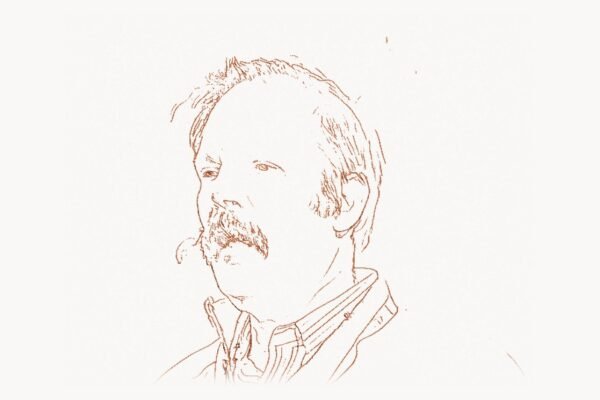
In the pantheon of blockchain visionaries, few figures provoke as much debate — or command as much respect — as Charles Hoskinson. A mathematician turned cryptocurrency entrepreneur, Hoskinson helped launch Ethereum before the age of 27, then walked away from the most successful smart contract platform in history to build something he believed would be fundamentally better. The result was Cardano, a blockchain engineered from peer-reviewed academic research and formal verification methods — an approach that struck many in the fast-moving crypto world as maddeningly slow and others as brilliantly principled. Whether you view him as a contrarian genius or an idealistic perfectionist, his influence on how we think about decentralized systems, governance, and the future of money is undeniable.
Early Life and Mathematical Foundations
Charles Hoskinson was born on November 5, 1987, in Hawaii and raised in a family that valued education and intellectual curiosity. His early fascination with numbers and logical systems led him to study mathematics at Metropolitan State University of Denver and later pursue analytic number theory at the University of Colorado Boulder. Although he did not complete a PhD, his graduate work in mathematics gave him a rigorous, proof-oriented mindset that would later differentiate his approach to blockchain development from nearly every other project in the space.
Before cryptocurrency entered his life, Hoskinson explored consulting and education, including an early venture in online teaching. His mathematical background — particularly his comfort with formal logic, set theory, and proof systems — would prove critical when he later insisted that blockchain protocols should be built the way bridges and aircraft are built: with mathematical proofs of correctness, not just optimistic testing.
This academic temperament set him apart in the early Bitcoin community, where most participants came from cryptography, libertarian activism, or software engineering. Hoskinson arrived as a mathematician who saw distributed ledgers as a problem in formal systems — a perspective that would shape everything he built afterward.
The Ethereum Chapter: Co-Founding a Revolution
Hoskinson’s path to Ethereum began in 2013, when Bitcoin was still primarily understood as a digital currency rather than a platform for programmable contracts. He became involved with the Bitcoin Education Project, an initiative to spread understanding of cryptocurrency and its underlying technology. This work brought him into contact with Vitalik Buterin, a young programmer with an ambitious vision for a blockchain that could execute arbitrary code.
Buterin’s white paper proposed a Turing-complete blockchain — essentially, a world computer that anyone could program. Hoskinson was one of the original eight co-founders who came together in early 2014 to turn that vision into reality. His role was primarily organizational: he helped structure the project, contributed to early fundraising strategy, and was briefly named CEO of Ethereum.
However, the co-founding team quickly fractured over a fundamental question: should Ethereum be a for-profit venture or a nonprofit foundation? Hoskinson advocated for a commercial model, believing it would provide sustainable funding and clear governance. Buterin and the majority favored a nonprofit Swiss foundation, arguing that a decentralized protocol should not be owned by any corporation. By mid-2014, Hoskinson departed from the project — a split that was acrimonious at the time but that both parties have since described in more measured terms.
The Ethereum experience taught Hoskinson two lessons he would carry forward. First, governance matters as much as code. Second, moving fast and breaking things might work for social media startups, but it invites catastrophe when you are building financial infrastructure used by millions of people. These convictions became the philosophical bedrock of Cardano.
Founding IOHK and the Birth of Cardano
In 2015, Hoskinson co-founded Input Output Hong Kong (IOHK, later rebranded to Input Output Global) with Jeremy Wood, another Ethereum alumnus. Rather than rushing a new blockchain to market, IOHK took an approach unprecedented in the cryptocurrency industry: they commissioned academic research. Hoskinson hired teams of computer scientists and cryptographers at universities including the University of Edinburgh, the University of Athens, and the Tokyo Institute of Technology. The goal was to develop every component of Cardano through peer-reviewed papers published in top-tier academic conferences like Crypto and Eurocrypt.
The result was Ouroboros, the first provably secure proof-of-stake consensus protocol to be accepted at a major cryptography venue. Where Bitcoin relies on proof-of-work mining that consumes enormous amounts of electricity, and where earlier proof-of-stake systems lacked rigorous security proofs, Ouroboros demonstrated mathematically that a stake-based system could achieve the same security guarantees as proof-of-work under clearly defined assumptions.
-- Simplified representation of a Cardano stake pool delegation
-- Haskell is the primary implementation language for Cardano node

module Cardano.Delegation where

import Data.Map.Strict (Map)
import qualified Data.Map.Strict as Map

data StakePool = StakePool
  { poolId        :: PoolId
  , poolPledge    :: Lovelace
  , poolCost      :: Lovelace
  , poolMargin    :: Rational
  , poolVrfKey    :: VrfVerificationKey
  }

data Delegation = Delegation
  { delegator     :: StakeCredential
  , delegatee     :: PoolId
  , delegEpoch    :: EpochNo
  }

-- Calculate reward share for a delegator based on pool performance
-- This reflects Cardano's reward-sharing scheme from the Ouroboros paper
calculateRewardShare :: StakePool -> Lovelace -> Lovelace -> Lovelace
calculateRewardShare pool totalPoolStake delegatorStake =
  let totalReward   = poolRewardForEpoch pool
      afterCost     = totalReward - poolCost pool
      ownerShare    = floor (fromIntegral afterCost * poolMargin pool)
      delegatorProp = fromIntegral delegatorStake / fromIntegral totalPoolStake
      delegatorCut  = floor (fromIntegral (afterCost - ownerShare) * delegatorProp)
  in  delegatorCut
Cardano launched its mainnet in September 2017, but in a deliberately staged fashion. The Byron era provided basic transaction functionality. Smart contracts did not arrive until the Alonzo upgrade in September 2021 — a gap of four years that critics seized upon as evidence of vaporware. Hoskinson’s response was characteristically blunt: he argued that deploying untested smart contract infrastructure would be reckless, pointing to the 2016 DAO hack on Ethereum — in which a smart contract vulnerability led to the theft of approximately $60 million in ETH — as a cautionary tale.
The Philosophy of Evidence-Based Blockchain Development
Hoskinson’s approach to blockchain development is rooted in what he calls “evidence-based” or “science-driven” engineering. This philosophy manifests in several distinctive ways that set Cardano apart from most competing platforms.
Formal Methods and High-Assurance Code
Cardano’s core node is implemented in Haskell, a purely functional programming language known for its strong type system and mathematical rigor. This was a deliberate choice. Haskell’s type system catches entire categories of bugs at compile time that would slip through in more permissive languages. For frameworks and platforms handling billions of dollars in value, Hoskinson argued, the implementation language is not a minor technical detail — it is a fundamental safety decision.
Beyond Haskell, Cardano employs formal verification for critical components. Formal verification is the process of using mathematical proofs to demonstrate that software behaves exactly as specified. It is standard practice in aerospace and medical device industries but almost unheard of in blockchain development. Hoskinson’s insistence on this approach has been both his greatest differentiator and the primary source of criticism regarding Cardano’s pace of development.
Plutus: A Smart Contract Language Built for Verification
Rather than adopting Solidity — Ethereum’s smart contract language — Cardano developed its own language called Plutus, based on Haskell. Plutus is designed to make formal verification of smart contracts practical. A Plutus contract can be analyzed mathematically to prove it will behave correctly under all possible inputs, a property that Solidity contracts cannot easily guarantee.
-- Example Plutus validator script for a simple vesting contract
-- Funds are locked until a specified deadline, then only the beneficiary can claim

{-# LANGUAGE DataKinds           #-}
{-# LANGUAGE NoImplicitPrelude   #-}
{-# LANGUAGE TemplateHaskell     #-}

module VestingContract where

import PlutusTx.Prelude
import Plutus.V2.Ledger.Api
import Plutus.V2.Ledger.Contexts

data VestingDatum = VestingDatum
  { beneficiary :: PubKeyHash
  , deadline    :: POSIXTime
  }

PlutusTx.unstableMakeIsData ''VestingDatum

{-# INLINABLE mkValidator #-}
mkValidator :: VestingDatum -> () -> ScriptContext -> Bool
mkValidator datum _ ctx =
  let info = scriptContextTxInfo ctx
      signedByBeneficiary = txSignedBy info (beneficiary datum)
      deadlineReached     = contains (from (deadline datum))
                                     (txInfoValidRange info)
  in  traceIfFalse "beneficiary signature missing" signedByBeneficiary &&
      traceIfFalse "deadline not yet reached"      deadlineReached
The extended UTXO (eUTXO) model that Cardano uses for transaction processing is another deliberate divergence from Ethereum’s account-based model. The UTXO model, originally used by Bitcoin, treats each transaction output as a discrete, immutable object. This makes transactions more predictable and easier to verify — you know the exact cost and behavior of a transaction before you submit it, unlike Ethereum where gas costs can fluctuate based on concurrent state changes. Hoskinson frequently cites this determinism as a critical advantage for financial applications where users need certainty, not surprises.
Governance and the Voltaire Era
Perhaps Hoskinson’s most ambitious contribution is his vision for on-chain governance. The Voltaire era of Cardano’s roadmap introduces a decentralized treasury system and voting mechanism that allows ADA holders to propose and fund development through a democratic process. The Catalyst project, which began distributing treasury funds in 2021, has become one of the largest decentralized funding experiments in the world, allocating hundreds of millions of dollars to community-proposed projects.
This governance focus reflects Hoskinson’s broader conviction that blockchains are not just technology — they are social systems. A protocol that cannot upgrade itself without contentious hard forks, he argues, will eventually ossify or fragment. Cardano’s governance model draws on concepts from computational theory and political science alike, attempting to encode democratic decision-making into the protocol layer itself. Managing such complexity across distributed teams requires the kind of disciplined project management practices that most open-source projects struggle to implement.
Africa, Identity, and the Vision for Financial Inclusion
One of the most distinctive aspects of Hoskinson’s work has been his focus on the developing world, particularly Africa. While most blockchain projects target wealthy, tech-savvy users in North America and Europe, Hoskinson has argued that the greatest potential for blockchain technology lies in providing financial services to the billions of people who lack access to traditional banking infrastructure.
In 2021, IOHK announced a partnership with the Ethiopian Ministry of Education to create a blockchain-based identity and academic credentialing system for five million students. The Atala PRISM identity platform, built on Cardano, aims to give students tamper-proof digital records of their academic achievements — records that cannot be forged, lost, or arbitrarily revoked by any central authority.
This initiative reflects Hoskinson’s belief that decentralized identity is a prerequisite for meaningful financial inclusion. If a farmer in rural Kenya or a student in Addis Ababa cannot prove their identity or credentials, they are effectively locked out of the global financial system — regardless of how many decentralized exchanges exist. By building identity infrastructure first, Hoskinson is betting on a bottom-up approach to adoption that most of the cryptocurrency industry has ignored in favor of speculation-driven growth.
Controversy and Criticism
No honest account of Hoskinson’s career would be complete without addressing the controversies that have followed him. His departure from Ethereum was contentious, and his relationship with several former co-founders has been publicly strained. He has been accused of overpromising and underdelivering, with smart contract functionality arriving years after it was first announced. His active presence on social media — particularly lengthy YouTube streams and Twitter debates — has earned him both devoted followers and vocal detractors.
Critics in the Ethereum community point to Cardano’s relatively modest DeFi ecosystem and argue that academic rigor is meaningless without real-world adoption. At various points, Cardano’s total value locked in DeFi protocols has been a fraction of Ethereum’s, leading some to dismiss the project as an expensive research exercise. Hoskinson has countered that measuring success by TVL (total value locked) is like judging a foundation by how quickly the walls go up — he would rather get the foundation right than rush construction.
There have also been questions about Hoskinson’s academic credentials. Early in his career, he was described in some contexts as having a mathematics PhD, which he does not hold. This was later clarified, but it left a residue of skepticism that his critics revisit periodically. Hoskinson has acknowledged the misunderstanding and been transparent about his educational background in subsequent interviews.
Technical Legacy and Industry Influence
Regardless of where one stands on the Cardano debate, Hoskinson’s impact on blockchain engineering methodology is difficult to dispute. Before Cardano, no major blockchain project had submitted its core protocol design to academic peer review. The Ouroboros family of papers has been cited hundreds of times in the academic literature and has influenced how other projects approach proof-of-stake design. The idea that a blockchain protocol should have a formal security proof — not just empirical testing — is now taken seriously across the industry, even by projects that do not follow Cardano’s specific methodology.
Hoskinson’s choice of Haskell has also had ripple effects. While Haskell itself remains a niche language, the principle of using strongly typed functional programming for mission-critical blockchain code has gained traction. Projects like modern AI systems and high-assurance financial platforms are increasingly adopting similar approaches, recognizing that the upfront cost of formal methods is justified by the catastrophic cost of bugs in production systems managing real value.
His emphasis on interoperability and cross-chain communication has also pushed the industry forward. Cardano’s design includes provisions for sidechains and bridges that allow different blockchains to communicate — a vision where value and data flow freely between networks rather than being siloed in competing ecosystems. This aligns with the broader industry movement toward multi-chain architectures and away from the maximalist view that one blockchain will rule them all. Building robust digital products that bridge multiple platforms requires exactly this kind of architectural foresight.
The Road Ahead: Midnight, Hydra, and Scaling
As of the mid-2020s, Hoskinson and IOHK continue to push Cardano’s roadmap forward. Hydra, Cardano’s layer-2 scaling solution, aims to dramatically increase transaction throughput by opening isomorphic state channels that mirror the main chain’s capabilities. Unlike some competing scaling approaches that sacrifice security or decentralization for speed, Hydra is designed to maintain the same formal guarantees as the base layer — consistent with Hoskinson’s philosophy that scaling should not come at the cost of correctness.
Midnight, a privacy-focused sidechain announced in 2022, represents another frontier. Hoskinson has argued that meaningful adoption of blockchain technology requires data protection capabilities that most current platforms lack. Businesses cannot operate on a fully transparent ledger where competitors can see every transaction, and individuals have a right to financial privacy. Midnight aims to provide selective disclosure — the ability to prove facts about your data without revealing the data itself, using zero-knowledge proof techniques that trace their lineage back to the work of cryptography pioneers like Adi Shamir and Shafi Goldwasser.
Hoskinson has also been vocal about the intersection of blockchain and artificial intelligence, arguing that decentralized systems will be essential for ensuring that AI models are transparent, auditable, and not controlled by a handful of corporations. Whether this vision materializes remains to be seen, but it reflects his consistent pattern of thinking about technology in terms of governance and power structures rather than pure technical capability.
A Mathematician’s Bet on Patience
Charles Hoskinson’s career is fundamentally a bet that rigor beats speed in the long run. In an industry defined by hype cycles, rug pulls, and the relentless pressure to ship, he has insisted on peer review, formal verification, and mathematical proof. This has cost him market share, earned him mockery from competitors, and tested the patience of his own community. But it has also produced something genuinely rare in the blockchain space: a protocol whose core design has been vetted by the academic cryptography community and whose codebase is built to the standards of mission-critical infrastructure.
Whether Cardano ultimately achieves Hoskinson’s vision of a global financial operating system remains an open question. The blockchain industry is fiercely competitive, and technical superiority does not guarantee adoption. But Hoskinson has already achieved something significant: he has demonstrated that it is possible to build a major blockchain project on a foundation of academic research and disciplined engineering practices rather than venture capital and viral marketing. For an industry that desperately needs more rigor and less hype, that contribution alone may prove to be his most lasting legacy.
Frequently Asked Questions
What is Charles Hoskinson best known for?
Charles Hoskinson is best known as a co-founder of Ethereum and the creator of Cardano, the first blockchain platform built entirely on peer-reviewed academic research and formal verification methods. He is also the co-founder and CEO of Input Output Global (IOG, formerly IOHK), the engineering company that develops Cardano’s core technology.
Why did Charles Hoskinson leave Ethereum?
Hoskinson departed from Ethereum in 2014 due to a fundamental disagreement about the project’s organizational structure. He advocated for a for-profit corporate model, while Vitalik Buterin and the majority of co-founders preferred a nonprofit foundation. The split was contentious at the time but both parties have since discussed it in more measured terms.
What makes Cardano different from other blockchain platforms?
Cardano distinguishes itself through its research-first development approach. Every major protocol component — from the Ouroboros consensus mechanism to the Plutus smart contract language — was developed through peer-reviewed academic papers before being implemented. The platform uses Haskell, a functional programming language, and employs formal verification to mathematically prove the correctness of critical code. It also uses the extended UTXO model for deterministic transaction processing.
What programming language is Cardano written in?
Cardano’s core node is implemented in Haskell, a purely functional programming language chosen for its strong type system and suitability for formal verification. Smart contracts on Cardano are written in Plutus (based on Haskell) or Aiken (a newer, more accessible alternative). On-chain validator scripts compile to Plutus Core, an intermediate language based on System F, a typed lambda calculus.
What is the Ouroboros consensus protocol?
Ouroboros is Cardano’s proof-of-stake consensus protocol and the first such protocol to have a peer-reviewed security proof published at a major cryptography conference. It divides time into epochs and slots, with stake pool operators selected to produce blocks based on the amount of ADA delegated to their pools. Multiple versions exist — Ouroboros Classic, Praos, Genesis, and Leios — each adding capabilities while maintaining formal security guarantees.
What is Cardano’s approach to scaling?
Cardano addresses scaling through multiple strategies. Hydra provides layer-2 scaling through isomorphic state channels that mirror the main chain’s security properties. Input endorsers and pipelining improve base-layer throughput. Mithril provides lightweight client verification. The approach prioritizes maintaining formal security guarantees while increasing transaction capacity — consistent with the project’s evidence-based philosophy.
What is the Cardano Africa initiative?
Hoskinson has prioritized blockchain adoption in Africa through several initiatives. The most prominent is a partnership with Ethiopia’s Ministry of Education to build a blockchain-based student identity and credential verification system for five million students using the Atala PRISM platform. The broader vision is to provide decentralized identity and financial infrastructure to populations currently underserved by traditional banking systems.
How does Cardano handle smart contract development?
Cardano supports smart contracts through Plutus (a Haskell-based language), Aiken (a newer language designed for ease of use), and Marlowe (a domain-specific language for financial contracts). The extended UTXO model provides deterministic execution — developers know the exact cost and behavior of a transaction before submitting it. This differs from Ethereum’s account model where gas costs can vary based on concurrent network state changes.