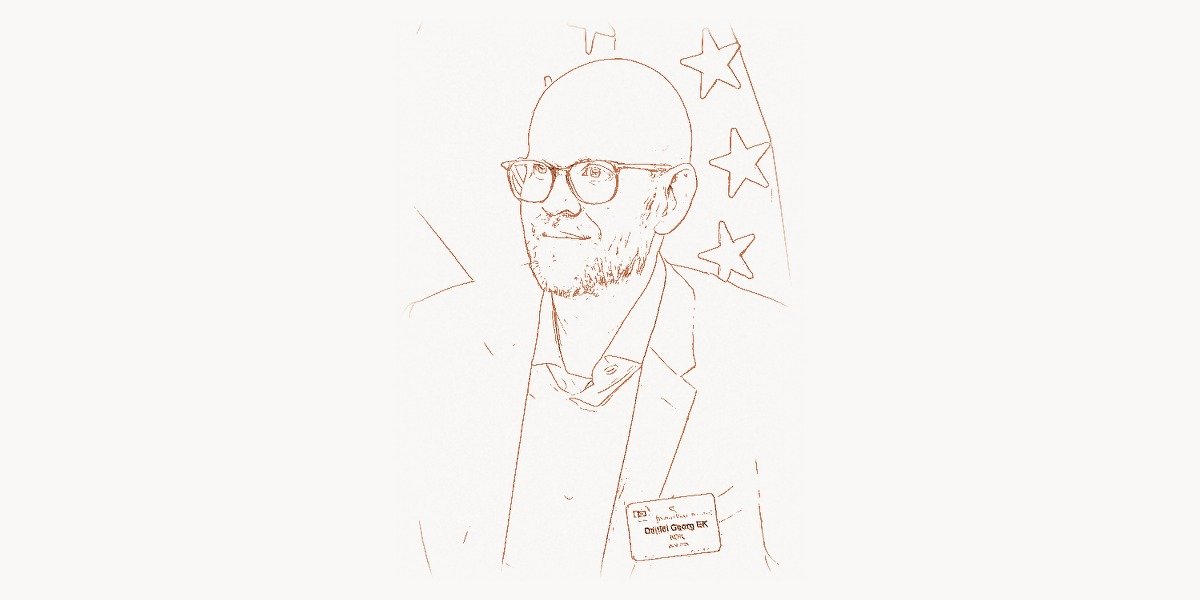
Before Daniel Ek launched Spotify in 2008, the music industry was in freefall. Piracy platforms like Napster and LimeWire had shattered the old revenue models, and record labels were hemorrhaging billions. Artists saw their incomes collapse. Consumers, meanwhile, had grown accustomed to free, instant access to virtually any song ever recorded. Into this chaos stepped a 23-year-old Swedish entrepreneur with a deceptively simple idea: what if you could offer people something better than piracy — a legal, lightning-fast streaming service that felt like having every song in the world on your hard drive? That idea became Spotify, and it did not merely save the music industry. It rebuilt it from the ground up, creating entirely new economic models, redefining how people discover music, and proving that a well-designed technology platform could align the interests of artists, labels, and listeners in ways nobody thought possible.
Early Life and the Making of a Prodigy
Daniel Ek was born on February 21, 1983, in Stockholm, Sweden. He grew up in the Rågsved district, a modest neighborhood in the southern suburbs of the capital. From a remarkably young age, Ek displayed an almost preternatural talent for technology. By the age of 14, he was already running a web-design business out of his bedroom, charging local companies to build their websites. He was reportedly earning more than his teachers by the time he was in high school — a detail that speaks volumes about both his precocity and the explosive demand for web skills in the late 1990s.
Sweden in the 1990s was fertile ground for a technically gifted teenager. The country had invested heavily in broadband infrastructure, and internet penetration was among the highest in the world. Stockholm was rapidly becoming a startup hub, producing companies like Skype (partly developed in Sweden) and attracting engineering talent from across Europe. Ek absorbed this environment like a sponge, teaching himself HTML, Java, and later Python and C++ through sheer curiosity and relentless experimentation.
After a brief stint studying engineering at the KTH Royal Institute of Technology, Ek dropped out — a decision that places him in the well-documented lineage of tech founders who found formal education too slow for their ambitions. He co-founded a series of small ventures, including an advertising company called Advertigo, which he sold in 2006. But it was his time at the file-sharing company uTorrent, and later as CEO of the advertising platform Stardoll, that crystallized his understanding of both digital distribution and consumer behavior at scale.
The Birth of Spotify: Solving an Impossible Problem
The insight that led to Spotify was elegant and counterintuitive. Ek realized that piracy was not fundamentally a pricing problem — it was an access problem. People did not pirate music because they refused to pay. They pirated because the legal alternatives were terrible: clunky digital storefronts, DRM restrictions that punished paying customers, and catalogs that were incomplete and fragmented. The experience of piracy — instant, frictionless, comprehensive — was simply better than anything the legal market offered.
Ek teamed up with Martin Lorentzon, co-founder of the digital marketing company Tradedoubler, and the two began building Spotify in 2006. Lorentzon provided the initial funding and business acumen; Ek provided the technical vision and an almost obsessive focus on user experience. The founding team set an audacious engineering goal: the service had to feel instant. When you clicked on a song, playback had to begin in less than 200 milliseconds — faster than most people could perceive a delay.
Achieving this required solving some genuinely difficult technical problems. The early Spotify client used a peer-to-peer architecture combined with server-side caching, a hybrid approach that reduced latency and bandwidth costs while delivering the perception of instantaneous playback. The engineering team — many of whom were recruited from Sweden’s thriving framework and systems programming community — built custom networking protocols and audio codecs optimized for streaming over variable-quality connections.
The Peer-to-Peer Architecture
Spotify’s original desktop client leveraged P2P networking in a way that was technically sophisticated and commercially pragmatic. Each client cached recently played tracks and served them to nearby peers, forming a distributed content delivery network that dramatically reduced the load on Spotify’s central servers. This was not incidental — it was a core architectural decision that allowed Spotify to scale rapidly without the massive infrastructure costs that would have otherwise been required.
# Simplified model of Spotify's early P2P track resolution
# Each client maintains a local cache and peer connections

class SpotifyP2PClient:
    def __init__(self, user_id, cache_size_mb=500):
        self.user_id = user_id
        self.local_cache = LRUCache(max_size=cache_size_mb)
        self.peer_connections = []
        self.server_fallback = CentralServer()

    def request_track(self, track_id):
        # Step 1: Check local cache first (fastest path)
        if track_id in self.local_cache:
            return self.local_cache.get(track_id)

        # Step 2: Query connected peers for cached copy
        for peer in self.peer_connections:
            if peer.has_track(track_id):
                track_data = peer.stream_track(track_id)
                self.local_cache.put(track_id, track_data)
                return track_data

        # Step 3: Fall back to central server
        track_data = self.server_fallback.fetch(track_id)
        self.local_cache.put(track_id, track_data)
        return track_data

    def serve_to_peers(self, track_id):
        """Share cached tracks with requesting peers."""
        if track_id in self.local_cache:
            return self.local_cache.get(track_id)
        return None
This architecture was eventually phased out as Spotify’s user base grew and cloud infrastructure became cheaper, but it was a critical enabler in the company’s early years — allowing a small Swedish startup to deliver a service that felt as fast as having a local music library.
Negotiating with the Music Industry
Building the technology was only half the battle. Ek faced perhaps an even more daunting challenge: convincing the major record labels to license their catalogs to a streaming service founded by a twenty-something from Stockholm. The labels were deeply suspicious of anything that resembled the digital distribution models that had eviscerated their revenues. They had been burned by Napster, burned by the unfulfilled promises of early digital stores, and many executives viewed streaming as little more than sanctioned piracy.
Ek’s approach was a masterclass in patient negotiation and strategic concession. He offered the labels equity stakes in Spotify — a move that aligned their financial interests with the platform’s success. He agreed to a complex, label-friendly royalty structure that guaranteed minimum per-stream payments. And he relentlessly demonstrated the technology itself, showing label executives that Spotify’s user experience was so superior to piracy that it could actually convert illegal downloaders into paying subscribers. This argument, backed by early user data from the Swedish beta, proved surprisingly persuasive.
By 2008, Spotify launched in a handful of European countries. The initial model was freemium: a free, ad-supported tier with unlimited listening, and a premium tier at roughly $10 per month that removed ads and enabled offline playback. This two-tier structure was controversial — many in the industry feared it would cannibalize paid subscriptions — but Ek’s bet was that the free tier would serve as a massive funnel, converting casual listeners into paying subscribers over time. History proved him right. As of 2025, Spotify has over 640 million monthly active users, with more than 250 million paying for Premium.
Technical Innovation and the Recommendation Engine
Spotify’s technical contributions extend far beyond its initial streaming architecture. The company has become one of the most influential forces in applied machine learning and data science, particularly in the domain of recommendation systems. Discover Weekly, introduced in 2015, became one of the most celebrated features in consumer technology — a personalized playlist of 30 songs, updated every Monday, that consistently surfaced music users loved but had never heard.
The recommendation engine behind Discover Weekly combines three distinct approaches: collaborative filtering (analyzing the listening patterns of millions of users to find taste correlations), natural language processing (scanning blogs, reviews, and articles to understand how music is described and contextualized), and raw audio analysis (using convolutional neural networks to extract features directly from the audio signal). This multi-modal approach allows Spotify to recommend tracks that no single method could surface alone.
// Simplified collaborative filtering for music recommendations
// Based on matrix factorization approach used in recommendation systems

class CollaborativeFilter {
  constructor(numFactors = 40) {
    this.numFactors = numFactors;
    this.userFactors = new Map();  // userId → latent vector
    this.trackFactors = new Map(); // trackId → latent vector
  }

  // Train on user-track interaction matrix
  trainALS(interactions, epochs = 20, lambda = 0.1) {
    // Alternating Least Squares: fix one matrix, solve the other
    for (let epoch = 0; epoch < epochs; epoch++) {
      // Fix track factors, update user factors
      for (const [userId, tracks] of interactions) {
        const trackMatrix = tracks.map(t => this.trackFactors.get(t.id));
        this.userFactors.set(userId,
          this.solveLinearSystem(trackMatrix, tracks, lambda)
        );
      }
      // Fix user factors, update track factors
      for (const [trackId, users] of this.invertInteractions(interactions)) {
        const userMatrix = users.map(u => this.userFactors.get(u.id));
        this.trackFactors.set(trackId,
          this.solveLinearSystem(userMatrix, users, lambda)
        );
      }
    }
  }

  // Predict affinity score for a user-track pair
  predict(userId, trackId) {
    const userVec = this.userFactors.get(userId);
    const trackVec = this.trackFactors.get(trackId);
    return this.dotProduct(userVec, trackVec);
  }

  // Generate top-N recommendations for a user
  recommend(userId, candidateTracks, topN = 30) {
    return candidateTracks
      .map(trackId => ({ trackId, score: this.predict(userId, trackId) }))
      .sort((a, b) => b.score - a.score)
      .slice(0, topN);
  }
}
Spotify’s investment in machine learning has also extended to podcast recommendations, audio ad targeting, and the development of internal tools that help artists understand their audiences. The company’s engineering blog and published research papers have contributed significantly to the broader ML community, establishing Spotify as a genuine technology company — not merely a music platform.
The Freemium Model and Platform Economics
One of Daniel Ek’s most consequential decisions was the adoption of the freemium business model. In 2008, the idea of giving away a core product for free while charging for premium features was far less established than it is today. Ek studied the economics carefully, drawing on insights from the gaming industry and early SaaS companies that were beginning to demonstrate the power of free-tier conversion funnels. The core thesis was simple but counterintuitive: by removing the barrier of payment entirely, Spotify could acquire users at a fraction of the cost of traditional marketing, then convert a meaningful percentage into paying subscribers through the sheer quality of the premium experience.
This model required extraordinary discipline around unit economics. Every free user represented a cost — server bandwidth, licensing fees, royalty payments — that had to be offset either by advertising revenue or by eventual conversion to Premium. Ek and his team obsessively tracked conversion rates, churn metrics, and lifetime value calculations, building sophisticated data infrastructure that allowed them to optimize every stage of the user journey. The approach worked: Spotify’s free-to-paid conversion rate consistently outperformed industry benchmarks, vindicating Ek’s belief that a superior product would naturally monetize itself.
Managing large-scale platform projects of this nature demands robust project management workflows, where cross-functional teams must coordinate engineering, licensing, data science, and product design simultaneously. The complexity of running a platform that serves hundreds of millions of users across dozens of markets — each with its own licensing agreements, payment systems, and cultural preferences — is a challenge that few organizations have navigated as successfully as Spotify under Ek’s leadership.
The Squad Model: Reinventing How Teams Work
Beyond the product itself, Daniel Ek and Spotify made a profound contribution to the practice of software engineering through the development of the “Spotify Model” of organizational design. Introduced around 2012 and popularized through a pair of widely shared videos and whitepapers, the model proposed a radical alternative to traditional hierarchical engineering organizations.
The fundamental unit is the Squad — a small, autonomous, cross-functional team (typically 6-12 people) that owns a specific feature or component end-to-end. Squads are grouped into Tribes (collections of squads working in related areas), while Chapters and Guilds provide cross-cutting coordination for people with shared skills or interests. The model emphasizes autonomy, alignment, and minimal handoffs — principles that allow large engineering organizations to maintain the speed and agility of small startups.
The Spotify Model has been adopted, adapted, and debated by technology companies worldwide. Digital agencies and development teams across the industry have drawn on its principles to restructure their own workflows, recognizing that the traditional project-manager-driven approach often creates bottlenecks and misaligned incentives at scale. While Spotify itself has evolved beyond the original model, its influence on how the industry thinks about team organization remains substantial.
Spotify for Artists and the Creator Economy
One of the most significant — and most debated — aspects of Ek’s legacy is the transformation of the economics of music creation. Spotify for Artists, launched in 2017, gave musicians direct access to streaming data, audience demographics, and playlist submission tools. For the first time, independent artists could see exactly who was listening to their music, where those listeners were located, and how their tracks were performing relative to similar artists.
This transparency was revolutionary, but it also exposed uncomfortable truths. The per-stream payment model — in which artists receive a fraction of a cent per play, with the exact amount varying based on the listener’s country, subscription tier, and the total pool of streams — has been fiercely criticized. Major artists and independent musicians alike have argued that the model undervalues creative work, particularly for niche or emerging artists who lack the massive stream counts needed to generate meaningful revenue.
Ek has responded to these criticisms with a characteristically data-driven argument. He points out that Spotify has paid over $40 billion in royalties to rights holders since its founding, and that the platform has enabled thousands of artists to build sustainable careers who would have had no viable path to their audience in the pre-streaming era. He has also acknowledged the need for continued evolution, introducing features like direct artist-to-fan tools, merchandise integration, and concert ticket sales that allow musicians to diversify their revenue beyond streaming alone.
Daniel Ek’s Leadership Philosophy
Ek’s leadership style is often described as quiet, analytical, and intensely focused on long-term outcomes. Unlike many high-profile tech CEOs who cultivate public personas through social media and conference keynotes, Ek has maintained a relatively low profile, preferring to let the product speak for itself. When he does speak publicly, his communication tends to be precise, data-informed, and refreshingly honest about the challenges Spotify faces.
A recurring theme in Ek’s public statements is the importance of thinking in decades rather than quarters. He has consistently argued that Spotify’s mission — to unlock the potential of human creativity by giving a million creative artists the opportunity to live off their art — requires patience and sustained investment that short-term financial thinking would undermine. This long-term orientation has sometimes put him at odds with Wall Street analysts and shareholders who expect more immediate returns, but it has also enabled Spotify to make strategic bets — like the massive investment in podcasting beginning in 2019 — that competitors were unwilling to make.
Ek is also notable for his genuine passion for music. Unlike many tech executives who view content as a commodity to be optimized, Ek has consistently demonstrated a deep personal engagement with music culture. He plays guitar, has spoken extensively about how music shaped his childhood, and has been known to personally curate playlists for friends and colleagues. This authentic connection to the creative side of the business has helped Spotify maintain credibility with artists and labels in ways that a purely transactional approach could not.
Podcasting and the Audio-First Strategy
Beginning in 2019, Ek made one of the boldest strategic pivots in Spotify’s history: a massive push into podcasting. The company acquired Gimlet Media, Anchor, and Parcast in quick succession, spending hundreds of millions of dollars to establish itself as a dominant player in podcast creation and distribution. This was followed by high-profile exclusive licensing deals, including a reported $200 million agreement with Joe Rogan, and additional deals with prominent creators across sports, news, and entertainment.
The strategic logic was clear. Music licensing creates a structural challenge for streaming services: because the major labels control the catalogs, no single platform can achieve meaningful differentiation through music alone. Podcasts, by contrast, offer the possibility of exclusive content that drives user acquisition and retention. Moreover, podcast advertising — which Spotify could sell through its own ad technology — offered significantly higher margins than music streaming.
The execution has been mixed. Some acquisitions and exclusive deals have performed spectacularly; others have underperformed expectations. Spotify has iterated on its podcasting strategy, shifting from an exclusivity-first approach to a more open model that prioritizes reach and advertising revenue. This willingness to course-correct — to treat strategy as a hypothesis to be tested rather than a commitment to be defended — is characteristic of Ek’s pragmatic, evidence-based leadership style.
Legacy and Lasting Impact
Daniel Ek’s impact on technology, culture, and business is difficult to overstate. Before Spotify, the conventional wisdom held that consumers would never pay for music again. Ek proved that they would — not by restricting access or prosecuting piracy, but by building something genuinely better. In doing so, he established the template for the modern subscription economy that now dominates software, video, news, gaming, and countless other industries.
His contributions extend beyond the product itself. The Spotify Model of team organization has influenced how thousands of companies structure their engineering departments. Spotify’s investment in machine learning and recommendation systems has advanced the state of the art in personalization technology. And the company’s data infrastructure — built to process billions of events per day across hundreds of millions of users — has produced open-source tools and published research that have benefited the broader engineering community, resonating with the same ethos of contribution that drove pioneers like Salvatore Sanfilippo and others.
Perhaps most importantly, Ek demonstrated that technology companies can create genuine value — not by extracting rents from captive users, but by solving real problems in ways that benefit all stakeholders. Spotify is not perfect, and the debates about artist compensation are far from resolved. But the fundamental achievement is undeniable: Daniel Ek took an industry that was destroying itself through litigation and denial, and built a platform that gave musicians a global stage, listeners an unprecedented library, and the entire ecosystem a sustainable economic model for the digital age.
Frequently Asked Questions
What did Daniel Ek do before founding Spotify?
Before Spotify, Daniel Ek ran a web design business as a teenager, worked at several tech startups, co-founded and sold an advertising company called Advertigo, worked at the file-sharing company uTorrent, and served as CEO of Stardoll. These experiences gave him deep insight into digital distribution, consumer behavior, and internet-scale technology — all of which proved essential to Spotify’s creation.
How does Spotify’s recommendation algorithm work?
Spotify’s recommendation engine combines three main approaches: collaborative filtering (analyzing patterns across millions of users to find taste similarities), natural language processing (scanning text about music to understand context and sentiment), and deep audio analysis (using neural networks to extract features directly from audio files). These methods work together to power features like Discover Weekly and Daily Mix playlists.
What is the Spotify Model of team organization?
The Spotify Model is an agile organizational framework built around Squads (small autonomous teams), Tribes (groups of related squads), Chapters (people with the same skill set across squads), and Guilds (cross-company communities of interest). It emphasizes team autonomy and alignment over centralized control, and has been widely adopted and adapted across the technology industry.
How much has Spotify paid artists in royalties?
As of 2025, Spotify has paid over $40 billion in cumulative royalties to rights holders since its founding. The per-stream payment varies based on factors including the listener’s country, subscription tier, and total platform streams, but the company remains the largest single source of revenue for the recorded music industry.
Why did Spotify invest so heavily in podcasting?
Spotify’s podcast investments were driven by a strategic need to differentiate beyond music, where licensing from major labels makes it difficult for any single platform to stand out. Podcasts offered the possibility of exclusive content, higher advertising margins, and a broader audio-first platform strategy that reduces dependence on music label negotiations.
What programming languages and technologies power Spotify?
Spotify’s technology stack has evolved significantly over its history. The backend has relied heavily on Java and Python, with microservices architecture replacing the earlier monolithic system. The company is known for its use of Google Cloud Platform, Apache Kafka for event streaming, and custom-built tools for machine learning deployment. The desktop client was originally built in C++ for performance, while mobile apps use native iOS and Android development alongside cross-platform frameworks.
Is Daniel Ek still the CEO of Spotify?
Yes, Daniel Ek has served as CEO of Spotify since co-founding the company in 2006. He took the company public on the New York Stock Exchange in 2018 via a direct listing — an unconventional approach that bypassed the traditional IPO process — and has continued to lead the company through its expansion into podcasting, audiobooks, and new markets.