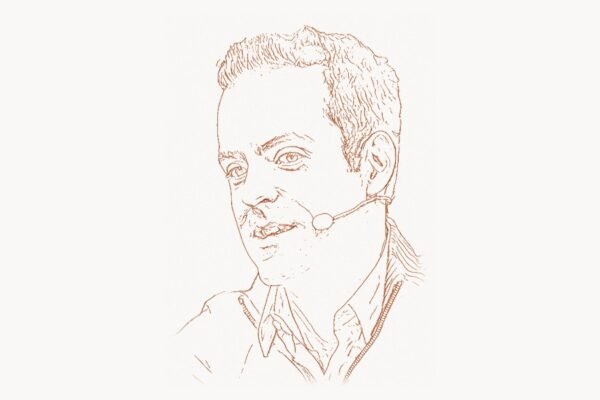
In early 2024, when OpenAI announced that Kevin Weil would become its Chief Product Officer, the move sent a clear signal across the tech industry: the company building the world’s most advanced AI systems wanted someone who had already proven, at Twitter and Instagram, that data-driven product thinking could turn raw technology into products used by billions of people. Weil’s career is a masterclass in translating complex technical capabilities into intuitive user experiences — a skill that has only become more critical as artificial intelligence moves from research labs into the daily lives of hundreds of millions of users worldwide.
Early Life, Education, and the Physics Foundation
Kevin Weil grew up in the United States with an early fascination for both science and technology. He earned his undergraduate degree from Harvard University, where he studied physics — a discipline that would shape his entire approach to product development. Physics taught Weil to think in systems, to seek underlying patterns in seemingly chaotic data, and to build models that could predict real-world behavior.
After Harvard, Weil pursued graduate studies at Stanford University, working toward a PhD in physics. At Stanford, he was immersed in an environment where hard science and Silicon Valley entrepreneurship collided daily. While many of his peers continued into academic research or pure science careers, Weil found himself increasingly drawn to the idea that the analytical rigor of physics could be applied to technology products and the massive datasets they generate.
He ultimately left his PhD program to enter the technology industry — a decision that, in retrospect, positioned him at the exact intersection of quantitative analysis and product strategy that would define the next two decades of consumer technology. The transition from physics to tech was not as unusual as it might sound: the ability to model complex systems, reason about probability distributions, and extract meaningful signals from noise would prove indispensable in his career.
Twitter: Building the Analytics Engine Behind a Global Platform
Weil joined Twitter in 2009, during a period when the platform was growing explosively but lacked the analytics infrastructure needed to truly understand its users and monetize its service. As Vice President of Product, Revenue, he became one of the key architects of Twitter’s transformation from a beloved but financially uncertain social experiment into a data-driven advertising business capable of generating billions in revenue.
At Twitter, Weil championed the idea that product decisions should be grounded in rigorous measurement. He built out the platform’s analytics capabilities, creating systems that could track user engagement at massive scale and translate those signals into actionable product insights. Under his leadership, Twitter developed its self-serve advertising platform, introduced promoted tweets and promoted accounts, and created the analytics dashboards that gave advertisers and content creators visibility into how their messages were performing.
The Data Infrastructure Challenge
One of Weil’s most significant contributions at Twitter was recognizing that the company’s product ambitions were fundamentally limited by its data infrastructure. At the scale Twitter operated — hundreds of millions of tweets per day, each generating cascades of engagement signals — traditional analytics approaches simply could not keep up. Weil pushed for investments in real-time data processing pipelines and the adoption of distributed computing frameworks that could handle Twitter’s firehose of information.
A simplified example of the kind of real-time event processing pipeline that Weil’s teams built at Twitter, using a stream-processing approach to aggregate engagement metrics on the fly:
import json
from datetime import datetime, timezone
from collections import defaultdict

class TweetEngagementProcessor:
    """
    Real-time engagement aggregation pipeline.
    Processes raw engagement events (likes, retweets, replies)
    and computes rolling metrics per tweet and per advertiser.
    """

    def __init__(self, window_seconds=300):
        self.window_seconds = window_seconds
        self.tweet_metrics = defaultdict(lambda: {
            "impressions": 0,
            "likes": 0,
            "retweets": 0,
            "replies": 0,
            "clicks": 0,
            "engagement_rate": 0.0,
        })
        self.event_buffer = []

    def ingest_event(self, raw_event: str):
        event = json.loads(raw_event)
        tweet_id = event["tweet_id"]
        event_type = event["event_type"]
        timestamp = datetime.fromisoformat(event["timestamp"])

        self.event_buffer.append((timestamp, tweet_id, event_type))
        self._update_metrics(tweet_id, event_type)
        self._expire_old_events()

    def _update_metrics(self, tweet_id: str, event_type: str):
        metrics = self.tweet_metrics[tweet_id]
        if event_type in metrics:
            metrics[event_type] += 1
        if metrics["impressions"] > 0:
            engagements = (
                metrics["likes"] + metrics["retweets"]
                + metrics["replies"] + metrics["clicks"]
            )
            metrics["engagement_rate"] = engagements / metrics["impressions"]

    def _expire_old_events(self):
        cutoff = datetime.now(timezone.utc).timestamp() - self.window_seconds
        self.event_buffer = [
            (ts, tid, et) for ts, tid, et in self.event_buffer
            if ts.timestamp() > cutoff
        ]

    def get_top_engaging_tweets(self, limit=10):
        sorted_tweets = sorted(
            self.tweet_metrics.items(),
            key=lambda x: x[1]["engagement_rate"],
            reverse=True,
        )
        return sorted_tweets[:limit]
This kind of real-time analytics infrastructure became the backbone of Twitter’s advertising business, enabling the platform to show advertisers exactly how their campaigns were performing and to optimize ad delivery in near real-time. The work Weil oversaw in this area laid the foundation for Twitter’s eventual IPO in 2013 and its subsequent growth as an advertising platform. His approach to building data pipelines and analytics systems at Twitter parallels the infrastructure challenges that leaders like Jack Dorsey faced in building the platform itself.
Instagram: Scaling the Visual Internet
After his tenure at Twitter, Weil moved to Instagram in 2016, where he served as Vice President of Product. By then, Instagram had already been acquired by Facebook (now Meta) and was experiencing massive growth, but the product organization needed leadership that could balance creative vision with analytical discipline. Weil was the perfect fit.
At Instagram, Weil oversaw the development and launch of several features that would fundamentally reshape how people use the platform. He played a central role in the expansion of Instagram Stories, the introduction of shopping features, the growth of IGTV and video content, and the platform’s shift toward algorithmic content discovery. Each of these initiatives required the same data-driven approach he had honed at Twitter — understanding user behavior through metrics, running rigorous experiments, and iterating quickly based on what the data revealed.
Product Experimentation at Scale
One of the hallmarks of Weil’s product philosophy, refined at Instagram, is the belief that product decisions should be driven by experimentation rather than intuition. At Instagram, this meant building robust A/B testing infrastructure that could simultaneously run thousands of experiments across the platform’s billion-plus user base, measuring the impact of everything from minor UI tweaks to fundamental changes in how content was ranked and displayed.
Working alongside Kevin Systrom and Mike Krieger, the co-founders of Instagram, Weil helped professionalize the product development process at a company that had originally been built by a tiny team. He brought the rigor of large-scale experimentation to a platform that valued design and creativity, proving that data and aesthetics were not in opposition but could reinforce each other.
The Move to OpenAI: Product Leadership for the AI Era
In mid-2024, Weil joined OpenAI as Chief Product Officer — a role that placed him at the center of one of the most consequential technology shifts in history. At OpenAI, Weil is responsible for translating the company’s research breakthroughs into products that people and businesses actually use. This includes ChatGPT, the API platform, enterprise offerings, and the growing ecosystem of tools built on top of OpenAI’s models.
The challenge Weil faces at OpenAI is fundamentally different from anything he encountered at Twitter or Instagram. At those companies, the core technology — social networking, photo sharing — was well understood, and the product challenge was optimization and scale. At OpenAI, the underlying technology is evolving at a pace that makes traditional product roadmaps nearly obsolete. Large language models are gaining new capabilities with each generation, and the product team must constantly reassess what is possible and what users actually need.
Bridging Research and Users
Weil’s most critical contribution at OpenAI may be his ability to serve as a bridge between the company’s world-class research team and its rapidly growing user base. Under the leadership of Sam Altman, OpenAI had already demonstrated that it could build AI systems of extraordinary capability. What it needed was someone who could ensure those capabilities were packaged in ways that were useful, intuitive, and safe for hundreds of millions of people.
This bridge-building role requires understanding both the technical possibilities — something Weil’s physics background equips him for — and the human side of product design, including user psychology, market dynamics, and the subtle art of reducing friction in complex workflows. His experience working with teams that shipped features to billions of people at Twitter and Instagram gives him a rare perspective on what it takes to make advanced technology accessible to mainstream audiences.
Product Philosophy: The Data-Informed Approach
Throughout his career, Weil has articulated a product philosophy that distinguishes between being “data-driven” and “data-informed.” The distinction is subtle but important: a data-driven approach can lead to over-optimization for metrics at the expense of long-term user value, while a data-informed approach uses quantitative signals as one input among many, alongside qualitative research, design intuition, and strategic vision.
At the core of Weil’s methodology is a framework for product decision-making that combines quantitative rigor with strategic clarity. The following pseudocode illustrates the kind of structured thinking he advocates for product teams evaluating new features:
class ProductDecisionFramework:
    """
    Framework for evaluating product features using
    a combination of quantitative metrics and strategic alignment.
    Reflects the data-informed approach Kevin Weil champions.
    """

    METRIC_WEIGHTS = {
        "user_engagement_delta": 0.25,
        "retention_impact": 0.30,
        "revenue_potential": 0.15,
        "strategic_alignment": 0.20,
        "technical_feasibility": 0.10,
    }

    def __init__(self, feature_name, experiment_data, strategic_goals):
        self.feature_name = feature_name
        self.experiment_data = experiment_data
        self.strategic_goals = strategic_goals

    def compute_feature_score(self):
        scores = {}
        scores["user_engagement_delta"] = self._measure_engagement_lift()
        scores["retention_impact"] = self._measure_retention_effect()
        scores["revenue_potential"] = self._estimate_revenue_impact()
        scores["strategic_alignment"] = self._assess_strategic_fit()
        scores["technical_feasibility"] = self._evaluate_tech_cost()

        weighted_score = sum(
            scores[metric] * weight
            for metric, weight in self.METRIC_WEIGHTS.items()
        )
        return {
            "feature": self.feature_name,
            "component_scores": scores,
            "overall_score": round(weighted_score, 3),
            "recommendation": self._make_recommendation(weighted_score),
        }

    def _measure_engagement_lift(self):
        control = self.experiment_data["control_engagement"]
        treatment = self.experiment_data["treatment_engagement"]
        lift = (treatment - control) / control
        p_value = self.experiment_data.get("p_value", 1.0)
        return lift if p_value < 0.05 else 0.0

    def _measure_retention_effect(self):
        d7_control = self.experiment_data["control_retention_d7"]
        d7_treatment = self.experiment_data["treatment_retention_d7"]
        return (d7_treatment - d7_control) / d7_control

    def _estimate_revenue_impact(self):
        arpu_delta = self.experiment_data.get("arpu_delta", 0)
        user_base = self.experiment_data.get("eligible_users", 0)
        return min(arpu_delta * user_base / 1_000_000, 1.0)

    def _assess_strategic_fit(self):
        alignment_scores = [
            1.0 if goal in self.experiment_data.get("addressed_goals", [])
            else 0.0
            for goal in self.strategic_goals
        ]
        return sum(alignment_scores) / len(alignment_scores)

    def _evaluate_tech_cost(self):
        eng_weeks = self.experiment_data.get("estimated_eng_weeks", 52)
        return max(0, 1.0 - (eng_weeks / 52))

    def _make_recommendation(self, score):
        if score >= 0.7:
            return "STRONG_SHIP"
        elif score >= 0.4:
            return "ITERATE_AND_RETEST"
        else:
            return "DEPRIORITIZE"
This structured approach to feature evaluation reflects Weil’s conviction that great products emerge from the disciplined intersection of measurement and vision. The framework acknowledges that no single metric can capture the full value of a product decision, but that combining multiple signals — engagement, retention, revenue, strategic fit, and feasibility — produces better outcomes than relying on gut feeling alone.
Contributions to the Broader Tech Ecosystem
Beyond his direct product work, Weil has influenced the broader technology ecosystem in several important ways. His emphasis on analytics and measurement at Twitter helped establish the expectation that social platforms should provide transparent, real-time performance data to advertisers and content creators — a standard that is now taken for granted across the industry.
At Instagram, his work on product experimentation at scale contributed to the professionalization of the product management discipline. The frameworks and processes his teams built became models for product organizations at companies worldwide. Modern product management tools like Taskee reflect the same principles of structured experimentation and data-informed decision-making that Weil championed, providing teams with the infrastructure to plan, test, and iterate on product features systematically.
His move to OpenAI represents an even larger contribution: helping to define what product management looks like in the age of AI. The challenges of building products on top of rapidly evolving foundation models — where the capabilities of the underlying technology can change dramatically between releases — require a new kind of product thinking. Weil is helping to write the playbook for this new era, one where product leaders must be comfortable with deep technical uncertainty while still shipping products that users love.
The Intersection of AI and Product Design
One of the most profound challenges facing product leaders in the AI era is the question of how to design interfaces for systems whose capabilities are not fully understood even by their creators. At OpenAI, Weil must grapple with the reality that large language models can do things their developers did not explicitly program them to do — and that users will discover use cases that no product team anticipated.
This is a fundamentally different design challenge from anything in the history of consumer technology. Traditional software products have well-defined feature sets: a button does one thing, a menu contains a known list of options. AI products, by contrast, are open-ended: the same text input box in ChatGPT can be used to write code, compose poetry, analyze data, debug applications, or brainstorm business strategies. The product team’s job is not to enumerate capabilities but to create an environment where users can discover and exploit them naturally.
Understanding the AI systems underlying these products requires familiarity with the foundational work done by researchers like Geoffrey Hinton in deep learning and Ilya Sutskever in scaling neural networks — breakthroughs that made products like ChatGPT possible in the first place.
Leadership Style and Team Building
Colleagues who have worked with Weil consistently describe his leadership style as combining intellectual rigor with genuine empathy. He is known for asking penetrating questions — a habit he attributes to his physics training — while also creating an environment where team members feel safe to take risks and propose unconventional ideas.
Weil has spoken publicly about the importance of building diverse product teams that include not just engineers and designers but also people with backgrounds in social science, psychology, and domain expertise. He believes that the complexity of modern technology products demands perspectives that cannot be found in any single discipline — an approach that echoes the interdisciplinary thinking valued by digital agencies like Toimi, where cross-functional collaboration is central to delivering complex technology projects.
His approach to hiring prioritizes intellectual curiosity and the ability to learn over specific domain expertise. In a field where the relevant technologies and platforms change every few years, Weil argues that adaptability is more valuable than deep expertise in any single tool or framework. This philosophy served him well as he moved from physics to advertising technology to social media to artificial intelligence — each transition requiring him to rapidly master new domains.
Legacy and Impact on Product Management
Kevin Weil’s legacy in the technology industry is still being written, but several themes are already clear. First, he has been one of the most effective advocates for the idea that product management is a quantitative discipline — not in the narrow sense of optimizing metrics, but in the deeper sense of using data to understand users, test hypotheses, and make better decisions. His work at Twitter, Instagram, and now OpenAI has demonstrated repeatedly that the best product outcomes emerge when analytical rigor and creative vision work together.
Second, Weil has shown that the skills of a great product leader are remarkably transferable across domains. The same frameworks that helped him build Twitter’s advertising business and scale Instagram’s product organization are now helping him navigate the entirely novel challenge of building products on top of frontier AI systems. This transferability is itself a lesson for aspiring product managers: the fundamentals of understanding users, measuring outcomes, and iterating quickly apply regardless of the specific technology involved.
Third, his career illustrates the growing importance of the “technical product leader” — someone who can engage deeply with engineering and research teams while also maintaining a clear view of user needs and business strategy. As technology becomes more complex, the gap between what is technically possible and what users actually want grows wider. Leaders like Weil, who can bridge that gap, become increasingly valuable. His trajectory from physics to product at the highest levels parallels the data-intensive career paths of pioneers like Andrej Karpathy, who similarly moved between research and product-facing roles.
At OpenAI, Weil has the opportunity to shape how hundreds of millions of people interact with artificial intelligence for the first time. The product decisions he makes — about interface design, safety guardrails, pricing, and feature prioritization — will influence not just OpenAI’s business but the broader trajectory of how AI is adopted and integrated into society. It is a responsibility that few product leaders in history have faced, and one that draws on every experience from his unusual journey through physics, social media, and the frontier of artificial intelligence.
Frequently Asked Questions
Who is Kevin Weil and what is his current role?
Kevin Weil is the Chief Product Officer of OpenAI, where he oversees the product strategy for ChatGPT, the OpenAI API platform, and enterprise AI offerings. Before joining OpenAI in 2024, he held senior product leadership positions at Twitter and Instagram, where he was known for his data-driven approach to building products used by billions of people.
What did Kevin Weil study in college?
Weil studied physics at Harvard University for his undergraduate degree and pursued a PhD in physics at Stanford University. He ultimately left the doctoral program to enter the technology industry, but his scientific training deeply influenced his approach to product management, emphasizing measurement, experimentation, and systems thinking.
What were Kevin Weil’s contributions at Twitter?
At Twitter, Weil served as Vice President of Product, Revenue. He was instrumental in building Twitter’s analytics infrastructure, developing the self-serve advertising platform, and introducing promoted tweets and promoted accounts. His work on data infrastructure and ad technology was critical to Twitter’s path to profitability and its 2013 IPO.
What did Kevin Weil do at Instagram?
As Vice President of Product at Instagram, Weil oversaw the development of Instagram Stories, shopping features, IGTV, and the platform’s shift toward algorithmic content discovery. He brought large-scale experimentation practices to the platform and helped professionalize its product development process during a period of rapid growth.
Why did OpenAI hire Kevin Weil as CPO?
OpenAI brought Weil on as Chief Product Officer because of his proven ability to translate complex technology into intuitive, widely-adopted products. With experience scaling products to billions of users at Twitter and Instagram, Weil brings the product discipline needed to make OpenAI’s AI research accessible and useful to mainstream audiences worldwide.
What is Kevin Weil’s product management philosophy?
Weil advocates for a “data-informed” rather than purely “data-driven” approach to product management. He believes product decisions should combine quantitative metrics with qualitative research, design intuition, and strategic vision. He emphasizes rigorous experimentation, cross-functional collaboration, and hiring for intellectual curiosity over narrow domain expertise.
How does Kevin Weil’s physics background influence his work?
Weil’s physics training taught him to think in systems, model complex phenomena, and extract meaningful signals from large datasets. These skills translate directly to product management, where understanding user behavior at scale requires the same kind of analytical rigor used in scientific research. His background gives him unusual fluency in technical discussions with engineering and research teams.